
Table tennis betting odds in Great Britain
 Available in US
The numbers next to a table tennis betting market are not neutral. Every price already contains the bookmaker’s margin, every accumulator multiplies it, every “boosted” price is still a price the bookmaker has written. This page looks at what a GB-licensed table tennis price actually contains, which bookmakers carry the sport, what the in-play product looks like, and what a reader pays for chasing predictions, bonuses and crypto routes that the licence does not back. Comparisons stay descriptive and the verdict on each operator belongs to the operator block itself, not to a market in which a single brand is “the safe choice” by default.

Reviewed against the Gambling Commission’s public register as of 27 October 2026.
Live markets and cash out on a serve-by-serve sport
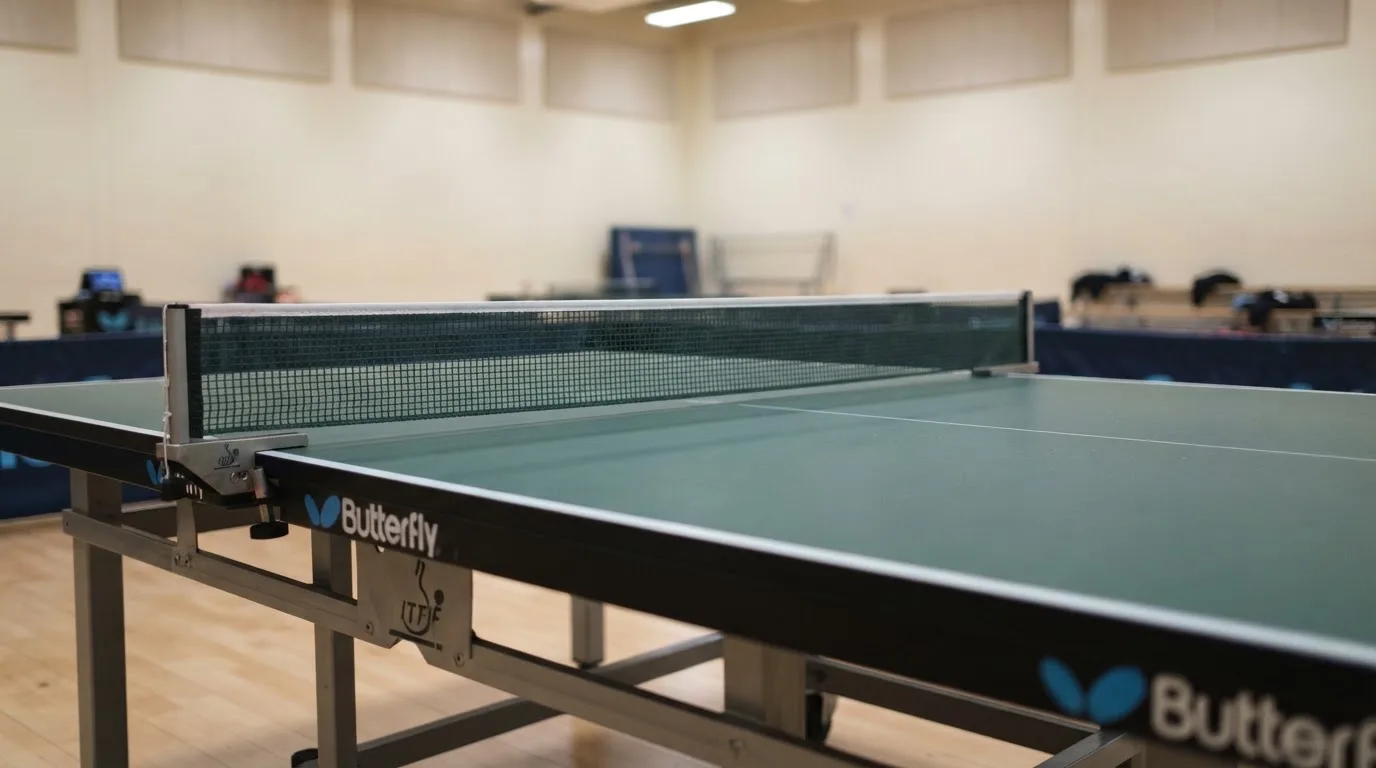
Table tennis is one of the few sports in which a live bet can resolve on the next point. Service alternates every two points until both players reach 10, after which each serves one point in turn. That rhythm makes the sport unusually well suited to in-play markets, and it is also what makes a hurried in-play bet unusually easy to misread.

What “in-play” actually means at a table tennis event
An in-play market is the same selection the bookmaker offered before the match, repriced as the rally goes on. With the score visible on the slip and the next point about to start, the temptation is to read momentum off the last two or three rallies and bet against the run of play. The bookmaker has watched the same rallies and has had longer to reprice them: a price that looks generous at 4-4 has usually already been pulled. In-play is also where bookmakers run the tightest margins of the day, because a slow customer is the customer who pays the overround.
GB-licensed bookmakers offer in-play on table tennis across the WTT Tour, the ITTF World Championships and lower-tier events. The exact fixture list varies by operator and by hour: a brand strong on tennis is rarely the one strong on Setka Cup, and a brand strong on Setka Cup is rarely the one strong on Champions League football. The presence of in-play on table tennis is normal at every reviewed brand; the depth of the offer is not.
Cash out as an exit, not as a feature
Cash out lets the punter settle a bet before the match is finished, at a price the bookmaker sets in the moment. The number offered is not the price the bet was struck at; it is the price of laying the bet back against the bookmaker, with the bookmaker’s spread built in. On a sport as point-volatile as table tennis, the price can swing several ticks in two serves, which is exactly why the option is offered.
A bettor who uses cash out as a planned exit, with a stop-loss written down before the match, pays a known price for a known outcome. A bettor who uses cash out to chase a moving number is the one the feature is written for. The bookmaker’s spread on a cash-out price is wider than its pre-match margin, and a reader who checks both sides of the quote against an exchange’s lay price will see where the gap sits.
Streaming and data behind the live price
Live streaming of table tennis is offered by GB-licensed brands that have negotiated rights for the underlying feed, and not every brand holds those rights for every tournament. Where streaming is offered, the picture usually runs a few seconds behind the data feed the price is computed from, which means the price on the slip is reacting to a point the punter has not yet seen. That lag works both ways: it can be exploited by a reader with a faster feed of their own, and it can also be exploited by the bookmaker against a customer reacting to a picture the price has already priced in.
Stats panels and “match live” widgets are common to most reviewed brands. The deeper question is whether the widget shows what the bettor needs to make a decision, or whether it shows what the bookmaker wants shown. A rally-by-rally breakdown of serve points won, for example, is more useful on a match at 9-9 than a head-to-head from a tournament played three years ago.
Predictions, tipsters and the cost of following the tip
A table tennis betting tip is a tipster’s claim that one player will beat another, framed as a price the bookmaker is offering. The tip has a value to the reader only if the tipster’s record is public, the price the tip was struck at is known, and the sample size is large enough that the result is not just one upset away from a re-write. Most tipster records published online fail at least one of those three tests, often without the reader noticing.
What a tipster actually sells
A tipster sells an opinion at a stated price. The cost to the reader is the subscription or the affiliate cut, plus the spread between the tip and the market, plus the margin inside every price the tipster urges the reader to back. A tipster who beats the market by two points over a thousand bets has earned the subscription; a tipster who beats it by two points over twenty bets has earned the next twenty bets as an open question.
Tipster records that do not show the price the tip was struck at, the staking plan, the sample size and the bookmaker’s margin on the market bet into cannot be checked against any benchmark. A flat record that shows “won / lost” without those fields is the tipster equivalent of a marketing page: a result on its own, with the cost of the result stripped out.
Forecasting is not handicapping
Forecasting table tennis is closer to handicapping a tennis match than handicapping a football match: serve rhythm, match-up history and recent form carry weight, and the data the bookmaker already prices is mostly public. Where a tipster adds value, the value is in the discipline of pricing — sticking to matches where the stated price is bigger than the implied probability the tipster puts on it, and declining matches where the edge is not there.
Predicting that one player will beat another is the cheapest sentence in this market. Predicting at what price the prediction becomes worth acting on is the expensive one, and it is the sentence the reader is paying the tipster to write.
Strategy that survives a losing run
A strategy is a rule for staking and selecting, not a rule for picking winners. The bookmaker’s margin, applied to a sequence of bets that follows the rule, sets the cost the strategy pays over time. The reader who works in units rather than pounds, sets a stop at a defined multiple of the unit, and writes down the price before each bet pays that cost with eyes open. The reader who chases the previous bet’s loss pays it with a margin the bookmaker has set.
Staking plans such as flat, percentage of bankroll and Kelly fraction are all variations on the same arithmetic: stake size relative to bankroll and edge. They do not move the edge. A reader who decides on the staking plan first and the tip second is the one with a strategy. A reader who decides on the tip first is the one whose strategy is “follow this week”.
Bet types, prices and the arithmetic inside every quote
The shape of a table tennis market is wider than most readers expect, and the spread of prices within one match is the metric the reader can actually measure. A bookmaker offering one match-winner line is offering a market. A bookmaker offering match winner, handicap, total games, set winner, race-to-five, race-to-eleven and next-point is offering a market with several prices.
Match winner, handicap and totals
The simplest price is the match winner: player one to win the best-of-five or best-of-seven. The margin sits inside the two prices, and the gap between them is what the bookmaker keeps of every unit bet on this market. A handicap line shifts the implied probability by setting one player a head start in games, which spreads the price into a range the bookmaker is happier to quote. Totals — over/under on the number of games or points — give the reader a market that does not require picking a winner.
These three market types are the floor of what a GB-licensed bookmaker should offer on a major table tennis event. Their absence on a major fixture is a sign the operator is not set up for the sport; their presence is not itself a recommendation, because every operator’s margin on the same market differs.
Set winner, race-to-X and next-point
Set winner, race-to-five, race-to-eleven and next-point are the markets that turn table tennis into a serve-by-serve product. They are also the markets on which an overround bookmaker’s edge is widest: a two-way next-point market is a coin flip with a margin bolted on, and the reader pays that margin twice a point.
A reader who understands that the next-point market is the most expensive at a small price, and that the same match’s set-winner market is closer to the book’s pre-match margin, will size their bets accordingly. A reader who plays the next-point market for the entertainment of it should set that money against the entertainment budget, not the staking budget.
Accumulator pricing and the way the margin compounds
An accumulator is several legs multiplied into a single price. The upside is the multiplicative odds; the cost is the multiplicative margin. A four-leg accumulator at 5 % margin per leg has roughly a 19 % margin in the combined price, not 5 %. The number the punter sees on the slip is the same, but the share of every pound the bookmaker keeps has risen.
Bet builder and same-game multi combine markets from one event into one slip. The combined price is the price the bookmaker has set for the combination, not the multiplication of the legs’ prices, and the margin on the combination is usually wider than the average of the legs. A reader who expects a bet builder to price at the sum of its parts is paying the difference.
Fixtures, tournaments and the shape of the calendar
Table tennis is not one calendar: it is three layered over each other. The top layer is the WTT Tour and the ITTF World Championships, where the best players in the world meet. The middle layer is the ITTF World Tour’s feeder events and continental championships. The base layer is the Setka Cup, TT Cup and WTT Feeder, where matches are run back-to-back and a bookmaker with rights to the feed can run a price on a match every 30 minutes.
Where the deep markets live
The deep markets live on the top layer. A WTT Smasher or an Olympic semi-final is where the bookmaker is competing for the punter’s custom, the price is sharper, and the line moves on information. This is also where a reader betting against the market needs an edge that survives the book’s own pricing.
Mid-tier events run fewer markets. The price on a match winner is usually the only price offered, the margin is wider, and the bettor paying the margin for the privilege of betting on a tournament they care about is the audience the bookmaker is set up for.
Where the back-to-back fixtures live
Setka Cup and TT Cup matches are run on a near-continuous schedule, with sessions starting every hour or two. A bookmaker carrying those feeds has a live product running at all hours of the day, which is the product the platform pitches the in-play bettor. The bettor’s edge on those matches is the thinnest of the three layers, and the book’s hold is unusually high. Setka Cup results have also been the subject of integrity scrutiny at the international level; readers weighing the live volume against the integrity record will arrive at different conclusions, and neither reading is wrong on the data alone.
Olympic and World Championships
Table tennis has been an Olympic sport since 1988. The ITTF was founded in 1926. World Championships have run since that year with a few interruptions, and the WTT Tour replaced the ITTF World Tour as the top tier of the professional circuit. Major championships are covered by every reviewed brand at the highest level, and the brands that cannot quote a price on a World Championships quarter-final are brands the table tennis bettor is not playing on.
The ranking: ten GB-licensed bookmakers on table tennis
The ranking below is a list, not a verdict. Every brand here holds a Gambling Commission remote licence, every brand is offered on its own terms, and the order is descriptive rather than numerical. A bettor choosing between two brands should weigh the comparison below against their own staking plan, the markets they care about, and the rules of each operator’s offer.
The comparison itself runs as a single table: licence number and licence holder on one side, what the operator’s own terms say on the relevant subject on the other. Cells without a backed figure carry an em dash rather than a guess, and a column whose cells research does not cover for most rows would have been dropped rather than printed.
| Brand | Gambling Commission remote licence and licence holder | What the operator’s own terms state on table tennis betting |
|---|---|---|
| Fitzwilliam Sports | Remote licence 048760-R-335434-009 (account 48760); SBKI Limited | A Dublin-based bookmaker with capped membership and a “High Stakes Welcome” subject to compliance criteria; instant deposits, fast withdrawals, timeouts and deposit limits, with links to safer-gambling services |
| BetTom | Remote licence 064959-R-339314-003 (account 64959); Bet Tom Limited | A 50% back offer as a free bet of up to £50, with a matching 50% back up to £50 as free slot funds for casino play; full terms apply |
| NetBet | Remote licence 039170-R-319343-032 (account 39170); Netbet Enterprises Limited | Daily Boosts, Profit Boosts and free bet offers, a Bet Builder with instant dynamic odds, and sports stats for major leagues |
| Paddy Power | Remote licence 039439-R-319330-013 (account 39439); PPB Counterparty Services Limited | Coverage of football, horse racing, boxing, rugby, tennis, golf, darts, snooker and F1 |
| BetUK | Remote licence 039198-R-319450-029 (account 39198); LeoVegas Gaming PLC | A sports welcome offer: deposit £10 or more, place a sports bet within 7 days of registering, receive four £10 free bets (two football accumulators of 4+ selections and two multiples of 2+); valid for 7 days; opt-in required |
| BetVictor | Remote licence 039576-R-319370-028 (account 39576); BV Gaming Limited | Best Odds Guaranteed on UK and Irish horse racing, enhanced live race streaming, a BetFinder feature for racing bets, and Smart Stats |
| Geoff Banks | Remote licence 054095-R-330366-010 (account 54095); GB Sports Advisors Limited | Live in-play prices and ante-post prices on future events |
| Ladbrokes | Remote licence 054743-R-330863-014 (account 54743); LC International Limited | A Sports Betting App from Entain Operations Limited, rated 4.66 from 101,255 ratings in the GB App Store |
| Kalooki Sportsbook | Remote licence 057730-R-333396-005 (account 57730); Kalooki Sportsbook Limited | Operated by Kalooki Sports Book Ltd (company number 12938274), licensed by the Gambling Commission and a GAMSTOP member |
| Dabble | Remote licence 065677-R-340363-005 (account 65677); Dabble Sports UK Ltd | A welcome offer of “Bet £10, Get £10 in Free Bets” on a first deposit, a 7-day free bet expiry, minimum odds apply and the stake is not returned |
How the market is built and what a price actually pays
A bookmaker does not bet against the reader at a price the reader chooses. The bookmaker offers a price on every outcome of every market and pays the reader the stake multiplied by that price on the outcome that lands. The reader’s return on a single bet, in decimal odds, is the stake multiplied by the odds; the net profit is the stake multiplied by the odds minus one. On a £10 single at decimal odds of 1.91 the reader takes back £19.10 if the bet wins, of which £9.10 is profit.
A combination bet pays the multiplied odds: four legs at 1.91 each, multiplied into a single price of roughly 13.30, on which a £10 stake returns £133.00 if all four legs win, of which £123.00 is profit. The multiplication that makes the upside attractive is also the multiplication that runs the book’s margin through each leg in turn. The cost of those four legs, expressed as the difference between the multiplied price and the fair multiplied price, is the reader’s stake in the book’s overround, compounded.
The margin, worked out
A bookmaker’s margin on a market is what it keeps of every unit bet on that market. It is the difference between the payout share the market offers and the full unit that would be paid out at fair prices. Worked out from the prices, the payout share of a two-way market at decimal odds of 1.90 / 1.90 is the reciprocal of the sum of the implied probabilities, which is one divided by (1/1.90 + 1/1.90), or roughly 95 % of every pound bet. The margin, on the same books, is the difference between 100 % and that payout share, which is roughly 5 % of every pound bet. For an illustrative two-way table tennis match at 1.90 / 1.90, the margin sits in the band of around 5 %, and the same arithmetic applies to any two-way price that mirrors it.
The wider the margin. The wider the book’s edge. On a market where the price is 1.85 / 1.85, the margin is wider; on a market where the price is 1.95 / 1.95, the margin is tighter. The reader looking at the same event at two brands should look at both sets of prices before staking, because the difference is what a sharp comparison looks like.
How the reader checks it
The reader does not need a calculator. Reading the price as a percentage — 1.90 as 52.6 %, 1.85 as 54.1 % — and adding the two sides is the test. A two-way market whose two prices add to 105 % is a market the bookmaker keeps 5 % of; a market whose prices add to 108 % is one the bookmaker keeps 8 % of. The brand-by-brand comparison of margins on the same fixture is the bridge between “I bet on table tennis” and “I bet on table tennis at a bookmaker that takes a known cut”.
The compounded margin
Two-way margin compounds through every leg of an accumulator. A 5 % margin on each of four legs does not multiply into 20 % in the combined price, because each leg’s fair probability is itself closer to 50 %, and the compounded overround follows the probabilities, not the legs. The audit is simple: take each leg’s implied probability, multiply them into the combined implied probability, and read the overround off the difference. A 5 % margin per leg at evens-roughly-each compiles into a combined overround of around 19 %; a 5 % margin per leg at 1.40 each compiles into a much smaller combined overround because the underlying probabilities are no longer close to 50 %. The principle is constant: the wider each leg’s margin, the wider the combined margin.
What a Great Britain bookmaker is, and what the licence means
A GB-licensed bookmaker is one whose remote operations are licensed by the Gambling Commission under the Gambling Act 2005, with the Gambling (Licensing and Advertising) Act 2014 closing the point-of-consumption loophole for any operator whose facilities are used in Great Britain. The Commission is a non-departmental public body sponsored by the Department for Culture, Media and Sport. The Act covers Great Britain (England, Scotland and Wales); Northern Ireland is outside the Act and runs under older legislation. A Gibraltar, Maltese or Curaçao licence is not a substitute at the point of consumption: a brand serving UK customers without a Commission licence is breaking section 33 of the 2005 Act, which carries up to 51 weeks’ imprisonment, a fine up to level 5, or both, on summary conviction in England and Wales.
How to verify a licence
The Commission’s public register can be searched by business name, trading name, domain or account number, and the search is the whole test of whether a brand holds a licence. A licence line on a bookmaker’s homepage is a claim, not a proof; the register is the proof. A reader cross-checking a licence should look up the brand’s domain, read the licence number and the licence holder’s name, and check that both match the brand’s marketing. A mismatch — a brand quoting one licence number and the register showing another — is the kind of detail the reader notices before depositing.
A Curaçao, Maltese or Gibraltar licence does not authorise remote betting into Great Britain. A brand holding only an offshore licence and advertising to UK customers is one the reader should not stake with, because the loss of protection is material: no GAMSTOP coverage, no Commission complaints route, no approved dispute-resolution body, no British consumer redress if funds are withheld, and no application of the 10x bonus cap or the £150 financial vulnerability check.
What the licence costs the operator, and what it costs the reader
A GB licence is not free. Operators pay the Commission’s statutory levy, a separate charge from General Betting Duty, and they comply with the Licence Conditions and Codes of Practice (LCCP) on social responsibility, marketing and player protection. The reader pays for it through the verification check before the first deposit: name, address and date of birth are checked before a customer can deposit or gamble, including with a free bet or bonus, since 7 May 2019. The licence also gives the reader the only guarantee that matters at a dispute: a Commission complaints route and an approved dispute-resolution body.
What the licence does not do
The licence does not set a maximum stake or a maximum loss. It does not pick the reader’s markets. It does not decide the price. Those are the operator’s choices, made within the LCCP. A reader looking at a price they think is wrong is looking at a price the bookmaker has set, on a market the bookmaker has chosen to offer. The licence backs the dispute if one arises; it does not back the price.
Safer gambling at the licensed operators
A GB-licensed operator must offer GAMSTOP, the national multi-operator online self-exclusion scheme, which is a mandatory licence condition for online operators since 31 March 2020. Self-exclusion periods run six months, one year, five years, or five years with auto-renewal. After the minimum period the exclusion stays in place for a further seven years unless the customer asks GAMSTOP to remove it. GAMSTOP covers online sites and apps; betting shops use a separate service. Every GB-licensed online operator takes part in GAMSTOP.
The vulnerability check and the affordability check
The financial vulnerability check is an LCCP condition that applies to licensed remote betting when a customer’s deposits minus withdrawals exceed £150 in a rolling 30 days. It is a public-record check — bankruptcy or county court judgments — not an income check and not a credit reference check. Financial risk assessments are announced in a staged plan, with no start date confirmed; the reader hearing about an “affordability check” should read it as announced, staged, and pending.
Deposit limits and the reader’s choice
Deposit limits are the customer’s choice at a GB-licensed operator. Operators must offer a gross deposit limit on a fixed time frame. There is no state-set deposit or loss ceiling for betting; the limit is the limit the customer sets themselves. Readers who set a deposit limit before their first bet, and write it down, are the readers who notice when a session has drifted past it.
Where help is found
GamCare runs the National Gambling Helpline. GambleAware funds treatment and education. Gamblers Anonymous runs peer-led meetings. NHS gambling clinics are available in several regions. None of these routes is a substitute for the GAMSTOP exclusion, and none of them is a substitute for a deposit limit the customer sets themselves. A reader who finds themselves chasing a session should reach for the deposit limit first and the helpline second.
Crypto and anonymity at the licensed bookmaker
A licensed bookmaker is licensed to verify the customer. The verification check before the first deposit means no anonymous play at a GB-licensed site. A reader who wants to bet with bitcoin or another cryptocurrency, and to keep the bet off the bank statement, is asking the licensed operator to do the opposite of what its licence requires. The two paths do not meet.
What the licensed bookmaker accepts
GB-licensed bookmakers accept the payment methods they list in their cashier: debit cards and bank-based payments are normal, e-wallets are common, prepaid vouchers are present at some brands. Credit cards are banned for gambling in Great Britain since 14 April 2020, including credit-card-funded payments through an e-wallet. A British named-account rule, a state list of permitted payment methods and any rule for or against cryptocurrency deposits at licensed operators are not established; what is established is that the customer is identified before the deposit, and the deposit has to come from a source the operator can verify at higher spend.
What the unlicensed bookmaker accepts
An unlicensed bookmaker is a brand serving UK customers without a Commission licence. Several offshore brands accept cryptocurrency, run on a Curaçao or other non-UK licence, and promise a different product. The price is the same kind of price; the verification check before the first deposit is not run; the GAMSTOP coverage does not apply; the Commission complaints route is not open; the dispute-resolution body is not the British one. A reader who values anonymity over the protections the licence offers is making a trade, and the trade is theirs to make and theirs to lose.
The maths of the trade
A reader choosing between a licensed and an unlicensed brand is choosing between a bookmaker that has to identify them, and one that does not. The price is comparable; the protection is not. A reader who runs a small staking budget, knows the limits of what the licence delivers, and reads the operator’s own terms before staking is the reader who makes the trade with eyes open. A reader who assumes the unlicensed product is identical with the verification check turned off is the reader the licence is written to flush out.
Bonuses and free bets on table tennis
A welcome offer is a marketing claim the bookmaker writes and the customer has to clear. The “free” in a free bet is the book’s word, not the reader’s: a free bet’s stake is usually not returned with a win, the bet has to be placed at or above the operator’s minimum price, the offer has an expiry, and the offer is subject to a stake limit on the winnings. The maths of the offer is the maths of the marketing.
What the offer actually says
A “Bet £10, Get £10 in Free Bets” welcome says the reader places £10 of their own money on a first bet, and receives £10 in free bets if the first bet settles. The £10 free bet is the stake the bookmaker is putting up; the £10 first bet is the reader’s first money, and is paid back only if the first bet wins. A 50% back offer as a free bet says the reader’s first stake is matched at half its value as a free bet, on the bet losing; on the bet winning, the reader takes back the matched amount as profit, with no free bet issued. The two products are not the same product, and the second one is paid only on a loss.
What the offer costs the reader
A welcome offer with a wagering requirement has a turnover the reader must run before the bonus balance becomes withdrawable. Wagering requirements on bonuses are capped at 10x for GB-licensed operators since 19 January 2026, which means a £10 bonus at the cap needs £100 of qualifying bets before the bonus balance clears. A £10 bonus at 50x needs £500 of qualifying bets, which is not allowed under the cap. The cap is the cap, and the operator’s own terms state the cap on each offer.
The expected cost of clearing a bonus is the turnover the reader runs multiplied by the margin of the market the reader runs it on. A £10 bonus with £100 of qualifying bets at a market with a 5 % margin costs the reader around £5 on average, before any minimum price or expiry rule applies. The cap, the expiry and the minimum price all sit on top of that arithmetic, and the reader ignoring one of them is the reader who finds the bonus has expired before the turnover was complete.
What “free” leaves out
The free in a free bet is the stake. A £10 free bet at decimal odds of 3.00 returns £30 to the reader if it wins, of which £20 is profit. A £10 cash bet at the same odds pays £30, with £20 of that being profit and £10 being the original stake. The free bet’s stake is not paid back; the cash bet’s stake is. The headline price is identical; the realised return is not.
Mixed-product promotions, such as an offer that requires gambling on two or more product types, are banned at GB-licensed operators. The reader seeing “bet on football to get free spins” at a licensed brand is looking at an offer the brand cannot legally run.
Why the offer is there
The offer is there because the bookmaker’s customer-acquisition cost is high, and the offer is the cheapest way the bookmaker has to acquire a customer. The reader looking at an offer should price it against the margin on the market the bonus will be cleared on, against the minimum price the bonus allows, against the expiry the bonus carries. The offer is the bookmaker’s tool; the maths is the reader’s.
Operators reviewed
Each operator below is reviewed in the order set by the plan. The verdict on each one is the page’s own, not the operator’s marketing copy.
Fitzwilliam Sports
Fitzwilliam Sports describes itself as a Dublin bookmaker with capped membership, which is the first signal a reader should weigh. A capped membership means the operator is selective about who it onboards, and a reader who is onboarded at a brand with capped membership is on a brand that has decided they are the kind of customer it wants. The “High Stakes Welcome” the site advertises is subject to compliance criteria, which is the second signal: the headline says one thing, the terms say another, and the reader looking at the welcome should read the criteria before staking.
The site lists instant deposits, fast withdrawals, timeouts and deposit limits, with links to safer-gambling services including GambleAware, GamStop and Gamblers Anonymous. The safer-gambling stack is the standard stack at every GB-licensed brand. The brand’s licence is the Fitzwilliam Sports Limited licence, and the holder on the Commission’s public register is SBKI Limited. The site is Fitzwilliam Sports.
This operator is designed for a reader who qualifies for capped membership, accepts the welcome’s compliance criteria, and assesses the offer’s cost against the brand’s actual market depth.
BetTom
BetTom’s sports welcome offer is 50% back as a free bet of up to £50, with a matching 50% back up to £50 as free slot funds for casino play. The two halves of the welcome are two different products: the sports half is a free bet issued on the first settled sports bet losing, the casino half is free slot funds subject to casino wagering. The full terms apply, and the reader should read both halves before staking. The two halves are mixed-product in spirit, which is why a GB-licensed operator will state the terms explicitly rather than describe them as a single offer.
Bet Tom Limited holds the Gambling Commission licence for BetTom. This operator suits readers who understand the distinction between a free bet triggered by a loss and free slot funds with wagering attached, as both halves of the terms require verification before committing.
NetBet
NetBet offers Daily Boosts, Profit Boosts and free bet offers, with a Bet Builder on instant dynamic odds and sports stats for major leagues. The product is built around the bet builder and the boost, which is the standard stack at a GB-licensed brand with a Bet Builder product. Netbet Enterprises Limited is the Gambling Commission licence holder for NetBet.
The bet builder’s price is the price the bookmaker has set for the combination, not the multiplication of the legs’ prices, and the margin on the combination is usually wider than the average of the legs. A reader who expects the bet builder to price at the sum of its parts is paying the difference. A reader who treats the bet builder as a price the bookmaker has set is the reader who decides whether the price is worth the bet.
Those who treat the bet builder as a bookmaker-priced combination and weigh its cost against the convenience of placing several markets on one slip are the audience this operator targets.
Paddy Power
This operator’s app features football, horse racing, boxing, rugby, tennis, golf, darts, snooker, and F1. Table tennis is not explicitly highlighted in the marketing, a detail the discerning table tennis bettor should factor in. Since the brand’s primary focus is football and racing, the table tennis reader should price the offering accordingly. The operator’s licensing details on the Commission’s register are held by PPB Counterparty Services Limited.
A reader who chooses Paddy Power on the strength of its football product is choosing the brand’s strength, not the brand’s table tennis product. A reader who chooses Paddy Power on the strength of its table tennis product should look at the price of a pre-match winner on a WTT Smasher before staking, because that price is the test of the brand’s depth on the sport.
The verdict: a destination for the table tennis bettor who plays sports not always prioritized by the main app, with a price reading that remains the most important part of the staking process.
BetUK
BetUK’s sports welcome is a deposit-gated offer: deposit £10 or more, place a sports bet within 7 days of registering, receive four £10 free bets (two football accumulators of 4+ selections and two multiples of 2+). The four free bets are split across two product shapes, which is the kind of detail the headline glosses over. The free bets are valid for 7 days, opt-in is required, and minimum odds apply. The stake of a free bet is not returned.
BetUK’s licence on the Commission’s register is the LeoVegas Gaming PLC licence, and LeoVegas is the holder. The brand’s offer is deposit-gated, with a free bet structure that mixes a football accumulator and a multiple. A reader whose betting is on football accumulators and multiples is the reader the offer is built for; a reader whose betting is on table tennis match winners is the reader who finds the free bet structure does not match the staking plan.
This operator is selected by football accumulator and multiple bettors because its free bet structure aligns with their staking habits. Those whose betting strategy relies on single-bet table tennis match winners should evaluate the welcome against their specific staking plan, rather than relying on the headline.
BetVictor
BetVictor’s headline product on the app is Best Odds Guaranteed on UK and Irish horse racing, enhanced live race streaming, a BetFinder feature for racing bets and Smart Stats. The racing stack is the brand’s depth, and the table tennis product is what the brand carries in addition. The licence on the Commission’s register is the BV Gaming Limited licence.
A reader whose betting is on UK and Irish horse racing is the reader BetVictor’s product is built for, and the table tennis product is a casualty of the racing depth. A reader whose betting is on table tennis should weigh the racing depth as a signal of the brand’s overall product, not as a product they will use.
This operator is primarily oriented toward UK and Irish horse racing, with table tennis included as a supplementary sport.
Geoff Banks
Geoff Banks’ app is published by GB Sports Advisors Ltd and offers live in-play prices and ante-post prices on future events. The product is built around the live product and the future event, which is the structure of a specialist bookmaker rather than a generalist. The licence on the Commission’s register is the GB Sports Advisors Limited licence.
A specialist bookmaker’s depth on a sport is the test the reader should run. A brand offering in-play on a sport it carries means the brand has the feed; a brand offering ante-post on a sport it carries means the brand has priced the future. Geoff Banks’ product sits on those two pillars, and the reader’s edge on the product is the reader’s reading of the in-play and the future.
A specialist destination for the reader who prioritizes live in-play and ante-post betting, treating the specialist product as the primary value rather than as mere marketing.
Ladbrokes
Ladbrokes’ app is published by Entain Operations Limited and is rated 4.66 from 101,255 ratings in the GB App Store, which is the rating on the storefront and not a statement of the brand’s table tennis depth. The licence on the Commission’s register is the LC International Limited licence, and Ladbrokes and Coral run under the same licensee.
A reader betting on table tennis at Ladbrokes is betting on a brand whose app rating is set by its football and racing customers, and whose table tennis product is what the brand carries in addition to those. A reader who treats the rating as a signal of the table tennis product is reading the rating wrong. A reader who treats the rating as a signal of the brand’s overall product is reading it right.
The verdict: a brand for the reader betting on the sports the brand is built around, with table tennis as one of several sports rather than as a focus. The reader’s edge on the table tennis product is the reader’s reading of the price before staking.
Kalooki Sportsbook
Kalooki Sportsbook is operated by Kalooki Sports Book Ltd (company number 12938274), licensed by the Gambling Commission under account number 57730, and is a GAMSTOP member. The structure is straightforward: an operator, a licence holder, a GAMSTOP membership. The brand’s stack on the Commission’s public register is on Kalooki Sportsbook Limited.
A reader who values clarity in the licence stack is the reader Kalooki Sportsbook’s structure is built for, and the brand’s product on table tennis is what the operator carries rather than what the licence stack promises. A reader who treats the licence stack as a signal of the table tennis product is reading the licence wrong; viewing it as a signal of brand compliance, however, is accurate.
A straightforward choice for the reader who prioritizes a transparent licensing stack and a clear compliance signal, treating table tennis as one of several offerings on a brand built around regulatory clarity.
Dabble
Dabble’s welcome offer is “Bet £10, Get £10 in Free Bets” on a first deposit, with minimum odds, a 7-day expiry and the stake not returned. The structure is the standard free bet welcome, with the stake of the free bet not returned. The reader’s edge on the offer is the reader’s understanding of the minimum odds and the expiry.
Dabble’s licence on the Commission’s register is the Dabble Sports UK Ltd licence. A reader who clears the welcome on a market with a known margin, at a stake at or above the minimum odds, and within the 7-day expiry is the reader the welcome is built for. A reader who tries to clear the welcome at the minimum stake and the minimum odds is the reader who finds the welcome has expired before the turnover is complete.
The verdict: a brand for the reader betting on the sports its offer is built around, with a standard free bet welcome that requires the reader to read the minimum odds and the expiry before staking.
The maths of a price, worked through
The arithmetic the page carries belongs to the page, and the conclusion the page draws is the conclusion the arithmetic earns. Where the inputs are missing, the point is made qualitatively.
Worked example: a £10 single on a 1.90 / 1.90 two-way market
A £10 single at decimal odds of 1.90 returns £19.00 if the bet wins, of which £9.00 is profit. The same £10 at 1.95 returns £19.50, of which £9.50 is profit. The difference is the difference in margin: the wider the price, the smaller the margin, and the smaller the share of every pound the bookmaker keeps. On a 1.90 / 1.90 market, the implied probabilities are roughly 52.6 % each, summing to a 105.2 % overround, which is a margin of around 5.2 % of every pound bet on the market.
Worked example: a four-leg accumulator at 1.91 per leg
Four legs at decimal odds of 1.91 each multiply into a combined price of roughly 13.30. A £10 stake returns £133.00 if all four legs win, of which £123.00 is profit. The combined overround at a 5 % margin per leg is around 19 %, which is the book’s edge on the combined price.
Worked example: clearing a £10 bonus with a 10x cap
A £10 bonus with a 10x wagering requirement needs £100 of qualifying bets before the bonus balance is withdrawable. At a market with a 5 % margin, the expected cost of clearing is roughly £5 of the £100. The cap is the cap, and the reader ignoring the cap is the reader who finds the bonus balance has been cleared at a higher cost than the bonus’s headline value.
Frequently asked questions
How is the return on a bet worked out from the stake and the odds?
In decimal odds, return is the stake multiplied by the price. A £10 stake at 1.91 returns £19.10 if the bet wins, of which £9.10 is profit. The stake is paid back on a win; the free bet’s stake is not.
What is the bookmaker’s margin and how can it be seen in the odds?
The margin is the share of every pound bet the bookmaker keeps. On a two-way market at 1.90 / 1.90, the implied probabilities sum to roughly 105.2 %, which means the margin is around 5.2 % of every pound. The wider the prices, the smaller the margin; the tighter the prices, the larger it.
How can it be checked that a bookmaker holds a Gambling Commission licence?
The Commission’s public register can be searched by business name, trading name, domain or account number. A licence line on a brand’s homepage is a claim; the register is the test. A reader cross-checking the licence should match the domain, the licence number and the licence holder’s name.
How to bet on table tennis?
Pick a market — match winner, handicap, totals, set winner or race-to-X — at a GB-licensed bookmaker, set a stake, confirm the bet, and watch the event settle. The mechanics are the same as any sport; the markets are specific to the sport.
How to win table tennis betting?
No reader can know the outcome of a match. The reader can pick markets at prices bigger than the implied probability, set a staking plan in units, write down the price before each bet, and quit at the stop the staking plan sets. Winning is a margin the reader keeps over the bookmaker, not a tipster’s prediction.
Tennis, darts & cue sports – Grey Hound
Content created by the «Grey Hound» team
