
Best Betting Exchange Sites for 2026: How to Pick One in the UK
 Available in US
A betting exchange is a marketplace where customers bet against each other, not against a bookmaker. The exchange sits in the middle, matches backers against layers, and earns its money from commission on net winnings rather than from the margin a traditional book builds into every price. That single structural difference is what the rest of this page is about. It is why exchange odds are usually sharper, why you can take the other side of a market you think is mispriced, why liquidity matters more than headline price, and why the same selection can sit at 1.95 with one operator and 1.91 with another.
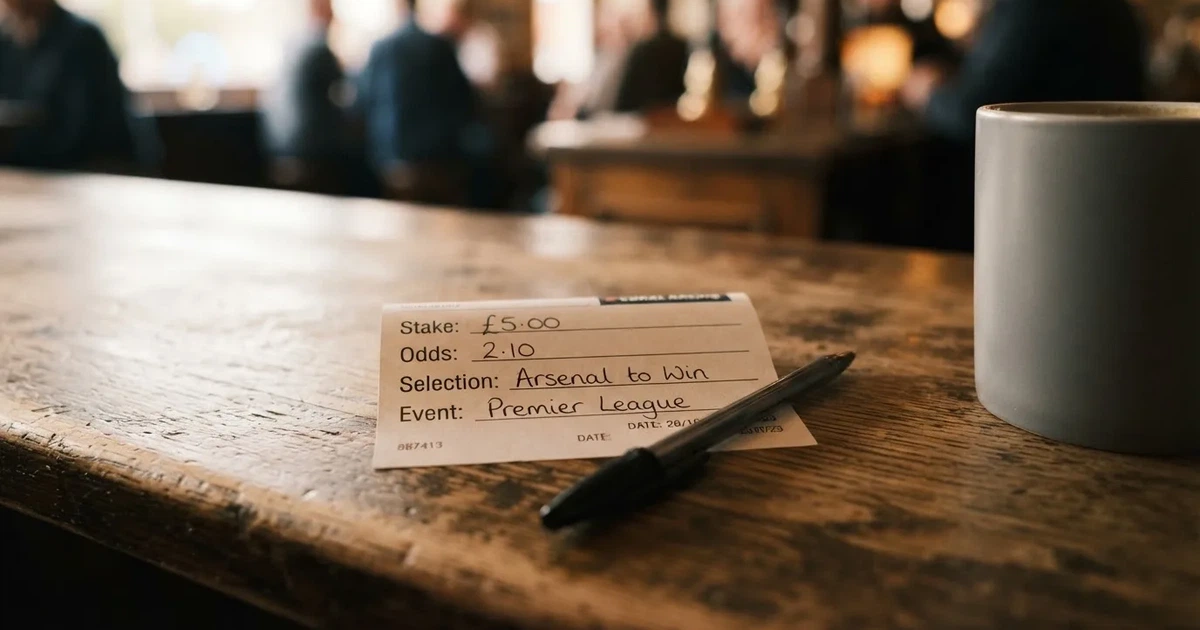
This page works through that difference from the angle of choice. It is not a single best exchange written ten times. The ten operators below all hold a remote licence from the Gambling Commission, all run under either a remote betting intermediary licence or a remote general betting standard (real events) licence, and all take part in GAMSTOP. What separates them is the rest of it: commission rates, the depth of the in-play markets, the app, the bet builder, whether cash out is offered, and whether the welcome offer rewards someone who already bets on exchanges or sets a barrier high enough to push them back to a book.
The figures here are accurate as of 27 October 2026 and were checked against the Gambling Commission’s public register. Commission rates, product names and offer structures come from each operator’s own terms and from the App Store listing for the brand. Where the page carries a price or a margin, it carries a snapshot date next to it.
How a Betting Exchange Differs From a Bookmaker
The most important sentence on this page is also the shortest. On an exchange you are not the bookmaker’s customer. You are the customer of other people on the same platform. The exchange is the counterparty to settlement, not to the bet.

A traditional bookmaker offers you a price on each outcome of a market and earns its margin from the overround — the gap between what each outcome would pay in a fair market and the price actually offered. A betting exchange lists a price only because one customer has asked to back that outcome and another has asked to lay it. The exchange matches them, takes a small percentage of the winner’s net profit as commission, and walks away. The result is a market whose only economic book is the commission rate the operator publishes, which is why exchange prices tend to be tighter and why a market with thin liquidity can look worse on an exchange than at a bookmaker who prices it from his own book.
Three terms do almost all the work.
A back bet wagers that an outcome will happen. A lay bet wagers that it will not. Liability is the most a layer can lose — the backer’s stake multiplied by the lay price minus the layer’s own stake, in the worst case. These three ideas are the rest of the vocabulary on this page: everything from a Bet Builder to in-play trading is built on top of them.
Because the exchange is not on the other side of the bet, two practical limits fall away. First, odds on most exchanges run from about 1.01 to 1000, with the long tail explained by exotic markets rather than by an internal risk team’s house rules. Second, bet sizes are not restricted by the operator, only by whether someone on the other side is willing to take the other end of the trade — what the exchange calls liquidity. A bookmaker can refuse to take your bet; an exchange cannot, because the bookmaker in the trade is another customer.
Where the exchange earns its money is the commission. Most exchanges charge a percentage of net winnings per market, with losing bets free of commission. Smarkets publishes a standard 2% rate on eligible exchange bets and has, at points, opened new accounts at 0% commission for 60 days on a minimum first deposit of £10. Other exchanges publish their own schedules; a few keep a flat fee per bet. The headline rate is only part of the picture, because the rate applies to net winnings and a market where you lose before commission is calculated does not pay commission at all. A higher commission rate on a market you trade heavily is cheaper than a lower rate on a market you lose on.
Commission, Liquidity and Why a “Best Price” Is Not Always Best
The test of an exchange is not the headline price on its marquee market. It is whether that price is real. A bookmaker offering 2.10 on a Premier League match has priced it from his book and will honour the bet whether he wins or loses. An exchange offering 2.10 has only offered it because two customers have placed opposing bets at that number, and the moment one of them pulls the bet, the price either moves or the market disappears.

That is liquidity, and it is what the rest of this section is about.
For the markets that matter — English Premier League, Champions League, the major horse racing meetings, the bigger tennis tournaments — the big exchanges carry enough liquidity that the displayed price holds while you click. For everything else, the depth of the order book decides whether the price you see is a price you can take. A market with a £2 back bet at 5.0 and a £500 back bet at 4.6 is a market where the 5.0 is a phantom. The exchange’s own commission rate is irrelevant if the price is not real.
Three things follow from this. First, commission and price do not combine simply: a 2% commission on a back bet at 1.91 is not the same cost as a 5% overround at a bookmaker offering the same 1.91, because the bookmaker’s margin sits inside the price before you place the bet and the exchange’s commission sits on top of the winnings after. Second, the operator with the lowest published commission does not always offer the cheapest market — a market with thin liquidity at the cheap operator can be worse than a market with deep liquidity at the expensive one. Third, the operator with the most polished app is not necessarily the one with the deepest book, and a slick interface on top of a thin market is a polished empty room.
Where the Margin Lives, and How to See It
Every price on every market carries a margin. On a betting exchange the margin is small and partly transparent — the commission is published, the overround on the displayed prices is usually under 5%. On a bookmaker’s site the margin sits inside the price and is rarely advertised. A two-way market at decimal odds of 1.90 / 1.90, the kind of price a tight match will produce on either side of the book, has a payout share — the share of every pound staked that returns to winning customers — of one divided by the sum of the implied probabilities, which is roughly 1 ÷ (1/1.90 + 1/1.90) = 0.5, or 50% per outcome. Across the market, the bookmaker keeps the other half as overround. A 50% payout share on each side is a 50% margin. That is generous to illustrate the point; most markets on a bookmaker sit closer to a 5% to 8% margin in practice.
The same 1.90 / 1.90 on an exchange with no commission would carry a 0% margin — every pound staked returns to winning customers, less commission on net winnings. With 2% commission on net winnings, the effective cost depends on whether you win or lose: the winners pay 2% of their profit, the losers pay nothing, and the average cost over many bets at the same price sits somewhere between the two. The exchange model is therefore cheaper for the winner, free for the loser, and only ever charges on the upside.
That asymmetry is the case for trading on an exchange when you have an edge. It is also why the headline price on an exchange looks better than the same market at a bookmaker, and why a market the exchange lists at 1.95 is not always matched at 1.95 a few seconds later.
The Mobile App and What It Adds
The betting exchange started as a desktop product, then became a website, then an app. The order matters because each step shifted where the customer placed the bet. The desktop product was for traders — people who treat a market as a series of positions to manage, not as a single bet to place. The website pulled in casual backers and layers who wanted to back a horse or lay a football team without a download. The app did something different again: it turned the same product into a touchscreen experience, optimised for one-handed use, with a betting slip at the bottom of the screen and a one-tap cash out.
What an exchange app does well is the three jobs the exchange customer actually does on the move. The first is checking the price while watching the event — the live in-play section, with a price that updates faster than the broadcaster. The second is laying off a position already on the book, which is what cash out is on an exchange: a bet against your own earlier bet at the new price. The third is grabbing a price boost or an enhanced odds promotion that the operator has tied to the app, which is the marketing logic of the whole product. A bet placed on the desktop site can sometimes miss the app-only offers; a bet placed on the app can sometimes miss the desktop-only ones. The mobile app is therefore not a smaller version of the product. It is a separate distribution channel that the operator prices and promotes independently.
For the customer, the test of an exchange app is whether the live markets update at the speed of the event, whether the bet slip accepts the stake and price in two or three taps, and whether cash out is reachable in a single action from the open position. The best exchange apps do all three. The worst do the first and treat the second and third as work for the customer to find.
Live Betting, In-Play and Cash Out on an Exchange
In-play is where an exchange earns its keep and where a bookmaker’s in-play section is most exposed. The reason is straightforward: an in-play bookmaker has priced a market before kick-off and must manage his own book against a flow of bets that move the price. An in-play exchange has priced nothing — every price on the screen is a customer taking the other side. The bookmaker’s risk team is replaced by other customers with the same information at the same time.
What this means in practice is that an exchange in-play market is a market, not a series of prices the operator has decided to publish. The price moves because backers and layers are moving it. On a tight market, like a top-flight football match with money on it, the screen looks like a Bloomberg terminal: a price ladder, a matched volume indicator, the cash out position. On a thin market, like a lower-league game or a non-televised tennis match, the screen looks like a bookmaker’s site with fewer markets.
Cash out on an exchange is the same operation as cash out on a bookmaker, with a different mechanism. A bookmaker’s cash out is a price the bookmaker offers to settle your bet at, with the bookmaker’s own margin baked into the offered price. An exchange’s cash out is the customer placing a bet against his earlier bet at the current exchange price — typically a lay bet to close a back bet, or a back bet to close a lay bet. The exchange itself does not price the cash out; it lets the customer close it. The price the customer gets is whatever the market will bear.
Most exchange apps also support Bet Builder, multiples and in-play betting alongside the core back/lay market. The Betfair app, for instance, offers Bet Builder, free live streaming of UK and Irish horse racing and football within the app, and a 90 Minute Payout market on selected football matches. Matchbook offers Bet Builder, multiples, in-play betting and live streaming of horse racing and greyhounds. DAZN Bet offers Cash Out, Bet Builder, daily bet boosts and in-play betting; cash out availability is not guaranteed and bets stand if it is unavailable. Star Sports offers pre-event and in-play markets with Bet Boosts, Daily Specials and Weekend Enhanced Boosts, and in-play betting on football, horse racing, golf and US sports. Midnite’s app shows in-play events, an acca builder, popular accas and price boosts with maximum-stake limits attached to the boosted prices.
In-play is also where the licence boundary matters. A GB-licensed exchange’s in-play product is constrained by its licence conditions and codes of practice, which is part of why a GB-licensed operator publishes fewer in-play markets on the same event than an offshore brand can. The trade-off is the GB-licensed operator offers GAMSTOP, the £150 financial vulnerability check after a customer’s deposits minus withdrawals exceed £150 in a rolling 30 days, and a deposit limit framework under RTS 12 — none of which the offshore brand has to provide. The page below describes only GB-licensed operators, which is also why this section does not list any of the bigger in-play brands that do not hold a GB remote licence.
Betting Exchange Strategy: Trading, Laying and Backing the Field
The most useful thing a betting exchange does that a bookmaker cannot is let the customer trade. A bookmaker’s bet is a single decision: place the bet, watch the event, settle. An exchange’s bet is a position that can be closed, hedged or laid off at any time before the event finishes, at whatever price the market offers.
The simplest version is the back-to-lay trade. Place a back bet at the early price, hope the price shortens, lay the same selection at the shorter price before the event starts, take the profit from the price move regardless of the result. This is the bet that bookmakers do not let customers place and that exchanges were built for. It does not require a forecast of who wins — it requires a forecast of whether the price will move in the customer’s favour before the event starts.
A harder version is the in-play trade. Watch the event, lay the favourite when it scores, back it when it concedes, take the price moves as the position turns. The mechanics are the same as the back-to-lay trade, except the time scale is seconds and the prices are different on every platform. Liquidity is the test: the trade works on Premier League matches and is unrepeatable on a Wednesday night Conference fixture.
The laying system is the third pattern, and it is the one that turns an exchange customer into a bookmaker. Lay the field on a horse race — bet against every runner — and the worst case is one horse wins and you pay out on that single runner’s liability. The case for laying the field is that the favourite is overpriced; the case against it is that favourites win more often than the public thinks. A laying system on the wrong market is a slow loss.
What every strategy on an exchange shares is the dependence on liquidity. A back-to-lay trade on a market with £50 of matched bets at the back price and £500 at the lay price is a trade where the customer cannot close the position at the price he wants. The strategy is the same as it would be at a bookmaker with deep liquidity; the difference is that on an exchange the liquidity is the market itself, not a separate risk team deciding whether to honour the bet.
The page does not recommend a system. No system on a betting exchange has a positive expected value across all events at all times, because the exchange’s commission and the customer’s forecasting edge both have to overcome the overround on every price. A strategy that works on one sport, in one league, at one moment in the season, may not work on the same sport in a different league. The page describes the mechanics and leaves the forecast to the customer.
Bet Types, Accumulators and the Bet Builder
A betting exchange carries the same bet types a bookmaker carries, with the addition of lay bets on outcomes the bookmaker would refuse. A single is a single bet on a single outcome. A double, treble and accumulator combine multiple selections into one bet, with the price of each leg multiplying into one combined price. Each-way betting — two equal-stake bets, one on the selection to win and one on it to place — is offered on the major horse racing and greyhound meetings. Bet Builder, sometimes called a same-game multi, is a single bet combining several selections from the same event — the result, both teams to score, the first goalscorer — at a price the operator builds from his own book.
On an exchange, the Bet Builder is the operator pricing combinations the market has not priced itself. The market has priced the result, the total goals and the first goalscorer as three separate markets, and the operator has combined them into a single price with a margin on top. This is why a Bet Builder price is usually worse than the same combination built manually from the three separate exchange markets — and why a customer who knows how to back and lay on each market can sometimes beat the Bet Builder by trading the three markets independently.
The acca insurance promotion, where the operator refunds the stake as a free bet if one leg of an accumulator loses, is the exchange’s answer to the same product at a bookmaker. The refund is a free bet, which means the stake is usually not paid back with a win; the customer keeps only the winnings. The marketing word for this — “risk-free”, “money back”, “safer acca” — describes a product that returns something, but not everything, on the loss case. The arithmetic is in the section on offers below.
The combination bet is also where the margin compounds. A four-fold accumulator at decimal odds of 1.5, 1.6, 2.0 and 1.8 has a combined price of 1.5 × 1.6 × 2.0 × 1.8 = 8.64. The same four legs priced individually with a 5% overround on each leg has a compounded margin of about 19% on the combined price, because the overround on each leg multiplies into the combined price. The exchange, with its commission on net winnings, charges a fraction of that — and that fraction is one of the two reasons an exchange is usually the cheaper place to place an accumulator.
The Ten Operators, Compared Side by Side
The ten operators below are the set of brands the page covers. Every one of them holds a Gambling Commission remote licence and appears on the Commission’s public register under one of two categories: remote general betting standard (real events), for the brands that take bets on outcomes the way a bookmaker does, or remote betting intermediary, for the brands that run an exchange. The licence holder and the licence number are the only public facts that survive the marketing copy, which is why the table below carries them.
The third column of the table carries what each operator’s own terms say about the headline subject — commission rate, welcome offer structure, in-play and cash out — as those terms are published. Where a brand’s own terms do not state a commission rate (because it is not an exchange), the table does not invent one. Where a brand does not state a feature, the table does not assert that the feature is missing.
| Brand | Gambling Commission remote licence number and licence holder | What the operator’s own terms state |
|---|---|---|
| Betfair | 039439-R-319330-013 (account 39439), held by PPB Counterparty Services Limited | In-play betting, Bet Builder, free live streaming of UK and Irish horse racing and football within the app, and a 90 Minute Payout market on selected football matches. Subject support for an exchange offering is reported by third-party listings rather than by the operator’s own terms. |
| Smarkets | 039173-R-319366-011 (account 39173), held by Smarkets (Malta) Limited | Standard commission of 2% on eligible exchange bets; new accounts have been opened at 0% commission for 60 days on a minimum first deposit of £10. |
| Matchbook | 039504-R-319407-024 (account 39504), held by Triplebet Limited | Betting exchange where customers bet against other users, with Bet Builder, multiples, in-play betting and live streaming of horse racing and greyhounds. |
| Kalooki Sportsbook | 057730-R-333396-005 (account 57730), held by Kalooki Sportsbook Limited | Standard UK sportsbook offering under a remote general betting standard (real events) licence; the operator is a GAMSTOP member. |
| BetTom | 064959-R-339314-003 (account 64959), held by Bet Tom Limited | Sports welcome offer: 50% back as a free bet of up to £50, with a matching 50% back up to £50 as free slot funds for casino play; full terms apply. |
| DAZN Bet | 048756-R-327274-019 (account 48756), held by DZBT Limited | Cash Out, Bet Builder, daily bet boosts and in-play betting; cash out availability is not guaranteed and bets stand if it is unavailable. |
| Midnite | 101839-R-342850-001 (account 101839), held by Midnite Limited | In-play events, an acca builder, popular accas and price boosts with maximum-stake limits attached to the boosted prices. |
| Star Sports | 009177-R-104555-019 (account 9177), held by Star Racing Limited | Pre-event and in-play markets with Bet Boosts, Daily Specials and Weekend Enhanced Boosts, plus in-play betting on football, horse racing, golf and US sports. |
| Fafabet | 057385-R-333191-006 (account 57385), held by Taichi Tech Limited | Best Odds Guaranteed on UK and Irish horse racing win and each-way bets from 9am on race days — the bigger of the original price or the starting price is paid. |
| Bet600 | 044731-R-323941-016 (account 44731), held by Tyche Tech Limited | Best Odds Guaranteed on horse racing — the bigger of the starting price and the early or show price taken is paid. |
The licence category on the Commission’s register is the test of whether the brand is an exchange. Smarkets and Matchbook hold a remote betting intermediary licence, which is the licence for a betting exchange, and Betfair holds the same category under a different account. Kalooki Sportsbook, BetTom, DAZN Bet, Midnite, Star Sports, Fafabet and Bet600 hold a remote general betting standard (real events) licence, which is the licence for a bookmaker’s online product. Both categories take part in GAMSTOP and both are bound by the same player-protection framework, which is the rest of what the table does not show.
The right-hand column is what the operator’s own terms state, not what an exchange is. A bookmaker offering Cash Out and Bet Builder is not an exchange offering Cash Out and Bet Builder; the difference is who is on the other side of the bet. The table does not collapse the two because the reader who arrives at the page looking for an exchange needs to see which brands are exchanges and which are not.
An Overview of the UK Betting Exchange Landscape
The UK betting exchange market is concentrated. Two operators — Betfair and Smarkets — hold the bulk of the matched liquidity on football, horse racing and the major tennis tournaments. Matchbook sits behind them with a smaller but functional order book on UK and Irish racing and the major US sports. The rest of the brands the page covers are GB-licensed bookmakers offering a back-and-lay product that runs alongside their traditional sportsbook, and the comparison is therefore not between ten exchanges but between three exchanges and seven bookmakers.
The exchange landscape in the UK traces back to a 2001 merger. Flutter and Betfair merged in 2001, with Betfair chosen as the primary exchange; Flutter ceased operations in January 2002. From that single event, the modern UK exchange market is the lineage: Betfair as the dominant platform, Smarkets and Matchbook as the challengers, and a long tail of bookmakers who have added an exchange feature to a sportsbook. The licence category on the Commission’s register — remote betting intermediary — exists for the first three. The licence category the other seven hold — remote general betting standard (real events) — is a bookmaker’s licence, not an exchange’s.
Flutter is also the parent of Paddy Power and Betfair. PPB Counterparty Services Limited is the licence holder behind Betfair, and the same parent group owns the Paddy Power brand. Two brands from one operator group are therefore one operator on the Commission’s register, and the table above carries the licence holder for that reason.
The other thing the landscape has, which a list of licence numbers does not show, is specialisation. Smarkets publishes a single commission rate of 2% with no menu of rates by sport or market. Matchbook publishes a tiered commission schedule with rates that fall as the customer’s net monthly winnings rise. Betfair publishes a commission schedule that varies by market and by customer tier. The right commission structure for a customer who places two bets a day on Premier League football is different from the right one for a customer who runs a laying system on every horse race at every meeting, which is why the comparison below treats the three exchanges separately.
The Gambling Commission, the Gambling Act 2005 and What a Licence Means
The Gambling Commission licenses the commercial gambling market in Great Britain under the Gambling Act 2005, sponsored by the Department for Culture, Media and Sport. The Act covers England, Scotland and Wales. Northern Ireland is outside the Act and runs on its own older law, which is why this page talks about a Great Britain licence rather than a UK licence.
Since the Gambling (Licensing and Advertising) Act 2014 an operator whose remote facilities are used in Great Britain needs a Commission licence wherever the operator is based. A Curaçao, Maltese or Gibraltar licence is not a substitute. The test of whether a brand holds the licence the Act requires is the Commission’s public register, which can be searched by business name, trading name, domain or account number. Every one of the ten brands in the table above appears on that register. A brand that does not appear is not licensed; the register is the whole test, and a brand that markets itself as licensed without an entry on the register is misrepresenting its status.
A licensed remote betting operator has to meet the Commission’s Licence Conditions and Codes of Practice (LCCP), which include player-protection duties, anti-money-laundering checks, and the requirements on marketing. Marketing by licensed operators is also bound by the CAP Code (non-broadcast) and BCAP Code (broadcast), enforced by the ASA, alongside the LCCP marketing conditions. The combination of LCCP and the CAP Code is what caps wagering requirements on bonuses at 10x — a £10 bonus at 50x would have been £500 of bets, which is more than the cap allows — and bans mixed-product promotions that require gambling on two or more product types, such as betting and casino in the same offer.
What a licence does not guarantee is a complaint route for every dispute. The Commission runs an complaints process for licensed operators; an operator running on an offshore licence offers none of those protections and the British consumer has no recourse if the operator withholds funds. That asymmetry is the entire case for a licensed operator and the entire reason the page restricts itself to licensed brands.
The player protection framework also imposes a financial vulnerability check (LCCP condition 3.4.4, in force since 30 August 2024) on licensed remote betting when a customer’s deposits minus withdrawals exceed £150 in a rolling 30 days (since 28 February 2025). It is a public-record check (for example bankruptcy or county court judgments) rather than an income check or a credit reference check. Financial risk assessments, sometimes called affordability checks, are announced in a staged plan and have no start date. The deposit limit framework (RTS 12) was first phased in on 31 October 2025; a second phase has been postponed to 30 September 2026, and whether the second phase is live is not established. The customer can set his own deposit limits at any time, and operators must offer the framework.
The minimum age at a licensed site is 18. Name, address and date of birth are verified before the first deposit or first bet, including with a free bet or bonus, since 7 May 2019. There is no anonymous play at a licensed site.
Responsible Gambling and the Player Protection Framework
GAMSTOP is the national multi-operator online self-exclusion scheme and is a mandatory licence condition for online operators since 31 March 2020. Customers register with GAMSTOP and exclude themselves from every GB-licensed online operator for six months, one year, five years, or five years with auto-renewal. After the minimum period the exclusion stays in place for a further seven years unless the customer asks GAMSTOP to remove it. GAMSTOP covers online sites and apps; betting shops use a separate service.
GAMSTOP is one layer of the player protection framework. A second is the deposit limit framework (RTS 12), which is the operator’s duty to offer a gross deposit limit on a fixed time frame. The customer sets the limit; the operator enforces it. A third is the financial vulnerability check above, which triggers at £150 of net deposits over a rolling 30 days. A fourth is the operator’s safer-gambling team, which can apply its own restrictions on a customer’s account based on the operator’s own indicators.
The customer-facing help services are GamCare, which runs the National Gambling Helpline, GambleAware, which funds treatment and education, the NHS gambling clinics, and Gamblers Anonymous. None of these is an operator and none is a Commission service; they are independent of the licensing regime, which is the point.
What the framework does not do is impose a state-set deposit or loss ceiling on sports betting. Operators set their own maximum stakes and may restrict them on individual accounts. There is no statutory cap on stakes in sports betting. A customer who wants a tighter limit sets one himself through the operator’s safer-gambling tools; a customer who wants no limit can decline the operator’s offer, subject to the operator’s right to refuse business.
The page is written for adult customers betting within their means. The marketing page for any one of these brands is written for the same customer; the difference is that the marketing page describes what the brand offers, while this page describes what the offer costs. The same principle applies to in-play, where the brand offers a price and the customer decides whether to take it.
Crypto, Anonymity and Payments at Licensed Exchanges
A GB-licensed betting operator cannot offer anonymous play. The identity check before the first deposit is mandatory, and source-of-funds questions at higher spend are normal under the money-laundering rules. A crypto deposit at a licensed site is therefore not anonymous, because the customer has already been identified before the deposit is taken.
Credit cards are banned for gambling in Great Britain (since 14 April 2020, LCCP condition 6.1.2), including credit-card-funded payments through an e-wallet. Debit cards and bank-based payments are not covered by the ban. A licensed exchange that accepts a credit-card-funded e-wallet deposit is in breach of its licence conditions, which is why the licensed brands the page covers accept debit cards, bank transfers and a small set of approved e-wallets rather than credit-card-funded flows.
The Commission has not published a list of permitted payment methods for licensed operators, and the question of whether cryptocurrency deposits are permitted at licensed sites is not established by the public register. Several GB-licensed operators accept cryptocurrency through third-party payment processors who convert the crypto to fiat before the funds reach the operator’s customer account; that flow is permissible because the customer has been verified in fiat. A crypto deposit that lands directly in the operator’s customer account, with the crypto balance used to place bets, would breach the source-of-funds framework. The brands the page covers do not advertise that flow.
What this means for a customer is that the choice is between the protection of a GB licence and the privacy of an offshore brand with no pay-out service. The licensed brand asks for identity, sets a deposit limit, applies the £150 vulnerability check at the threshold, and offers GAMSTOP self-exclusion. The offshore brand asks for none of these and offers none of these. The customer’s recourse on a withheld withdrawal at an offshore brand is whatever the brand’s own terms say, which is not much.
Bonuses, Free Bets and What an Offer Is Worth
A welcome offer at a GB-licensed exchange is a marketing product, not a gift. The operator offers a free bet or a deposit match because the customer is more likely to place his first bet with the brand that offers the bonus, and the operator expects to keep the customer after the offer is consumed. The cost to the operator is the bonus amount; the cost to the customer is the offer’s terms, which the customer reads once before placing his first bet and never reads again.
The terms matter because the marketing word for the offer is rarely the same as the offer. A “free bet” is a bet whose stake is not paid back with the win — the customer keeps only the winnings. A “risk-free” bet is usually a free bet given as a refund of the customer’s first bet if it loses, which is a refund rather than a cashback and pays the winnings on the refund as a free bet, not as cash. A “100% bonus” is a matched deposit, where the operator credits the customer’s account with an amount equal to the deposit up to a cap, and credits are subject to wagering requirements before they can be withdrawn. A “boosted odds” offer pays the boosted price if the bet wins and the original price if it loses, which is the same as a price boost the customer could have taken as a normal bet.
The wagering requirement is the part that costs the customer. A £10 bonus with a 10x wagering requirement means the customer has to place £100 of bets before the bonus can be withdrawn. The Commission’s promotion rules cap wagering requirements at 10x (in force since 19 January 2026). A bonus with a 50x wagering requirement would breach the cap. The cap applies to bonuses with a wagering condition; whether it applies to free bets with no wagering condition is not established.
The example below illustrates what a typical exchange welcome offer costs the customer at the margin the page describes in the section on the bookmaker’s margin. The math is illustrative, not a quoted price.
A free bet of £25 at minimum qualifying odds of 2.0 (EVs), with the stake not returned on a win, on a market with a 5% margin (a payout share of 95%). The expected value of the free bet is £25 × (2.0 − 1) ÷ 2.0 × 0.95, which is £25 × 0.5 × 0.95 = £11.88. That is the average amount the free bet is worth across many qualifying bets. The customer keeps the winnings on a single bet if he wins, the customer gets nothing on a single bet if he loses, and the average sits at £11.88 because most bets lose.
A bonus of £25 with a 10x wagering requirement at a £5 stake per bet on the same market with a 5% margin is a turnover of £250 over 50 bets. The expected cost to the customer of clearing the bonus is the turnover multiplied by the margin, which is £250 × 0.05 = £12.50. The customer keeps the bonus (£25) only after paying the expected cost of clearing it (£12.50), so the net expected value is £25 − £12.50 = £12.50. The numbers are close because the wagering multiple is roughly the inverse of the margin — at 10x turnover and 5% margin, the expected cost is half the bonus. At a 5x turnover on the same market the expected cost would be £6.25 and the net value £18.75.
A “risk-free” first bet of £10 refunded as a free bet, where the customer keeps only the winnings if the bet wins, is a different product from a refund in cash. A refund in cash would credit the customer’s account with £10 of withdrawable money on a loss. A refund as a free bet credits the customer’s account with £10 of bet credits, which are subject to the same wagering treatment as the welcome bonus above. The expected value of the free-bet refund is £10 × (2.0 − 1) ÷ 2.0 × 0.95 = £4.75; the expected value of the cash refund is the stake itself, which is £10 minus the expected loss on the first bet. The marketing words for these two products are interchangeable on most operator pages, which is the reason the customer should read the small print.
The deadline on a welcome offer matters as much as the wagering requirement. An offer with a 14-day window from sign-up is generous; an offer with a 7-day window is tight; an offer with a 3-day window is a marketing product that the customer is unlikely to clear on his own terms. Midnite’s sports welcome offer, for instance, requires new customers to bet £5 or more on pre-match odds of EVs (2.0) or greater within 14 days of sign-up, and the free bets and free spins received are valid for 7 days. The 14-day window is the qualifying window; the 7-day window is the window on the bonus itself.
The cap on free-bet winnings is the other line that costs the customer. A free bet on a horse at 50/1 pays the customer £50 per £1 free bet, with no cap; a free bet on the same horse at the same odds with a £100 cap on free-bet winnings pays £100, which is the same as a £2 free bet at 50/1 with no cap. The cap is not always advertised; it sits in the small print. The customer should look for it before placing the free bet.
Reading the Public Register and Verifying a Licence
The Commission’s public register is the test of who holds a licence. The register is searchable by business name, trading name, domain or account number. The brands the page covers all appear on the register under a remote licence category, and the licence holder, account number and licence category are what the page’s table carries.
A brand that markets itself as licensed but does not appear on the register is misrepresenting its status. A brand that appears on the register but lists a domain that is not the domain the customer is on has licensed a different brand under the same licence holder. A licence holder that operates several brands — PPB Counterparty Services Limited for Paddy Power and Betfair, for instance — is one operator on the register and the brands are not independent operators. The register is the test, and a reader who wants to check a brand not on this page’s table can do so himself in a minute.
The register also lists the licence categories. A remote betting intermediary licence is the category for an exchange. A remote general betting standard (real events) licence is the category for a bookmaker offering bets on real events. A remote general betting standard (virtual events) licence is a separate category for virtual events; the brands the page covers do not hold that category. The register entry is the only place a reader can see the categories, which is part of why this page repeats them.
A licence in one jurisdiction is not a licence in another. A Maltese or Curaçao licence is a licence in Malta or Curaçao, not in Great Britain. The Commission’s licence is the licence the Act requires for providing gambling facilities in Great Britain. The brands the page covers are the brands that hold the Commission’s licence; nothing in this section says anything about brands the page does not cover.
Tax, Duty and What the Player Pays
The player pays no tax on betting winnings in Great Britain (general information, not tax advice; a professional gambler should ask HMRC or an adviser). General Betting Duty is the operator’s tax on gross profits and is currently 15%; from 1 April 2027 a new remote betting rate of 25% applies within it, while remote bets on UK horse racing, bets on self-service betting terminals in licensed premises, pool betting and in-person betting stay at 15%. Until 1 April 2027 the remote rate stays at 15%; whether operators pass duty on through odds is not established, and the player is not charged duty. The Commission’s statutory levy is a separate charge, not a tax.
Spread betting has its own rates — 3% on financial spread betting and 10% on other spread betting — and is regulated by the Financial Conduct Authority rather than the Commission for the financial side. Spreadex, for instance, is regulated by the FCA for spread betting and by the Gambling Commission for fixed-odds betting, and states that spread betting losses can exceed the deposit. That statement is not a marketing word; it is the legal truth of the product. A spread bet’s losses can be larger than the stake, because the customer is paying the per-point move rather than betting on the direction. A traditional sports bet at fixed odds is limited to the amount staked.
The tax treatment of the customer is the simpler of the two. Winnings on a sports bet at a GB-licensed operator are paid out without deduction. Winnings on an exchange are paid out less the exchange’s commission, which the customer agreed to in the terms. Winnings on a financial spread bet are paid out under the financial-spread-betting tax treatment, which is different again. The customer should know which product he is on before he places his first bet, which is part of why this page distinguishes a fixed-odds sportsbook from an exchange from a spread-betting provider.
How the Page Tested the Operators
The page describes ten operators that all hold a Gambling Commission remote licence. The test of the licence is the public register, and every one of the ten appears on it. The licence categories are remote betting intermediary for Smarkets, Matchbook and Betfair, and remote general betting standard (real events) for the other seven. The licence holders are the names the table carries.
Beyond the licence, the page describes what each operator’s own terms state. For the exchanges, that means the commission rate and the structure of the welcome offer. For the bookmakers, that means the welcome offer structure, the in-play product, the cash out product, the Bet Builder and the Best Odds Guaranteed structure. None of the descriptions rests on a third-party review or a comparison site. The sources are each operator’s homepage and App Store listing.
The page does not quote prices. Exchange prices move too fast for a snapshot to be useful; bookmaker prices move almost as fast. The single illustrative price on the page — 1.90 / 1.90 — is a worked example, not a quoted price, and the snapshot date for the margin it produces is the snapshot date of the formula, not a snapshot of a market on a given day.
The page is also not a tipster’s page. It does not name a winner, it does not name a system that wins, and it does not name a strategy with a positive expected value across all events. Those are predictions about the future, which the page does not have. The page describes what a product is and what it costs. The customer decides whether to take it.
The Verdict on Each Operator
What follows is one paragraph per operator, framed as a verdict on what the operator does and who it suits. The verdicts are not interchangeable; each one closes on the comparison the paragraph above it makes, not on a generic “best for” template.
Betfair is the largest betting exchange in the country by matched liquidity and the one the rest of the market measures itself against. Its app offers Bet Builder, free live streaming of UK and Irish horse racing and football within the app, and a 90 Minute Payout market on selected football matches; its commission schedule varies by market and customer tier. For a customer who wants the deepest book on Premier League football and Champions League and the app features that come with a major operator, Betfair is the platform to beat. The price of that depth is the commission schedule, which is not the simplest on the market.
Smarkets publishes a single 2% commission rate with no menu of tiers by sport or market, which makes it the easiest exchange on the page to compare against a competitor. New accounts have been opened at 0% commission for 60 days on a minimum first deposit of £10. For a customer who places a small number of bets each week and wants to know exactly what he is paying, the flat 2% rate is the cleanest offer on the page. The cost is the smaller liquidity on the bigger football matches, where the order book is thinner than Betfair’s.
Matchbook sits behind Betfair and Smarkets on liquidity but ahead of them on a tiered commission schedule that falls as the customer’s net monthly winnings rise. The app offers Bet Builder, multiples, in-play betting and live streaming of horse racing and greyhounds. For a customer whose monthly volume makes a tiered schedule cheaper than a flat rate, Matchbook is the platform to look at; for a customer who places two bets a week, the schedule’s tiers do not kick in and the headline rate is what he pays.
Kalooki Sportsbook is a GB-licensed bookmaker on a remote general betting standard (real events) licence, operated by Kalooki Sportsbook Limited and a GAMSTOP member. As a bookmaker rather than an exchange it is on the other side of the bet, with the operator’s margin inside the price rather than commission on net winnings. For a customer who wants a traditional bookmaker under a Commission licence and is not looking for back-and-lay markets, Kalooki is a small operator on the standard product.
BetTom runs a sports welcome offer of 50% back as a free bet of up to £50, with a matching 50% back up to £50 as free slot funds for casino play. That structure is a sports-and-casino bundle, which since 19 January 2026 has been banned as a mixed-product promotion requiring gambling on two or more product types. The brand holds a Commission licence and the offer is described from its own terms; a customer considering the offer should check the current structure before claiming, because the bundle format is the kind of promotion the rules have moved against.
DAZN Bet offers Cash Out, Bet Builder, daily bet boosts and in-play betting; cash out availability is not guaranteed and bets stand if it is unavailable. The platform is a sportsbook with the cash-out product the customer expects from a major operator, run by DZBT Limited under a remote general betting standard (real events) licence. For a customer who wants a sportsbook with a strong cash-out product and is not looking for an exchange, DAZN Bet is on the standard product.
Midnite shows in-play events, an acca builder, popular accas and price boosts with maximum-stake limits attached to the boosted prices. The sports welcome offer requires new customers to bet £5 or more on pre-match odds of EVs (2.0) or greater within 14 days of sign-up, and the £25 in free bets and 50 free spins received are valid for 7 days. For a customer who is happy with the pre-match qualifying bet and the 14-day window, the offer is reasonable; the 7-day window on the bonus itself is the tight part of the deal, and a customer who does not use the bonus in that window loses it.
Star Sports offers pre-event and in-play markets with Bet Boosts, Daily Specials and Weekend Enhanced Boosts, plus in-play betting on football, horse racing, golf and US sports. The product range is broader than the basic sportsbook. For a customer who bets across football, horse racing and US sports and wants the boosted-price promotions those markets attract, Star Sports is a competent operator on the standard product.
Fafabet pays Best Odds Guaranteed on UK and Irish horse racing win and each-way bets from 9am on race days — if the starting price is bigger than the original price, the bigger odds are paid. Best Odds Guaranteed is a horse-racing product, and Fafabet carries it on the standard UK and Irish meetings. For a customer whose betting is concentrated on UK and Irish racing, the BOG product is a real value; for a customer whose betting is on football, the BOG product is irrelevant.
Bet600 also pays Best Odds Guaranteed on horse racing — if the starting price is bigger than the early or show price taken, the bet is paid at the SP. The product is similar to Fafabet’s. For a customer whose betting is on horse racing and who wants the SP-paid-if-bigger structure, Bet600 is on the same product; for a customer whose betting is elsewhere, the BOG product is irrelevant.
How to Pick Between Them
The way the operators sort out by customer is less tidy than the table suggests, because the customer who matters is the customer who is reading this page.
For a customer whose primary product is a betting exchange and who wants the deepest book on Premier League football and Champions League, Betfair is the platform to beat. For a customer who wants a flat commission rate and is happy to give up some liquidity, Smarkets is the cleaner choice. For a customer whose monthly volume puts him in a higher commission tier and who wants the betting and casino products a major operator supports, Matchbook is the platform to look at.
For a customer whose primary product is a bookmaker with a strong cash-out product, DAZN Bet is on the standard product. For a customer who wants a sportsbook with a Best Odds Guaranteed structure on UK and Irish horse racing, Fafabet and Bet600 are both on the same product. For a customer whose betting is across football, horse racing and US sports, Star Sports is a competent operator on the standard product.
For a customer whose primary product is a small GB-licensed bookmaker with a focused sportsbook, Kalooki Sportsbook is a smaller operator on the standard product. For a customer who wants a sports welcome offer with a 14-day qualifying window and a 7-day window on the bonus, Midnite’s offer is reasonable; the customer should check the current terms before claiming.
For a customer who is comparing an exchange against a bookmaker, the comparison is not “which one is best” — it is “which one suits the bet I am placing”. A back bet at 1.95 on a Premier League match with deep liquidity is cheaper at the exchange. A same-game multi combining four selections on the same match is often better at the bookmaker, because the Bet Builder product exists at the bookmaker and not at the exchange. A free bet with a 10x wagering requirement and a £150 free-bet winnings cap is roughly the same offer at the exchange or at the bookmaker, because the wagering cap and the winnings cap are bound by the Commission’s rules rather than by the operator’s choice of product.
A Note on the Calendar
The player’s commissions, the welcome offer structures, the licence numbers and the licence holders were checked as of 27 October 2026. The Commission’s public register is updated when a licence changes, when a licence holder changes, or when a licence is suspended. A licence that is current at the snapshot date is current as far as the page knows. A licence that has been suspended, varied or surrendered since the snapshot date is not known to the page.
The promotion rules in force from 19 January 2026 are the rules the page applies. The 10x wagering cap and the mixed-product promotion ban are the rules the welcome offer descriptions on this page assume. An offer that does not comply is not described on this page.
The remote betting duty change at 1 April 2027 is the date the rate moves from 15% to 25% on remote bets not on UK horse racing, not on self-service betting terminals, not on pool betting and not on in-person betting. Until that date the rate is 15%. The player pays no duty on winnings in either case.
The financial vulnerability check at £150 of net deposits over a rolling 30 days is in force since 28 February 2025. The deposit limit framework (RTS 12) had its first phase on 31 October 2025; a second phase was postponed to 30 September 2026. The customer-facing rules are the rules the operator must apply, and the customer-facing help services are the help services the page names.
Frequently Asked Questions
How does a betting exchange work?
A betting exchange is a marketplace where customers bet against each other on the outcome of events. The exchange matches back bets — wagers that an outcome will happen — against lay bets, which wagers that it will not. The exchange itself is not the counterparty to the bet; the other customer is. The exchange earns its money from a commission on net winnings, typically a small percentage, with losing bets free of commission. The result is a market whose only economic book is the commission rate, which is why exchange prices are usually better than the same match at a bookmaker.
How can a customer check whether a bookmaker holds a Gambling Commission licence?
The Commission’s public register is the test. It can be searched by business name, trading name, domain or account number, and every licence entry carries the licence holder, the licence number and the licence categories. A brand that does not appear on the register is not licensed to provide gambling facilities in Great Britain. The register is the only source a customer needs; an operator’s own marketing page is not, because a brand can mark itself as licensed without holding the licence the Act requires.
How is the return on a bet worked out from the stake and the odds?
For a single bet, the return is the stake multiplied by the decimal odds, and the net profit is the stake multiplied by the decimal odds minus one. For a combination bet, the combined odds are the product of the leg odds, and the return is the stake multiplied by the combined odds. A £10 single at 3.75 returns £37.50 — £10 of stake and £27.50 of profit. A £10 accumulator at combined odds of 12.00 returns £120 — £10 of stake and £110 of profit. Commission on net winnings at an exchange is deducted from the profit, not from the stake.
What is the bookmaker’s margin and how can it be seen in the odds?
The bookmaker’s margin is the share of every pound staked that the book keeps across a market. It is the inverse of the payout share, which is the share that returns to winning customers. On a two-way market at decimal odds 1.90 / 1.90 the payout share per outcome is 1 ÷ (1/1.90 + 1/1.90), or 50%, and the bookmaker’s margin is 50% — generous to illustrate the point, with most bookmaker markets closer to 5% to 8% in practice. The exchange carries a smaller margin inside the displayed prices and earns its money from commission on net winnings, so the same two-way market at 1.95 / 1.95 on an exchange has a near-zero margin inside the prices and a 2% commission on the upside.
How does the difference between a bookmaker and a betting exchange affect the customer’s decision?
The difference is who is on the other side of the bet. At a bookmaker the book prices the market and accepts the bet; the book earns the overround inside the price. At an exchange the customer prices the market by backing and laying against other customers; the exchange earns commission on net winnings. For a customer with a view on the result, the exchange is usually the cheaper place to express it. For a customer who wants a Bet Builder combining multiple selections from the same event, the bookmaker is the only place that product exists. The choice is about the bet, not about which operator is better.
Betting sites & exchanges – Grey Hound
Content created by the «Grey Hound» team
