
Horse racing betting tips 2026: how predictions work and what they cost
 Available in US
A tip is somebody’s bet placed with somebody else’s money. That sentence strips out the glamour and leaves the maths, which is the only part that survives contact with a bookmaker. Horse racing is the sport where tips have the longest folklore — newspaper tipsters, racing post columns, tip-ones, the pundit in the parade ring — and it is also the sport where the gap between a tipster’s confidence and the reality of the result is widest. A 10/1 shot wins roughly one race in eleven; a 5/2 favourite wins roughly two in seven. The arithmetic does not bend for the tipster. What follows is a guide to building your own judgement, knowing what an offer is actually worth, and recognising where the bookmaker’s margin eats into every price you read.

27 October 2026 — current against the Gambling Commission’s public register and each operator’s stated terms.
Bonuses, free bets and the real cost of “free” on horse racing
The word “free” does a lot of work in horse racing marketing. A free bet is a token, not a refund: when it wins, the stake is usually not paid back, so a £10 free bet at 5/1 returns £50, not £60. That single rule separates most “free bet” figures from what they end up worth to a punter’s wallet. Welcome offers built around horse racing tend to take one of three shapes: a fixed free bet for a qualifying first wager, a deposit match whose matched amount carries a turnover requirement, or a recurring perk such as Best Odds Guaranteed (BOG), where the bookmaker pays the bigger of the price taken and the final starting price on UK and Irish racing. Each of these rewards a different behaviour and carries a different cost.
BOG is the cleanest horse-racing perk on the British market. Several of the brands reviewed here pay it: William Hill pays BOG on UK and Irish horse racing from 8 AM on the day of the race, on single and multiple bets, with ante-post, tote and pari-mutuel excluded; Fafabet runs BOG from 9 AM on race days on win and each-way bets; Ladbrokes carries BOG alongside its odds boosts. A BOG token is not a free bet, has no turnover, and pays out in real cash at the higher price. Its value depends on how often the starting price drifts longer than the price you took earlier in the day — it pays you for finding the horse, not for gambling harder.
Welcome free bets are a different animal. BoyleSports Acca Insurance, for instance, requires opt-in, a £5 minimum stake, minimum odds of 1/2 (1.50 decimal) and refunds a maximum of £20 as a free bet that expires in seven days, with the qualifying bet placed and settled on the same day. The refund arrives as a free bet, not as cash, and the stake on that free bet is not returned when it wins. The Dabble welcome — a £10 free bet for a £10 first deposit — carries a seven-day free-bet expiry, minimum odds on the qualifying bet and the same no-stake-returned rule. BetMGM’s UK sports welcome splits the reward across four £10 free bets (two football accumulators of four or more selections, two sports multiples of two or more), each valid for seven days, with minimum odds and opt-in required. None of these is a gift; each is a paid-for nudge toward a particular kind of bet.
The wagering-cap rule since 19 January 2026 is the single most important structural number on horse racing offers in Great Britain. Any bonus — a deposit match, a free-bet refund, a losing-bet refund, a price boost — now carries a wagering requirement capped at 10x the bonus base. A £10 bonus at the old 50x would have demanded £500 of bets before withdrawal; under the cap, no bonus requires more than £100 of qualifying turnover. It does not erase the requirement — £100 of bets at the cap is still £100 — but it changes which offers are worth claiming. Heavy-wagering packages that would have priced out a casual punter are now off the table. Mixed-product promotions, where claiming a sports offer forces play on another product (a casino bonus tied to a sports deposit, for example), are banned outright under the same rule.
The practical order for a punter is simple. Read the qualifying bet first: minimum stake, minimum odds, market restrictions, expiry. Read the reward next: free bet or cash, stake returned or not, expiry. Read the withdrawal conditions last: wagering multiple on any bonus element, the markets that count, the cap on winnings from a free bet. The most expensive mistakes on UK racing offers are claiming a bonus whose turnover cannot be cleared in time, or whose minimum odds exclude the racing markets the punter actually wanted to play. A £10 free bet is not worth £10; on a single winner at 5/1 it returns £50, and on a loser it returns £0. That is the shape of the offer, and the cap in front of it.
Mobile apps and the experience of betting on racing from a handset
A horse racing app is judged by three things the punter feels in the first ten seconds: how quickly the racecard loads, how the bet slip handles each-way and multiple bets, and whether the in-play odds update before the stalls open or after. Best Odds Guaranteed, where it is offered, is meaningless if the price a punter took in the morning cannot be confirmed in the bet history before the race goes off. Live streaming of meetings — every major UK and Irish meeting plus the Australian, American and South African feeds during their seasons — is the second test. The third is whether the app settles quickly enough that a punter can place the next race without staring at a frozen screen.
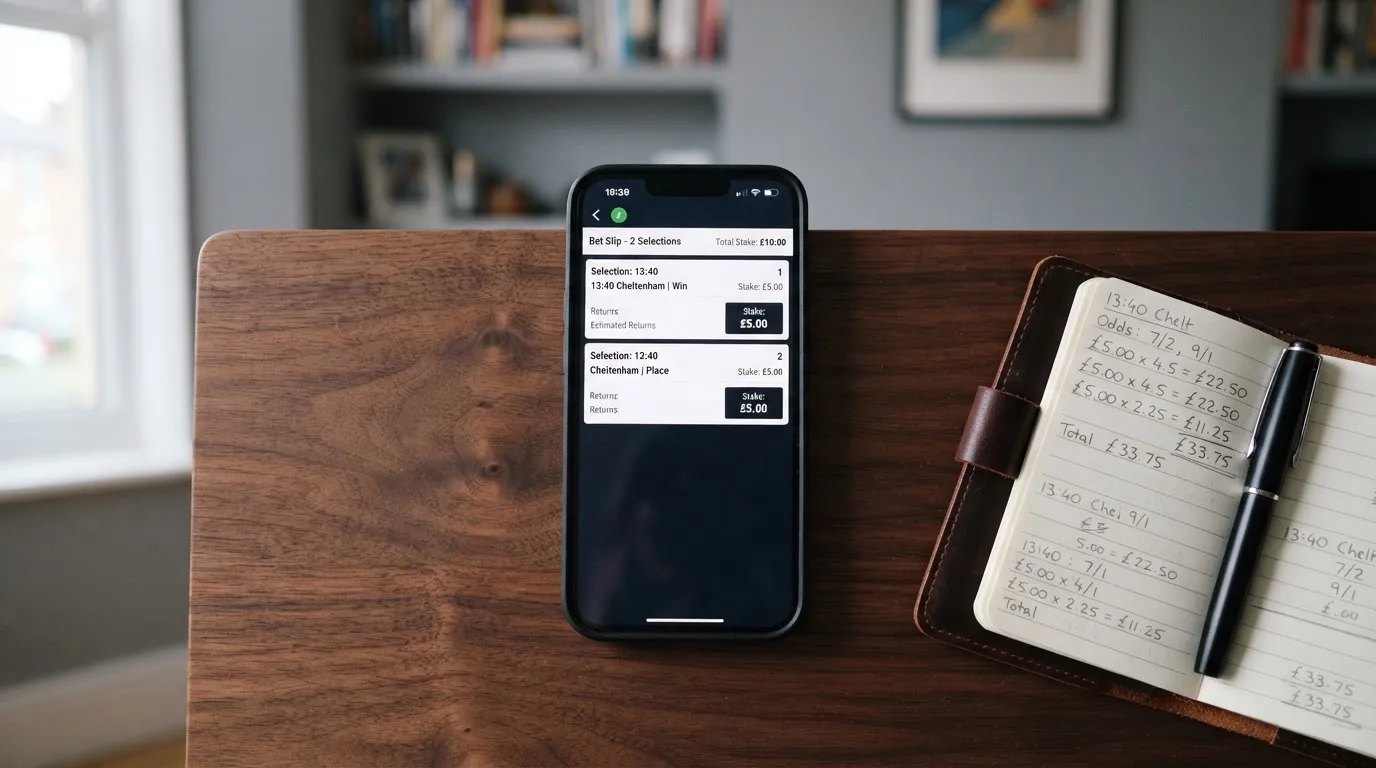
Bet of Those William Bet Bet of Those The reviewed brands handle these three jobs to different standards. bet365, Fitzdares, Ladbrokes, BetMGM and BoyleSports carry full racecards, BOG on UK and Irish racing, live streaming of meetings and in-play odds. BetMGM’s sports welcome is delivered through four £10 free bets with minimum odds and a seven-day window per token. BoyleSports runs its Acca Insurance across the app with the £20 cap and the seven-day refund rule. Fitzdares pairs its racing coverage with accumulators, Lucky 15s and specials, alongside cash out and live odds on horse racing, football, tennis, rugby, cricket, golf and American football. Ladbrokes layers odds boosts, BOG, in-play and Acca Boosts across the same product.
The racing-specific apps and the cross-sport apps are not the same shape. Tote runs pool betting and is built for the race-by-race sweep rather than the fixed-odds card; its value to a punter is the pool dividend rather than a price taken early. BAR 1 Betting (the rebrand of Bar One Racing) is an Irish independent with shops across Ireland and racecourse sponsorships at Dundalk, Fairyhouse, Navan, The Curragh, Curraheen Park and Cork — the kind of brand whose racing depth is sharp on Irish racing and lighter on the wider international card. Fitzwilliam Sports does the trading-room job: the phone line and live chat run from 09:00 to 21:00 seven days a week, with messenger replies typically inside 90 seconds — useful when a bet has been struck wrong and the off is minutes away. Dabble takes a different angle: the £10 free bet for a £10 deposit, the seven-day expiry, and a social feed where punters follow each other’s bets. That social layer changes the feel of the app without changing the maths of any bet placed.
Two cautions apply to every racing app. First, identity verification before the first deposit is now mandatory at every licensed operator — since the 2019 strengthening of the LCCP, name, address and date of birth are checked before a customer can deposit or gamble, and that includes with a free bet. There is no anonymous play at a licensed British app. Second, the in-play experience on horse racing is narrower than on football or tennis. Once a race begins, the in-play market is brief and the price moves quickly; the betting exchange layer, where one punter lays a price to another, carries more of the in-play liquidity than the fixed-odds books do.
Live betting, cash out and the value of closing a bet early
Live horse racing betting is a different product from the morning card. Once the stalls open, the in-play window is short — often under three minutes from breakoff to finish — and the price moves fast. Most fixed-odds books offer in-play on the bigger meetings; the depth of the in-play market, the speed of price updates and whether cash out is offered depend on each operator’s trading room. Cash out closes a bet before the race finishes at a price the bookmaker sets at that instant; the value of cash out is that it converts an uncertain return into a certain one, at the cost of giving the bookmaker the spread between the live market and the live cash-out figure.
Bet365’s in-play product carries live streaming of events worldwide, alongside Bet Track, Match Live and the Live Golf Tracker — the same infrastructure used to follow racing in play. Fitzdares pairs in-play live odds with cash out, accumulators, specials and ante-post markets. Ladbrokes combines in-play with its odds boosts and Acca Boosts. The cash-out button is a tool for punting discipline: a punter who set a stop-loss at the start of the day can use cash out to enforce it without waiting for the result. The cost of the tool is the bookmaker’s margin on the cash-out price, which is wider than the margin on the morning price — the bookmaker is buying a position back, not offering a market.
The honest framing is that in-play racing is for traders and disciplined punters more than for novices. The decisions arrive in seconds, the prices move on each stride, and the difference between a good in-play punter and a poor one is the willingness to leave a bet alone when no edge is visible. Cash out is a profit-taking tool and a loss-cutting tool; used as either, it adds to the punter’s record. Used as a way to “save” a bet that was a mistake at the off, it usually costs more than letting the bet run.
Predictions, value bets and the discipline of staking
A tip is a prediction dressed as advice. A value bet is a price that is bigger than the chance the horse actually has of winning, with the bookmaker’s margin stripped out. Finding value: the steady work behind every sharp punter’s record, and the difference between punting as a hobby and punting as a discipline. The mechanics of value are simple to state and hard to apply. If a horse is a 2/1 shot (3.00 decimal) and the punter’s honest estimate of its chance of winning is 40%, the implied probability at 2/1 is 33%; the punter’s estimate says the price should be shorter than 2/1, so 2/1 is value. If the estimate is 25%, the implied probability is already 33%, and the bet is not value at any price. The arithmetic is unambiguous. The work is in the estimate.
Form, statistics and the market price of other runners are the inputs. Recent form: where the horse finished in its last three or four runs, the class of those races, the going (the ground condition, from firm to soft), the distance. Statistics: the trainer’s strike rate at the course, the jockey’s record at the distance, the sire’s record on the going. Market: where the price has moved from morning to off, and whether that movement reflects new information (a leading trainer pulling a horse in favour of another) or mere liquidity. None of these guarantees an outcome. They sharpen the estimate.
Staking and bankroll discipline are what keep a value punter solvent long enough for the maths to work. Two principles matter. First, never stake more than a fixed percentage of the bankroll on a single bet — a flat 1% or 2% per bet is the usual range, and chasing losses by raising the stake is the most common way a value punter becomes an ex-value punter. Second, keep a written record of every bet: the price taken, the stake, the result, the closing price at the off. Without the record, the punter cannot tell whether the system is working or whether the wins have been luck. With the record, the punter can tell — and a system that loses over a thousand bets at flat stakes is a system that has not been given enough time, not a system that has failed.
No tip is certain. A 1/5 shot (1.20 decimal) loses roughly one race in six; an 11/2 shot (6.50 decimal) wins roughly one race in seven. The shorter the price, the higher the strike rate — but the smaller the return, and the harder it is to find value because the margin sits inside the price. The longer the price, the lower the strike rate — but the bigger the return on the rare wins, and the more often the bookmaker’s price is generous because the public has ignored the horse. Value lives at the longer end of the market more often than the shorter, but the variance is steeper there too. A betting record that shows profit at long prices over hundreds of bets is a real edge; a record of three winners from three bets at 20/1 is three winners from three bets, and nothing more.
Bet types, odds and what each market costs
The bets available on a British race meeting fall into roughly three families. Single bets: one selection, win or each-way. Multiple bets: doubles, trebles, accumulators (or “accas”), and the named combinations — Trixie (4 bets), Patent (7), Yankee (11), Lucky 15, Super Yankee or Canadian (26), Heinz (57), Goliath (247). Each-way bets: a win bet and a place bet of equal stakes, so the stake doubles and the place terms decide the return if the horse places but does not win. Bet builders — same-race multiples — are a newer layer on top, and spread betting, where the return is the difference between a figure and a benchmark, is a different product entirely.
UK each-way place terms run on a standard scale. Handicaps with more than fifteen runners pay one-quarter odds for four places; twelve to fifteen runners one-quarter for three places; other races with more than seven runners one-fifth for three places; five to seven runners one-quarter for two places; fewer than five runners pay win only. A £10 each-way bet on a 10/1 horse at 1/4 place terms (three places) costs £20 and returns £110 on the win part and £35 on the place part — £145 in total if it wins, £35 if it places. The place terms change with the race, and a punter who does not check them before placing a bet is paying for a worse deal than the one they think they have.
Odds on British racing come in two forms. Fractional odds (5/1, 11/4, evens) are the traditional British form: 5/1 returns five units for every one staked plus the stake back, so a £10 bet at 5/1 returns £60. Decimal odds (6.00, 3.75) are the European form: 6.00 returns six units for every one staked including the stake, so the same £10 bet returns £60. Conversion is one-way — fractional a/b becomes decimal a ÷ b + 1, so 5/1 becomes 6.00 and 11/4 becomes 3.75. Odds-on (shorter than evens) prices are the favourite’s end of the market: 4/6 (1.67 decimal) is a 60% chance at the price, with the bookmaker’s margin on top.
The starting price (SP) is the official price the industry settles to at the off, set from the on-course bookmakers’ boards. Best Odds Guaranteed, where it is offered, pays the bigger of the price the punter took and the SP. SP matters for place terms too — most each-way bets settle to SP for the place part if the punter did not take a price.
The margin inside every price: the cost the punter pays for the bookmaker’s service, and the lever that turns a clever system into a losing one. A market with no margin would have a payout share of exactly 100% — a fair coin at evens returns the stake to both sides. The bookmaker’s margin is what tips the scale against the punter. Seeing the margin in a market is straightforward: convert each runner’s odds to an implied probability (1 ÷ decimal odds), sum the implied probabilities, and subtract 100%. On a two-runner market priced 1.90 / 1.90 decimal (9/10 each), the implied probabilities are 1 ÷ 1.90 and 1 ÷ 1.90, summing to about 105.3% — a margin of roughly 5.3%. On a twelve-runner handicap with a wider spread of prices, the margin is often closer to 20% to 30%, because the longshots at the back of the field carry fat prices that nobody expects to win. The margin sits inside every price, and a punter who treats the displayed odds as a fair reflection of the chance is paying for the privilege.
The margin on an illustrative two-way market
Take an illustrative two-way market at decimal odds 1.90 / 1.90 (9/10 each). The implied probabilities are 1 ÷ 1.90 on each side, summing to 2 ÷ 1.90, which is about 105.3%. The payout share is the reciprocal of that sum — roughly 95.0% — and the margin is about 5.3%. The figure is illustrative: a real bookmaker’s margin on a two-way market in horse racing (win or lose each-way, after place terms) sits in a band shaped by the field size and the price spread, and on a small field with two matched prices the margin lands in the low single digits as a percentage. On bigger fields with longshots at the back, the margin is wider. The 5.3% number belongs to the matched-price scenario stated here; it is a worked example of the trade, not a quoted price from any meeting.
Sports coverage, racing’s calendar and the shape of the British season
Flat racing in Great Britain runs roughly from March to November, with the all-weather tracks filling the winter months. Jump racing (National Hunt) runs through the autumn, winter and spring, with the Cheltenham Festival in March the high point of the season. The five British Classics shape the flat calendar: the 2000 Guineas and the 1000 Guineas in early May, the Derby and the Oaks at Epsom in early June, and the St Leger at Doncaster in September. The British Triple Crown — the 2000 Guineas, the Derby and the St Leger — is open only to colts and fillies, has been won eleven times in its history, and is one of the hardest achievements in the sport.
Flat races range from five furlongs (about 1.0 km) to two and a half miles (about 4.0 km), with five to twelve furlongs (1.0 to 2.4 km) the most common distances. Jump races range from around two miles to over four miles, with three miles the standard for the championship events. Handicap races assign each horse a different weight to carry based on its assessed ability, with the higher weights going to the better ones; conditions races give every runner the same weight, with allowances for younger horses, for fillies against colts, and for other factors the race conditions name. A maiden is a race for horses that have not yet won; a novice is a jump horse in its first season over fences or hurdles; a Listed or Group race sits below the Group 1 championship events but above the standard handicaps.
The major British and Irish meetings — Cheltenham, Aintree, Punchestown, the Curragh, Leopardstown, Goodwood, York, Ascot — draw the deepest betting markets. International meetings — the Melbourne Cup in November, the Breeders’ Cup in late autumn, Royal Ascot in June, the Arc de Triomphe in Paris in October, the Dubai World Cup in spring — pull in punters and bookmakers from across the world. A punter who bets only on televised meetings is betting on the meetings with the most efficient markets and the sharpest prices; a punter who bets on smaller weekday cards is betting on markets with wider margins and more generous place terms, but also less form data and more surprise results.
Ranking the UK-licensed horse racing bookmakers
Every brand listed below holds a Gambling Commission remote licence for Great Britain, with the licence category covering real-event betting. The Commission’s public register is the whole test of who holds a licence; the licences are the GB-licences described in the legality section below. Several brands run under one licensee — Ladbrokes and Coral under LC International Limited, Paddy Power and Betfair under Flutter — and they are presented here as the operator the punter meets, not as separate corporate entities. Each is described on its own terms as each operator states them, with the comparison built on the facts each operator’s profile records.
Tote — pool betting on British and Irish racing
Tote is the pool-betting brand for British and Irish racing: rather than taking a fixed price against the punter, the bets go into a pool and the dividend is declared after the race. The pool dividend pays out the final share of the pool after the take; the punter’s edge is that the pool is not the bookmaker — the take is the operator’s fee, and the rest goes back to winning tickets. The trade-off is that the punter cannot take a price, and the final dividend depends on the pool composition. For British racing’s biggest meetings — the Grand National, the Cheltenham Gold Cup, Royal Ascot — the Tote pools are deep enough that the dividend is meaningful. For weekday all-weather cards, the pool is thin and the dividend less attractive.
BAR 1 Betting — Irish independent with racecourse sponsorships
BAR 1 Betting is the rebrand of Bar One Racing, an Irish independent bookmaker with shops across Ireland and racecourse sponsorships at Dundalk, Fairyhouse, Navan, The Curragh, Curraheen Park and Cork. The depth on Irish racing is the brand’s reason for being in place — meetings at the sponsored tracks carry the deepest coverage, and the in-shop and online experience carries the same trading. For British and international meetings, BAR 1 covers the main events but is not the deepest shop in the market. The value to a punter who bets on Irish racing heavily is the racing-specific attention; the value to a punter betting on British flat handicaps is more limited.
Fitzdares — premium betting with a racing-heavy card
Fitzdares positions itself as a premium betting brand, and the app pairs accumulators, Lucky 15s, specials, ante-post markets and cash out across horse racing, football, tennis, rugby, cricket, golf and American football. Live in-play odds run across the same sports. The racing card is the spine of the product — ante-post, daily cards, in-running — with the cross-sport specials sitting on top. For a punter who wants a single app that handles a racing-heavy betting day with the cross-sport specials as a sideline, Fitzdares is built for the job.
bet365 — the in-play and streaming benchmark
bet365 is the in-play and streaming benchmark for the British market. The app carries live streaming of events worldwide, in-play odds across the racing and sports schedule, Bet Track for following bets in play, Match Live and a Live Golf Tracker. The welcome offer sits in the standard shape; the racing product is built around the daily card with BOG, in-play, multiples and ante-post. For a punter who uses live streaming as the spine of their betting day, bet365 is the reference; for a punter who bets on the morning card and rarely watches the races live, the streaming product is a less important piece of the offer.
Dabble — a £10 free bet welcome with a social feed
Dabble’s welcome is “Bet £10, Get £10 in Free Bets” on a first deposit for new customers, with minimum odds applying, a seven-day free bet expiry and the stake not returned. The product has a social layer: punters follow each other’s bets, copy positions and discuss form. For a punter new to betting who wants a low-cost entry and a sense of community, Dabble’s welcome is a clean offer. For a punter who values a deep racing card and high-end in-play tools, the racing product is lighter than bet365 or Fitzdares. The social feed is a feature some punters value and others ignore; the maths of any individual bet is unaffected by it.
BetMGM — four £10 free bets as the sports welcome
BetMGM’s UK sports welcome splits the reward across four £10 free bets — two football accumulators of four or more selections and two sports multiples of two or more — for new UK customers who deposit £10 or more and place a sports bet within seven days. Each token is valid for seven days with minimum odds and opt-in required. The product carries a full racing card alongside the casino product. For a punter who bets on football and racing together, the welcome is structured around both. For a racing-only punter, two of the four tokens are harder to use than the other two, and the seven-day window per token tightens the schedule.
BoyleSports — Acca Insurance with a £20 cap
BoyleSports Acca Insurance refunds a maximum of £20 as a free bet that expires in seven days, on accumulators with a £5 minimum stake, minimum odds of 1/2 (1.50 decimal) and bets placed and settled on the same day, with opt-in required. The free bet stake is not returned on winning free bets. The racing product carries BOG on UK and Irish racing, a full card and a deep Irish racing offering. For an accumulator punter, the insurance is the headline perk. For a flat-stake value punter, it is less central to the offer.
Ladbrokes — odds boosts, BOG and Acca Boosts
Ladbrokes layers odds boosts on horse and greyhound bets, Best Odds Guaranteed on UK and Irish horse races, in-play betting and Acca Boosts. The brand sits under LC International Limited alongside Coral, sharing the same licence. The racing card is deep on the British and Irish meetings; the in-play product is full; the welcome offer sits in the standard shape. For a punter who values a wide range of odds boosts across racing and football, Ladbrokes is built for the job.
Fafabet — BOG on UK and Irish racing from 9 AM
Fafabet pays Best Odds Guaranteed on UK and Irish horse racing win and each-way bets from 9 AM on race days: if the starting price is bigger than the original price, the bigger odds are paid. The racing product carries the standard daily card; the welcome offer sits in the standard shape. For a punter who takes prices early in the morning and lets the SP settle them, Fafabet’s 9 AM BOG is the kind of perk that pays a steady edge across a year of betting.
Fitzwilliam Sports — phone-and-chat service with long office hours
Fitzwilliam Sports runs phone and live chat support from 09:00 to 21:00, Monday to Sunday, with messenger replies typically inside 90 seconds. The racing product carries a full card; the welcome offer sits in the standard shape. For a punter who places bets by phone rather than by app — older punters, those with accessibility needs, those who want to argue a Rule 4 — Fitzwilliam’s service hours and the live-chat speed are the reason the trade exists.
The comparison across the ten brands
| Brand | Gambling Commission remote licence | Key terms on horse racing offers and BOG |
|---|---|---|
| Tote | 054779-R-331321-008 (TDCO Limited) | Pool betting; dividend-based returns rather than fixed odds |
| BAR 1 Betting | 056516-R-332750-007 (Bar-One Racing Limited) | Irish independent; sponsorships at Dundalk, Fairyhouse, Navan, The Curragh, Curraheen Park and Cork |
| Fitzdares | 000400-R-103839-030 (Fitzdares Limited) | Cash out, accumulators, Lucky 15s, specials, ante-post on racing, football, tennis, rugby, cricket, golf and American football |
| bet365 | 055148-R-331498-002 (Hillside (UK Sports) ENC) | In-play betting, live streaming worldwide, Bet Track, Match Live, Live Golf Tracker |
| Dabble | 065677-R-340363-005 (Dabble Sports UK Ltd) | £10 free bet for £10 deposit; 7-day free bet expiry; stake not returned; minimum odds apply |
| BetMGM | 039198-R-319450-029 (LeoVegas Gaming PLC) | Four £10 free bets on football accumulators and sports multiples; 7-day token window; minimum odds apply |
| BoyleSports | 039469-R-319383-025 (Boylesports Enterprise) | Acca Insurance: £5 min stake, 1/2 min odds, max £20 free bet refund, 7-day free bet expiry, same-day settlement |
| Ladbrokes | 054743-R-330863-014 (LC International Limited) | Odds boosts on horse and greyhound bets; BOG on UK and Irish horse racing; in-play betting; Acca Boosts |
| Fafabet | 057385-R-333191-006 (Taichi Tech Limited) | BOG on UK and Irish racing win and each-way bets from 9 AM on race days |
| Fitzwilliam Sports | 048760-R-335434-009 (SBKI Limited) | Phone and live chat 09:00–21:00 Mon–Sun; messenger replies typically inside 90 seconds |
The trade-off across the set sits between depth and discipline. bet365 and Ladbrokes are the depth play — full cards, BOG, in-play, streaming, the wider welcome. BAR 1 Betting and Fitzwilliam Sports are the service play — Irish racing depth and long office hours. Tote is the dividend play — pool returns rather than fixed odds. Fitzdares is the racing-with-specials play. Dabble, BetMGM and BoyleSports are the welcome-play brands, where the headline perk pays the entry fee but the racing product is lighter than the depth brands.
Overview: what a horse racing punter is actually buying
A betting guide for horse racing in 2026 sits inside three honest frames. The first frame is the sport itself: a horse race is an event with a small number of runners, a published form line, a known going, a known distance and a market that has priced every runner before the off. The punter’s job is to find a price that is bigger than the chance the horse actually has of winning, after the bookmaker’s margin is stripped out, and to stake a fixed percentage of the bankroll on the bet. The second frame is the offers around the sport: free bets, deposit matches, BOG, acca insurance, odds boosts. Each offers a different reward for a different behaviour; each carries a different cost; the punter’s job is to read the small print on the qualifying bet, the reward and the withdrawal condition before claiming. The third frame is the regulation around the operator: a GB licence means a Commission-regulated book with mandatory GAMSTOP, mandatory identity verification before the first deposit, the 10x bonus cap in force since 19 January 2026, and the affordability-check regime announced by the Commission in July 2026 with no start date. A punter who bets on a GB-licensed brand trades anonymity for those protections.
What the punter is not buying, on any frame, is certainty. A tip is a prediction. A value bet is a price that is bigger than the chance. A welcome offer is a paid-for nudge toward a particular kind of bet. A BOG token is a hedge against the price drifting. None of these promises a win. The arithmetic of the sport is that roughly one horse in every twelve wins a twelve-runner race; the rest are place, unplaced or pulled up. The arithmetic of the offers is that a £10 free bet at 5/1 returns £50 on a winner and £0 on a loser; the stake is not returned. The arithmetic of the regulation is that a GB-licensed bookmaker charges a margin inside every price — the cost of the service — and that the punter’s edge, when one exists, is the gap between the price and the true chance.
A punter who treats the sport as a hobby, the offers as paid-for perks and the regulation as the floor beneath the trade will read this guide and recognise the shape of the work. A punter who treats the sport as an income source has mistaken the arithmetic for a system, and no system changes the underlying variance.
Legality, licensing and what a GB licence actually means
The Gambling Commission (UKGC) is the regulator for Great Britain’s commercial gambling market, a non-departmental public body sponsored by the Department for Culture, Media and Sport. It licenses the whole commercial market under the Gambling Act 2005. Great Britain — England, Scotland and Wales — is the territory the Act covers; Northern Ireland sits outside the Act under its own older law. A GB licence regulates a bookmaker for Great Britain, not the United Kingdom as a whole, and a “UK-licensed” brand should be read as “GB-licensed” wherever the licence is the Commission’s.
Since the Gambling (Licensing and Advertising) Act 2014, an operator whose remote facilities are used in Great Britain needs a Commission licence wherever the operator is based — sections 33 and 36 of the 2005 Act as amended. A Curaçao, Maltese or Gibraltar licence is not a substitute. There is no state monopoly and no cap on the number of licences; the Commission’s public register lists every licensee, and the register is the whole test of who holds a licence. The register is searchable by business name, trading name, domain or account number; licensed operators use .com as well as .co.uk, and the domain proves nothing.
The licence categories that matter for a punter are remote general betting standard (real events), remote general betting standard (virtual events), remote general betting limited, remote pool betting and remote betting intermediary (the betting-exchange licence). Spread betting on financial markets is regulated by the Financial Conduct Authority, not the Commission; spread betting on sports sits inside General Betting Duty. Each of the ten brands reviewed here holds a remote general betting standard (real events) licence; Ladbrokes additionally holds a remote betting intermediary licence.
Identity verification before the first deposit has been mandatory at every licensed operator since the 2019 strengthening of the LCCP. Name, address and date of birth are verified before the customer can deposit or gamble, and the check covers free bets and bonuses — there is no anonymous play at a licensed British site. The minimum age is 18. Financial vulnerability checks (LCCP condition 3.4.4, in force since 30 August 2024) apply to licensed remote betting when a customer’s deposits minus withdrawals exceed £150 in a rolling 30 days, with the threshold live since 28 February 2025. The check is a public-record check (bankruptcy, county court judgments), not an income check and not a credit reference check. The deeper financial risk assessments — the “affordability checks” of the press — were announced in a Commission article of 7 July 2026 on a staged plan, with no start date. Deposit limits (RTS 12) have applied in their first phase since 31 October 2025; a second phase was postponed to 30 September 2026, and whether the second phase is live is not established. There is no state-set deposit or loss ceiling for betting: limits are the customer’s choice.
The player pays no tax on betting winnings in Great Britain (general information, not tax advice; a professional gambler should ask HMRC or an adviser). General Betting Duty is the operator’s tax on gross profits, currently 15%, with a new remote betting rate of 25% applying from 1 April 2027 within it; remote bets on UK horse racing, self-service betting terminals in licensed premises, pool betting and in-person betting stay at 15%. Until 1 April 2027 the remote rate is 15%; whether operators pass duty on through odds is not established. The Commission’s statutory levy is a separate charge, not a tax.
Offshore and unlicensed play is the alternative frame. A GB licence is compulsory at the point of consumption — providing gambling facilities in Great Britain without the licence the Act requires is an offence under section 33 of the Gambling Act 2005 (on summary conviction up to 51 weeks’ imprisonment, a fine up to level 5, or both; six months in Scotland). The offence is aimed at the operator; no offence aimed at a customer who merely bets on an unlicensed site was found. The honest framing for a punter who chooses an unlicensed site is the loss of protection: no GAMSTOP coverage, no Commission complaints route, no approved dispute-resolution body, no British consumer redress if funds are withheld, no 10x bonus cap, no £150 vulnerability check, and no recourse if the operator walks away. Whether the operator is licensed is the Commission’s register test; the punter’s choice is between the protections and the anonymity.
Responsible gambling, GAMSTOP and the help that exists
GAMSTOP is the national multi-operator online self-exclusion scheme in Great Britain, and a mandatory licence condition for online operators since 31 March 2020. A punter who registers with GAMSTOP chooses an exclusion period of six months, one year, five years, or five years with auto-renewal. After the minimum period, the exclusion stays in place for a further seven years unless the punter asks GAMSTOP to remove it. GAMSTOP covers online sites and apps; betting shops use a separate service. The point of GAMSTOP is that the punter does not need to remember every operator — the exclusion applies across every GB-licensed online bookmaker.
The help that exists alongside GAMSTOP is severalfold. GamCare runs the National Gambling Helpline. GambleAware funds treatment and research. The NHS runs gambling clinics across Great Britain. Gamblers Anonymous runs peer-support meetings. GamCare, GambleAware, GAMSTOP, Gambling Therapy and the Betting and Gaming Council are the organisations that British punters are pointed toward by every licensed operator’s safer-gambling page.
The financial side of safer gambling sits inside the regulation: the £150 rolling-30-day threshold that brings the financial vulnerability check into play; the deposit limits (RTS 12) that operators must offer; the bonus cap that stops a free-bet refund from demanding £500 of qualifying turnover; the marketing rules under the CAP Code that restrict who may appear in a gambling advertisement. None of these are a substitute for the punter’s own discipline, but each is a guardrail that did not exist ten years ago.
A punter who has hit a wall — chasing losses, betting more than the budget allows, hiding bets from family, missing work or appointments — has a clear path: the GamCare helpline for a conversation, GAMSTOP for a self-exclusion that closes the licensed sites for the chosen period, the NHS gambling clinics for treatment where the behaviour has tipped into harm. None of these is a small step and none is a sign of weakness; the harms gambling can cause are real, and the help exists.
Crypto, anonymity and the licensed-operator rule
Anonymity and a GB licence do not coexist. Identity verification before the first deposit is mandatory at every licensed operator since the 2019 strengthening of the LCCP, and the verification covers free bets and bonuses — there is no anonymous play at a licensed British site. Cryptocurrency deposits are not banned at GB licensed bookmakers by statute; whether a particular operator accepts them is the operator’s own policy, and the ten brands reviewed here carry their stated payment methods on their own terms. A punter who wants anonymity is choosing a different product entirely, with the trade-off described in the legality section: no GAMSTOP, no Commission complaints route, no British consumer redress if funds are withheld.
The crypto angle on horse racing sits in two places. First, payment rails: a punter with a crypto wallet may want to fund a betting account from it, and a licensed operator may or may not accept that rail. The licensed operator’s identity check still runs, so the wallet does not buy anonymity — it buys a payment method. Second, prediction markets and on-chain betting: blockchain-based prediction markets and betting exchanges exist outside the GB-licensed space, and the trade-off is the same as any unlicensed operator. None of the brands reviewed here is an on-chain prediction market.
A British punter choosing between a licensed and an unlicensed site has the rule stated plainly: licensed means checks, limits, GAMSTOP, the bonus cap and British consumer redress; unlicensed means none of those, plus the possibility of funds being held without recourse. Neither is “the safe choice” by default. The choice belongs to the punter.
Frequently asked questions
How do you bet on horse racing?
A horse racing bet is a stake against a runner at a price, placed with a licensed bookmaker or through a betting exchange. The punter picks a runner, chooses a stake, takes a price (or accepts the starting price), and adds a win bet or an each-way bet — each-way is two bets of equal stake, one on the horse to win and one to place, so the stake doubles. BOG, where it is offered, pays the bigger of the price taken and the SP; place terms vary by race type and field size.
How are horse racing bets worked out?
The return is stake × odds on the win part, plus the place part of an each-way bet at the place terms. A £10 win bet at 5/1 (6.00 decimal) returns £60 — the £50 profit plus the £10 stake. A £10 each-way bet at 5/1 at 1/4 place terms costs £20 and returns £60 on the win part plus £12.50 on the place part (£25 stake-returned total at 5/1 ÷ 4) — £72.50 if the horse places only, £72.50 plus the win part if the horse wins. The arithmetic is the same for any combination bet: stake × combined odds.
How do betting odds work in horse racing?
Fractional odds (5/1, 11/4, evens) are the British form: 5/1 returns five units for every one staked plus the stake back. Decimal odds (6.00, 3.75) are the European form: 6.00 returns six units for every one staked including the stake. The conversion is one-way — fractional a/b becomes decimal a ÷ b + 1. Odds-on prices (shorter than evens, like 4/6 or 1.67) are the favourite’s end of the market. The implied probability at decimal odds d is 1 ÷ d, and the sum of the implied probabilities across a market is more than 100% — the bookmaker’s margin.
What is a value bet and why is no tip ever certain?
A value bet is a price that is bigger than the chance the horse actually has of winning, with the bookmaker’s margin stripped out. If the punter’s honest estimate is 40% and the price implies 33% (2/1 or 3.00 decimal), the bet is value. No tip is ever certain because the outcome is uncertain by definition: a 1/5 shot loses one race in six, an 11/2 shot wins one in seven. The arithmetic does not bend for the tipster. A punter’s edge lives in the gap between the price and the true chance — and that edge shows up over hundreds of bets, not over three.
What is the bookmaker’s margin and how can it be seen in the odds?
The margin is the slice of every pound bet that the bookmaker keeps on a market. It is seen by converting each runner’s odds to an implied probability (1 ÷ decimal odds), summing the implied probabilities, and subtracting 100%. On a two-way market at 1.90 / 1.90 decimal, the sum is 2 ÷ 1.90 — about 105.3% — and the margin is about 5.3%. On a twelve-runner handicap, the margin is wider because the longshots at the back of the field carry fat prices. The margin sits inside every price, and a punter who treats the displayed odds as a fair reflection of the chance is paying for the privilege.
How is the return on a bet worked out from the stake and the odds?
The return on a single win bet is stake × decimal odds — a £10 bet at 6.00 returns £60, the £50 profit plus the £10 stake. The net profit is stake × (decimal odds − 1) — £10 at 6.00 gives a profit of £50. For an each-way bet the stake doubles and the place part pays at the place fraction of the win odds. For a combination bet the legs multiply into one price, and the stake is multiplied across the legs. BOG, where it is offered, pays the bigger of the price taken and the SP — the arithmetic runs the same way with the SP plugged in.
Horse racing & greyhounds – Grey Hound
Content created by the «Grey Hound» team
