
High Stakes Betting Sites in Great Britain: What a Large Bet Really Costs You
 Available in US
A bettor who pushes stakes into four figures stops being a casual customer. The bookmaker’s terms start to matter in a different way: a £0.05 minimum becomes a £10,000 ceiling, a 50x wagering requirement becomes a five-figure turnover obligation, and a margin that sits quietly inside a 1.91 price becomes a thousand-pound drag over a season of bets. This page looks at high stakes betting sites in Great Britain from that angle — not what the marketing copy says, but what a large bet costs the person placing it, and what each licensed operator’s own terms actually do once the stake gets serious.
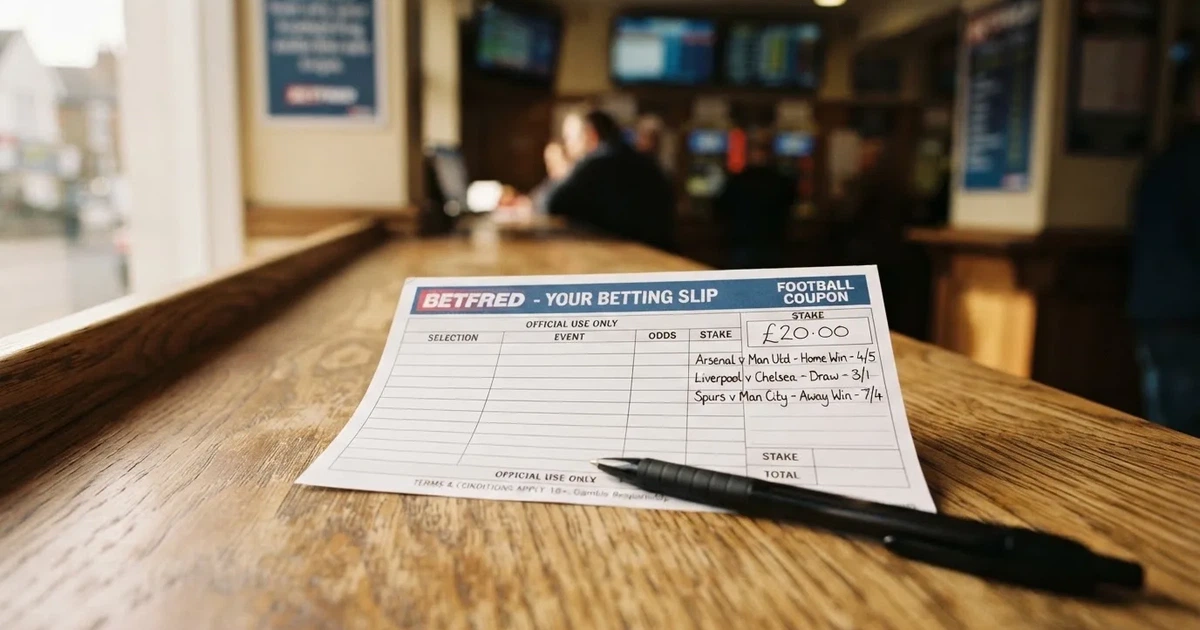
Currency, format and authority are stated below. Odds shown on this page are decimal unless flagged otherwise. £ figures are pounds sterling.
*Current as of 27 October 2026. Verified against the Gambling Commission’s public register.*
The fundamentals a high-stakes bettor needs first
A “high stakes” bettor is not a defined legal category. The term covers anyone whose bet is large enough for the bookmaker’s own rules to start cutting in: maximum payout caps, restricted markets, enhanced affordability checks, or stake limits that turn a routine bet into an off-market request. None of this is governed by statute in Great Britain. Operators set their own ceilings, and the Gambling Commission’s role is to license the firm and to police conduct, not to dictate how big a bet can be.

That gap is the first thing to understand. A bookmaker licensed by the Commission has cleared the entry test — fit and proper directors, segregated customer funds, anti-money-laundering controls, social-responsibility duties. Beyond the threshold, the rules of the game are the operator’s own, and they vary widely. The same Premier League match at the same odds can have a £25 maximum payout at one firm and a £500,000 ceiling at another, and both are fully licensed.
The second thing to understand is that high stakes do not mean high odds. The opposite tends to be true: the larger the stake, the more likely the bettor is shopping short-priced favourites, where the bookmaker’s margin takes a smaller percentage but still earns serious money across hundreds of bets. A bettor placing £1,000 at decimal odds of 1.50 on a Premier League favourite is paying roughly 6-8% in margin on every bet, which over a season of similar bets adds up to more than the welcome offer of most licensed bookmakers combined.
The third thing, which the rest of this page returns to, is the difference between a licence and a recommendation. A Gambling Commission licence is a permission to operate. It tells the bettor that the firm has satisfied a regulator; it does not tell the bettor that this is the right firm for a £5,000 each-way bet on the Champion Hurdle, or that the free-bet terms suit a bettor who runs accumulators, or that the in-play markets are deep enough for someone trading during a football match. Those decisions are made by reading the terms, comparing them across operators, and matching them to the way the bettor actually bets.
What “high stakes” looks like in practice
In the absence of a statutory threshold, three practical markers separate high-stakes betting from casual play. The first is stake size relative to the operator’s published limits: many bookmakers set a default £100 maximum stake on lower-division football, and a £500 bet on League One is a request that flags a manual review. The second is payout exposure: a £5,000 stake at odds of 20.0 (£100,000 return) on a long-odds outsider approaches the ceiling at several licensed firms, and bookmakers routinely restrict or close accounts whose lifetime exposure exceeds the operator’s risk appetite. The third is verification depth: licensed operators in Great Britain must check identity before play, but a customer whose deposits exceed the Commission’s vulnerability threshold (deposits minus withdrawals over £150 in a rolling 30 days) faces a financial vulnerability check, and a customer who deposits four figures a month can expect periodic source-of-funds requests.
None of these markers are news to the bettor. What they mean in practice is that the choice of bookmaker is part of the bet. A high-stakes bettor wants a firm that publishes generous limits, settles quickly, does not restrict winners, and offers the markets the bettor actually uses. They also want a regulator behind the firm in case something goes wrong.
The shape of the landscape
The licensed online betting market in Great Britain runs into the hundreds of brands, but a much smaller group carries the volume of high-stakes play. The ten firms reviewed later on this page — Betfred, Midnite, Sky Bet, Kwiff, Ladbrokes, William Hill, BetGoodwin, BetVictor, QuinnBet and Swifty Sports — cover most of what a high-stakes bettor needs: a breadth of markets, in-play trading, accumulators and bet builders, plus racing features such as Best Odds Guaranteed on UK and Irish meetings. Each holds a Gambling Commission remote licence, which is the floor rather than the ceiling. The choice between them is made on terms, limits, depth of market and the way each firm treats a winning customer.
A few brands appear under different labels but are run by the same group, which is worth knowing before comparing welcome offers. Ladbrokes and Coral are operated by LC International Limited under the same parent; Paddy Power and Betfair Sportsbook sit under Flutter; bet365 and 365 Group are distinct operations but the betting platform is one firm. Two brands on the same betting platform does not double the welcome offer — once-only customers are tracked across related domains — and using both to claim two welcome packages risks having both closed.
Statute and regulation: what a Gambling Commission licence actually buys
The legal frame around online betting in Great Britain rests on the Gambling Act 2005, the Gambling (Licensing and Advertising) Act 2014, the Commission’s Licence Conditions and Codes of Practice (LCCP) and the Remote Technical Standards (RTS). A short summary follows; full legal advice belongs to a solicitor, not to a betting guide.

The Gambling Commission is a non-departmental public body sponsored by the Department for Culture, Media and Sport. It licenses operators, sets conduct rules, investigates breaches and publishes enforcement action. The Commission’s public register, searchable by business name, trading name, domain or account number, is the single test of who holds a licence. The register lists the licence holder (often a Gibraltar, Maltese or Isle of Man company), the licensed trading names, the licence categories, the domains covered and any conditions or reviews attached to the licence.
Since the 2014 Act, an operator whose remote facilities are used in Great Britain needs a Commission licence wherever the firm is based. A Curaçao, Maltese or Gibraltar licence does not substitute; it may be a fine licence in its home jurisdiction, but it does not authorise British customers. Sections 33 and 36 of the 2005 Act set out the offence of providing gambling facilities in Great Britain without the licence the Act requires, aimed at the operator; no offence aimed at a customer who merely bets on an unlicensed site has been identified, but the loss of protection — no GAMSTOP, no Commission complaints route, no approved dispute-resolution body, no British consumer redress if funds are withheld, no 10x wagering cap and no £150 vulnerability-check floor — is real and material.
The categories of remote licence most relevant to a high-stakes bettor are remote general betting standard (real events), remote general betting standard (virtual events), remote general betting limited, remote pool betting and remote betting intermediary (the exchange licence). All ten operators reviewed on this page hold remote general betting standard (real events); Ladbrokes’ parent also holds the betting intermediary licence. Holding a casino licence separately is irrelevant to sports betting — a casino permit does not authorise sports wagers, and a betting permit does not authorise casino tables.
What changes for the customer under the licence
Three changes are worth carrying in mind across the rest of the page. First, age and identity: minimum age is 18, and since 7 May 2019 every licensed operator must verify name, address and date of birth before a customer can deposit or gamble, including with a free bet or bonus — there is no anonymous play at a licensed site. Second, payment: credit cards have been banned for gambling in Great Britain since 14 April 2020, including credit-card-funded e-wallet top-ups; debit cards, bank transfers and most e-wallets are not covered. Third, conduct: the LCCP sets social-responsibility duties, anti-money-laundering obligations and a financial vulnerability check at the £150-in-30-days threshold (live since 28 February 2025); wider financial risk assessments have been announced in a staged plan but carry no start date and are not in force.
Advertising sits in a separate regime. Marketing is not licensed by the Commission; it is governed by the CAP Code (non-broadcast) and BCAP Code (broadcast), enforced by the Advertising Standards Authority, alongside the LCCP marketing conditions. Section 16 of the CAP Code covers gambling: marketing must be socially responsible, must not strongly appeal to under-18s, and no one who is or appears under 25 may be featured gambling or playing a significant role in gambling marketing (with a narrow exception for in-betting-shop and similar in-product marketing). The “no under-25 in the ad” rule concerns who may appear in the advertisement, not who may bet — a 19-year-old can register, deposit and bet at any licensed operator.
Since 19 January 2026, wagering requirements on bonuses have been capped at 10x the bonus, and mixed-product promotions — an offer that requires gambling on two or more product types, for example a football bet to unlock free spins — have been banned. Whether the cap applies to free bets whose stake is not returned with a win has not been settled in guidance and varies by operator. The £10 free bet that “wins £80” at decimal odds of 9.0 is a different shape of offer from the £10 cash bonus with a 10x wager, and the cap is clearer on the second than on the first.
Betting duty and what the player actually pays
Players pay no tax on betting winnings in Great Britain. The operator pays General Betting Duty on its gross profits from betting — currently 15% under the existing regime, with a remote betting rate of 25% taking effect on 1 April 2027 for online bets not on UK horse racing, alongside a 15% rate for bets on UK horse racing, bets on self-service betting terminals, pool betting and in-person betting. Until that date the remote rate remains at 15%. Whether operators pass the duty on through odds is not established in published guidance and is not the same thing as the player being charged — the player is not.
Spread betting is its own world: financial spread betting is regulated by the Financial Conduct Authority, not the Commission, and carries its own duty rates (3% on financial, 10% on other). Spreadex, for instance, is regulated by the FCA for spread betting and by the Commission for fixed-odds betting, and spread betting losses can exceed deposits — a different risk profile from fixed-odds staking.
Safeguards, limits and what a high-stakes bettor should set up before the first bet
The licensed market in Great Britain has built up a thicker layer of player protection than most bettors use. The reason is usually that the bettor who needs the protection most is the bettor least likely to opt into it. The following is what the licensed bookmakers are required to offer, what they offer on top, and what a high-stakes bettor should set up before the first four-figure bet.
Self-exclusion: GAMSTOP and the seven-year tail
GAMSTOP is the national multi-operator online self-exclusion scheme. Since 31 March 2020 it has been a mandatory licence condition for online operators, which means every brand reviewed on this page participates. Exclusion periods are six months, one year, five years, or five years with auto-renewal. After the minimum period the exclusion stays in place for a further seven years unless the customer asks GAMSTOP to remove it — a fact that catches customers who picked the shortest period expecting it to lapse. The scheme covers online sites and apps; betting shops use a separate, non-online service. Self-exclusion stops new account opening across participating operators, but it does not withdraw funds already held; settlement of pending bets and withdrawal of balances is processed normally.
A high-stakes bettor who has set a stake ceiling, a loss ceiling and a deposit ceiling at one operator can still open accounts at others — that is a feature of the licensed market, where competition for customers is the point. What the licensed market does not allow is using one operator’s deposit limit to discipline behaviour across the market. GAMSTOP is the only multi-operator tool, and it works by closing the door, not by negotiating a budget.
Affordability, vulnerability and the £150 floor
The Commission’s financial vulnerability check (LCCP condition 3.4.4, in force since 30 August 2024) applies to licensed remote betting when a customer’s deposits minus withdrawals exceed £150 in a rolling 30-day window. The check is a public-record check — bankruptcy, county court judgments, individual voluntary arrangements — not an income check and not a credit reference check. It does not require payslips, bank statements or tax returns at the threshold. A high-stakes bettor whose 30-day net deposits clear £150 should expect a check; the operator will not refuse the deposit, but the check has to come back before further deposits are accepted.
Beyond the vulnerability check, the Commission has announced a staged plan for fuller financial risk assessments (the “affordability checks” of the press), but no start date has been set. Until a date is fixed, financial risk assessments are not in force and operators are not yet required to request payslip-level evidence at any fixed threshold. Several operators run voluntary affordability frameworks on top of the Commission rule, and a high-stakes customer can expect source-of-funds requests earlier at some firms than others.
Deposit limits, time-outs and reality checks
Operators must offer a gross deposit limit on a fixed time frame under RTS 3.3 of the Remote Technical Standards (the specific phase in force is set out in the technical standards themselves, with the first changes applied since 31 October 2025 and a second phase to 30 September 2026 — whether that second phase is live is not established at the time of writing). A deposit limit is a customer-set ceiling, not a regulator-set one; the customer sets the limit, the operator enforces it, and lifting the limit carries a cooling-off period at most firms (24 hours is typical). There is no state-set deposit ceiling for betting in Great Britain; the ceiling is the customer’s choice.
Time-outs (24 hours to several weeks) and reality checks (on-screen prompts at set intervals) are also mandatory under the social responsibility code. They are not optional for the operator and not optional for the customer. A high-stakes customer who wants to switch off reality checks for a major race meeting cannot; the operator is required to show them, and the customer can only lower their frequency.
Where to get help
GamCare runs the National Gambling Helpline. GambleAware funds treatment and research. The NHS runs gambling clinics in several regions, and Gamblers Anonymous runs peer-support meetings. None of these is a substitute for self-exclusion at the firm level, but they are the route to specialist help when the customer recognises the pattern. A high-stakes bettor who finds themselves raising limits to chase losses, betting money earmarked for something else, or hiding their play from family is past the point of a stake ceiling.
Selection, staking and settling: what a large bet actually costs
This is the part of the page where the marketing copy stops and the arithmetic starts. The terms below govern every bet the bookmaker takes, and they govern a £5,000 bet in the same way they govern a £5 bet — the difference is the magnitude of what gets paid out, and what gets paid away to the margin.
The two price formats and what conversion looks like
British bookmakers quote fractional odds by default (5/1, 11/4, evens) and decimal odds alongside (6.00, 3.75, 2.00). Conversion from fractional a/b to decimal is straightforward: decimal = a ÷ b + 1. Five to one in fractional form becomes 5 ÷ 1 + 1 = 6.00 in decimal. Eleven to four becomes 11 ÷ 4 + 1 = 3.75. Evens (1/1) becomes 2.00. Fractional odds under evens (3/5, 1/4) are “odds-on”: the stake is larger than the profit, and the decimal form is below 2.00.
The return on a winning bet at decimal odds of *o* with stake *s* is *s × o*. Net profit (what the bettor walks away with above the stake) is *s × (o − 1)*. A £100 bet at decimal odds of 6.00 returns £600 — £100 of stake returned, £500 of profit. A £1,000 bet at 1.50 returns £1,500 — £1,000 stake returned, £500 profit. The return includes the stake; the profit does not. Confusing the two is a common mistake in stake-sizing.
For an accumulator (a multi-leg bet), the legs multiply into one price. A four-fold accumulator at per-leg decimal odds of 2.00, 3.00, 1.50 and 4.00 carries a combined decimal price of 2.00 × 3.00 × 1.50 × 4.00 = 36.00. A £100 stake at 36.00 returns £3,600 if all four legs win. Each leg pays out only if it wins; one losing leg loses the whole stake. Accumulators are how bookmakers earn the highest effective margin, because the margin of each leg compounds into the multiplied price.
The bookmaker’s margin and why it shows up in every price
The bookmaker’s margin (also called overround) is the difference between the true probability of all outcomes and the implied probability the prices quote. In a perfectly priced market, the implied probabilities of every outcome would sum to exactly 100%. In any real market, they sum to more — and the excess is the margin, which is the operator’s gross take on every unit bet on this market.
The calculation is straightforward for a two-way market. Take an illustrative two-way market at decimal odds of 1.90 / 1.90 — an example rather than a quoted price, since real prices vary by event and operator. Implied probability for each side is 1 / 1.90 = 0.5263, or 52.63%. The two sides sum to 105.26%. The payout share to bettors is 1 ÷ 1.0526 = 95.00%, and the margin is 1 − 0.95 = 5.00%. So at this illustrative price, the bookmaker keeps roughly 5p of every £1 wagered across both outcomes, on average over a large number of bets.
For a three-way football match result (home / draw / away), the same principle applies. If the prices are 1.80 / 3.50 / 4.50, the implied probabilities sum to 1/1.80 + 1/3.50 + 1/4.50 = 0.5556 + 0.2857 + 0.2222 = 1.0635, or 106.35%. The margin is 6.35%. Three-way markets generally run a wider margin than two-way markets, because pricing three outcomes is harder than pricing two. Live in-play markets run a wider margin still, because the operator is repricing in real time and pricing in the cost of carrying a position across the next goal.
What the margin means for a high-stakes bettor is the steady tax on the betting bank. At an effective margin of 5% on every bet, a bettor staking £10,000 a month across the year pays roughly £6,000 to margin over twelve months — that is the size of what an enhanced welcome offer has to beat to be worth claiming. At 8% on Premier League match odds, the same £10,000-a-month stake costs roughly £9,600 a year in margin. A bettor who beats the margin by skill is paying the margin to keep playing; a bettor who does not beat it is paying the margin to lose slowly.
Settling: each-way bets and place terms
An each-way bet is two bets of equal stake: one on the win, one on the place. A £100 each-way bet costs £200 — the win half and the place half, both at £100. The place half pays at a fraction of the win odds, set by the bookmaker and varying by race type and number of runners. A typical place fraction is 1/4 the win odds for handicaps with eight or more runners, 1/5 for non-handicaps with eight or more runners, 1/4 for fields of 5-7 runners, and 1/4 for fields of 5-7 runners in handicaps. Each-way terms are set by the operator and can vary; the bettor should check the place terms before staking.
Settlement is settled on the result; non-runners reduce the field and may trigger a Rule 4 deduction (a bookmaker rule that reduces the price on remaining runners when a withdrawal shortens the field). Each-way bets on non-runner-no-bet markets refund the stake on a non-runner; on standard markets the stake is lost. Withdrawals, dead heats and walkovers each carry their own settlement rules; the LCCP requires operators to publish them and apply them consistently.
Limits: where the high-stakes ceiling lives
Maximum payout caps are set by the operator. Several firms cap singles at £100,000 to £250,000; some cap at £1 million for selected markets; a small group cap higher on Premier League football and top-tier horse racing. The cap is on the return (stake plus profit), not on the stake, and applies per bet per customer. Exceeding the cap is rarely an option — the bet is simply rejected at a higher stake — but the bettor who knows the cap in advance can structure their staking around it.
Stake limits are a separate matter. Many operators set a per-event maximum stake that is much lower than the payout cap: a £10,000 cap on returns at decimal odds of 1.10 (£1,000 stake × 1.10) versus a £100,000 cap at decimal odds of 50.00 (£2,000 stake × 50.00). The cap is on the worst-case liability for the operator, not on the stake itself.
Best Odds Guaranteed (BOG) is a horse-racing concession rather than a stake limit, but it matters for the high-stakes each-way punter: take the price at the time of the bet, and if the starting price (SP) is higher, the bet settles at SP. Most major operators apply BOG from 8 AM on the day of the race; the offer covers UK and Irish racing and applies to single and multiple bets, with ante-post, tote and pari-mutuel markets excluded. The cost to the operator is real — it changes a £1,000 wager at 5.0 into a £1,000 wager at 6.0 if the SP drifts — which is why the same offer is rarely available on every market.
Free bets, bonuses and the cost of clearing them
Free bets are a credit, not cash. The stake is usually not returned with a win, so a £10 free bet at decimal odds of 5.0 returns £50 (£40 profit), not £60. The expected value of a free bet whose stake is not returned, on a market with a payout share *p* (the share of total stakes that gets returned to winners as payouts) at decimal odds of *o*, is approximately the free-bet amount × (o − 1) / o × p. For a £10 free bet at 5.0 on a market paying 95p on the pound, that is £10 × 4/5 × 0.95 = £7.60 of expected value — less than the headline £40 profit the marketing quote implies, but still positive against the operator’s edge.
A cash bonus is different: a £10 cash bonus at 10x wagering, where only the bonus amount is wagered, requires £100 of qualifying bets to clear. At a market margin of 5%, the expected cost of those £100 of bets is £5 in margin; the net gain is £10 bonus minus £5 expected cost = £5 expected value. The Commission’s 10x cap means no operator can require more than £100 of bets to clear a £10 bonus, which is what the cap was designed to fix.
What the headline offer does not say is the wagering requirement, the minimum odds on qualifying bets, the deadline, the markets excluded, the maximum bonus convertible to cash, and the maximum stake allowed while the bonus is being cleared. A high-stakes bettor should read those before claiming: a 50x wagering requirement at minimum odds of 4/5 (1.80) with a 7-day deadline and a maximum stake of £10 means the bonus is cleared by £500 of wagering in 50 bets of £10 each, with only bets at 1.80 or above counting. For a bankroll that bets at £100 a bet, the same bonus requires halving the stake for a week. That is the cost.
The comparison: ten licensed bookmakers, side by side
The table below compares the ten operators reviewed in the next section on the same set of matters: brand, Gambling Commission remote licence number and holder, and what the operator’s own terms state on the key subject — namely the cap on returns, the welcome offer terms and the racing concession (BOG, in-play, acca). Cells are filled from the operator’s own public terms where stated; gaps are gaps in the published terms, not additions to them.
| Brand | Gambling Commission remote licence (number and holder) | What the operator’s own terms state on the key subject |
|---|---|---|
| Betfred | 039544-R-319290-010 (Petfre (Gibraltar) Limited) | Sportsbook with Bet Builder, Sub Switch, Racing Post data, Extra Places on selected racing, live casino and bingo in the app |
| Midnite | 101839-R-342850-001 (Midnite Limited) | Welcome offer: stake £5+ at EVS (2.0) or greater within 14 days for £25 free bets + 50 free spins, 7-day expiry; in-play, acca builder, price boosts with max-stake limits |
| Sky Bet | 067370-R-341330-005 (SBG Sports Limited) | Welcome offer: deposit £5+ and place first single or each-way bet of 5p at 1/1 or greater for £30 in three £10 free-bet tokens |
| Kwiff | 044448-R-323408-017 (Eaton Gate Gaming Limited) | Supercharge randomly boosts odds (e.g. 2/1 → 20/1) on singles or multis on any sport; 17+ age rating |
| Ladbrokes | 054743-R-330863-014 (LC International Limited) | Odds boosts on horse and greyhound bets, BOG on UK and Irish racing, in-play betting, Acca Boosts; also a betting-intermediary licence for exchange operations |
| William Hill | 039225-R-319373-015 (WHG (International) Limited) | BOG on UK and Irish racing from 8 AM on race day, single and multiple bets (ante-post, tote and pari-mutuel excluded); Football Acca Boost 3%-200% on 2-20+ leg accas at 1/5+ per leg, max boost £10,000 per online bet, runs to 30 May 2027; Cash Out not on each-way and not always on accas |
| BetGoodwin | 002927-R-327985-008 (Goodwin Racing Limited) | Welcome offer: stake £10 for £15 in free bets (one £5 sports, one £5 acca, one £5 Sub-Cover) |
| BetVictor | 039576-R-319370-028 (BV Gaming Limited) | BOG on UK and Irish racing, enhanced live race streaming, BetFinder for racing bets, Smart Stats |
| QuinnBet | 061011-R-335683-004 (QuinnBet (Gibraltar) Limited) | Free bets valid 7 days from credit, usable on any market at 1/2 (1.5) or greater, max odds 50/1; Trixies, Patents and Yankees excluded (straight accumulators allowed) |
| Swifty Sports | 058957-R-334734-006 (Swifty Global (UK) Ltd) | BOG, Cash Out on horse racing and football markets, daily price boosts, live streaming, in-play; Bet Builder listed as coming soon |
The ten are not a ranking and not a recommendation. What the table shows is the shape of the licensed landscape: nine of ten hold a remote general betting standard (real events) licence and one — Ladbrokes’ parent — also holds the betting-intermediary licence, which is the exchange side of the business. Welcome offers vary in headline value but the wagering conditions vary more: a £30 free-bet credit at Sky Bet is not the same economic value as a £25 free-bet-and-50-spins package at Midnite, because the qualifying bet, the expiry window and the minimum odds all differ. A high-stakes bettor should read the small print on the operator’s own terms page rather than relying on the headline number.
The ten operators, reviewed
The reviews below cover each of the ten brands in the order the Commission’s public register returns them by account number. Each entry sets out the licence, what the brand does well on its own terms, where its terms cost the high-stakes bettor, and the verdict on which kind of punter it suits.
Betfred
Betfred runs on Gambling Commission account 39544, with Petfre (Gibraltar) Limited as the licence holder and a remote general betting standard (real events) category on the register. The brand has been in British betting since the 1960s, and the sportsbook carries the depth of an established firm: Bet Builder, Sub Switch (a same-game sub-market feature on selected football matches), Extra Places on selected racing, full racing post data and a broad in-play catalogue. Live casino and bingo are also part of the app, but a high-stakes sports bettor is unlikely to use either.
On the cost side, Betfred’s welcome offer is more racing-led than football-led, which is the right shape for a horse-racing punter and the wrong shape for someone staking on the Premier League. Maximum payout caps are not advertised at a single number; the cap varies by market and is shown on the betting slip. Cash Out is available on selected markets but with the same each-way and acca exclusions common to most operators. The Racing Post integration is a feature in its own right — form, sectional data and tipping content are embedded in the platform — which suits a serious racing customer and adds little to a casual football punter.
The verdict on Betfred is that it is the British high-street bookmaker whose racing product is hard to beat at this level of stake. A bettor whose betting bank runs through horse racing and greyhounds will find Extra Places, BOG on UK and Irish meetings, the depth of the racing markets and the in-shop brand recognition of Betfred sufficient. A bettor whose betting bank runs through Premier League accumulators and in-play trading should compare the margin and the in-play depth to William Hill, Ladbrokes and bet365 before settling.
Midnite
Midnite runs on Gambling Commission account 101839, with Midnite Limited as the licence holder. The brand is newer than most of the field — the licence is recent, which is the trade-off a newer firm makes to enter the market under tighter conditions than the established bookmakers faced. The sports betting side shows in-play events, an acca builder, popular accas and price boosts with maximum-stake limits published per market. The welcome offer stakes £5 or more at minimum odds of EVS (2.0) within 14 days of sign-up for £25 in free bets plus 50 free spins, valid for 7 days from credit.
What the terms cost the high-stakes bettor is the size of the ceiling. As a newer firm, Midnite tends to set tighter maximum stakes on the bigger markets and tighter payout caps on long-odds outsiders; the maximum-stake limits on price boosts are published per market and are worth checking before staking on the boosted selection. The brand’s edge is depth on esports and on the US sports leagues, where the markets run deeper than at most of the British established firms, and a slicker app than several of the older brands. The acca builder is on the same footing as the established firms’ equivalents.
The verdict on Midnite is that it suits the high-stakes bettor whose bank is on US sports or esports and who values a fresh app over brand recognition. A punter whose main interest is UK horse racing or Premier League football will find tighter limits and a thinner racing product than at Ladbrokes, William Hill or Betfred.
Sky Bet
Sky Bet runs on Gambling Commission account 67370, with SBG Sports Limited as the licence holder. The welcome offer is £30 in free bets, credited as three £10 free-bet tokens after a deposit of at least £5 and a first single or each-way bet of at least 5p at minimum odds of 1/1. The 5p qualifying bet is the lowest in the field, which is the headline feature; the terms cost is that the free bets are non-withdrawable tokens with their own expiry and minimum-odds requirements on use.
The Sky Betting and Gaming side has the brand recognition of Sky’s media presence behind it, and the sportsbook is integrated with Sky Sports’ broadcast feed in some markets. On racing, the price is competitive but Best Odds Guaranteed is on selected meetings rather than all UK and Irish racing — a meaningful difference at this kind of stake, where a BOG drift on a 20/1 outsider changes the return materially. On football, the Super 6 free-to-play game and the RequestABet feature are well-known additions; the in-play catalogue is broad but not the deepest in the field.
The verdict on Sky Bet is that the welcome offer is genuinely cheap to qualify for and the product is solid, but the BOG scope is narrower than the established bookmakers’ and the brand recognition comes from broadcasting rather than from racing. A bettor whose staking is on Premier League football and who watches Sky’s coverage will find Sky Bet a comfortable fit. A bettor whose staking is mainly on horse racing should weigh the BOG scope against the £30 in free-bet tokens, which is a real cost-benefit calculation rather than a free choice.
Kwiff
Kwiff runs on Gambling Commission account 44448, with Eaton Gate Gaming Limited as the licence holder and a 17+ App Store age rating on the GB app. The defining product is Supercharge — a feature that randomly boosts the odds on a bet, with examples given of 2/1 boosting to 20/1 on any sport, on singles or multi bets. The brand’s identity is the surprise boost rather than the steady edge; the marketing leans on the upside rather than the margin.
What Supercharge means in practice is that a bettor placing a bet at the standard price may see the bet settled at a much higher price, with no advance warning. That is entertainment value rather than margin improvement. Kwiff’s standard market margin is in line with the licensed field; the boost is added on top of the standard price, paid for by the operator’s house edge on the boosted selection. Maximum payouts are published per market, and the welcome offer (a stake-and-get style on the welcome) is structured around Supercharge-eligible bets.
The verdict on Kwiff is that it suits the high-stakes bettor who treats the boost as a feature rather than a margin. A punter whose staking is on singles and who likes the lottery-style upside will find Kwiff entertaining; a punter whose staking is on accumulators and who depends on compounding the price across legs will find the Supercharge mechanism less useful, because the boost applies per bet rather than per leg.
Ladbrokes
Ladbrokes runs on Gambling Commission account 54743, with LC International Limited as the licence holder. The brand carries remote general betting standard (real events) and remote betting intermediary licences — the latter is the exchange side of the business, which is shared with Coral under the same parent group. The sportsbook side offers odds boosts on horse and greyhound bets, Best Odds Guaranteed on UK and Irish horse racing, in-play betting and Acca Boosts. Extra Places on selected racing are a long-standing feature.
On the cost side, Ladbrokes is one of the larger British operators and carries correspondingly high maximum payout caps on top-tier football and racing. The brand’s edge is the depth of the market and the racing concessions. The trade-off is the welcome offer, which is more modest than several of the smaller challengers’ headline numbers; a high-stakes bettor using Ladbrokes is paying for the racing depth, not the welcome bonus. The acca product is on the same footing as the established firms’ equivalents.
The verdict on Ladbrokes is that it is the British racing bookmaker for high-stakes bettors who want depth on UK and Irish meetings. A punter whose bank runs through Cheltenham, the Grand National, Royal Ascot and the Irish festivals will find the BOG, Extra Places, odds boosts and market depth hard to match. A punter whose bank runs through esports or US sports will find a thinner catalogue than at the US-focused challengers.
William Hill
William Hill runs on Gambling Commission account 39225, with WHG (International) Limited as the licence holder. The brand offers BOG on UK and Irish horse racing from 8 AM on the day of the race, on single and multiple bets; ante-post, tote and pari-mutuel bets are excluded. Football Acca Boost covers accas of two or more legs at 1/5 or bigger per leg, with a boost from 3% on a double up to 200% on twenty or more legs, a maximum boost of £10,000 per online bet, and the offer runs until 30 May 2027. Cash Out is available on selected markets but not on each-way bets and not always on accumulators, and William Hill does not guarantee its availability.
On the cost side, William Hill is one of the higher-stake-cap bookmakers in the field and one of the few that publishes a Football Acca Boost ceiling (£10,000) clearly. The trade-off is the welcome offer, which is more modest than several of the challengers’ headline numbers, and the in-play depth, which is solid but not the deepest in the licensed field. The brand’s edge is the combination of racing concessions, Football Acca Boost and the longest-established British high-street brand recognition, which matters at the top of the market where a £10,000 acca boost ceiling is a real ceiling.
The verdict on William Hill is that it suits the high-stakes football accumulator punter who also bets seriously on horse racing. A punter running a 10-leg Premier League acca at £100 a leg will find the 200% boost on 20+ legs and the £10,000 ceiling a real feature, and the BOG scope on UK and Irish racing competitive. A punter whose bank is mainly on singles at short prices will find the welcome offer modest relative to the market and the in-play depth limited compared to bet365.
BetGoodwin
BetGoodwin runs on Gambling Commission account 2927, with Goodwin Racing Limited as the licence holder. The welcome offer is “Bet £10 & Get £15 in Free Bets”, made up of a £5 sports bet, a £5 acca and a £5 Sub-Cover bet. The brand is racing-led rather than football-led, and the Goodwin Racing heritage shows in the depth of the racing markets and the small-stakes welcome offer shape.
On the cost side, BetGoodwin’s appeal is the racing focus rather than the headline bonus. Maximum payout caps are not advertised at a single number; the cap varies by market and is shown on the betting slip. The Sub-Cover bet (a free-bet token that pays out if a named selection is substituted in a named race) is a racing-specific concession that is rare at other firms.
The verdict on BetGoodwin is that it suits the high-stakes racing punter who likes the racing focus and the racing-specific concessions. A punter whose bank is on the Cheltenham festival, the Grand National and the classics will find the depth of the racing markets and the Sub-Cover bet a useful addition. A punter whose bank is on Premier League accumulators will find a thinner catalogue than at William Hill, Ladbrokes or Sky Bet.
BetVictor
BetVictor runs on Gambling Commission account 39576, with BV Gaming Limited as the licence holder. The brand offers Best Odds Guaranteed on UK and Irish horse racing, enhanced live race streaming, a BetFinder feature for finding racing bets and Smart Stats — a form-data overlay on selected football and racing markets. The brand has been in British betting since the 1940s and carries a long-standing reputation for value pricing on the bigger football markets.
On the cost side, BetVictor’s edge is the historical reputation for tight margins on top-tier football, which matters at this kind of stake. The brand’s trade-off is the welcome offer, which is more modest than several of the challengers’ headline numbers, and the racing product, which is solid but not as deep as Ladbrokes’ or William Hill’s. The live race streaming is a real feature at this level of stake — being able to watch the races the bettor has money on, in-app, without paying for a separate subscription.
The verdict on BetVictor is that it suits the high-stakes football punter who values tight margins and the long-standing reputation for value pricing. A punter running a Premier League singles book at £500 a bet will find the margin and the Smart Stats overlay a useful addition. For the accumulator-focused punter, the Acca Boost features at William Hill offer more value, and the overall sports catalogue is also deeper at the industry leaders.
QuinnBet
QuinnBet runs on Gambling Commission account 61011, with QuinnBet (Gibraltar) Limited as the licence holder. Free bets are valid for 7 days from credit and can be used on any market at minimum odds of 1/2 (1.5), with a maximum odds of 50/1; straight accumulators are allowed but Trixies, Patents and Yankees are not. The free-bet terms are clearly published and the restrictions are visible, which is the kind of clarity a high-stakes bettor should look for.
On the cost side, QuinnBet’s edge is the free-bet clarity and the in-play depth, which is broader than the headline bonus would suggest. The trade-off is the maximum odds cap of 50/1 on free bets, which means a free-bet token cannot be staked at the long-odds end of the market; the maximum stake on free-bet use is published per market. The brand’s reputation has grown since the licence was issued, and the in-play catalogue is competitive with the established firms’ equivalents.
The verdict on QuinnBet is that it suits the high-stakes bettor who reads the small print and values free-bet clarity. A punter whose staking is on singles and short-priced multiples will find the 1/2 (1.5) minimum and the 50/1 maximum consistent with most staking patterns. A punter whose staking is on complex system bets (Trixies, Patents, Yankees) will find the exclusion a real cost, because those bet types are common in the high-stakes betting bank.
Swifty Sports
Swifty Sports runs on Gambling Commission account 58957, with Swifty Global (UK) Ltd as the licence holder. The brand offers Best Odds Guaranteed, Cash Out on horse racing and football markets, daily price boosts, live streaming and in-play betting; Bet Builder is listed as coming soon. The app is newer than most of the established firms’ and the catalogue is competitive on the headline markets, with the Bet Builder gap the obvious omission.
On the cost side, Swifty Sports’ edge is the live streaming catalogue and the daily price boosts, which suit a high-stakes bettor who runs a daily singles book. The trade-off is the absence of a Bet Builder, which is a real cost for a football bettor who builds same-game multis; until the feature ships, the bettor should compare the singles-only margin to the Bet Builder margin at the established firms. The welcome offer is in line with the smaller challengers’ headline numbers.
The verdict on Swifty Sports is that it suits the high-stakes bettor who watches live sport in-app and runs a daily singles book. A punter whose bank is on Premier League in-play singles will find the live streaming catalogue and the daily price boosts a useful addition. A punter whose bank is on same-game multis should wait for Bet Builder, or compare the singles margin to the Bet Builder margin at the established firms in the meantime.
How to read the published margin — and what it tells a high-stakes bettor
The arithmetic of a margin is straightforward. For a two-way market at decimal odds *o₁* and *o₂*, the payout share is 1 ÷ (1/o₁* + 1/o₂*), and the margin is 1 − payout share. For a three-way football match at decimal odds 1.80 / 3.50 / 4.50, the payout share is 1 ÷ (1/1.80 + 1/3.50 + 1/4.50) = 1 ÷ 1.0635 = 94.04%, and the margin is 5.96%. For a four-way market — a forecast tricast or a quarter-correct-score — the calculation adds a fourth term and the margin widens.
The way to read a margin is as a cost per unit bet on that market. A 5% margin on a two-way market means the bookmaker keeps 5p of every £1 wagered across both outcomes, on average over a large number of bets. A 6% margin on a three-way market means the bookmaker keeps 6p of every £1 wagered across home, draw and away. Live in-play markets generally run a wider margin because the operator is repricing in real time and pricing in the cost of carrying a position across the next goal; accumulators run a wider margin still, because the per-leg margin compounds.
What the margin does not tell a high-stakes bettor is whether a specific bet is +EV (positive expected value). A market with a 5% margin can still contain prices that are too high relative to the true probability of an outcome, if the bettor’s estimate of the probability is better than the market’s. The whole point of the licensed betting market is that some bettors do beat the margin, and most do not. A high-stakes bettor who beats the margin by 2% over a season — a skilled football punter, a racing-form specialist — is paying the 5% margin to keep playing and earning the 2% on top. A bettor who does not beat it is paying the 5% margin to lose slowly.
Frequently asked questions
How can it be checked that a bookmaker holds a Gambling Commission licence?
The Commission’s public register, on the Commission’s own site, is searchable by business name, trading name, domain or account number. The register entry lists the licence holder (which is often a Gibraltar, Maltese, or Isle of Man company rather than the brand name the customer sees), the trading names covered, the licence categories, the domains in scope and any conditions or reviews attached to the licence. A match on the register confirms the licence; no match means the brand is not licensed to take bets from customers in Great Britain. The register is the single test — a brand claiming a Commission licence without a register entry is not licensed.
How is the return on a bet worked out from the stake and the odds?
At decimal odds of *o* with stake *s*, the total return on a winning bet is *s × o*, which includes the stake. The net profit (what the bettor walks away with above the stake) is *s × (o − 1)*. A £1,000 bet at decimal odds of 1.50 returns £1,500 (£1,000 stake + £500 profit); at decimal odds of 6.00 it returns £6,000 (£1,000 stake + £5,000 profit). For an accumulator (a multi-leg bet), the legs multiply into one price, so a four-fold accumulator at per-leg decimal odds of 2.00, 3.00, 1.50 and 4.00 carries a combined price of 36.00.
What is the bookmaker’s margin and how can it be seen in the odds?
The margin is the difference between the implied probability of every outcome in a market and 100%. For a two-way market at decimal odds of *o₁* and *o₂*, implied probability on each side is 1 / *o*, and the two sides sum to 1/*o₁* + 1/*o₂*. The payout share to customers is 1 ÷ that sum, and the margin is 1 − payout share. At 1.90 / 1.90 (illustrative), the sum is 1.0526, the payout share is 95.00%, and the margin is 5.00% — meaning the bookmaker keeps 5p of every £1 wagered on that market across both outcomes, on average over a large number of bets.
How do fractional odds such as 5/1 convert to decimal odds such as 6.00?
Conversion is a/b → a ÷ b + 1. Five to one (5/1) becomes 5 ÷ 1 + 1 = 6.00 in decimal. Eleven to four (11/4) becomes 11 ÷ 4 + 1 = 3.75. Evens (1/1) becomes 2.00. Three to five (3/5, an odds-on price) becomes 3 ÷ 5 + 1 = 1.60. The decimal price includes the stake in the return; the fractional form does not. A £100 stake at decimal 6.00 returns £600 (£500 profit), which is the same economic value as a £100 stake at fractional 5/1 (£500 profit, £100 stake returned).
Which tools for controlling play does a licensed bookmaker have to offer?
Every licensed remote operator must offer GAMSTOP self-exclusion (six months to five years, with a seven-year tail), deposit limits on a fixed time frame, time-outs (24 hours to several weeks), reality checks at set intervals and access to help-line information. The Commission’s financial vulnerability check applies at deposits minus withdrawals over £150 in a rolling 30 days, and is a public-record check rather than an income check. Operators may offer additional voluntary tools — loss limits, session time reminders, product-level blocking — but the mandatory set is the floor, not the ceiling, of what a licensed firm provides.
Are betting winnings taxed in Great Britain, and who pays General Betting Duty?
Betting winnings are not taxed on the customer. General Betting Duty is the operator’s tax on gross profits from betting, currently 15% across the regime, with a remote betting rate of 25% taking effect on 1 April 2027 for online bets not on UK horse racing. Until that date the remote rate stays at 15%. Spread betting carries separate duty rates (3% financial, 10% other). Whether operators pass duty on through odds is not established in published guidance and is not the same as the customer being charged — the player is not charged duty, and the rates above describe the operator’s tax position only.
Betting sites & exchanges – Grey Hound
Content created by the «Grey Hound» team
