
The Best UK Betting Sites for Accumulator Bets This Year
 Available in US
27 October 2026 · Verified against the Gambling Commission’s public register of remote operating licences
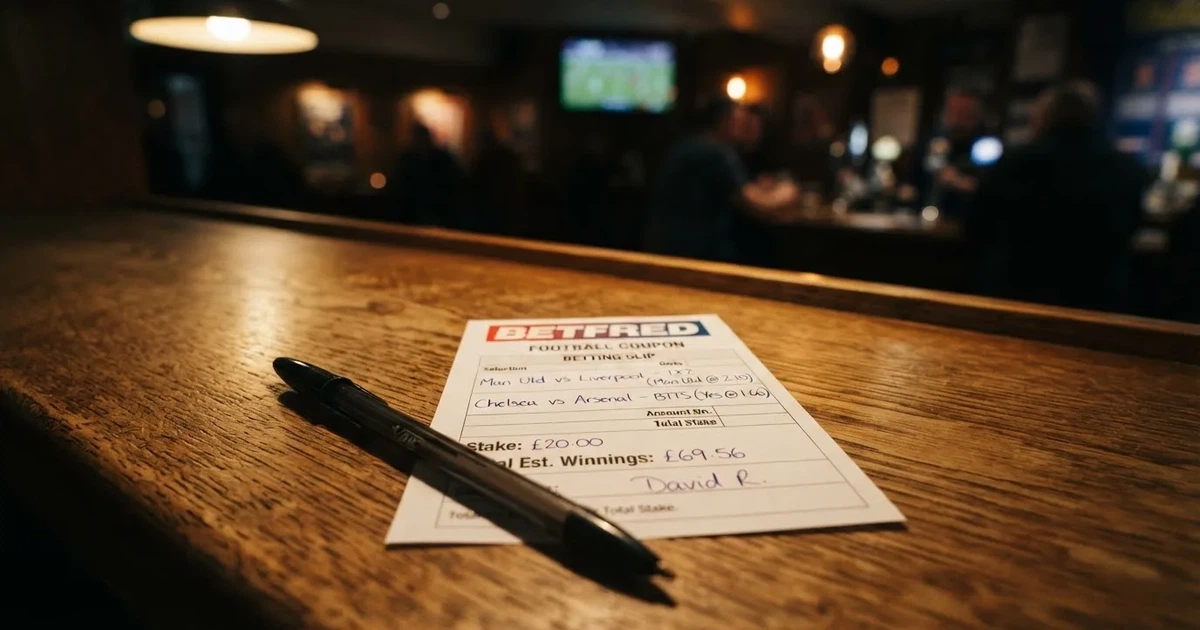
Ten licensed UK bookmakers sit on this list. Each one holds a remote operating licence from the Gambling Commission and each one prices accumulator bets. The differences between them are not whether they offer an acca — they all do — but how they shape it: how many legs the slip will hold, how quickly it settles, whether you can cash out a winner mid-match, and how the welcome offer treats accas specifically.
This page first compares ten licensed bookmakers, because finding the right home for an accumulator is often the main question for a punter. It then explains what an accumulator actually is and how it pays out, because the maths behind an acca is consistent and a punter who understands it spots a generous price faster than one who does not. The legal framework, the safer-gambling tools and the bonus rules that apply to accas follow. The page closes with a strategy section, a breakdown of related bet types, the payout arithmetic and a short FAQ.
The Ten Licensed Bookmakers at a Glance
The comparison below covers the ten brands reviewed in detail further down. Every brand here holds a Gambling Commission remote licence; every brand is reachable from a desktop or a phone in Great Britain; every brand settles accumulator bets. The table puts the licence reference and the licence holder side by side, then captures what each operator’s own terms say about accumulator betting.

| Brand | Gambling Commission licence | Licence holder |
|---|---|---|
| BetUK | 39198 (remote 039198-R-319450-029) | LeoVegas Gaming PLC |
| Midnite | 101839 (remote 101839-R-342850-001) | Midnite Limited |
| Bet Ahoy | 100094 (remote 100094-R-341742-003) | Bet Ahoy Ltd |
| Smarkets | 39173 (remote 039173-R-319366-011) | Smarkets (Malta) Limited (betting intermediary) |
| BetGoodwin | 2927 (remote 002927-R-327985-008) | Goodwin Racing Limited |
| Kalooki Sportsbook | 57730 (remote 057730-R-333396-005) | Kalooki Sportsbook Limited |
| 888sport | 39028 (remote 039028-R-319297-014) | 888 UK Limited |
| Swifty Sports | 58957 (remote 058957-R-334734-006) | Swifty Global (UK) Ltd |
| Spreadex | 8835 (remote 008835-R-104580-022) | Spreadex Limited |
| Betfair | 39439 (remote 039439-R-319330-013) | PPB Counterparty Services Limited |
The ten sit in a market that also contains many other licensed brands — the Commission’s register lists far more than a single comparison can cover — and a single page cannot claim any one of them is “the only” licensed operator. What the table does establish is that each of these names appears on the public register against a licensee holding a remote betting licence for Great Britain. A licence number can be checked directly through the register’s search by business name, trading name, domain or account number, and that check is the only test of who actually holds one.
How each brand treats accumulators in its own terms comes further down in the individual reviews. The rest of this section sets out how to weigh these options before the page moves to the detail that the decision depends on.
BetUK — A Full-Service Acca Site With a Casino Attached
BetUK runs under the LeoVegas Gaming PLC licence, the operator that also publishes the BetMGM UK app. The site combines sports betting with casino games; for accumulator punters the relevant half is the sportsbook. The app is published in the UK App Store as “BetUK Sports Betting & Casino” and it ships with the standard acca tools — a bet builder, in-play markets, cash out — plus a free-bet welcome offer. The sports welcome offer is delivered as several free bets on signing up and wagering a qualifying amount, and the terms state which markets count: free bets exclude virtual sports, esports and non-UK/Ireland horse racing, with a minimum price applying.

That exclusion list matters because acca builders will not work on excluded markets. A punter who wants a virtual-football leg at the bottom of a four-fold finds it blocked. A punter who likes esports accumulators finds the welcome free bets unusable on those legs, though cash stakes are unaffected. The minimum price attached to the free bet is the second constraint to watch: at short prices the qualifying bet cannot be built from very short favourites.
The acca mechanics are the ordinary bookmaker mechanics — a slip with multiple selections, a combined price, cash out available in-play. The LeoVegas licence gives the site a deep enough catalogue for most acca ambitions, and the connection to the BetMGM UK product means BetUK is one of the few GB-licensed brands whose sportsbook and casino sit under one licensee in the way a single account moves between.
The verdict for an accumulator punter: a mainstream sportsbook with the usual acca tools, where the welcome free bets have a short list of excluded categories worth checking before you place a qualifying bet. For punters whose accas are built only on mainstream sports and who want one account covering sports and casino, BetUK is a comfortable pick. For punters whose accas lean on virtuals or esports, the welcome free bets do not fit, even though the underlying sportsbook does.
Midnite — A Modern Acca Site Built Around the Slip Itself
Midnite holds account 101839 and the site’s own homepage opens on in-play events, an acca builder, popular accas and price boosts with maximum-stake limits visible. The sportsbook puts the accumulator at the centre of its product — popular accas is the navigation tile, and the acca builder is the page a returning punter lands on.
The welcome offer is built specifically for accumulator punters. New customers who bet £5 or more on pre-match odds of EVS (2.00) or greater within 14 days of sign-up receive £25 in free bets and 50 free spins. The free bets are valid for 7 days from receipt. The qualifying bet needs only one selection at EVS or longer — a single, not an acca — and the free bets are usable on whatever sportsbook markets the punter wants, including accas. That makes the offer unusually direct: a small qualifying wager unlocks £25 to deploy on the accumulator slip.
The trade-off is the deadline. Fourteen days to place the qualifying bet and seven days to use the free bets is tight against competitors that allow thirty days at each end, and a punter who drifts loses the offer. The free-spins half of the package is for casino, not sports, and is governed by separate casino terms.
The acca product itself is the usual sportsbook acca — combined price, in-play cash out, a bet builder for same-game multis. The price boosts the homepage shows come with maximum-stake caps that change per event, which is normal and worth reading before staking.
The verdict for an accumulator punter: a site that puts the acca first, with a welcome offer designed for it and an in-play product that is the main reason to come back. The deadlines are tighter than the market average, and the offer has to be used in three weeks. For a punter who bets regularly, Midnite is one of the cleaner acca sites on the register. For a punter who bets rarely, the tight window makes the offer harder to clear than its £25 nominal value suggests.
Bet Ahoy — A Newer Brand With a Split Welcome Offer
Bet Ahoy holds account 100094 and is operated by Bet Ahoy Ltd. The brand is newer than the names above it and the welcome offer reflects the smaller scale: “Bet £10 & Get £10 in Free Bets”, split into a £5 sports bet and a £5 acca. The split is the relevant detail. Half the free bet is on the standard single-or-treble market; the other half is specifically an acca token, which means it can only be used on a slip with multiple legs.
A free bet locked to accumulators is worth less than a free bet usable on any market, all else equal, because the punter cannot place it on a banker single. The £5 acca token has to be staked on an acca with the minimum number of legs the terms name, and any winning returns from the token typically do not include the stake. The £5 sports half of the bundle has its own conditions.
The site itself runs the standard sportsbook acca product — a combined price, in-play, cash out, bet builder. Being newer than the established brands, Bet Ahoy’s market depth is shallower on niche sports and outright tournaments, but mainstream football, horse racing and the major US leagues are covered.
The verdict for an accumulator punter: a £10 welcome bundle where half is tied to an acca and the other half is a normal free bet. The brand is licensed and the offer is real, but the constraint on the acca token makes it worth less than a free £10 stake on any market would be. For a punter happy to place a small acca specifically to use the token, Bet Ahoy is a reasonable starting offer. For a punter who wants flexibility, the split is the binding constraint.
Smarkets — A Betting Exchange With Accas From the Back Book
Smarkets is not a traditional sportsbook. It holds a remote betting intermediary licence, account 39173, which is the Commission’s licence category for betting exchanges. An exchange lets punters back a selection (bet it on) or lay it (bet it against), and matches backers against layers rather than setting prices against the house. The Commission’s standard rate is 2% commission on eligible exchange bets, and the welcome offer has been 0% commission for 60 days with a minimum first deposit of £10.
Accumulators on an exchange are built from back bets the punter selects. The combined price is the product of the legs, the same as a sportsbook acca, and the difference is in where the price comes from — other layers, not the house. The exchange does not offer a sportsbook-style acca insurance or acca bonus because there is no house margin on the price; the commission on winning bets is the exchange’s only charge.
The verdict for an accumulator punter: an exchange is a different product from a sportsbook, and Smarkets is the cleanest GB-licensed exchange for accas built from back bets. Prices on major events are competitive because the layers compete with each other, and the 2% commission is a known cost. The trade-off is the absence of sportsbook-style acca features — no cash out in the traditional sense, no bet builder, no price boosts. For a punter who understands back-and-lay and wants the best price on each leg, Smarkets is the right venue. For a punter who wants the convenience of a single sportsbook slip, it is not.
BetGoodwin — A Horse-Racing Brand With an Acca-Friendly Welcome
BetGoodwin holds account 2927 and is operated by Goodwin Racing Limited, which gives the brand a horse-racing heritage visible in the welcome offer and the market depth. The sports welcome offer is “Bet £10 & Get £15 in Free Bets”, split into three £5 tokens: a £5 sports bet, a £5 acca and a £5 Sub-Cover bet. The Sub-Cover token is the unusual piece — it is for a specific bet structure rather than a single market.
A £5 acca token has the same constraint as Bet Ahoy’s: it must be placed on a multi-leg slip, and the usual free-bet terms apply (stake not returned on a win). The £5 Sub-Cover token is a niche product aimed at horse-racing punters who use full-cover bets like a Heinz or a Goliath. The £5 sports token is the flexible half.
The sportsbook product is mainstream — combined-price accas, in-play, cash out where the operator offers it, plus a deeper horse-racing section than the average brand. BetGoodwin’s identity is racing-first, and an acca built from racing selections sits comfortably on the slip.
The verdict for an accumulator punter: a £15 welcome bundle split three ways, where the acca token is one of three. The racing heritage means an acca built from racing legs is at home here, and the Sub-Cover token is a bonus for full-cover bettors. For a racing-led punter who also dabbles in football accas, BetGoodwin is well-suited. For a punter whose accas are pure football, the racing tilt of the brand does not add anything beyond what a mainstream sportsbook offers.
Kalooki Sportsbook — A Small Licensed Brand With a Tight Acca Product
Kalooki Sportsbook is operated by Kalooki Sports Book Ltd, company number 12938274, and holds account 57730. The brand is one of the smaller licensed names on this list and the site focuses on a tight sportsbook product rather than a wide catalogue. It is a GAMSTOP member, which is a regulatory requirement for every licensed remote operator, not a distinguishing feature.
The acca product follows the standard sportsbook shape — a slip that combines selections into one bet, with a combined price and in-play cash out where the operator supports it. The smaller scale of the brand means market depth on niche sports and outright tournaments is shallower than the bigger names, but the major football leagues, horse racing and the popular US sports are covered.
The verdict for an accumulator punter: a licensed sportsbook that does the basics well, with the same GAMSTOP coverage and identity-verification rules as every other brand on this list. For a punter who wants a clean, mainstream acca product from a smaller brand, Kalooki Sportsbook is a sensible pick. The lack of a distinctive acca feature — no specialist acca insurance, no dedicated acca bonus — makes it a steady option rather than a standout.
888sport — An Established Brand With the Full Acca Toolkit
888sport holds account 39028, under 888 UK Limited. The brand has been in the GB market for years and the sportsbook product reflects that maturity: pre-match and in-play betting, Cash Out, Bet Builder, racing streams, BetFinder form tools, a live bet feed and daily boosted odds. The acca toolkit on 888sport is the full set — a bet builder for same-game multis, cash out on accumulators in-play, daily price boosts that apply to popular acca selections.
Boosted odds on an acca leg are worth more than they look, because they raise the combined price multiplicatively — a boost on one leg of a four-fold lifts the whole acca price. The BetFinder form tools are aimed at horse racing and greyhound racing rather than at acca legs specifically, but they support the kind of pre-race research an acca punter does anyway.
The verdict for an accumulator punter: a full-feature sportsbook with the acca toolkit already in place, plus daily boosted odds that lift acca prices and a bet builder for same-game multis. For a punter who wants every acca feature a sportsbook offers in one place, 888sport is well-suited. For a punter who needs only the basics, the depth is no advantage.
Swifty Sports — A Racing-Led Brand With Best Odds Guaranteed
Swifty Sports holds account 58957, under Swifty Global (UK) Ltd. The brand is racing-led and the app description lists Best Odds Guaranteed, Cash Out on markets including horse racing and football, daily price boosts, live streaming and in-play betting. Bet Builder is on the product roadmap — the app description lists it as coming soon, which means an acca punter using the same-game multi feature has to wait for it.
Best Odds Guaranteed is the relevant acca detail. BOG pays the bigger of the price taken and the starting price, and that applies to each racing leg of an acca separately, which raises the combined price. A racing-led acca with BOG on every leg is more generous than the same acca at a brand without BOG.
The verdict for an accumulator punter: a racing-led brand with BOG on racing legs of an acca, plus cash out and price boosts. The bet builder is on the roadmap rather than shipped. For a punter whose accas are built from racing, Swifty Sports is a strong fit. For a same-game-multi acca punter, the missing bet builder is a real gap until it ships.
Spreadex — A Spread-Betting Brand With a Fixed-Odds Acca Product
Spreadex is the unusual entry on this list because the company holds two licences: it is regulated by the Financial Conduct Authority for financial spread betting and by the Gambling Commission for fixed-odds betting, account 8835. Spread-betting losses can exceed deposits — a market feature of spread products, not a flaw — and the FCA regulation covers that half of the business. The fixed-odds half is what an accumulator punter uses.
The new customer offer is £60 in free bets for a £10 fixed-odds bet, with the free bets usable across fixed odds and spread betting. The qualifying bet must be placed within 28 days of opening the account. A £60 welcome bundle on a £10 qualifying bet is generous against the market, and the free bets cover both halves of the Spreadex product.
The verdict for an accumulator punter: a licensed fixed-odds sportsbook attached to a spread-betting firm, with a generous welcome bundle and a 28-day qualifying window. For a punter who wants to combine fixed-odds accas with spread betting under one account, Spreadex is a natural fit. For a punter who wants only a fixed-odds sportsbook, the spread-betting half of the brand adds nothing.
Betfair — A Sportsbook With Live Streaming and an Exchange Behind It
Betfair Sportsbook holds account 39439, under PPB Counterparty Services Limited, which is the same licensee as the Betfair Exchange. The sportsbook offers in-play betting, Bet Builder, free live streaming of events such as UK and Irish horse racing and football within the app, and a 90 Minute Payout market — a market that pays out on the 90-minute result regardless of extra time or penalties.
The 90 Minute Payout market is unusual and relevant to an acca punter: a leg on a cup match settles on the 90-minute result rather than the full-time outcome, which removes the extra-time and penalty uncertainty. An acca that includes such a leg pays out if the team is ahead after 90 minutes, even if the match goes to extra time.
The verdict for an accumulator punter: a sportsbook with live streaming, a bet builder, in-play and a 90 Minute Payout market that simplifies cup-match legs. The Betfair Exchange sits behind the same licensee for punters who want to lay selections. For a punter whose accas include cup football, Betfair’s 90 Minute Payout market removes a layer of uncertainty that other sportsbooks leave in. For a punter who bets only on league football, the feature is no advantage.
What an Accumulator Bet Actually Is
An accumulator is a single bet that links two or more individual wagers. Two selections is a double; three is a treble; four or more is an accumulator in the strict sense, though the term “acca” is used loosely for anything from a double upwards. The defining feature is that every leg has to win for the bet to win, and a single losing leg loses the whole bet. A tie on one leg — known as a push in American usage — removes that leg from the slip and the payout is recalculated on the remaining legs.
The maths is straightforward: the decimal odds of each selection multiply into one combined price. A four-fold at 2.00, 2.00, 2.00 and 2.00 has a combined price of 16.00. A £10 stake returns £160 on a win (£150 profit plus the £10 stake), and returns nothing on any losing leg. That multiplicative structure is why accas attract attention: a small stake on a long combined price can pay a large sum, and the risk is that even one losing leg wipes the stake out.
In fixed-odds accumulators the payout odds are the product of the odds of each selection, which is why decimal odds suit them: 2.00 × 2.00 × 2.00 × 2.00 = 16.00 in decimal form is the same calculation that 1/1 × 1/1 × 1/1 × 1/1 in fractional form makes harder to read. A punter who reads fractional prices can convert any of them to decimal with a ÷ b + 1, where a/b is the fractional price — 5/1 becomes 6.00, 11/4 becomes 3.75, evens (1/1) becomes 2.00.
Accumulators are also called parlays, accas, combo bets or multis. The terms mean the same thing on a UK sportsbook.
How Football Accumulators Work
Football is the sport accas are most often built on. A typical football acca combines several match-outcome selections — home win, draw, away win — into one slip. The price of each leg is the price the operator offers for that result, the combined price is the product of all legs, and the bet wins only if every leg wins. Draws on a single leg are settled on the 90-minute result, which is what the Betfair 90 Minute Payout market captures automatically.
A variant is the bet builder or same-game multi, where several selections on one match — result, total goals, first goalscorer, both teams to score — are combined into one bet on a single event. The combined price is the product of the legs, and the bet wins only if every leg wins. The risk on a same-game multi is correlation between legs: both teams to score and over 2.5 goals are not independent outcomes, and bookmakers price that correlation into the combined price.
A second variant is the each-way accumulator, where the stake is doubled — half on the win portion, half on the place portion — and the place terms depend on the number of selections and the type of event. Each-way is more common on horse racing than on football, where place terms are unusual.
How Accas Are Settled
A winning acca pays out at the combined price times the stake, with the stake returned alongside the profit. A losing acca pays out nothing — the stake is lost. A leg that voids — a match postponed, a selection declared void under the operator’s rules — is removed from the slip and the payout is recalculated. A four-fold with one void leg becomes a treble.
Cash out changes the settlement. A bookmaker offering cash out on accumulators lets the punter settle the bet before every leg has been completed, at a price the bookmaker offers. The cash-out price reflects the probability of the remaining legs winning and is below the full payout because the bookmaker keeps a margin. A punter who cashes out a four-fold after three legs have won accepts a lower return in exchange for locking in a profit before the final leg runs to book.
In-play accumulators are settled leg by leg as matches finish. A four-fold with legs at 2pm, 3pm, 5pm and 8pm settles the first three in turn and the last at the end of the evening. A cash out before the last leg locks in a return.
The Family Accumulators Sit In
An accumulator is one of several multi-leg bet structures. The family is known as full cover bets when they cover most combinations of the selections, and as system bets when they cover a chosen number.
A Trixie covers 3 selections in 4 bets (three doubles and a treble). A Patent is the same 3 selections in 7 bets, with the three singles added. A Yankee covers 4 selections in 11 bets (six doubles, four trebles and a four-fold). A Lucky 15 is a Yankee with the four singles added — 15 bets in total. A Super Yankee, also called a Canadian, covers 5 selections in 26 bets. A Heinz covers 6 selections in 57 bets. A Super Heinz covers 7 selections in 120 bets. A Goliath covers 8 selections in 247 bets.
The total stake on any of these is the unit stake multiplied by the number of bets: a £1 Trixie costs £4, a £1 Lucky 15 costs £15, a £1 Goliath costs £247. A winning return on any of them can be large because each combination is itself an accumulator at the appropriate number of legs.
How an Acca Pays Out — Worked Example
Take a four-fold at illustrative decimal prices of 1.50, 2.00, 2.50 and 3.00, with a £10 stake. The combined price is 1.50 × 2.00 × 2.50 × 3.00 = 22.50. A winning bet returns £10 × 22.50 = £225, which is £215 profit plus the £10 stake. Any losing leg returns nothing.
Now take a Trixie on three selections at 2.00, 2.50 and 3.00, with a £2 unit stake. The Trixie is 4 bets (three doubles and a treble), so the total stake is £2 × 4 = £8. The doubles return 2.00 × 2.50 = 5.00, 2.00 × 3.00 = 6.00, and 2.50 × 3.00 = 7.50, each at £2 stake; the treble returns 2.00 × 2.50 × 3.00 = 15.00 at £2 stake. The maximum return is on the treble winning alongside every double: £2 × 5.00 + £2 × 6.00 + £2 × 7.50 + £2 × 15.00 = £10 + £12 + £15 + £30 = £67 stake returned, which is £67 profit on an £8 stake. A single losing leg still returns on the doubles and the treble that do not involve that leg — the Trixie’s insurance is that one losing selection does not wipe the whole stake.
The Trixie’s £2 unit stake on each of the 4 bets is what makes the total stake £8 rather than £2. The headline “£2 Trixie” obscures the real cost, and a punter reading the small print sees the 4-bet structure and the £8 total.
These are illustrative prices for the arithmetic; the prices a bookmaker offers on a real event are different and carry a margin.
The Margin Hiding Inside Every Leg
Every decimal price carries a margin — the slice of every unit staked that the bookmaker keeps on average. The margin is easiest to see in a two-outcome market like a tennis match. If the prices on player A and player B are 1.90 and 1.90, the implied probabilities are 1 ÷ 1.90 = 52.6% each, summing to 105.3%. The 5.3% above 100% is the bookmaker’s margin.
The margin on a three-outcome market like 1X2 (home, draw, away) is calculated the same way. Prices of 2.50, 3.40 and 2.80 imply probabilities of 40%, 29.4% and 35.7%, summing to 105.1%. The margin is 5.1%.
The margin on an accumulator compounds across the legs. A four-fold at margins of 5.1%, 5.1%, 5.1% and 5.1% on each leg has a combined margin of around 19% — the bookmaker’s expected slice of every pound staked on that acca. The combined price of 16.00 on the four evens legs above implies a fair price of 16.00 on each leg with no margin, but the real bookmaker’s price is lower because each leg has a margin. A punter who compares prices across bookmakers for the same selections sees the margin in action.
Legal and Regulatory Frame
The Gambling Commission (UKGC), a non-departmental public body sponsored by the Department for Culture, Media and Sport, licenses the whole commercial market under the Gambling Act 2005, which covers Great Britain — England, Scotland and Wales. Northern Ireland sits outside the Act under its own older law, so a Great Britain licence does not regulate Northern Ireland. A bookmaker serving customers in Great Britain needs a Gambling Commission licence wherever it is based, and the Commission’s public register is the whole test of who holds one.
Since the Gambling (Licensing and Advertising) Act 2014 an operator whose remote facilities are used in Great Britain needs a Commission licence at the point of consumption, and a Curaçao, Maltese or Gibraltar licence is not a substitute. There is no state monopoly and no cap on the number of licences, which is why the Commission’s register lists many more licensed brands than any single comparison can cover.
Licence types relevant to accumulators are remote general betting standard (real events), the standard sportsbook licence; remote general betting standard (virtual events), for virtuals; remote general betting limited, a narrower category; remote pool betting, for pool products on horse and dog racing; and remote betting intermediary, for betting exchanges. Each of the ten brands above holds one of these categories.
The minimum age for betting is 18, and name, address and date of birth are verified before a customer can deposit or gamble, including with a free bet or bonus. That check has applied since 7 May 2019. A punter who cannot pass verification cannot deposit, which is why licensed sites never offer anonymous play.
What may be bet on is not a closed list. An operator holds a licence for a category and offers markets under its own rules and the Licence Conditions and Codes of Practice. In-play betting is offered by GB bookmakers under those licence conditions; it is not “unrestricted” as a legal conclusion. Esports are treated like any other event; virtual events are a separate licence category; bets on politics, TV shows and novelty markets are offered by some GB bookmakers with no statutory prohibition. Spread betting that is not a financial product is inside General Betting Duty.
Financial spread betting is regulated by the Financial Conduct Authority, not the Commission. Spreadex is the dual-licensed example on this list.
Offshore, a GB licence is compulsory at the point of consumption. Providing gambling facilities in Great Britain without the licence the Act requires is an offence under section 33 of the Gambling Act 2005 — aimed at the operator, not the customer. The customer who bets on an unlicensed site loses the British protections: no GAMSTOP coverage, no Commission complaints route, no approved dispute-resolution body, no British consumer redress if funds are withheld, and no obligation on the operator to honour the 10x bonus cap or the £150 vulnerability check. Enforcement is disruption — cease-and-desist notices, search-engine referrals, work with registrars, hosts and payment providers — not blocking. The honest framing is that licensed sites offer British protections but also enforce identity verification before the first bet, and unlicensed sites offer neither the protections nor the verification.
Bonuses, Free Bets and the Promotion Rules That Apply
Promotion rules in force since 19 January 2026 cap wagering requirements on bonuses at 10x — a £10 bonus at 50x would need £500 of qualifying bets, but the cap limits the requirement to £100. Mixed-product promotions, where an offer requires gambling on two or more product types — an offer that requires betting on football to get free spins, for example — are banned. The cap applies to bonuses with a wagering condition; whether it applies to free bets with no wagering condition, and any cap on the money value of a bonus, are not established in the Commission’s published guidance.
The welcome offers on this list are described above each review. Each is a free-bet bundle tied to a qualifying bet, and each has its own terms — minimum odds, qualifying period, free-bet validity, eligible markets. The headline number (“£30 in free bets”) is the nominal value; what matters is whether the free bets are usable on accas, on singles only, on specific markets, and whether the stake is returned on a win.
The common shape is a small qualifying bet that unlocks a larger free-bet bundle, with the bundle split into tokens usable on different bet types. BetUK’s free bets exclude virtual sports, esports and non-UK/Ireland horse racing with minimum odds applying. Midnite’s welcome offer is £25 in free bets plus 50 free spins for a £5+ qualifying bet at EVS (2.00) or longer, with a 14-day qualifying window and 7-day free-bet validity. Bet Ahoy splits £10 into a £5 sports bet and a £5 acca. BetGoodwin splits £15 into a £5 sports bet, a £5 acca and a £5 Sub-Cover bet. Spreadex offers £60 in free bets for a £10 fixed-odds qualifying bet, usable across fixed odds and spread betting, with a 28-day qualifying window.
“Risk-free” bets are usually free bets — the stake is not returned on a win, and the offer is a token, not a refund in money. “Best odds guaranteed” applies to horse and greyhound racing and pays the bigger of the price taken and the starting price. “Acca insurance” refunds a stake as a free bet if one leg lets down the slip. Each offer type keeps its own structure; a punter reading the small print sees what the offer is worth.
Advertising is not licensed by the Commission. It runs through the CAP Code (non-broadcast) and BCAP Code (broadcast), enforced by the ASA, alongside the LCCP marketing conditions. CAP Code section 16 requires marketing to be socially responsible, not of strong appeal to under-18s, and without featuring anyone who is or seems to be under 25 gambling or playing a significant role. The “whistle-to-whistle” rule is an industry code: since 1 August 2019 betting advertisements are not shown on TV from five minutes before a live sporting event to five minutes after it, before the 9pm watershed, with horse and greyhound racing excluded. The Premier League clubs’ withdrawal of gambling sponsorship from shirt fronts (from 2026/27, with sleeves and hoardings remaining) is voluntary, not law.
Tax falls on the operator. The player pays no tax on betting winnings in Great Britain — general information, not tax advice; a professional gambler should ask HMRC or an adviser. General Betting Duty is the operator’s tax on gross profits, currently 15%, with a new remote betting rate of 25% from 1 April 2027 within it; remote bets on UK horse racing, self-service betting terminal bets, pool betting and in-person betting stay at 15%. The Commission’s statutory levy is a separate charge, not a tax.
Safer Gambling at Licensed UK Bookmakers
GAMSTOP is the national multi-operator online self-exclusion scheme and a mandatory licence condition for online operators since 31 March 2020. Periods are six months, one year, five years, or five years with auto-renewal; after the minimum period, the exclusion stays in place for a further seven years unless the customer asks GAMSTOP to remove it. GAMSTOP covers online sites and apps; betting shops use a separate service. Every GB-licensed online operator — every name on this list — takes part.
A financial vulnerability check (LCCP condition 3.4.4, in force since 30 August 2024) applies to licensed remote betting when a customer’s deposits minus withdrawals exceed £150 in a rolling 30 days, since 28 February 2025. The check is a public-record check (for example bankruptcy or county court judgments), not an income check and not a credit reference check. Financial risk assessments — the affordability checks of the press coverage — have been announced in a staged plan, with no start date as of the Commission’s published statement; the honest framing is “announced, staged, no start date”, not “in force”.
Deposit limits are a customer’s choice. Operators must offer a self-set gross deposit limit under RTS 12; the first changes have applied since 31 October 2025, a second phase was postponed to 30 September 2026, and whether it is live is not established. There is no state-set deposit or loss ceiling for betting. A punter who wants to cap their own deposits sets the limit at the operator.
Help is available outside the operators. GamCare runs the National Gambling Helpline. GambleAware funds treatment and support. The NHS runs gambling clinics. Gamblers Anonymous runs peer-support meetings. These are the routes outside the operator.
The Mobile and App Picture
Every brand on this list ships a mobile app or a mobile-optimised site. The accumulator product on mobile is the same as on desktop: a slip with multiple selections, a combined price, in-play cash out where supported. The bet builder for same-game multis is built into the mobile slip on the major brands — 888sport, Betfair, Midnite — and a punter who uses the mobile product gets the same acca tools as the desktop product.
The screen size matters for one specific feature: same-game multis on a small screen need a careful tap on each leg, and a misclick changes the slip. A punter who builds a six-leg same-game multi on a phone should review the slip before staking.
Touchscreen betting also changes how cash out works. In-play cash out is one tap on a phone, and the punter locks in the price offered at that moment. On a fast-moving event the price can change between the offer and the tap, and the slip settles at the price the operator offers when the cash out is confirmed.
Live streaming on mobile is offered by the brands that ship it — Betfair’s UK and Irish racing and football streams, 888sport’s racing streams — within the app, with a funded account or a qualifying bet typically required to access a stream.
Predictions, Tips and the Honest Limits of Both
Accumulators attract tipsters because a tipster who names a winning accumulator sells more than a tipster who names a winning single. The marketing logic is plain: a 100/1 winner is a story; a 5/4 winner is not. The arithmetic is less kind. A four-fold at 2.00, 2.00, 2.00 and 2.00 has a combined price of 16.00, which implies a 6.25% probability of all four legs winning. A bookmaker’s margin lifts the required probability higher than that, because each leg carries a margin of around 5%. The honest probability of a four-fold winning, given fair prices on each leg, is the product of the leg probabilities — 50% × 50% × 50% × 50% = 6.25%. With margin, the implied probability is higher and the real probability of winning is unchanged.
Tipsters offering “banker” accas, “sure” accas or named systems that win are selling a story the arithmetic cannot support. A tipster who names a winning acca once has had one outcome in a long sequence of attempts, and the past win does not predict the next one. Football accas are settled on the 90-minute result, with the extra-time and penalty uncertainty of cup matches removed, and the surface simplicity hides the variance of an acca that needs every leg to win.
The honest limits of acca tips: a tipster is one source among several, the past tip record is the only check on a tipster’s skill, and the product of leg probabilities is the ceiling on what an acca pays relative to its risk. A punter who reads tips should weight the source, weight the price and treat the combined price as the figure that determines value.
Bet Types and the Wider Family
The acca is one member of a wider family of multi-leg bets. Singles are one selection; doubles are two; trebles are three; accumulators are four or more in the strict sense. Each-way doubles and trebles double the stake and pay on the place portion as well as the win portion, with place terms varying by race and operator.
Bet builders and same-game multis are accas on a single event, with several selections from the same match combined into one bet. The combined price is the product of the legs, and the bet wins only if every leg wins. Correlation between legs is priced into the book.
Full cover bets cover most combinations of a set of selections: Trixie on 3 selections (4 bets), Patent on 3 (7), Yankee on 4 (11), Lucky 15 on 4 (15), Super Yankee/Canadian on 5 (26), Heinz on 6 (57), Super Heinz on 7 (120), Goliath on 8 (247). The unit stake multiplied by the number of bets is the total stake.
System bets cover a chosen number from a set: a Lucky 31 on 5 selections covers 31 bets, a Lucky 63 on 6 selections covers 63 bets. The unit stake multiplied by the number of bets is the total stake.
Betting exchanges offer back and lay on each selection, and an accumulator on an exchange is a series of back bets whose combined price is the product of the legs. Smarkets is the GB-licensed exchange on this list.
Spread betting is a different product, regulated by the FCA on the financial side and by the Commission on the fixed-odds side, where losses can exceed deposits. Spreadex is the dual-licensed example.
Working Out the Return on a Bet
A winning bet returns the stake times the decimal odds. A £10 stake at 2.50 returns £25, which is £15 profit plus the £10 stake. A £10 stake at 1.50 returns £15, which is £5 profit plus the £10 stake. A £10 stake at 6.00 returns £60, which is £50 profit plus the £10 stake. The relationship is linear in the stake and the odds.
A combination bet multiplies the odds of the legs into one combined price and applies the stake to that combined price. A £10 stake on four legs at 2.00, 2.50, 3.00 and 4.00 returns £10 × 60.00 = £600 if every leg wins. Any losing leg returns nothing.
The relationship between stake, odds and return is the same on every licensed UK sportsbook. The differences are in the prices offered and the products built on top — bet builder, cash out, price boosts.
The Payout Calculation for an Accumulator
The combined price on an accumulator is the product of the decimal odds of each leg. A stake of £10 on an accumulator at illustrative prices of 1.50, 2.00 and 2.50 (a treble) returns £10 × 7.50 = £75 on a win, with every leg winning. A stake of £2 per line on a Trixie at the same three prices, with the £2 multiplied by the 4 bets of the Trixie for a total stake of £8, returns up to £2 × 15.00 = £30 on the treble winning alongside the doubles.
The illustration is the arithmetic, not a quoted price. Real bookmaker prices on real events carry a margin, and the combined price the punter sees at the slip is the product of the legs the operator offers. The calculation above is the structure of the return; the inputs are the punter’s selections and the operator’s prices.
For a stake of £10 on a four-fold at illustrative prices of 1.50, 2.00, 2.50 and 3.00, the combined price is 22.50 and the win returns £225. The same stake on a five-fold at 1.50, 1.50, 2.00, 2.50 and 3.00 returns £10 × 33.75 = £337.50 on a win. The product of the leg odds is the figure that determines the return, and the stake is the multiplier on that figure.
Where the Money Actually Goes
A stake on an accumulator either returns the combined price times the stake or returns nothing. The bookmaker’s margin on the accumulator is the product of the leg margins, which compounds: four legs at 5% margin each produce a combined margin of roughly 1 − (0.95)^4 = 18.5%. A punter staking £10 on that four-fold is, on average, losing £1.85 of that stake to the bookmaker before any leg runs.
A punter who compares prices across bookmakers for the same selection sees the margin in action: the best price on player A in a tennis match is the lowest-margin one, and a four-fold built from best-price legs has a lower combined margin than the same four-fold at average prices. The compounding effect is why price-shopping on each leg matters more than price-shopping on the combined price.
Each bookmaker’s acca product — cash out, bet builder, price boosts — is built on top of the prices the bookmaker offers. A price boost on one leg lifts the combined price multiplicatively. An acca insurance offer refunds a stake as a free bet if one leg loses, which softens the all-or-nothing risk at a cost the operator builds into the terms.
How to Check a Bookmaker’s Licence
The Commission’s public register is searchable by business name, trading name, domain or account number. A punter who wants to check a bookmaker enters one of those into the register and confirms the licence category, the licence holder and the trading names covered. The register is the whole test of who holds a licence, and a licence number quoted by the bookmaker is verifiable against the register directly.
Every brand on this list holds a remote betting licence for Great Britain. The licence numbers and licence holders are in the comparison table at the top and in each individual review. A punter who wants to verify any of them enters the account number — 39198, 101839, 100094, 39173, 2927, 57730, 39028, 58957, 8835, 39439 — into the register’s search.
Licensed operators use .com as well as .co.uk, so the domain proves nothing on its own. A domain that ends in .com or .co.uk and matches the trading name on the register is licensed; a domain that does not match is not necessarily unlicensed, but is worth checking before depositing.
The licence categories differ. Most of the brands above hold remote general betting standard (real events). Smarkets holds remote betting intermediary, the exchange category. Each licence category permits a defined range of products, and the register’s licence detail page lists the categories against each account number.
Frequently Asked Questions
What is an accumulator bet?
An accumulator is a single bet that links two or more selections into one combined wager, where every leg has to win for the bet to win and a single losing leg loses the whole stake. The combined price is the product of the decimal odds of each leg, which is why the combined price rises faster than the number of legs. A four-fold at evens (2.00) on every leg has a combined price of 16.00, and a £10 stake returns £160 on a win.
How do football accumulator bets work?
Football accumulators combine several match-outcome selections — home win, draw, away win — into one slip. Each leg’s price multiplies into a combined price, and the total bet succeeds only if all selections are successful. A draw on a single leg is settled on the 90-minute result, and a void leg is removed and the payout recalculated. Bet builders and same-game multis work the same way on a single match, with several selections from the same event combined into one bet.
What is an accumulator bet in betting terms?
In betting terminology an accumulator is a multi-leg bet where every leg must win. Two selections make a double, three a treble, and four or more an accumulator. The term “acca” is loose UK usage for anything from a double up. The combined odds are the product of each leg’s decimal odds, and a winning bet returns the combined odds times the stake, with the stake included.
How can it be checked that a bookmaker holds a Gambling Commission licence?
The Commission’s public register is searchable by business name, trading name, domain or account number. Entering any of those shows the licence categories, the licence holder and the trading names covered. The register is the test of who holds a licence; a licence number quoted by the bookmaker is verifiable there directly. A punter who wants to verify a brand enters the account number into the register and checks the categories against the products the brand offers.
How is the return on a bet worked out from the stake and the odds?
The return is the stake multiplied by the decimal odds. A £10 stake at 2.50 returns £25, which is £15 profit plus the £10 stake. On an accumulator the combined price is the product of the leg odds, and the return is the stake multiplied by that combined price. The relationship is the same on every licensed UK sportsbook, and the differences between bookmakers are in the prices offered and the products built on top — cash out, bet builder, price boosts.
What is the bookmaker’s margin and how can it be seen in the odds?
The margin is the slice of every unit staked that the bookmaker keeps on average, calculated as 1 minus the payout share. The payout share is the inverse of the sum of the implied probabilities, where each implied probability is 1 divided by the decimal odds. In a two-outcome market at 1.90 and 1.90 the implied probabilities sum to 105.26%, creating an overround of 5.26% and a margin of 5.0%. The margin compounds across accumulator legs, so four legs at 5% margin each produce a combined margin of roughly 18.5%.
Bet types & in-play – Grey Hound
Content created by the «Grey Hound» team
