
What is a Goliath bet and what does it actually cost to play
 Available in US
The Goliath is the largest of the standard full-cover bets that the British high-street bookmaker has carried on the betting slip for decades. It bundles 247 separate bets across eight selections — every double, every treble, every four-fold, every five-fold, every six-fold, every seven-fold and the single eight-fold accumulator — and it settles each of them as its own little wager. A punter who picks eight football teams and ticks “Goliath” at £1 a line pays £247 up front and waits for the coupon to resolve. That single number — 247 — is the whole reason the bet exists and the whole reason a punter thinks twice.
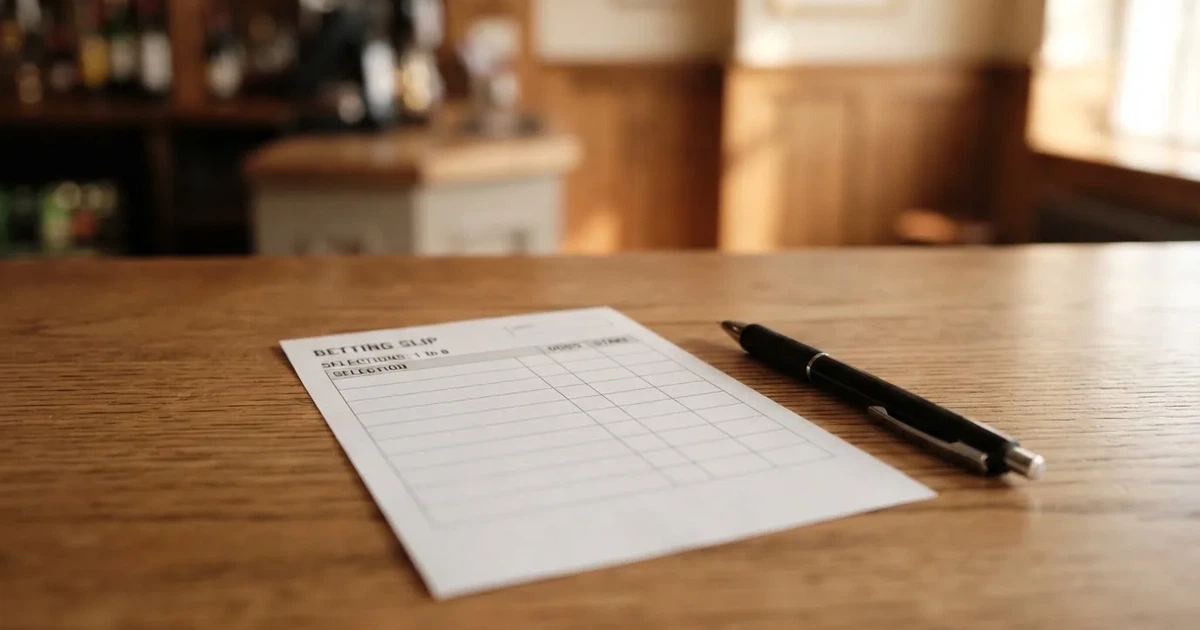
This page is written for the reader who has heard of the Goliath but has never quite seen what one does. It walks through the construction line by line, shows how each one pays, lays out the British regulatory frame that decides who may offer it and who may take it, and closes with the ten licensed bookmakers on the Gambling Commission’s public register whose site names a Goliath-style multiple-bet product. The argument runs from the consequence outward: stake first, return second, the book’s margin as the tax that sits inside every price, and only then the brands.
Data is current as of 27 October 2026 and was checked against the Gambling Commission’s public register and each operator’s own published terms.
Goliath bet predictions and strategy: why so few betting systems actually fit
A Goliath is not a forecasting tool. It is a staking structure: the punter’s job is to pick eight selections they believe will win, and the bet then covers every possible combination of those eight selections in multiples of two or more. The forecasting work — spotting which teams are likely to win, which horse is well handicapped, which tennis player is fit — is the same work a single accumulator asks for, multiplied by eight and paid for across 247 lines instead of one. Strategy is therefore not “how do I pick eight winners” but “how do I decide whether this structure is worth the extra cost over a plain eight-fold accumulator, and over a smaller full-cover bet such as a Heinz on six.”
Three calculations matter. The first is the cost of entry: with a unit stake of £1 on every line, the punter hands over £247 before the first match kicks off. The second is the chance that any combination of lines returns something: with eight selections, every one of which must win for the eight-fold accumulator to land, the chance that nothing on the coupon pays is the chance every selection loses — and a Goliath pays on a subset too. The third is the price the bookmaker quotes, which is the published odds on each of the eight legs: the larger those numbers, the larger the eventual return on whichever lines hit, and the larger the margin the bookmaker has loaded into each price.
A common tipster pitch is to pick short-priced favourites and stack them in a Goliath because “more lines means more chances to win.” That is half-true and misleading in the half that matters. More lines do mean more paths to a return, but every line pays only the price the bookmaker has set, and short-priced favourites return very little per pound staked — so the punter pays £247 for the privilege of winning back £20 on a six-line hit where a single accumulator on the same six selections, at £1 stake, would have cost £1 and paid out the same. The structure is a defence against the awkward middle case where four, five or six of the eight legs win, and the punter cannot predict which ones. It is expensive insurance, and the question is whether the insurance premium is worth what the policy pays out.
A second tipster pitch is to “use a Goliath to lock in a profit on an existing position,” as if a Goliath on its own could lock anything in. It cannot: a Goliath is an open bet placed from scratch, and the only way to lock a profit is to lay the same selection off at a betting exchange or take a cash-out at the existing bookmaker. A Goliath layered on top of an existing position is just two bets.
The honest framing is this. A Goliath rewards punting discipline — selecting eight outcomes the punter has a real read on, not eight names they recognise from the back pages — and punting bankroll: 247 unit stakes, paid in full whether one leg or all eight win. A punter with a £500 bankroll who fires a Goliath at £1 a line spends half the bank on one bet; a punter with a £50 bankroll cannot place the bet at all. That is the strategy section’s first and last word: the bet fits a punter who has eight reads, the bank to stake them and the patience to watch the coupon settle over hours or days.
Goliath bet types and odds: how the coupon is built and how it pays
A Goliath is one entry in a wider family of full-cover bets, and understanding it means seeing where it sits.

What is a full cover bet
A full cover bet is a single betting instruction that the bookmaker breaks into many smaller bets automatically. The punter picks a number of selections and asks for “every combination of multiples of two or more”; the bookmaker fills the rest. A Trixie on three selections is four bets; a Yankee on four is eleven; a Canadian (also called a Super Yankee) on five is twenty-six; a Heinz on six is fifty-seven; a Super Heinz on seven is one hundred and twenty; a Goliath on eight is two hundred and forty-seven. Each name is a fixed recipe.
The defining feature is that the punter does not write down 247 bets. The punter writes down eight selections and one structure. The betslip does the rest. The punter’s only stake decision is “how much per line,” and the total stake is that unit multiplied by the count of lines.
Goliath structure: what the 247 lines actually are
The Goliath breaks the eight selections into every combination of two, three, four, five, six, seven and all eight. The recipe is fixed:
- Doubles (every pair): 28
- Trebles (every triple): 56
- Four-folds: 70
- Five-folds: 56
- Six-folds: 28
- Seven-folds: 8
- Eight-fold accumulator: 1
- Total: 247
A single line costs the unit stake; the total stake is 247 times that. There are no singles in a Goliath, and there is no each-way version of a Goliath on a horse race the way there is on a Lucky 15. A punter who wants the consolation of a single win on each selection should pick a Lucky 63 instead — but that bet costs 63 times the unit stake and gives back a single on each winner, which is sometimes more sensible for short-priced favourites and is sometimes worse.
Sibling bets: how a Goliath compares to a Heinz and a Canadian
A Canadian (Super Yankee) on five selections is 10 doubles, 10 trebles, 5 four-folds and 1 five-fold — 26 bets. A Heinz on six is 15 doubles, 20 trebles, 15 four-folds, 6 five-folds and 1 six-fold — 57 bets. A Goliath on eight has, as set out above, 247 bets across multiples from two to eight. The structure is the same idea at three different sizes, and the price difference between them is the cost of the extra combinations.
For a punter weighing which size to play, the trade-off is mechanical. With five selections priced at 2.00 each, a Canadian at £1 a line costs £26. With six selections at the same price, a Heinz at £1 a line costs £57. With eight selections, a Goliath at £1 a line costs £247. The punter is buying coverage in the five- to eight-leg combinations: a Canadian pays nothing if only four of the five selections win, because a Canadian has no four-fold-plus structure for a five-selection coupon; a Heinz pays nothing if only five of the six selections win, because the coupon ends at the six-fold; a Goliath pays nothing if only seven of the eight selections win if the punter picked seven-fold-only pricing — but a standard Goliath pays the eight-fold only if all eight win and pays seven-folds if seven of seven win. The boundary is the lesson: the structure of the bet decides what the punter gets paid for.
Settling a Goliath: how each line resolves
A Goliath settles line by line, exactly the way a single bet would. The bookmaker takes each of the 247 bets, applies its result to that bet, and pays out at the price the bet was struck. There is no averaging, no pooling across lines, no “Goliath bonus” paid for length. A bet that wins pays the price on the slip; a bet that loses pays nothing.
In practice this means the coupon settles in stages. As the eight matches, races or events resolve, the bookmaker adds up which lines have won so far and which have been killed by a losing leg. A losing leg kills every line that includes it: if the second selection loses, the punter forfeits every double, treble and larger multiple that contains it — which is the majority of the coupon. A late selection that loses when the other seven have already won is the cruelest result, because the punter was seven legs into an eight-fold and walks away with only the seven-folds that the dead leg did not contaminate.
The settlement order matters for cash-out. Most British bookmakers now offer cash-out on the betslip: a partial return offered before the last leg is decided. The cash-out price is the bookmaker’s estimate of the present value of the remaining lines, and that estimate shrinks as legs lose. A punter who started with a £247 stake and sees four legs win and four lose walks away with the wins on the four combinations that did not include any of the four losers — usually a small handful of doubles, often nothing if the four losers straddle most of the lines. The punter who sees seven legs win has a much larger live cash-out value, because the eight seven-folds and the dead eight-fold have largely survived.
How odds work: price and the margin inside it
Every price a bookmaker quotes carries a margin — the overround — which is the slice of every pound staked that the bookmaker keeps on average. The mechanics are easier than the word. If a fair coin toss paid evens (2.00) on either side, the bookmaker would keep nothing. A real bookmaker quotes 1.91 on heads and 1.91 on tails: 1 ÷ (1/1.91 + 1/1.91) = 1 ÷ 1.0471 = 0.955, so the payout share is 95.5% and the bookmaker’s margin is 4.5%. That 4.5% is the tax on every pound the punter risks, before the punter has even thought about who will win.
On a Goliath, the margin compounds. Each of the eight legs carries its own margin, and the eight-fold accumulator carries the multiplied margin of all eight — so a Goliath at £1 a line is 248 bets at roughly 4–6% margin each, and the eight-fold alone is closer to a 35–45% margin when the prices are short. That is not a flaw of the bet; it is a feature of compound multiples, and the punter pays it on every full-cover bet he places. The plain consequence: the more lines, the more times the punter pays the margin, and a Goliath pays it 247 times.
The standard British way to read a price is fractional. Three-to-one (3/1) means a £1 stake returns £4 — £3 profit plus the £1 stake back. Two-to-one-on (2/1) is a shorter odds-on price meaning a £1 stake returns £1.50. Decimal odds state the total return including the stake: 4.00 on 3/1, 1.50 on 2/1, 2.00 on evens. Every British bookmaker publishes both forms on the same slip, and every price in the rest of this article uses the decimal form for the column and the maths that follows. The conversion is a/b → a ÷ b + 1.
Illustrative payout at the £1 a line level
The arithmetic of a Goliath is the same arithmetic as any other multiple bet, multiplied 247 times. Take three illustrative selections — a short price of 1.50 (1/2), an even price of 2.00 (evens), and a longer price of 2.50 (6/4) — and use them as the legs of a treble. The combined price is 1.50 × 2.00 × 2.50 = 7.50. At £10 on the treble alone, the punter stakes £10 and the return on a win is £75 (£10 × 7.50), giving a profit of £65.
A full-cover bet on three selections that produced a similar treble alongside the three doubles and the three singles would be a Patent, at seven bets. At £1 a line on the Patent, the stake is £7; the treble component alone would return £7.50 on a win. The difference between the Patent’s £7 stake and the treble’s £10 stake is the cost of the doubles and the singles — the cover the punter paid for.
A Goliath at £1 a line, on eight selections at the same illustrative prices (1.50, 1.50, 2.00, 2.00, 2.50, 2.50, 1.50, 2.00), costs £247 and combines them in every way. The eight-fold alone has a combined price of 67.50, and a winning eight-fold returns £67.50 from its £1 stake. The seven-folds, six-folds and so on return smaller amounts. The total return on a perfect 8-from-8 is the sum of all 247 lines, each settled at its own combined price. The punter walks away with the largest payout the coupon can produce; the punter who gets 7 from 8 walks away with the seven-fold lines that did not include the dead leg, plus the six-folds, five-folds and so on that did not include it. The exact figure depends on which leg lost — the calculation is the coupon’s own work, and every online bookmaker now produces the per-line number on the betslip.
The point of the arithmetic is not to crown a single figure but to show the shape of the payout: a perfect 8-from-8 returns orders of magnitude more than a 6-from-8, and the stake of £247 is recovered many times over only on a near-perfect coupon. The bet is a long-tail structure that punishes losing legs heavily and rewards a clean sweep generously.
The ten licensed UK bookmakers that take a Goliath
The brands below all hold a remote operating licence from the Gambling Commission for Great Britain and offer a multiple-bet product that includes the full-cover family — Trixie, Patent, Yankee, Canadian, Heinz, Goliath. The test for inclusion is the licence, not the polish of the welcome page. Each card sets out the Commission’s licence number, the licence holder named on the register, and what the operator’s own terms say about the Goliath and its conditions.
The wider frame is the same for every brand: a UK Gambling Commission licence is the legal permission to take bets from customers in Great Britain, and every brand in the table is on the Commission’s public register. The licence is a precondition, not a verdict on the brand; the per-row verdict below the licence line is where the judgement lives.
| Brand | Gambling Commission licence | Licence holder | What the operator’s own terms say on Goliath-type bets |
|---|---|---|---|
| Fafabet | 057385-R-333191-006 (account 57385) | Taichi Tech Limited | Pays Best Odds Guaranteed on UK and Irish horse racing win and each-way bets from 9am on race days; the bigger of the original price and the starting price is paid. Multiple-bet products are settled on the prices at strike. |
| Betway | 039372-R-319367-029 (account 39372) | Betway Limited | Welcome offer for new UK and Ireland customers: £40 in free bet tokens (4 × £10) credited on settlement of a first bet of at least £10 at minimum odds of 2.0, with a 7-day expiry and debit card deposits only. |
| Bar One Racing | 056516-R-332750-007 (account 56516) | Bar-One Racing Limited | Irish independent bookmaker, now rebranded as BAR 1 Betting; horse racing sponsorships at Dundalk, Fairyhouse, Navan, The Curragh, Curraheen Park and Cork. Multiple bets settled at industry-standard full-cover recipes. |
| Unibet | 045322-R-324275-019 (account 45322) | Platinum Gaming Limited, Gibraltar | “Get £40 in Free Bets when you bet £20”: a deposit and sports bet of £20 or more at minimum odds of 2.0, free bets expiring within 7 days, for new GB customers using a debit card or instant bank transfer. |
| DAZN Bet | 048756-R-327274-019 (account 48756) | DZBT Limited | Cash Out, Bet Builder, daily bet boosts and in-play betting; cash-out availability is not guaranteed and bets stand if it is unavailable. |
| Midnite | 101839-R-342850-001 (account 101839) | Midnite Limited | Welcome offer: new customers who bet £5 or more on pre-match odds of EVS (2.0) or greater within 14 days of sign-up receive £25 in free bets and 50 free spins, valid for 7 days. In-play events, acca builder, popular accas and price boosts with maximum-stake limits. |
| Sporting Index | 027343-R-308898-011 (account 27343) | Sporting Index Limited | New-customer offer: a £10 fixed odds bet at minimum odds of 1/2 unlocks three £10 fixed odds free bets, three £5 Total Goals spread bets, three £5 Winning Favourites spread bets and a £1 Race Index spread bet; the qualifying bet cannot be placed in play or cashed out early. |
| BetMGM | 039198-R-319450-029 (account 39198) | LeoVegas Gaming PLC | Welcome offer for new UK customers who deposit £10 or more and place a sports bet within 7 days: four £10 free bets (two football accumulators of 4+ selections and two sports multiples of 2+), valid for 7 days with minimum odds and opt-in required. |
| Fitzwilliam Sports | 048760-R-335434-009 (account 48760) | SBKI Limited | Bases prices on Oddschecker’s average price for each selection; publishes Apple and Google mobile apps. |
| Octobet | 062545-R-337248-006 (account 62545) | Octopus Game Limited | Pays Best Odds Guaranteed on UK and Irish horse racing, up to £150 per customer per race. |
Reading the table
Three columns carry the legal frame and one carries the operator’s own terms; that is the deliberate split. The licence line is the precondition the Gambling Commission enforces; the holder is the company actually named on the register, which is the entity that answers to the Commission if anything goes wrong; and the terms line is what the punter reads on the operator’s own page before placing the bet. None of the brands is “the only” licensed operator: the Commission’s public register carries many more, and a Goliath is a standard multiple-bet product that any bookmaker with a remote general betting standard (real events) licence can offer.
What the table cannot show is the difference between a brand whose site places the betslip product alongside a price-compare engine and a brand whose site is built around it. Fitzwilliam Sports prices from Oddschecker’s average, which is closer to the industry consensus than a single bookmaker’s own model; Midnite publishes its in-play markets with a maximum-stake disclosure, which is the regulator’s transparency ask in operation. Those are not rankings; they are the differences a punter sees on the betslip.
Fafabet
Fafabet sits on the Commission’s register under account 57385, with Taichi Tech Limited as the licence holder and remote general betting standard (real events) as the licence category. The site’s own page carries Best Odds Guaranteed on UK and Irish horse racing from 9am on race days — the bigger of the original price and the starting price is paid on win and each-way bets. For a Goliath, that means horse-racing legs settled at the starting price when SP is higher than the struck price, which raises the per-line payout without changing the coupon structure. The BOG clause provides a concrete upside for the horse-racing Goliath: the higher of the two prices is always paid on legs settled at SP, which edges the return upward.
Betway
Betway’s licence sits under account 39372 with Betway Limited as the holder. The welcome offer for new UK and Ireland customers is the kind of small, time-bounded free-bet bundle the post-2026 promotion rules now permit: £40 in free bet tokens in four £10 tranches, credited on settlement of a £10+ first bet at minimum odds of 2.0, debit card deposits only, 7-day expiry. The free-bet stake is not returned with a win. For a Goliath, that matters: a free-bet tranche placed as a leg carries no stake refund, so a winning leg returns only the profit, not the unit. For the Goliath player, the welcome offer is a secondary consideration. A single-bet strategy is the safer use of the £10 unit here, rather than diluting it across a 247-line structure.
Bar One Racing
Bar One Racing holds account 56516 with Bar-One Racing Limited as the holder, and trades as BAR 1 Betting after a rebrand. The site carries horse racing sponsorships across Irish tracks — Dundalk, Fairyhouse, Navan, The Curragh, Curraheen Park and Cork — and the price feed is built around that core. A Goliath with a heavy horse-racing weighting is the bet this bookmaker is built for; a Goliath of football accumulators is a sideline. The licence is current and the multi-bet structure is standard.
Unibet
Unibet UK is run by Platinum Gaming Limited out of Gibraltar under account 45322. The welcome offer is “Get £40 in Free Bets when you bet £20”: £20+ deposit and a £20+ sports bet at minimum odds of 2.0, free bets expiring within 7 days of issue, debit-card or instant bank transfer only. Unibet has operated under that brand since 1999. For a Goliath, the verdict is the size of the catalogue: a bookmaker that has been trading for over twenty-five years carries the depth of market a multi-leg bet needs across football, tennis, horse racing and the smaller sports, and the Goliath is a routine structure on the slip.
DAZN Bet
DAZN Bet operates under account 48756 with DZBT Limited as the holder. The site’s published features are Cash Out, Bet Builder, daily bet boosts and in-play betting. The cash-out line is worth reading: cash out availability is not guaranteed and bets stand if it is unavailable, which is the regulator-required honesty about a feature that is often marketed as a right. For a Goliath, cash-out matters because the live cash-out price reflects the bookmaker’s estimate of the remaining lines, and that estimate changes as each leg settles. Media-tie-in branding is the DAZN angle, but the explicit cash-out policy is the stronger argument for the Goliath player, who needs to know exactly when the feature is available.
Midnite
Midnite sits under account 101839 with Midnite Limited as the holder. The welcome offer is a £5+ pre-match bet at minimum odds of EVS (2.0) within 14 days of sign-up, returning £25 in free bets and 50 free spins valid for 7 days. The site’s published features include in-play events, an acca builder, popular accas and price boosts with maximum-stake limits — the price-boost disclosure is the kind of transparency a Goliath punter reads carefully, because boosted legs affect the per-line return on every combination that contains them. The price-boost disclosure is the core takeaway for the Goliath builder: it warns how boosted legs behave in combination. The acca-builder is a secondary tool here.
Sporting Index
Sporting Index operates under account 27343 with Sporting Index Limited as the holder, and is the spread-betting brand in the set. The new-customer offer mixes fixed odds and spread bets: a £10 fixed-odds bet at minimum 1/2 unlocks three £10 fixed-odds free bets, three £5 Total Goals spread bets, three £5 Winning Favourites spread bets and a £1 Race Index spread bet, with the qualifying bet not placeable in play and not cashable out early. For a Goliath, the fixed-odds product is the relevant one — the spread legs are a different instrument with its own risk profile. It is a dual-product experience, provided the punter distinguishes the two sets of rules.
BetMGM
BetMGM UK is published by LeoVegas Gaming PLC under account 39198. The welcome offer is four £10 free bets (two football accumulators of 4+ selections and two sports multiples of 2+) for new UK customers who deposit £10+ and place a sports bet within 7 days, with minimum odds and opt-in required and a 7-day free-bet expiry. The free-bet tranches are explicitly shaped around accumulators, which is the closest match in the set to a Goliath leg — a 4-fold football accumulator is a single component of a Goliath’s 28 doubles and 56 trebles and larger multiples. The acca-shaped free bets align with the Goliath philosophy, mirroring the multiple-bet structure the bookmaker prioritises in its wider product design.
Fitzwilliam Sports
Fitzwilliam Sports holds account 48760 with SBKI Limited as the holder. The site’s published price methodology is the unusual one in the set: prices are based on Oddschecker’s average price for each selection. For a Goliath, that means the price feed on each of the eight legs is the average of three or more bookmakers, which tightens the margin a single bookmaker would otherwise carry and gives the punter a price closer to the industry consensus. The verdict is for the punter who wants the sharpest available price on each leg and is happy to take a less-marketed bookmaker to get it.
Octobet
Octobet operates under account 62545 with Octopus Game Limited as the holder. The site pays Best Odds Guaranteed on UK and Irish horse racing up to £150 per customer per race — a stake cap that matters because a Goliath with several racing legs can easily exceed £1 per line on a single race, and the £150 ceiling kicks in before the punter has priced all eight legs. The verdict is for the punter who builds a horse-racing-weighted Goliath below the £150 per-race ceiling; above it, the BOG clause is exhausted and the rest of the leg settles at the struck price.
Goliath bet overview and core mechanics
The definition is short and the rest of the page fills it out. A Goliath is a full cover bet on 8 selections made up of 247 bets, covering all doubles, trebles and larger multiples. That sentence is the legal definition from the standard reference and it is the one every British bookmaker’s betslip implements. A punter who reads only that sentence knows the shape; a punter who reads the rest of this page knows the cost and the consequence.
The shape of a full cover bet
A full cover bet is defined as all available multiple bets over a given number of selections. The family runs Trixie (3 selections, 4 bets), Patent (3, 7), Yankee (4, 11), Lucky 15 (4, 15 — adds the four singles), Canadian or Super Yankee (5, 26), Lucky 31 (5, 31 — adds the five singles), Lucky 63 (6, 63 — adds the six singles), Heinz (6, 57), Super Heinz (7, 120) and Goliath (8, 247). Each name is a fixed recipe; the punter chooses the size, not the structure.
The selection of “full cover with singles” is a different family from “full cover without singles.” A Lucky 15 pays on a single selection that wins; a Yankee does not. A Goliath has no singles; a Lucky 63 has six. The recipe distinction is the difference between a bet that rewards one correct call and a bet that requires at least two.
Why the bet has a name and a number
The Heinz name refers to the “57 varieties” slogan of a food brand; the Canadian and the Yankee carry the flavour of the mid-twentieth-century North American betting slip; the Goliath simply sits at the top of the family as the largest standard multiple-bet product. The names are convention, and the numbers — 26, 57, 120, 247 — are the math. A punter who knows the family knows the recipe; a punter who reads the betslip sees the same numbers the bookmaker’s pricing engine sees.
The eight selections: where the coupon gets its content
The eight legs of a Goliath are the punter’s choice across all markets the bookmaker offers. A Goliath of eight football matches is the common shape; a Goliath that mixes football, horse racing and tennis is also routine; a Goliath of eight short-priced favourites is the structure the tipsters promote most and the structure that pays least per line. The leg selection is the punter’s forecasting work, and the Goliath is the structure that lets the punter hedge across 247 lines instead of staking everything on the eight-fold accumulator.
The constraint is the bookmaker’s rule on combined events: many British bookmakers void any leg that is from the same match as another leg, on the ground that correlated outcomes should not both be priced. A Goliath that includes both “match result” and “both teams to score” from the same fixture is likely to have one leg voided by the bookmaker, which collapses the coupon to a 246-bet structure on seven selections. The punter’s first move is to read the bookmaker’s rule on related contingencies.
Legality and regulation in Great Britain
The frame is the Gambling Act 2005, the Gambling Commission, and the public register.
The regulator and the licence
The Gambling Commission (UKGC) is a non-departmental public body sponsored by the Department for Culture, Media and Sport. It licenses the commercial gambling market in Great Britain (England, Scotland and Wales) under the Gambling Act 2005; Northern Ireland is outside the Act and runs under older legislation, so a GB-licensed operator’s licence does not cover Northern Ireland and the page writes “Great Britain licence” or “GB-licensed” accordingly. Since the Gambling (Licensing and Advertising) Act 2014, an operator whose remote facilities are used in customers in Great Britain needs a Commission licence wherever it is based: a Curaçao, Maltese or Gibraltar corporate base does not exempt the operator from needing a GB licence if it serves GB customers. Sections 33 and 36 of the 2005 Act, as amended, set out the offence of providing gambling facilities without the licence the Act requires.
There is no statutory cap on the number of licences and no state monopoly. The Commission issues licences in categories, and the relevant category for a bookmaker taking a Goliath bet on real events is the remote general betting standard (real events) licence. Every brand in the table above holds one. A betting exchange runs under a different category — the remote betting intermediary licence — and a financial spread bet runs under the Financial Conduct Authority, not the Commission.
What the public register does
The Commission’s public register can be searched by business name, trading name, domain or account number, and is the whole test of whether a brand holds a licence. The search result carries the account number, the licence holder’s name, the licence category, the trading names and the domains. A punter who wants to check a brand before opening an account enters the domain into the register and reads the result: the domain proves nothing on its own (licensed operators may use .com or .co.uk interchangeably), but a domain that does not appear at all on the register is not licensed for Great Britain.
The licence line in the table above is exactly what the register shows. The number is the Commission account number; the suffix with the R is the remote-operating licence reference; the holder is the company that holds the licence, which is the entity the Commission holds to account.
Identity verification and the age rule
The minimum age to gamble in Great Britain is 18. Identity verification has been a licence condition since 7 May 2019: a customer cannot deposit or gamble — including with a free bet or bonus — until the bookmaker has verified name, address and date of birth. The verification is not optional and not waived for free-bet-only play. A punter who opens an account at a licensed bookmaker hands over those details before the first bet settles, and the bookmaker runs the check against public-record and document data. The bonus-and-free-bet clauses in the table above all sit on top of that verification step.
What may be bet on
There is no statutory list of permitted bets or markets. A bookmaker holds a licence for a category and offers markets under its own rules and the Licence Conditions and Codes of Practice (LCCP). In-play betting is offered by GB bookmakers and is controlled by the operator’s licence conditions and customer-protection duties; the page does not write that in-play is “unrestricted” as a legal conclusion. Esports are treated like any other event; virtual events are a separate licence category; bets on politics, TV shows and novelty markets are offered by GB bookmakers and no statutory prohibition was found. A Goliath on eight football matches is the most common form; a Goliath that mixes football with politics is unusual but not prohibited at the statutory level.
Advertising, bonuses and the 2026 promotion rules
Advertising is not licensed by the Commission; it runs through the CAP Code (non-broadcast) and BCAP Code (broadcast) enforced by the ASA, alongside the LCCP marketing conditions. The promotion rules in force since 19 January 2026 cap wagering requirements on bonuses at 10x — a £10 bonus at 50x needed £500 of bets before settlement; under the cap no more than £100 — and ban mixed-probability promotions, an offer that requires gambling on two or more product types such as betting, casino, bingo and lottery, for example “bet on football to get free spins.” Whether the cap applies to free bets with no wagering condition, and any cap on the money value of a bonus, are not established in the public file; the table describes each welcome offer as the operator’s own terms state it, without claiming a cap that the file does not show.
“Whistle-to-whistle” is an industry code rather than law: since 1 August 2019, betting advertisements are not shown on TV from five minutes before a live sporting event to five minutes after, before the 9pm watershed (horse and greyhound racing excluded). The Premier League clubs’ withdrawal of gambling sponsorship from the front of matchday shirts from 2026/27 — sleeves and hoardings remain — is voluntary, not law. Operators are responsible for marketing by their affiliates.
Tax: who pays what
The player pays no tax on betting winnings in Great Britain. General Betting Duty is the operator’s tax on gross profits, currently 15%, with a new remote betting rate of 25% applying within it from 1 April 2027 (HM Government policy paper of 26 November 2025). Remote bets on UK horse racing, bets on self-self-service betting terminals in licensed premises, pool betting and in-person betting stay at 15%. Spread betting carries its own rates: 3% on financial spread bets, 10% on other spread bets. Until 1 April 2027 the remote rate stays at 15%; whether operators pass duty on through the odds is not established, and the page does not write that the player is charged duty. The Commission’s statutory levy is a separate charge and is not a tax.
Offshore and the loss-of-protection framing
A GB licence is compulsory at the point of consumption. Providing gambling facilities in Great Britain without the licence the Act requires is an offence under section 33 of the 2005 Act, aimed at the operator. The loss for a customer who bets with an unlicensed brand is the loss of the British protection regime: no GAMSTOP coverage, no Commission complaints route, no approved dispute-resolution body, no British consumer redress if funds are withheld, and no protection under the 10x bonus cap or the £150 vulnerability check. The honest framing is licensed = checks, limits, GAMSTOP, bonus cap, and also verification before the first bet; unlicensed = none of those protections and possible loss of funds. Neither is “the safe choice” by default, and the page does not write that betting with an unlicensed brand is “legal to use.”
Responsible gambling and the British protection regime
The framework for player protection in Great Britain is the Commission’s LCCP plus a set of national services. A Goliath is a high-stake, long-settle bet; the framework matters more on this bet than on most.
GAMSTOP and self-exclusion
GAMSTOP is the national multi-operator online self-exclusion scheme and a mandatory licence condition for online operators since 31 March 2020. Periods are six months, one year, five years, or five years with auto-renewal; after the minimum period, the exclusion stays in place for a further seven years unless the customer asks GAMSTOP to remove it. GAMSTOP covers online sites and apps; betting shops use a separate service. Every GB-licensed online operator is a member, including every brand in the table above. A punter who has self-excluded through GAMSTOP cannot open an account, deposit or place a bet at any member operator for the period chosen.
Financial vulnerability and risk checks
A financial vulnerability check has applied to licensed remote betting since 30 August 2024, when a customer’s deposits minus withdrawals exceed £150 in a rolling 30 days (the threshold has applied since 28 February 2025). The check is a public-record check — for example, bankruptcy or county court judgments — and is not an income check and not a credit reference check. Financial risk assessments are the higher-level “affordability checks” the Commission has announced in a staged plan, with no start date in the public file. The page writes them as “announced, staged, no start date” rather than “in force.”
Deposit limits
Operators must offer a gross deposit limit on a fixed time frame under RTS 12. The first changes applied from 31 October 2025; a second phase was postponed to 30 September 2026, and whether it is live is not established in the public file. There is no state-set deposit or loss ceiling for betting: limits are the customer’s choice. A Goliath punter who sets a £500 weekly deposit limit can place the bet — at £1 a line, £247 stake — once per week at the limit, and the betslip will accept it.
Help
GamCare runs the National Gambling Helpline. GambleAware funds treatment and research. NHS gambling clinics offer specialist treatment. Gamblers Anonymous runs meetings. A punter who feels the bet has got away from him — a Goliath with several dead legs, a bankroll down to the bonus tranche, an urge to chase — should contact one of these before placing the next bet. The Commission’s licence conditions require operators to point customers at these services; the framework is not just a regulatory tickbox.
Identity and the verification step
Identity verification before the first deposit means there is no anonymous play at a licensed site. The check is required even for free-bet-only play, and a source-of-funds question at higher spend is normal under the money-laundering rules. A Goliath punter who has not yet verified cannot place it; a punter who has verified is on the Commission’s register as a customer of that brand, and the protection regime applies.
The shape of the verdict
The Goliath rewards a punter who has done the forecasting work and accepted the cost of hedging it. The pick over a plain eight-fold accumulator is the cover on the awkward middle case — four or five winners out of eight — and the cost is the cover on the lines that miss — 247 unit stakes paid up front. The pick over a Heinz is the cover on the larger multiples, and the cost is the extra 190 lines.
The ten brands in the table are the licensed bookmakers on the Commission’s public register whose site takes a multiple-bet product that includes the Goliath. The licence line in each row is the legal permission; the terms line is what the operator’s own page says; the verdict above each row is what this page makes of the two together. The reader who picks a brand from the table picks it on the licence check and the betslip, not on the welcome offer, which is small for all of them under the 2026 promotion rules.
The protection regime is the same for every row. GAMSTOP coverage, identity verification before the first bet, the £150 vulnerability check at the threshold, and the national help services are all in place. A Goliath punter who wants the regime to apply picks a licensed brand.
Frequently asked questions about a Goliath bet
What is a Goliath bet in plain English?
A Goliath is a single betting instruction the bookmaker breaks into 247 separate bets across 8 selections: every double, treble, four-fold, five-fold, six-fold, seven-fold and the eight-fold accumulator, with no singles. At £1 a line the punter pays £247 up front and the coupon settles leg by leg.
How many bets are in a Goliath?
247 — 28 doubles, 56 trebles, 70 four-folds, 56 five-folds, 28 six-folds, 8 seven-folds and 1 eight-fold. The numbers are fixed by the recipe: 8 selections, every combination of multiples from 2 to 8.
How does a Goliath bet work in practice?
The punter picks 8 selections and ticks “Goliath” on the betslip, choosing a unit stake per line. The bookmaker prices every combination automatically and the punter pays the unit times 247. As each leg settles, the bookmaker adds up the lines that have won and pays each one at its combined price; a leg that loses kills every line that contains it.
How can it be checked that a bookmaker holds a Gambling Commission licence?
The Commission’s public register at the UKGC’s domain can be searched by business name, trading name, domain or account number. A domain that returns no result is not licensed for Great Britain. The licence line in the table above is what the register shows for each brand.
How is the return on a bet worked out from the stake and the odds?
Return is stake multiplied by the decimal odds; net profit is stake multiplied by odds minus 1. For an accumulator the odds of the legs multiply into one combined price. A Goliath’s return is the sum of every line that wins, each settled at its own combined price.
What is the bookmaker’s margin and how can it be seen in the odds?
The margin is the slice of every pound staked the bookmaker keeps on average. On a two-outcome market with both sides priced at 1.91, the payout share is 1 ÷ (1/1.91 + 1/1.91) = 95.5%, so the margin is 4.5%. On a Goliath the margin compounds across all 247 lines and is larger on the eight-fold than on any single leg.
Bet types & in-play – Grey Hound
Content created by the «Grey Hound» team
