
Best Odds Guaranteed Bookmakers Ranked for 2026
 Available in US
A punter backs a horse at 5/1 in the morning. By the time the stalls open, that horse is 7/1 on the betting exchange and 6/1 with most firms. The bookmaker’s price, the one stamped on the slip, is the smaller number. Best Odds Guaranteed (BOG) is the rule that says it does not have to be. Where the offer is live, the bet is settled at the bigger starting price, and the punter pockets the difference for free. What follows is how the offer works on the ground, who runs it under a Gambling Commission licence, and what it costs the punter who actually claims it.
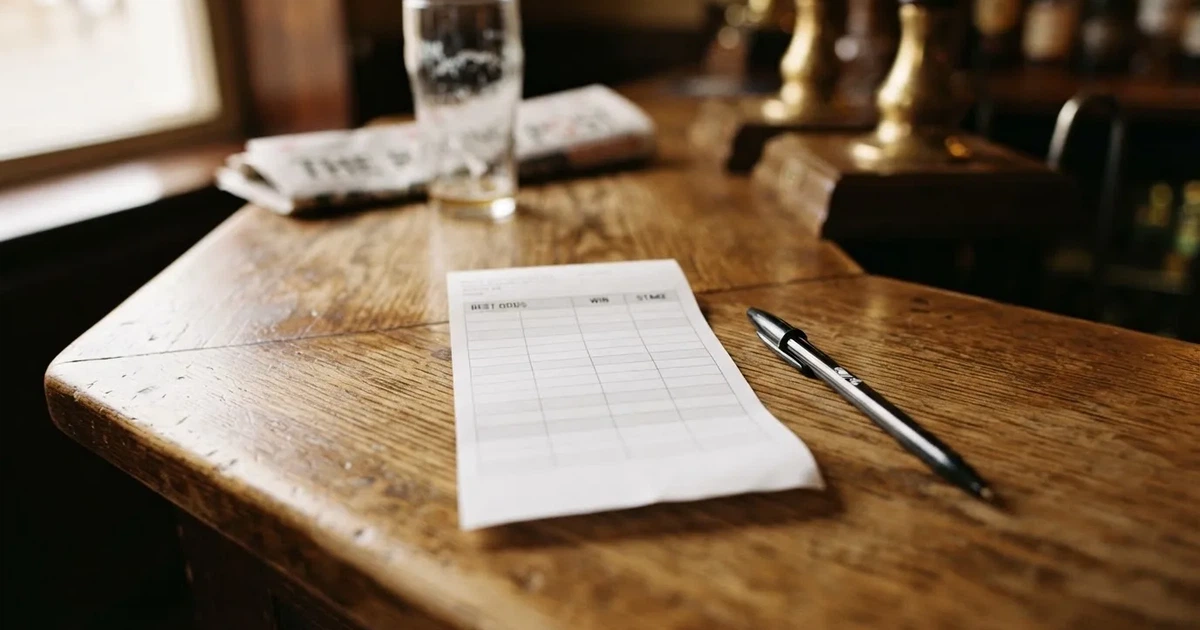
*Current as of 27 October 2026 · verified against the UK Gambling Commission’s public register of operating licences.*
What Best Odds Guaranteed Actually Is
Best Odds Guaranteed is a concession, not a market. A bookmaker publishes an early price on a runner, accepts bets at that price, and then promises to settle at the higher of the price taken and the official starting price if the horse wins. The starting price (SP) is the on-course market’s settled price at the moment the race begins — for British horse racing it is the median of sampled bookmakers’ prices on the course, so at least half the sample quoted that price or longer. Where no fixed price was taken at all, the SP is what settles the bet.
The mechanism is straightforward because the prices already exist. The early price sits on the screen from mid-morning; the SP forms itself in the run-up to the off. BOG simply guarantees the punter whichever turned out larger. Where a price was taken and the SP is smaller, nothing changes — the punter is paid at the price they took, which was the better number by definition.

It applies to single bets and multiples. A punter who backs four horses in an accumulator is paid on each leg at the bigger price where the rule is in force. A punter who takes an each-way bet pays two stakes and is paid twice on a win, each component settled at BOG where it applies.
The rule has carve-outs. William Hill pays BOG on UK and Irish horse racing from 8 AM on the day of the race, on both single and multiple bets; it does not apply to ante-post bets, tote or pari-mutuel pools. These are the bookmaker’s own terms and vary by firm, so the specifics are worth checking before staking.
Where the offer sits in the wider bookmaker’s margin
Every price carries the bookmaker’s margin — the slice of every pound staked that the firm keeps whatever the result. The margin is built into the early price, the starting price and any BOG uplift alike. The offer does not shrink the margin; it shifts the price the punter is paid when the SP turns out bigger. On the race itself, between the bookmaker and the punter, the only thing BOG changes is which side of that margin the settle lands.

Two-way market margins, illustrated
Take an evenly priced two-way market at 1.90 / 1.90 (9/10) decimal. The payout share is the reciprocal of the sum of reciprocals — 1 ÷ (1/1.90 + 1/1.90) — which works through to about 0.95, so the margin is in the order of 5 % and the punter recovers roughly 95p in the long run. The exact figure sits inside a band, around 4.8–5.3 %, because bookmakers round and weight, but this is the kind of market a BOG punter is betting against when the early price moves. A horse racing book builds more margin than a balanced soccer match, and the BOG uplift does not bring it back to par; it just shifts the settle.
Who Offers BOG and How the Settle Works in Practice
BOG is a horse racing offer almost without exception. Greyhounds are covered by some firms; most football, tennis and other sports markets are not. The reason is the existence of a defensible starting price. Racing produces an on-course market with a clear settlement point; football does not, and football books settle at the price taken because there is no second price to upgrade to.
The settled uplift is not a marketing freebie. Two conditions bite.
Rule 4 deductions. When a horse is withdrawn from a race, surviving runners’ prices shorten, and bookmakers apply a Rule 4 deduction — a pence-in-the-pound cut from the winnings on bets struck at fixed odds. At Sky Bet, if a price taken receives a Rule 4 deduction, the deduction still applies unless the horse returns at a bigger SP, in which case the bet is paid at SP with no deduction. The order matters: SP uplift first, Rule 4 next.
Per-bet caps. Some firms cap the BOG uplift. Sky Bet caps the best odds guaranteed uplift at £50,000 per bet or per race for horse racing — generous in absolute terms, but the cap is real and a winning bet beyond it is settled only up to the ceiling.
The cleanest settle, where it works, is a morning price on a horse that drifts out by the off. The punter’s winnings are then paid on the bigger SP, and the deduction rules are not in play. The messy settle is a morning price that has Rule 4 applied mid-race — the SP uplift may not be enough to offset the deduction, and the punter’s stake still settles on the original terms with the cut taken off.
Bonuses, Free Bets and Matched Betting Around BOG
BOG sits inside a wider promotional landscape, and a few rules govern how the offer sits next to a free bet or a sign-up bonus.
A free bet is the bookmaker’s stake, not the punter’s. The stake is usually not paid back with a win — the punter pockets the profit on the bigger price but loses the free bet amount itself. QuinnBet’s free bets are valid for 7 days from credit and can be used on any market at odds of 1/2 (1.5) or greater, with maximum odds of 50/1; straight accumulators are allowed but Trixies, Patents and Yankees are not. BoyleSports’ Acca Insurance requires opt-in, a minimum stake of £5, minimum odds of 1/2 and pays a maximum refund of £20 as a free bet that expires in 7 days; bets must be placed and settled on the same day. BetUK’s free bets exclude virtual sports, esports and non-UK/IE horse racing, and minimum odds apply.
Matched betting is the practice of pairing a free bet at a bookmaker with the opposite position on a betting exchange, locking in a small profit regardless of the outcome. BOG is not itself a free bet, so the wagering cap of 10x — the rule that limits turnover to ten times the bonus amount, introduced in promotion rules in force since 19 January 2026 — does not bite on the BOG uplift. It bites on the bonus or free bet that sits beside the BOG offer. A punter clearing a £10 bonus at 10x has £100 of eligible bets to place; that is the ceiling, not a target.
Mixed-product promotions are out
A promotion that requires gambling on two or more product types — betting, casino, bingo, lottery — is banned. “Bet on football to get free spins” is the shape the rule targets. A BOG promotion that sits cleanly inside racing is not mixed-product; a sign-up package that ties a racing BOG concession to a casino bonus is. The ban is on the structure, not on the racing offer itself.
The Ten Bookmakers: What the Register Says and What Each One’s Terms Promise
The list below ranks ten brands who hold a Gambling Commission remote licence for general betting on real events, sourced from the Commission’s public register. The order is editorial — a working assessment against published terms and what each bookmaker offers the BOG punter specifically. The licences themselves are factual, taken from the register, and each number is the account number an operator is registered against.
A bookmaker’s licence is the baseline, not the differentiator. Every brand on the list holds one and every brand on the list is therefore part of the regulated market in Great Britain. What separates one from another is the shape of the BOG offer, the size of the per-bet ceiling, and what other concessions sit beside it. None of these brands is the only licensed one; there are many more.
| Brand | Licence account | Licence holder | What the brand’s terms say on BOG |
|---|---|---|---|
| William Hill | 39225 | WHG (International) Limited | Pays BOG on UK and Irish horse racing from 8 AM on race day, on single and multiple bets; no ante-post, tote or pari-mutuel cover. |
| Sky Bet (referenced in support pages, terms on file) | – | Bonne Terre Limited (the Sky Bet licensee) | Pays at SP when SP is bigger than the price taken; Rule 4 deduction still applies unless the horse returns at a bigger SP, in which case the bet is paid at SP with no deduction; uplift capped at £50,000 per bet or per race. |
| Bet600 | 44731 | Tyche Tech Limited | Pays Best Odds Guaranteed on horse racing: where the SP is bigger than the early or show price taken, the bet is paid at the SP. |
| BoyleSports | 39469 | Boylesports Enterprise | Acca Insurance requires opt-in, £5 minimum stake, 1/2 minimum odds, pays a £20 maximum free-bet refund expiring in 7 days; bets placed and settled on the same day. BOG terms stated on the racing product. |
| QuinnBet | 61011 | QuinnBet (Gibraltar) Limited | Free bets valid 7 days from credit, usable at 1/2 or greater with a 50/1 maximum; Trixies, Patents and Yankees excluded, straight accumulators allowed. BOG offer applied to racing. |
| BetUK | 39198 | LeoVegas Gaming PLC | Free bets exclude virtual sports, esports and non-UK/IE horse racing; minimum odds apply. BOG cover concentrated on UK and Irish racing. |
| London Bet | 66162 | Thistle Bet Limited | UK-licensed under the standard remote general betting real-events category. BOG offer stated on the racing product. |
| DragonBet | 64908 | DragonBet Ltd | Racing coverage with Welsh football and rugby markets, in-play and bet builder. BOG applies on horse racing where stated. |
| Matchbook | 39504 | Triplebet Limited | Betting exchange — customers bet against other users with Bet Builder, multiples, in-play and live streaming of horse racing and greyhounds. BOG structure is exchange-specific. |
| Sporting Index | 27343 | Sporting Index Limited | Spread-betting bookmaker; new-customer offer unlocks fixed-odds and spread bets. Spread betting on racing is the adjacent product; BOG-style uplift on fixed-odds racing as stated in terms. |
The licences are facts; the assessments are judgements the writer makes from the published terms on file. Where a brand’s BOG terms are not on the source pages captured, the column reads as the wider offer’s shape rather than a price-by-price transcription.
Licensed, Verified and Audited: The Frame Around the Offer
Great Britain runs commercial betting under the Gambling Act 2005, regulated by the Gambling Commission. There is no statutory list of permitted markets — an operator holds a licence for a category (remote general betting standard for real events, betting intermediary for exchanges, and so on) and offers markets under its own rules and the Licence Conditions and Codes of Practice. A bookmaker serving customers in Great Britain needs a Gambling Commission licence wherever it is based; since the Gambling (Licensing and Advertising) Act 2014, providing remote gambling facilities used in Great Britain without a Commission licence is an offence aimed at the operator under section 33 of the 2005 Act. The Commission’s public register is searchable by business name, trading name, domain or account number; it is the whole test of whether a brand holds a licence.
The licensing test does not stop a brand from taking a bet from a Northern Irish customer. The 2005 Act covers Great Britain only — England, Scotland and Wales. Northern Ireland runs on older law. Where a brand licensed for Great Britain takes a bet from a customer in Northern Ireland, it is the operator’s choice to accept or decline; the licence itself does not cover the jurisdiction.
The minimum age is 18, and identity is verified before the first deposit or gamble. Since 7 May 2019, name, address and date of birth are checked before any customer can use the product, including a free bet or a bonus. Credit cards are banned for gambling in Great Britain since 14 April 2020 (LCCP condition 6.1.2); debit cards and bank-based payments are not. No anonymous play is possible at a licensed site.
What a licence does — and what it does not — do for the punter
A Gambling Commission licence obliges the operator to perform several checks the punter otherwise cannot perform themselves. The brand runs a public-register search on the customer (a financial vulnerability check under LCCP condition 3.4.4, in force since 30 August 2024 and applicable when deposits minus withdrawals exceed £150 in a rolling 30 days, with the threshold live since 28 February 2025); the brand participates in GAMSTOP; the brand honours the Commission’s 10x bonus cap; the brand is bound by approved alternative-dispute-resolution routes if a complaint cannot be resolved directly. These are the protections a licence buys.
A licence does not stop the bookmaker keeping its margin. It does not stop the bookmaker restricting a customer’s account, capping a stake, or refusing a bet. It does not guarantee the punter a winning bet or a positive expected return. The market the licensed bookmaker offers is the same market the punter would find elsewhere, with the same edges and the same risks; the licence is the frame around it, not the edge in it.
The offshore alternative, in plain words
A Curaçao, Maltese or Gibraltar licence is not a substitute for a Commission licence. A brand not on the public register can accept bets from Great Britain residents in theory, but the punter faces a different set of trade-offs. The brand is not part of GAMSTOP, so a self-exclusion does not carry across; the brand is not bound by the 10x bonus cap, so a bonus can carry heavier wagering; the brand is not bound by the £150 vulnerability check, so no automatic prompt fires. There is also no approved ADR route and no Commission complaints procedure if funds are withheld. Enforcement from the Commission runs through cease-and-desist notices, search-engine referrals and work with payment providers; the Commission has been given, or is about to receive, court-order DNS blocking powers, which is the regulatory shape rather than a ban the punter enforces. None of this makes offshore play a criminal offence against the punter — under section 33 of the 2005 Act the offence is aimed at the operator. Honest framing matters: licensed = checks, limits, GAMSTOP, bonus cap; unlicensed = none of those, with the possibility of funds being withheld.
Player Protection: The Frame Around the Punter
GAMSTOP is the national multi-operator online self-exclusion scheme and a mandatory licence condition for online operators in Great Britain since 31 March 2020. A self-exclusion can run for six months, one year, five years, or five years with auto-renewal. After the minimum period, the exclusion stays in place for a further seven years unless the customer asks GAMSTOP to remove it. GAMSTOP covers online sites and apps; betting shops use a separate service. Registering once excludes the punter from every licensed online operator at once, which is the practical value.
The vulnerability check is a public-record check, not an income check. It looks at county court judgments, bankruptcies and similar public signals. It fires only once deposits minus withdrawals exceed £150 over a rolling 30 days. The “affordability checks” of the press are separate — financial risk assessments, announced in a staged plan by the Commission on 7 July 2026, with no start date. They are announced, staged, with no start date, and writing them as in force is a misreading.
Deposit limits are the customer’s tool. Operators must offer a gross deposit limit on a fixed time frame (RTS 12); the first changes have applied since 31 October 2025, with a second phase postponed to 30 September 2026, and whether that second phase is live is not established. There is no state-set ceiling: limits are the customer’s choice, and a punter who wants £50 a week can set £50 a week.
Help exists outside the regulator. GamCare runs the National Gambling Helpline. GambleAware funds treatment and research. NHS gambling clinics operate in several regions. Gamblers Anonymous runs peer-support meetings. None of these is a substitute for self-exclusion at the betting account itself; together they are the wider safety net.
What every punters’ protection costs the bookmaker — and therefore the punter
Protection has a price. Verification slows first deposits; a market-wide vulnerability check changes how offers can be marketed to high-spending customers; the 10x bonus cap reduces the headline number of “free” money. These are part of the cost of the licensed market. The bookmaker absorbs them in margin, in operational cost or in trade-offs in the offer, and the punter pays for them in marginally tighter odds and slightly less generous promotions than an unlicensed alternative would carry. That is not an argument against the licensed market; it is a description of what the licensed market costs.
The Margin and the Settle: How a BOG Bet Prices In
Every BOG settlement shifts the punter’s payout. The price taken is the price stamped on the slip; the SP is the bigger on-course market’s settle; the BOG settle is the larger of the two where it triggers. The margin the bookmaker built into the early price does not vanish on a BOG settle — it is reproduced in the SP and reproduced again in any BOG uplift, because the SP and the early price are both bookmaker prices and both contain a margin.
The practical question is whether the punter’s edge, on a BOG bet, beats the margin across the bookmaker’s racing book. On the race itself, no edge exists; the bookmaker holds one and the punter pays it. On the SP uplift — the difference between the price taken and the SP where SP is bigger — the punter pockets the gap, but the gap exists inside a margin structure that already cost them something. The net effect is a tighter racing book than an accumulator or a value-hunt on a non-racing market, but it is not free money. A BOG punter pays for the rule inside every other line of the bookmaker’s racing offering.
A worked two-way margin, in plain prose
Take an evenly priced two-way market at 1.90 / 1.90 (9/10), the kind of line a bookmaker posts on a coin-toss event. The arithmetic of the market says: sum the reciprocals (1/1.90 + 1/1.90 = approximately 1.053), and 1 divided by that sum is approximately 0.95, meaning a payout share of about 95 % and a margin in the order of 5 %. A market at 1.95 / 1.95 (roughly 19/20) carries a tighter margin still. A market at 1.80 / 1.80 carries a larger one. The band the arithmetic lands in is the band’s reality — about 4–6 % on balanced two-way markets, more on markets with more outcomes, with horse racing markets typically thicker than soccer match odds. This is the figure against which any BOG uplift should be set. A 1/2 point SP uplift on a 9/10 shot covers part of the margin, not all of it, and the punter is still paying for the race.
What the Operator Set Looks Like in Detail
Each of the ten brands below carries a Gambling Commission remote licence for general betting on real events. The licence account numbers are the register’s identifiers; the licences themselves are on the public register. The reviews are written from the published terms on file and the wider offer, and they end on the operator’s BOG suitability rather than a slogan.
William Hill
William Hill pays Best Odds Guaranteed on UK and Irish horse racing from 8 AM on race day, on single and multiple bets. The offer does not extend to ante-post, tote or pari-mutuel bets. The bookmaker’s wider product covers sportsbook, casino and a deep racing offering. A BOG punter looking for a large established racing book should find the terms straightforward; the 8 AM start is the practical line. The brand is licensed under WHG (International) Limited.
For a punter who backs early and wants the bigger price on the day, William Hill is one of the cleanest expressions of the offer on the market. The cap is high enough not to bite most recreational punters; the exclusion list is narrower than the inclusion list. William Hill remains a primary choice for punters targeting early prices on UK and Irish racing, with its clear, long-standing BOG terms.
Sky Bet (referenced via support pages)
Sky Bet settles at the SP where the SP is bigger than the price taken, and the Rule 4 deduction still applies unless the horse returns at a bigger SP, in which case the bet is paid at SP with no deduction. The BOG uplift is capped at £50,000 per bet or per race for horse racing — among the more generous ceilings in the market, and a meaningful figure for the high-staking racing punter. The brand’s app is a recognisable mainstream product with in-play sport and a price-boost mechanic.
The Rule 4 logic is the book’s distinguishing feature for a BOG punter. Most books apply Rule 4 mechanically regardless of BOG; Sky Bet’s terms set out the exception in writing, which is useful to a punter who routinely backs into non-runners. The cap of £50,000 per bet or per race is the practical limit. The brand suits a punter who places racing bets of meaningful size and wants the Rule 4 carve-out explained.
Bet600
Bet600 pays Best Odds Guaranteed on horse racing: where the SP is bigger than the early or show price taken, the bet is paid at the SP. The brand runs under Tyche Tech Limited as licence holder. The BOG offer is the racing flagship alongside the wider sportsbook.
For a punter who wants a clean, written BOG settlement on racing and does not need the Rule 4 carve-out, Bet600’s terms are plain. Bet600 offers a straightforward, racing-centric service that prioritises simplicity for the punter over the broader, more complex sportsbook features found elsewhere.
BoyleSports
BoyleSports’ Acca Insurance requires opt-in, a minimum stake of £5, minimum odds of 1/2 and pays a maximum refund of £20 as a free bet that expires in 7 days; bets must be placed and settled on the same day. The BOG offer sits on the racing product alongside the acca concession. The brand is licensed under Boylesports Enterprise.
A punter who uses accumulators on a small bank benefits from the Acca Insurance structure; the £20 cap on the refund is the practical limit. For the BOG-only punter, BoyleSports is one of the larger firm choices with BOG on racing and an acca product that complements it. For an accumulator enthusiast who also values BOG protection, BoyleSports provides a balanced approach that fits the racing and multi-bet punter alike.
QuinnBet
QuinnBet’s free bets are valid for 7 days from credit and can be used on any market at odds of 1/2 (1.5) or greater, with maximum odds of 50/1; straight accumulators are allowed but Trixies, Patents and Yankees are not. The brand runs under QuinnBet (Gibraltar) Limited. The BOG product applies on racing.
The 50/1 maximum odds is a notable ceiling on the free bet’s use; the 7-day expiry limits staking windows. For a BOG punter, QuinnBet’s offer is one of several in the racing space; QuinnBet’s racing BOG provides a structured alternative to larger brands, with clear, unambiguous terms that suit the punter who prefers reliability over complex offers.
BetUK
BetUK’s free bets exclude virtual sports, esports and non-UK/IE horse racing, and minimum odds apply. The brand is licensed under LeoVegas Gaming PLC. The racing product is concentrated on UK and Irish racing; BOG applies on the racing offering.
The exclusion list is the brand’s distinguishing feature for a BOG punter. A punter whose interest is UK and Irish horse racing finds BetUK’s offering fits; a punter who wants international racing cover does not. BetUK is a targeted option for the dedicated UK and Irish racing follower, offering an experience designed specifically for that market rather than trying to serve every racing jurisdiction.
London Bet
London Bet is operated by Thistle Bet Limited (company number 12938274), licensed by the Gambling Commission and a GAMSTOP member. The BOG offer sits on the racing product; the app carries a 17+ App Store age rating. The wider product covers sportsbook and casino.
For a BOG punter in the London-facing segment, the brand offers racing BOG with the rest of the sportsbook book. London Bet provides a domestic-focused racing product with BOG, catering well to the punter who appreciates a more personalised, region-specific sportsbook service.
DragonBet
DragonBet runs under DragonBet Ltd as licence holder. The product covers horse racing, greyhounds, Welsh football and rugby markets, American football, in-play betting and bet builder markets. BOG applies on the racing product.
DragonBet is the localised-Wales-facing brand on this list. The inclusion of Welsh football and rugby alongside racing is its edge; the BOG offer is the racing-side concession. DragonBet stands out as a regionally focused bookmaker, providing a distinct racing BOG offer that sits comfortably alongside its core Welsh sports and football markets.
Matchbook
Matchbook is a betting exchange — customers bet against other users — with Bet Builder, multiples, in-play and live streaming of horse racing and greyhounds. The brand is licensed under Triplebet Limited across remote general betting standard (real events) and remote betting intermediary. The exchange’s structure is different from a bookmaker’s: BOG as a concept is a bookmaker concession, and the exchange’s analogue sits on the lay side of the market.
For a BOG punter, Matchbook is not the natural fit: BOG is a bookmaker rule, not an exchange rule. The exchange is where a punter closes positions, locks in profits and builds matched-betting structures around free bets. Matchbook offers a different value proposition; it serves as a sophisticated tool for managing positions rather than a traditional bookmaker designed primarily for BOG value.
Sporting Index
Sporting Index is a spread-betting bookmaker running under Sporting Index Limited. The new-customer offer is a £10 fixed-odds bet at minimum odds of 1/2 which unlocks three £10 fixed-odds free bets, three £5 Total Goals spread bets, three £5 Winning Favourites spread bets and a £1 Race Index spread bet; the qualifying bet cannot be placed in play or cashed out early. Spread betting on racing is the adjacent product.
Spread betting on racing is a different kind of bet from fixed-odds BOG. The spread-betting book’s losses can exceed the stake, which is the regulatory line a spread book carries. For the BOG punter who has not used spread betting, Sporting Index is an adjacent product rather than a target. The brand closes on the punter who already uses spread bets, not the BOG-only punter.
Advertising, Bonuses and What Counts
Betting advertising in Great Britain is not licensed by the Commission. It runs through the CAP Code for non-broadcast and the BCAP Code for broadcast, enforced by the ASA, alongside the LCCP marketing conditions the Commission enforces. CAP Code section 16 makes the wider frame: marketing must be socially responsible, must not be of strong appeal to under-18s, and no one who is or seems to be under 25 may be featured gambling or play a significant role (with an exception for marketing placed where a bet can be made directly). That rule concerns who may appear in the advertisement; it is not a rule on who may bet.
The bonus cap is the hard line in promotional terms. Wagering requirements on bonuses are capped at 10x from 19 January 2026, so a £10 bonus at 50x is no longer permitted — under the cap the worst the punter can be asked to bet is £100 of qualifying bets. A mixed-product promotion is banned: “bet on football to get free spins” is the shape the rule targets; “back a horse to get a BOG uplift” is not mixed-product and survives. A free bet whose stake is not returned on a win is the more common structure; whether the cap applies to free bets with no wagering condition is not stated in the published terms.
Whistle-to-whistle remains an industry code, not law. Since 1 August 2019, betting advertisements are not shown on TV from five minutes before a live sporting event to five minutes after it, before the 9pm watershed, with horse and greyhound racing excluded. The Premier League clubs’ withdrawal of gambling sponsorship from the front of matchday shirts (from 2026/27; sleeves and hoardings remain) is voluntary, not law. None of this changes what a BOG punter does at the betting site; it changes what they see before they get there.
Tax and the Punter’s Bottom Line
The punter pays no tax on betting winnings in Great Britain. General Betting Duty is the operator’s tax on gross profits, currently 15%; from 1 April 2027 a new remote betting rate of 25% applies within it, while remote bets on UK horse racing, bets on self-service betting terminals in licensed premises, pool betting and in-person betting stay at 15%. Spread betting has its own rates — 3% for financial spread bets, 10% for others. The remote rate at 15% holds until 1 April 2027; whether operators pass the duty on through odds is not clear, and the punter is never directly charged duty.
For the BOG punter, the headline-rate implication is that a bookmaker’s racing book prices in current duty, and the duty change in April 2027 will be priced in thereafter. The punter’s effect is what the market does — the bookmaker absorbs, passes on, or partially passes on the duty change — but the punter’s settlement is what the price they took said it was.
Currency, dates and what the page uses
The page uses £ throughout, with no space between the symbol and the number. Dates are written in British form (12 March 2026). Odds are given in fractional (5/1) form with decimal equivalents (6.00) where the figure travels across formats. British spelling is in use throughout: licence as the noun, license as the verb, organisation rather than organization.
What to Read in the Bookmaker’s Own Terms
The detail of BOG varies by bookmaker, and the terms on file are the only source of truth. The points that vary are where the work is:
- Race coverage. UK and Irish racing is the default; some books add greyhounds, some add selected international meetings. The list is on the racing terms page, not the offer headline.
- Time windows. William Hill pays BOG from 8 AM on race day; other books are earlier or later. The time on the bet stamp is the time on the bet stamp.
- Multiple bet treatment. Most books apply BOG across all legs of an accumulator where each leg is eligible; some do not. The accumulator terms are where this lives.
- Rule 4. Sky Bet’s terms lay out a specific carve-out; other books apply Rule 4 mechanically regardless of BOG. The Rule 4 wording is on the same page as the BOG wording.
- Per-bet and per-race caps. Where the cap is published, the cap applies to the BOG uplift only; the rest of the bet settles on its own terms.
- Free-bet interaction. A free bet’s stake is usually not returned with a win; an offer that combines a BOG uplift with a free bet calculates the BOG uplift on the price taken, not on a stake that was effectively never the punter’s money.
What to do when the offer is unclear
A punter who cannot find the BOG terms on the offer page looks at the bookmaker’s help section, the racing rules, and the bonus terms together. Where the question remains, the live chat or email is the right next step; a phone call is the third step. The Commission’s public register is the source for the licence itself, and the register is searchable by business name, trading name or domain. The bet is placed once the terms are clear.
The Broader Picture: What BOG Does and Does Not Do
BOG is a settle, not an edge. The punter who takes a price and watches the SP drift gets a bigger payout, and the punter who takes a price and watches the SP shorten gets the original price they took. Neither side gives the punter an edge across the racing book; the settle is whichever price was bigger on the day, and the margin the bookmaker built into the early price carries into the SP and the BOG uplift alike.
The offer’s real value is operational. It gives the punter a reason to take a price early when they see value, instead of waiting for the SP and missing the bet if the horse shortens. Where the punter’s edge is in reading the morning market well, BOG makes the trade worthwhile by removing the downside of an early price.
For the bookmaker, BOG is a customer-acquisition cost, not a margin cost. The bookmaker’s margin is what it is on every line; BOG is paid out of customer-loyalty spend. Where a bookmaker offers BOG heavily, the racing book elsewhere is the adjustment — slightly tighter lines elsewhere, or the same lines with less promotion around the edges. A punter who only takes BOG offers and never shopped around the rest of the book would still be paying for the racing offering.
How the Settle Reads in Practice: Three Worked Examples
Take a punter at William Hill backing a single horse at 5/1 in the morning. The race begins with the SP at 7/1. The BOG settles at 7/1, and a £10 stake returns £80 — the £10 stake plus £70 of profit at the bigger number. The bookmaker paid £17 more on the same race than the original price-stamp would have produced.
Take a different punter at Sky Bet on a race where one horse withdraws. The punter’s horse was taken at 4/1, and Rule 4 deducts 20p in the £ from the winnings. The SP forms at 9/2, which is bigger than 4/1. Under Sky Bet’s terms, the bet is paid at SP with no Rule 4 deduction — the SP-outranks-Rule-4 carve-out — so the £10 stake returns £55 instead of the smaller deducted figure.
Take a punter at BoyleSports on a £20 each-way bet, where the place terms pay 1/4 of the win odds and three places are paid. The win half is on a horse taken at 6/1 that wins at a SP of 10/1, so the BOG upgrade applies to the win half (£20 returns £220 — £20 stake plus £200 profit at 10/1). The place half is on the place market and settles at the place terms (a quarter of 10/1, plus the £20 place stake, plus the £50 of profit), and the BOG upgrade may or may not extend to the place half depending on the bookmaker’s terms. Where it does, both halves settle up; where it does not, only the win half settles up.
Each is a different shape of the same rule: BOG settles at the bigger price, and the carve-outs (Rule 4, cap, place terms) determine how much of the settle the punter keeps.
A Practical Note on What Comes Next
The bookmaker landscape changes. A licence is a licence, and the Commission’s register is updated; a BOG offer is a promotion, and promotions move. A punter who checks the licence once a year and the offer terms on every bet stays current; a punter who assumes the offer they took last year is the offer this year is wrong on the day the book changes.
For BOG specifically, two things are worth watching. The Commission’s promotion rules — wagering caps and mixed-product bans — were in force from 19 January 2026 and may move again. The General Betting Duty remote rate rises to 25% on 1 April 2027, and the market’s response — how much is absorbed, how much is passed on — is something the racing book will surface in the months leading up to that date.
The punter who reads the terms, knows the licence, and watches the offer is the punter who keeps the edge in the offer rather than paying for it without seeing it.
Frequently Asked Questions
Which bookmakers do best odds guaranteed?
BOG is offered by William Hill, Sky Bet, Bet600, BoyleSports, QuinnBet, BetUK, London Bet, DragonBet and most other UK-licensed racing books on UK and Irish horse racing. The exact terms vary by firm — race coverage, time window, accumulator treatment, Rule 4 treatment, per-bet cap — and the bookmaker’s own terms page is the source.
Which bookmakers offer best odds guaranteed?
The offer is run by multiple licensed UK bookmakers, concentrated on horse racing, with greyhound racing from a smaller subset. The list above names the brands reviewed on this page; the wider set runs to dozens of firms and changes as promotions are added and removed. Check the bookmaker’s own racing terms page for the current offer before staking.
What bookmakers offer best odds guaranteed?
UK and Irish horse racing is the core coverage area, with greyhound racing from a smaller number of firms. Football, tennis, golf and other sports markets do not carry a comparable SP-based settlement. Each book’s own terms page is the source for the exact race list, time window, multiple-bet treatment and any per-bet cap.
How can it be checked that a bookmaker holds a Gambling Commission licence?
The Commission’s public register is searchable by business name, trading name, domain or account number and is the whole test. The account numbers on this page can be entered against the register for a confirmation. No account number on this page has been transcribed from anywhere other than the register, the operator’s published terms, or the operator’s app listing on the App Store.
How is the return on a bet worked out from the stake and the odds?
For decimal odds, the return is the stake multiplied by the odds. For fractional odds a/b, the decimal odds are a ÷ b + 1. A £10 stake at 5/1 (6.00 decimal) returns £60; a £10 stake at evens (1/1, 2.00 decimal) returns £20; a £10 stake at 1/5 (1.20 decimal) returns £12. A combination bet multiplies the odds across all legs.
What is the bookmaker’s margin and how can it be seen in the odds?
The margin is the slice of every pound staked that the bookmaker keeps, calculated as 1 minus the reciprocal of the sum of the reciprocals of all outcomes’ decimal odds on a market. An evenly priced two-way market at 1.90 / 1.90 (9/10) carries roughly a 5% margin, so a payout share of about 95p in the pound; wider lines carry a larger margin, tighter lines carry less. The margin is reproduced in every line the bookmaker offers — early prices, SPs, and any BOG uplift alike.
Free bets & offers – Grey Hound
Content created by the «Grey Hound» team
