
Water polo betting tips and what to expect from the markets
 Available in US
The search that lands on this page usually wants picks. Picks are not what is on offer, because nobody knows who wins a match before it is played and the distance between a prediction and a price is where the bookmaker lives. What the page delivers instead is the apparatus around the pick: how a prediction is built from form, line-ups and statistics, how the bookmaker’s margin sits inside every price, and how a stake and a return are worked out. Water polo is a small market on a UK sportsbook, and small markets are exactly where the margin does more work and the bettor’s homework matters more. The guide below is built for that reader.
Data current as of 27 October 2026, cross-checked against the Gambling Commission’s public register of remote operating licences.
The legal frame in Great Britain
Every commercial bookmaker serving customers in Great Britain needs an operating licence from the Gambling Commission, regardless of where the company behind it is based. The rule sits in sections 33 and 36 of the Gambling Act 2005 as amended by the Gambling (Licensing and Advertising) Act 2014, and the test of who holds one is the Commission’s public register. There is no whitelist of “approved” sites issued by another body: the register is the whole test. Operators can run on a .com or a .co.uk domain, and the address itself proves nothing either way; some licensed brands use .com, some use .co.uk, and some use both. The only check that matters is the licence entry, looked up by business name, trading name, domain or account number.

A water polo market is offered under a category on that licence, normally “remote general betting standard (real events).” Several brands can run under one licence holder — the split between Paddy Power and Betfair on one side, or Ladbrokes and Coral on the other, is the well-known case — so a licence number alone does not name the brand a reader sees. Northern Ireland is outside the Gambling Act 2005: a Great Britain licence does not licence activity there, and a Northern Ireland customer is reading from a different statutory framework.
The financial side of betting is separate from the gambling side. Spread betting on financial markets is regulated by the Financial Conduct Authority, not the Gambling Commission, and the FCA’s regime is the one that applies to Spreadex’s spread-betting products. Where Spreadex also offers fixed-odds sports betting, that part sits under the Commission’s licence and the financial side keeps its separate regime — and the firm’s own front page is clear that financial spread-betting losses can exceed deposits.
Identity verification is part of the licence, not an optional extra. Before a customer can deposit, place a bet or use a free bet at any UK-licensed operator, name, address and date of birth are checked, and verification has been required across the remote market since 7 May 2019. Anonymous play is gone. The check is a legal condition, not a marketing decision, and it is the price of every other protection in the next section.
There is no statutory list of permitted bets or markets. What may be offered is what the licence category permits, what the Licence Conditions and Codes of Practice (LCCP) allow and what the operator chooses to price. In-play markets are widely offered; nothing in statute forbids them, and the controls are the licence conditions and each operator’s customer-protection duties. A reader who wants a specific market — a particular total, a particular handicap — checks that market on the operator’s terms and on the betting slip before staking; the page cannot promise any one bookmaker will be offering any one line on any one fixture.
Responsible gambling tools and what each one actually does
Licensed bookmakers in Great Britain must give customers a working set of harm-reduction tools. These are licence conditions and checked by the Commission, not perks a brand chooses to throw in.

GAMSTOP is the national self-exclusion scheme, compulsory for every UK-licensed online operator since 31 March 2020. The person registers once and is blocked across every participating site for six months, one year, five years, or five years with auto-renewal. After the minimum period has run, the exclusion stays in place for a further seven years unless the person actively asks GAMSTOP to remove it. The pause covers online sites and apps; betting shops use a different offline scheme. The point is that one decision closes every account at once, not one by one.
Deposit limits are a Remote Technical Standards requirement. Operators must offer a gross deposit limit set on a fixed time frame; the first changes under the new regime have applied since 31 October 2025, a second phase was postponed to 30 September 2026 and whether it is live on the date of reading depends on the operator. There is no state-set ceiling. What the law requires is that the customer can set one, not that a number is imposed.
Financial vulnerability checks came into force on 30 August 2024 under LCCP condition 3.4.4, and the live trigger tightened on 28 February 2025. Once a customer’s deposits minus withdrawals cross £150 in a rolling 30 days, the operator runs a public-record check — county court judgments, bankruptcy registers, that kind of result — not a credit-reference check and not an income check. A negative reading can lead to restrictions on the account. The named “financial risk assessments” of the press — the heavier affordability checks — were announced in a staged Commission plan published on 7 July 2026, with no start date yet, and that is exactly how it is described: announced, staged, no start date.
Help outside the operator is run by GamCare, which staffs the National Gambling Helpline, by GambleAware, by NHS gambling clinics and by Gamblers Anonymous. These are the four routes a reader who decides to step back can use regardless of which bookmaker held the account.
What an unlicensed site does not offer is the gap worth naming. No GAMSTOP coverage, no Commission complaints route, no approved alternative dispute resolution, no protection under the bonus cap, no protection under the vulnerability check, and no British redress if funds are withheld. A site without a GB licence is not “illegal to use” — no offence aimed at a customer was found in the relevant law — but the protection is gone. That is the practical frame for any decision to play on a site that does not appear on the register.
Bonuses, free bets and what an offer actually costs
A welcome offer in this market looks much like a welcome offer elsewhere: a fixed amount in free bets or bet credits for an opening stake at or above a stated minimum price, expiring in a short window, with a stake that is usually not returned with a winning free bet. The welcome offers advertised by the larger brands cluster in this shape, but the fine print divides them. Unibet’s UK sports welcome offer is “Get £40 in Free Bets when you bet £20”, and the qualifying bet is £20 or more at minimum odds of 2.0 (1/1), with the free bets expiring within 7 days of issue and the offer limited to new GB customers funding the account with a debit card or instant bank transfer. BoyleSports offers £20 in free bets for a £10 qualifying bet to UK players. BetMGM runs four £10 free bets on a £10 deposit-and-bet within 7 days, with minimum odds and an opt-in required, and the four free bets are split into two football accumulators of four or more selections and two sports multiples of two or more. None of these figures is a working code, a click-through promotion or a banner – they are the headline terms each bookmaker states on its own page, and each operator’s full terms govern how the offer actually pays.
The marketing words to read for what they are worth, rather than at face value, are the ones that sound unconditional. “Free bet” means a stake whose value is paid as winnings only, not as a return of stake, so a winning free bet at 5.00 returns four units of stake-equivalent in real money and not five. “Risk-free” usually means a refund as a free bet if the first bet loses, which is not a money refund and is not the same product as insurance on a household item. “Best odds guaranteed” on horse racing means a payout at the higher of the price taken and the starting price; on water polo it does not exist as a category, and “BOG” claims attached to a niche sport are not the same product. “Enhanced odds” or “price boost” is a one-off price on a named selection, settled as a single; the boost is the book’s marketing budget, and the leg’s terms still apply. Each phrase works the same way whichever sport it is attached to, and the size of the “free” amount is never the size of the value.
The statutory frame around offers is now real and dated. From 19 January 2026, wagering requirements on bonuses at UK-licensed operators are capped at 10x; a £10 bonus at 50x would have needed £500 of qualifying bets, and under the cap no more than £100 of qualifying stakes is required. Mixed-product promotions — an offer that asks the customer to play on two or more product types to unlock a reward, such as a free-bet welcome offer that requires betting and casino play together — are banned. Whether the 10x cap applies to free bets with no wagering condition, and any cap on the bonus amount itself, were not established from the register and the published rules; the figure that is fixed is the cap on rollover.
What a price is, and how a return is worked out
A decimal price tells a reader two things at once: how much a winning £1 returns, and what the market implies about the chances. A price of 2.00 returns £2 for every £1 staked, profit £1, and “implies” a one-in-two chance. A price of 5.00 returns £5 for every £1 staked, profit £4, and implies a one-in-five chance. The implied probability is 1 divided by the decimal price, and on a one-outcome book that is the cleaner reading; on a market with two or three runners the probabilities add up to more than 100 per cent, and the excess is the bookmaker’s margin.
Worked example: a two-way market priced at 1.90 and 1.90. The implied probabilities are 1 ÷ 1.90 and 1 ÷ 1.90, which add up to 1.0526, or about 105.3 per cent. The bookmaker’s margin — the slice the book keeps on every unit bet, on average, before any individual result is known — is the difference, 5.3 per cent. The payout share to customers, seen from the other side, is 1 ÷ 1.0526, or about 95.0 per cent. The arithmetic is the same whichever way the result lands: a lower margin means a higher payout share, and a higher margin means the book’s edge is wider.
This is why two prices on the same event are not two views of the same thing. Five per cent on one side of a market is the bookmaker’s commission, taken as a slice of every pound bet, and the price it produces is the only honest reading of what the selection is worth. A price is never “what will happen”; it is the market’s collective view of what will happen with the margin already taken out. The “value” in a value bet is the gap between a reader’s own estimate of the chance and the price’s implied chance, with the margin accounted for; if a reader thinks a team is a 60 per cent chance to win and the price implies 52 per cent, the price is high by eight points and that gap is the value.
The calculation of a return depends only on the stake and the price. A winning £10 single at 2.50 returns £25, profit £15. A winning £10 single at 5.00 returns £50, profit £40. A combination bet’s price is the multiplication of the legs’ decimal prices: three legs at 2.00, 3.00 and 4.00 give one combined price of 24.00, and a £10 stake returns £240 if all three legs win. Each leg must win for the combination to pay; one loss means the whole stake is lost. An each-way bet is two bets of equal stake, so the unit stake doubles, and on a niche sport like water polo each-way terms are not the standard horse-racing place terms and the bookmaker’s market rules govern what counts.
Fractional odds are the British form – 5/1, 11/4, evens. The conversion to decimal is straightforward: divide the first number by the second and add one. 5/1 becomes 5 ÷ 1 + 1 = 6.00. 11/4 becomes 11 ÷ 4 + 1 = 3.75. Evens (1/1) becomes 2.00. “Odds-on” means a price shorter than evens: 4/6 becomes 4 ÷ 6 + 1 = 1.67, and a winning £10 returns £16.67. The decimal and the fractional say the same thing in different notation; the maths at the betting slip is identical.
Water polo as a betting market
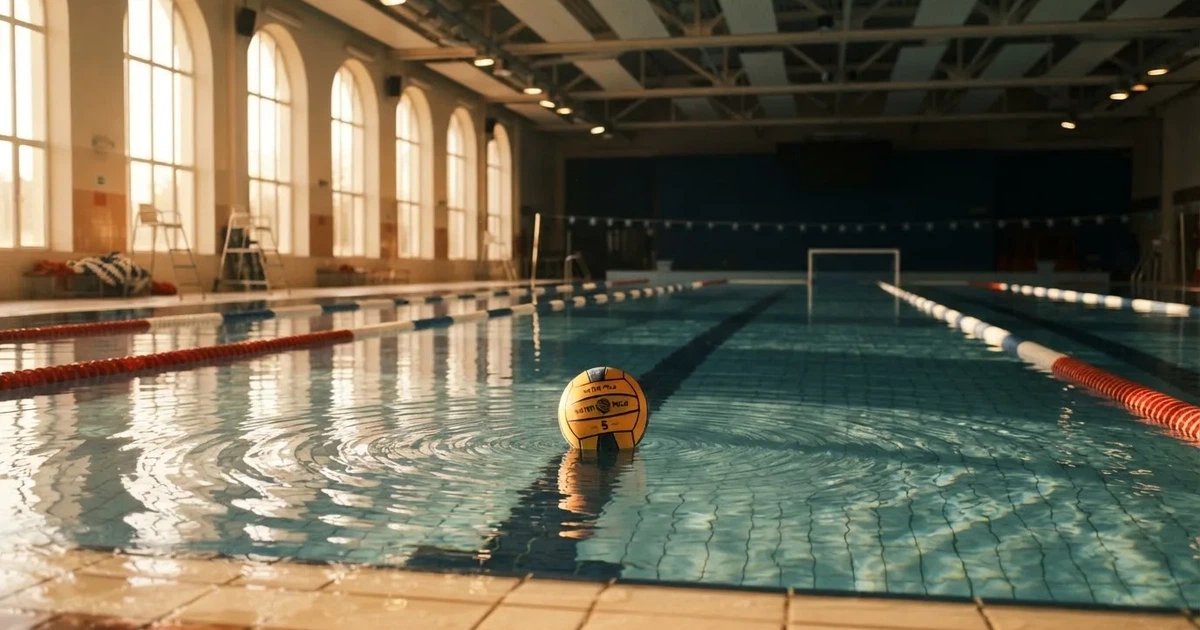
A betting reader is more useful when they know what is being priced. A water polo team fields seven players: six in the water and a goalkeeper, with up to six substitutes on the bench. Matches are played in four quarters in a pool deep enough that no one touches the bottom. Tournament water polo is the format bet on: the World Aquatics Championships have run a men’s tournament since 1973, with women’s competition added in 1986, and the period between editions is two to four years. The Olympic tournament is the showcase: men’s water polo was among the first team sports at the 1900 Olympic Games, women’s water polo joined the programme at Sydney 2000.
What this means in the market is that a niche sport is a thinner market than football or tennis, with fewer bookmakers pricing each fixture and fewer markets per fixture. Match winner, handicap and totals are the lines that most often appear; outrights on tournament winners appear around major championships; player props are rare. Where a fixture falls off a smaller bookmaker’s pricing, the only prices a reader sees are from the bigger books, and the choice on the price is the choice between two or three names rather than a long list.
The quartered structure of the match and the small squad make live betting plausible when the bookmaker’s technology supports it, and a reader looking at in-play on water polo sees a market that moves on goals, exclusions and goalkeeper switches rather than the constant flow of football’s possession and shots. The bookmaker’s margin on niche markets runs higher than on the marquee sports: a thinner book means a larger overround, often 7 to 10 per cent on a two-way line where a Premier League fixture sits closer to 5 per cent. That margin is the reader’s bill for backing a niche sport with the limited liquidity the market has.
For the same reason, a tip on a small market is harder to verify than a tip on a deep one. Form, head-to-head, prior meetings in the same tournament, team news (suspensions, injuries, the goalkeeper’s minutes played) and tournament dynamics (a side that has already qualified, a side that has been eliminated) are the legs of any reading; the price is the check on the reading; the margin is what turns a wrong view into a slow loss and a right view into a slow win.
Comparing ten UK-licensed bookmakers for water polo
The comparison below is built on the only thing a regulator can verify for a reader: the Gambling Commission’s public register. Each row carries the licence number that appears against the trading name on the register and the public-facing domain the bookmaker uses. The “what the operator’s own terms state” column is reserved for the figure, line or condition that matters most to a reader on this sport. A dash means research did not document a value, not that the value is zero.
| Operator | Gambling Commission licence number and licence holder | What the operator’s own terms state on the subject |
|---|---|---|
| Betfred | 039544-R-319290-010, held by Petfre (Gibraltar) Limited | Betfred Sports, Casino & Games covers 21 sports on the GB App Store; published by Done Brothers (Cash Betting) Ltd |
| Unibet | 045322-R-324275-019, held by Platinum Gaming Limited | UK welcome offer: £40 in Free Bets when betting £20 or more at minimum odds 2.0 (1/1); free bets expire within 7 days |
| London Bet | 066162-R-340278-004, held by Thistle Bet Limited | App combines sports betting on football, tennis, horse racing, greyhounds, darts, golf, cricket, NFL, NBA, MLB and snooker with Pragmatic Play casino and live in-play |
| Copybet | 053774-R-330743-010, held by Copybet UK Limited | Best Odds Guaranteed all day on all UK and Irish racing; first past the post paid even if a horse is later disqualified |
| Fitzdares | 000400-R-103839-030, held by Fitzdares Limited | Cash out, accumulators, Lucky 15s, specials and antepost on horse racing, football, tennis, rugby, cricket, golf and American football; live in-play odds |
| BoyleSports | 039469-R-319383-025, held by Boylesports Enterprise | Sports welcome offer: £20 in free bets when a £10 qualifying bet is placed (UK players) |
| BetMGM | 039198-R-319450-029, held by LeoVegas Gaming PLC | Four £10 free bets on a qualifying £10 deposit and bet within 7 days; minimum odds and opt-in required |
| Paddy Power | 039439-R-319330-013, held by PPB Counterparty Services Limited | Sports betting app covers football, horse racing, boxing, rugby, tennis, golf, darts, snooker and F1 |
| Tote | 054779-R-331321-008, held by TDCO Limited | Best Odds Guaranteed on UK and Irish horse racing from 8 AM on race day, singles and multiples; no ante-post, no tote or pari-mutuel bets |
| QuinnBet | 061011-R-335683-004, held by QuinnBet (Gibraltar) Limited | Best Odds Guaranteed on UK and Irish racing from 10:00am, singles, multiples and system bets; maximum benefit £150 per customer per race |
Reading this side-by-side, the spread of products separates two clusters. The first cluster – Betfred, Unibet, Paddy Power, BetMGM – bundles a deep sportsbook with a separate casino or gaming product and tends to price a wider fixture list in niche sports, which is where a water polo reader is more likely to find a market on a non-marquee fixture. The second cluster – London Bet, Fitzdares, BoyleSports, QuinnBet – sits closer to a horse-racing and football core and may not price every water polo fixture on the calendar; on the events they do price, the depth of their horse-racing product (each-way terms, BOG from a stated time of day) does not transfer to water polo, where each-way terms are a separate question and “BOG” does not apply.
The licence column is the only column on this table that is not a marketing claim. It is the value a reader can verify themselves, on the Commission’s public register, by business name or by the account number in the column above. What is on the register is what the law treats as licensed; what is not on it is what the law treats as unlicensed. No count of the licensed market is quoted here without a “data current as of” line, because the register churns and any number in print ages fast.
Betfred
Betfred runs a sportsbook that lists 21 sports on its GB App Store product and a separate gaming suite. On the Commission’s register the brand’s remote licence is held by Petfre (Gibraltar) Limited, with Betfred as the trading name; the corporate split is the usual one in UK-licensed online betting, where the licence holder sits offshore and the brand sits in front of the customer. Done Brothers (Cash Betting) Ltd is the publisher named on the App Store listing and is the operating-company face in Britain.
What a reader looks at before staking on water polo is fixture coverage: a 21-sport core does not guarantee water polo on every date the sport is in season, and the practical test is the betting slip on the day. The brand’s offer is depth rather than specialism.
For a reader who already has a Betfred account from football or horse racing and is adding water polo as a fourth or fifth sport, Betfred is a convenient extension of an existing setup rather than a reason to open a new one. The 21-sport listing is breadth without a flagship niche.
Unibet
Unibet’s UK site is run by Platinum Gaming Limited, Gibraltar, under Commission account 45322. The brand’s “operated since 1999” line is the longevity claim that distinguishes it from newer entrants, and the welcome offer – £40 in Free Bets when betting £20 or more at minimum odds 2.0 (1/1), free bets expiring within 7 days – is at the upper end of the headline stakes the licensed market is now allowed to advertise under the 19 January 2026 bonus rules. The free-bet stake is the kind that does not return with a win, so a winning free bet at 3.00 returns three units, not four, and the qualifying bet’s minimum odds 2.0 is the price filter that stops the bonus being claimed on a heavy favourite.
For a new customer looking to fund a first stake on water polo, Unibet’s offer is one of the bigger headline stakes in the comparison, and the 7-day window is the workable end of the expiry spectrum compared with the 14-day windows a smaller operator sometimes offers. The length of operating history is its own statement of where the brand sits on the licensed shelf.
London Bet
London Bet’s app sits in a defined product niche: sports betting on football, tennis, horse racing, greyhounds, darts, golf, cricket, NFL, NBA, MLB and snooker, paired with Pragmatic Play casino slots and live in-play betting. The brand does not name water polo in the App Store product description, and the implication for a reader is that water polo coverage is at the bookmaker’s discretion rather than a stated category.
Thistle Bet Limited holds the GB licence behind London Bet, and the brand is what the law sees as Thistle Bet trading as London Bet. The honest read for a reader is that the niche sport coverage is best checked on the betting slip itself for the day of the fixture, rather than assumed from the App Store copy.
For a London-centric customer who wants a UK-facing bookmaker with a clear product focus and is comfortable checking niche sport pricing on a fixture-by-fixture basis, London Bet is a candidate. A water polo reader who needs the sport priced every week is better served by a bookmaker who names water polo as a category on the front page.
Copybet
Copybet’s standout product is Best Odds Guaranteed all day, every day on UK and Irish racing, plus first-past-the-post paid even where a horse is later disqualified. The racing product is mature. Water polo does not sit in the racing product, and the brand’s coverage on a niche sport is what a reader finds on the betting slip on the day, not what the racing product guarantees.
The Commission licence sits under Copybet UK Limited, account 53774. The brand is the licensable name, and there is no second brand tied to the same holder on the register in the way there is with the larger groups.
For a customer whose day-to-day betting is UK and Irish racing and who treats water polo as an occasional interest around a major championship, Copybet is a working choice. A racing primary, football secondary and water polo tertiary reader will find the racing product well-built and the niche sport the kind of line they check rather than the kind they assume.
Fitzdares
Fitzdares calls itself “Premium Betting” and reads as a higher-end racing and football product: cash out, accumulators, Lucky 15s, specials and antepost markets on horse racing, football, tennis, rugby, cricket, golf and American football, with live in-play odds. Six sports are listed in the App Store product line and a wider set inside the app. Fitzdares Limited holds Commission account 400, an early number on the register and a marker of operating history. The product pattern is “selected sports, polished tooling, racing-leaning audience,” and a water polo market is at the bookmaker’s selection rather than at a customer’s command.
For a customer who values the racing and football product depth and treats water polo as a small addition, Fitzdares is a candidate. The licence account number’s smallness does not transfer to the depth of a niche sport’s pricing; the two are independent questions.
BoyleSports
BoyleSports’ headline to UK players is the £20-in-free-bets-for-a-£10-bet welcome; for Irish players it is €30 in free bets for a €10 bet. Boylesports Enterprise holds the GB licence under account 39469. The brand has the shape of a UK and Irish operation rather than a UK-only one, and the dual welcome is a clue to where the audience sits.
The sports product on the App Store is the typical racing and football core plus a wider line, and water polo sits where it sits on the brand’s calendar of niche sport pricing. The honest read is that BoyleSports is a working UK-licensed operator for a reader whose day-to-day is the core sports and whose water polo interest is a checked-on-the-day fixture.
For a UK customer opening a second or third bookmaker account alongside an existing one, BoyleSports’ welcome is the kind that adds a second bite of the larger welcome cluster. The €30 Irish headline is not a £30 UK headline, and the customer uses the offer that matches their account.
BetMGM
BetMGM’s UK welcome is four £10 free bets split into two football accumulators of 4+ selections and two sports multiples of 2+, on a qualifying £10 deposit and bet within 7 days, with minimum odds and an opt-in required. The structure of the four free bets is the marketing story – more pieces, smaller pieces, more required leg-count than a single £40 free bet.
LeoVegas Gaming PLC holds the GB licence behind BetMGM under account 39198, and BetMGM is the brand. The LeoVegas connection is a corporate fact a reader can verify on the Commission’s register; it does not affect the betting product the customer sees.
For a football-accustomed reader willing to construct a multi-leg bet to claim the welcome, the four-piece structure is the path. For a water polo reader looking to back a single selection from a niche market, the four-piece shape is awkward: a 4+ leg football accumulator is not a water polo market. The straightforward option is to use one of the four free bets on the sport a reader backs, and treat the welcome as a marketing coupon rather than a free stake on a niche fixture.
Paddy Power
Paddy Power’s App Store product copy names football, horse racing, boxing, rugby, tennis, golf, darts, snooker and F1. The brand sits inside PPB Counterparty Services Limited under Commission account 39439, and PPB is the corporate parent that also holds the Betfair licence in the same licensed group.
For a UK reader whose main account is with a Paddy Power / Betfair group brand and who is adding water polo as a small additional interest, Paddy Power is a working extension of an existing setup rather than a separate reason. The deeper in-play product on football and the racing infrastructure do not automatically price water polo, and a reader checks the betting slip for the day.
Tote
Tote is the pool-betting and fixed-odds brand run by TDCO Limited under Commission account 54779. The brand is best known for pool betting on horse racing, where payouts are settled from a pool rather than a fixed price, and the Best Odds Guaranteed terms on UK and Irish racing from 8 AM on the day of the race apply only to singles and multiples, not to ante-post, tote or pari-mutuel bets.
The sport coverage outside racing and football is what the betting slip shows on the day. The Tote pattern for a customer is racing-primary, football-secondary, with the niche sports an on-the-day check rather than a stated product.
For a racing reader who likes pool products and who treats water polo as a checked-on-the-day market around a major tournament, Tote is a working choice. The pool-betting product is unique in this list and is the reason a reader opens a Tote account rather than a clone of the racing product elsewhere.
QuinnBet
QuinnBet’s standout product on the racing side is Best Odds Guaranteed on UK and Irish racing from 10:00am daily on singles, multiples and system bets, capped at £150 per customer per race. The £150 cap is what distinguishes this BOG from the open-ended product some of the bigger books run, and a reader backing a hot favourite takes the £150 cap into account on a race with a long-priced winner.
QuinnBet (Gibraltar) Limited is the licence holder behind QuinnBet on Commission account 61011, and the brand is the licensable name. The sports product beyond racing is what the betting slip and the App Store product line show on the day of the fixture.
For a UK racing reader who is happy to live under a £150 BOG cap, QuinnBet is a working racing-primary choice. The cap is the cost of the headline product, and the trade-off is a question of stake size rather than product depth.
How the bookmaker’s margin does its work on a water polo price
The margin is the single number a reader should know before staking on any market. Worked through the calculation that the spec defines for this page – a margin calculation on an illustrative two-way market at decimal odds 1.90 / 1.90 (fractional 9/10) – the answer sits in a band, not in one figure.
The implied probabilities of the two outcomes add up to 1 ÷ 1.90 + 1 ÷ 1.90, which is 0.5263 + 0.5263 = 1.0526. The bookmaker’s margin, in a strict reading of the formula, is 1 − 1 ÷ 1.0526 = 1 − 0.9500 = 0.0500, or about 5.0 per cent. The payout share to customers is the complement, 1 ÷ 1.0526 = 0.9500, or about 95.0 per cent. Under the assumption that the two outcomes are equally likely in the market’s view and the bookmaker’s pricing is symmetric, the band settles at 5.0 per cent margin / 95.0 per cent payout share.
The band matters because no real market is the same shape as the worked example. Live betting prices the same fixture at a different margin than the pre-match price. A bookmaker’s overround runs higher on a niche sport than on a marquee sport, with 7 to 10 per cent on a typical water polo two-way line compared with 4 to 6 per cent on a Premier League match winner. A combination bet multiplies the legs’ prices and keeps the larger margin of the legs, not the smaller one. The 5.0 per cent figure on this page is the worked answer at 1.90 / 1.90, not a statement about the broader market.
What the figure says, and what it does not, is the part to handle carefully. It says that on this illustrative two-way line the book keeps 5 pence on every pound bet, across all outcomes and across many bets, before any individual result is known. It does not say what any individual bettor wins, what any individual bettor loses, or how likely any individual bet is to land. It is a statistical estimate of the book’s average take on the market; individual bets settle on the result, not on the average.
The application is the part the reader uses. On a real market the reader can recompute the overround in a few seconds: implied probability sum = 1 ÷ price₁ + 1 ÷ price₂ + …, and margin = the sum − 1. A reader who reads a margin of 7 per cent on a niche-market line knows the book is keeping 7 pence per pound on that market, and a reader who reads 12 per cent knows the price is worse and the value bar is higher.
How an opinion becomes a bet, and why no tip is certain
A tip on water polo starts the way a tip on any sport starts: from information. Line-ups, including which goalkeeper starts; recent form, including the team’s record at the same tournament; head-to-heads; suspensions and the foul count ahead of a knock-out match; travel and rest, especially at a multi-week tournament; pool dynamics, including a side that has already qualified resting players. The list is the same on every sport; the relative weight is different on a niche sport where the public information is thinner.
The opinion is then tested against the market. The price says what the book thinks, with margin; the reader’s own view is a separate estimate of the chance. The value bet is the gap – not the opinion that a side will win, but the argument that a side will win more often than the price implies, with the margin stripped out. A reader who thinks a side is a 60 per cent chance to win and the price implies 52 per cent has found an 8-point gap; a reader who thinks 52 per cent and the price implies 52 per cent has found no value and should walk away.
The final layer is stake. A flat stake, or a small percentage of bankroll, is the discipline that lets a tipster survive a losing run – which is the normal state of any reader doing this seriously, because no view is right more often than the view’s own probability. Chasing losses by raising the stake after a bad run is the commonest way a bettor overruns a sensible bankroll, and it is how a sound opinion turns into an unsound position. Staking 1 or 2 per cent of bankroll on each selection is the rule of thumb the maths rewards, and the rule of thumb that lets a reader keep doing the work.
Betting is no income. The arithmetic is honest about this: a reader whose view is right 55 per cent of the time at average odds of 2.00 is breaking roughly even before the margin; after the 5 per cent margin worked through above, the same reader is losing 2.5 per cent of turnover, which is a slow loss on stake. A reader successful 60 per cent of the time at 2.00 odds remains ahead before the margin; after a 5 per cent margin the edge is 8.6 per cent of turnover, which is a slow win. The slower the win, the more important discipline is, because the slow win is what a tilt or a stake hike turns into a slow loss.
Workouts for a water polo reader
Two small drills close the practical side of the guide.
The first is the implied-probability drill. Pick any two-way water polo market the bookmaker is offering. Read the two decimal prices; divide 1 by each; add the two answers; subtract 1 from the sum. The result, expressed as a percentage, is the book’s margin on this market. If the two prices are 1.85 and 1.85, the implied probabilities are 0.5405 each, sum 1.0811, margin 8.1 per cent. If the two prices are 1.95 and 1.95, the margin is 1 ÷ 1.95 × 2 − 1 = 0.0256, or about 2.6 per cent. The lower the margin, the better the price; the higher the margin, the more the reader’s view needs to be above the implied probability to justify a stake.
The second is the stake-and-return drill. Decide the stake. Choose the price. Multiply. Stake £15 at 3.50 returns £52.50, profit £37.50. Stake £25 at 4.20 returns £105, profit £80. Stake £10 each-way at 5.00 is two bets of £10; £20 returns on the win, and the place side pays the place fraction at the place price stated by the bookmaker for that sport. The decimals always say the same thing the fractions say, and a reader who is comfortable in one form is comfortable in the other.
A reader who runs these two drills on every selection before staking is doing more of the work than the page can do for them. The page can hand over the apparatus; the application is the reader’s.
Frequently asked questions
What is a value bet and why is no tip ever certain?
A value bet is a stake on a selection whose price implies a lower chance of winning than the bettor’s own estimate of that chance. The margin that the bookmaker builds into every price is taken out before the estimate is compared. No tip is ever certain because a price is a view held by a market, not a fact about the world, and even a heavy favourite at decimal odds 1.10 loses roughly one fixture in ten. Anything that depends on a result is uncertain, and that is the underlying condition of the market.
What is the bookmaker’s margin and how can it be seen in the odds?
The margin is the slice of every pound bet the book keeps on average, before any individual result. It is read out of the odds by adding up the implied probabilities of every outcome (one divided by the decimal price for each), then subtracting one from the sum. On a two-way market priced 1.90 and 1.90 the implied probabilities add up to 1.0526 and the margin is about 5.3 per cent; on a tighter market at 1.95 and 1.95 the same sum is 1.0256 and the margin is about 2.6 per cent.
How is the return on a bet worked out from the stake and the odds?
Multiply the stake by the decimal price: a £10 stake at 3.50 returns £35 (£25 profit on top of the £10 stake). A combination bet’s price is the multiplication of the legs’ prices, and the same stake times combined price gives the return. Where a free bet wins, the stake is not returned and the figure is the price minus one times the free-bet amount.
How can it be checked that a bookmaker holds a Gambling Commission licence?
Search the Commission’s public register by business name, trading name, domain or account number; the licence entry names the holder, the licence number and the licensed trading names. Any site that does not appear on the register does not hold a Commission licence, and the protections – GAMSTOP, the bonus cap, the vulnerability check, the Commission’s complaints route – do not apply.
Which tools for controlling play does a licensed bookmaker have to offer?
A licensed remote bookmaker offers GAMSTOP self-exclusion (six months, one year, five years, or five years with auto-renewal), customer-set deposit limits, time-outs and self-exclusion at the operator level, reality checks and access to GamCare’s National Gambling Helpline, GambleAware and the NHS gambling clinics. A financial vulnerability check applies once deposits minus withdrawals exceed £150 in a rolling 30 days; heavier financial risk assessments are announced, staged and not yet in force.
How do fractional odds such as 5/1 convert to decimal odds such as 6.00?
Divide the first number by the second and add one. 5/1 is 5 ÷ 1 + 1 = 6.00. 11/4 is 11 ÷ 4 + 1 = 3.75. Evens is 1/1, which becomes 2.00. The decimal and the fractional are the same information written in different notation, and the maths at the betting slip returns the same figure whichever form is used.
US & other team sports – Grey Hound
Content created by the «Grey Hound» team
