
A Trixie Bet in Practice: Four Bets, Three Selections, One Decision
 Available in US
Current as of 27 October 2026 and checked against the Gambling Commission’s public register.
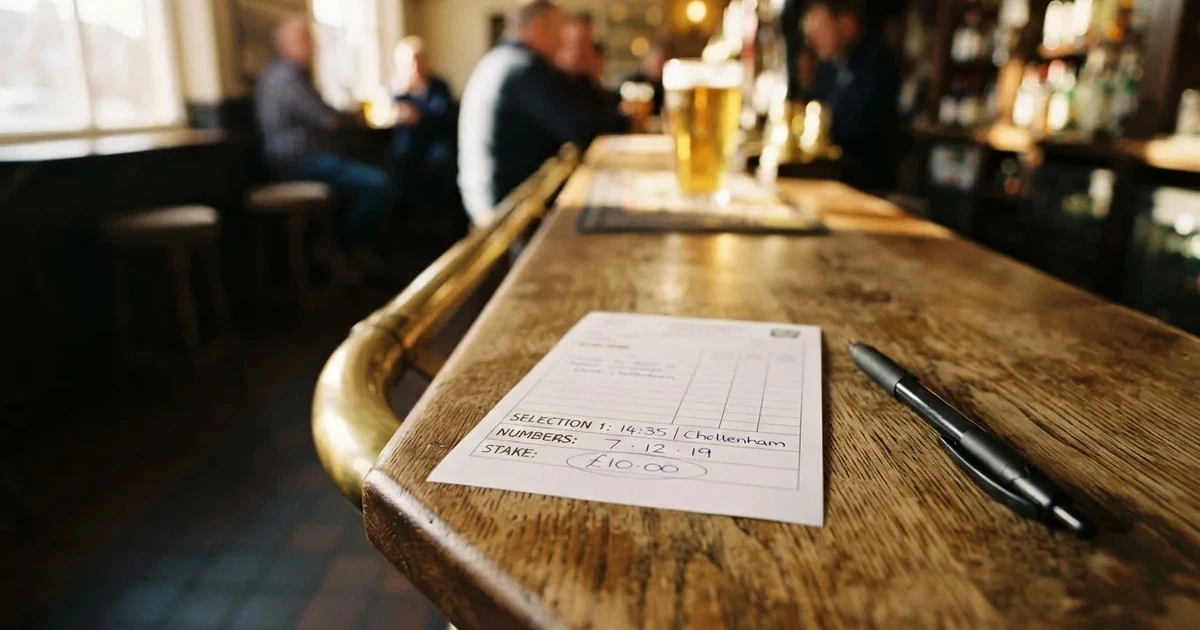
What is a Trixie bet?
*A Trixie is a full cover bet, meaning it covers all possible multiple bets over a given number of selections.*
A Trixie looks modest on paper — three selections, four bets — and that is precisely why it tempts bettors into thinking the maths is simple. It is not. Four bets multiply into each other in ways that the headline odds never advertise, and the difference between a Trixie and a Patent sitting next to it is exactly the singles you have decided to drop. This page is about how the bet is built, how it settles, what it costs in the long run, and which UK bookmakers let a customer place one. The aim is to leave a reader able to read a betting slip for a full-cover wager and know what every line on it does.
UK gambling law and what it means for a Trixie
The Trixie is not a regulated product in any statutory sense. There is no clause of the Gambling Act 2005 that names a Trixie, a Yankee or a Lucky 15. What the statute regulates is the operator: the kind of licence that operator holds, who issues it, and what conditions attach to it. The Trixie is a bet type that an operator chooses to offer — or not — under its own remote general betting standard licence. That distinction matters, because searching for “Trixie UK law” returns nothing useful, while searching for “Gambling Commission licence” returns the only test the market has.

In Great Britain — England, Scotland and Wales — the Gambling Commission licenses every commercial betting operator whose remote facilities are used by customers in this jurisdiction. Since the Gambling (Licensing and Advertising) Act 2014, an operator based anywhere in the world needs that licence if it wants to take bets from a customer in Great Britain. A licence from Malta, Gibraltar or Curaçao does not substitute. Northern Ireland sits outside the 2005 Act under its own older legislation, so the careful framing is “GB-licensed” rather than “UK-licensed” when the test is the Commission’s register.
There is no statutory list of permitted bets. The Commission issues licences in categories — remote general betting standard (real events), the same for virtual events, remote general betting limited, remote pool betting, and the betting intermediary licence that covers exchanges — and the operator then offers its own markets under the Licence Conditions and Codes of Practice. A Trixie is one of those market structures. Spread betting on financial instruments sits under the Financial Conduct Authority instead; spread betting on sports falls back inside general betting duty and the Commission’s remit.
The public register on the Commission’s site is the whole test of whether a brand holds a licence. It is searchable by business name, trading name, domain and account number, and any serious check starts there. The register is dated; a licence that existed yesterday is not assumed today, and a count of licensed operators is meaningless without the date it was taken. Every brand named in this guide holds a current licence at the snapshot date carried in the lead paragraph.
Naming the licence once and naming it correctly does the work. Quoting licence numbers, dates of issue and registered addresses on a guide page invites the page to drift out of date while the register keeps moving. The rule is to describe the licence by its category and holder, and to point the reader at the register for anything that needs to be verified today.
Three further points belong to this section rather than the next. First, identity verification has been mandatory at the point of first deposit since 7 May 2019: a Trixie cannot be placed anonymously at a licensed brand. Second, the minimum age for any gambling product, including a free bet, is 18. Third, the credit-card ban of 14 April 2020 covers every gambling transaction at a licensed site, including a credit card funding an e-wallet that then pays the bookmaker — a debit card or a bank transfer does not fall under that ban.
Responsible gambling tools around a multi-leg bet
A Trixie is four bets on three legs, which makes it a higher-engagement product than a single but a lower-engagement one than an eightfold accumulator. The responsible-gambling tools that apply are the same in either case, and they sit with the operator rather than with the bet type.

GAMSTOP is the national multi-operator self-exclusion scheme and a condition of every remote operating licence. A customer can self-exclude for six months, one year, five years or five years with auto-renewal; after the minimum period the exclusion stays in place for a further seven years unless the customer asks GAMSTOP to remove it. It covers online sites and apps; betting shops run a separate service. Every GB-licensed online operator is a GAMSTOP member.
A financial vulnerability check has applied since 30 August 2024 under LCCP condition 3.4.4, and the threshold at which it kicks in is deposits minus withdrawals exceeding £150 in a rolling 30 days (since 28 February 2025). The check is a public-record one — bankruptcy, county court judgments, similar entries — not an income or credit-reference check. Financial risk assessments of the kind reported in the press have been announced by the Commission in a staged plan (an article of 7 July 2026) without a start date. The correct wording is “announced, staged, no start date”; they are not yet in force at the snapshot date.
Deposit limits under RTS 12 are the customer’s tool rather than a state ceiling. Operators must offer a gross deposit limit on a fixed time frame; the first phase of changes has applied since 31 October 2025 and a second phase was postponed to 30 September 2026. There is no statutory cap on deposits or losses — the limit is the customer’s choice, the operator’s tool to enforce it.
Help lines sit outside the operator. GamCare runs the National Gambling Helpline, GambleAware funds treatment and education, the NHS runs gambling clinics, and Gamblers Anonymous runs peer-support meetings. The bookmakers reviewed below all link to these services; the section above on legality names what they have to do, this section names where a bettor turns when those tools are not enough.
Bonuses, free bets and a Trixie — what the terms actually allow
A Trixie interacts with bonuses in two ways, and the relevant interaction is rarely the one a marketing page leads with. The first is that free bets and bonus cash may not be usable on a Trixie at all. The second is that, even where they are, the bonus comes with terms that govern stake contribution, minimum odds and expiry — and a Trixie has the same four-bet structure whatever those terms say.
The clearest example is QuinnBet. Its free bets are valid for seven days from credit, can be used on any market at odds of 1/2 (1.50) or greater with a maximum odds of 50/1, and the same terms state that straight accumulators are allowed but Trixies, Patents and Yankees are not. That is a categorical exclusion: a free bet credited to a QuinnBet account cannot be staked on the bet type this guide is about. The figure worth carrying is the reason — QuinnBet’s terms treat a Trixie as a multi-line structure that its seven-day clock cannot police leg-by-leg.
Other brands carry the opposite rule. BetUK’s free bet terms exclude virtual sports, esports and non-UK/IE horse racing, and minimum odds apply; the multi-line bet types are not excluded by name. Dabble’s welcome offer is a £10 free bet on a £10 first deposit, with a seven-day expiry and the stake not returned; the operator does not exclude Trixies in the same way. Betfred’s app carries Bet Builder, Sub Switch, Racing Post data, Extra Places and a sportsbook in which multi-leg bets are the everyday product.
The bonus cap that does affect every GB-licensed operator is the wagering cap on promotional credit: since 19 January 2026 no licensed brand may attach a wagering requirement above 10x to a bonus, and a mixed-product promotion — an offer that requires gambling across two or more product types — is banned. A Trixie is one product, so the mixed-product ban does not catch it directly; the wagering cap does, and any “200% bonus, 50x wagering” headline that has been seen in the past no longer exists at a licensed brand. The rule says nothing about a cap on the money value of a bonus, and nothing about free bets that carry no wagering requirement at all; those points remain open.
Free-bet mechanics themselves deserve a sentence. A free bet is credit, not cash; the stake is usually not returned with a winning free bet, and a £10 free bet at 4/1 returns £40 in profit, not £50. The distinction matters for a Trixie because the four bets are staked as free bets at four times the headline unit stake, and the not-returned stake cuts the headline return by four unit stakes before profit begins. The arithmetic is taken up in the calculation block below; here it is enough to say that any offer reading “free bet on a Trixie” carries a stake-not-returned rule that materially changes what the bet pays.
Two further terms recur. First, the seven-day expiry is standard: a free bet un-used inside the window is forfeit, and a Trixie placed inside that window must settle inside it, otherwise some legs may become void and the bet drops to a smaller multiple. Second, minimum odds apply: the 1/2 (1.50) floor at QuinnBet and similar floors elsewhere exist so that the operator does not give away bonus money on outcomes that are close to certain. A Trixie whose every leg sits at odds-on prices may fail the floor on a free bet even where each leg clears it individually — the floor can be per-leg or per-bet depending on the terms, and that is a clause worth reading before claiming.
Strategy, staking and the bankroll question for a Trixie
The strategy literature on full-cover bets is mostly a literature of staking plans dressed up as insight. Strip the marketing and three questions remain: what is the right stake per line for the bankroll in question, what is the right minimum price per leg, and is the bookmaker’s margin on each leg acceptable at the moment of betting.
A Trixie’s stake is the unit stake multiplied by four — three doubles and one treble. That is a hidden multiple that casual bettors underweight: a £5 Trixie costs £20, a £10 Trixie costs £40, a £25 Trixie costs £100. The total exposure is the unit stake times four, and that total is the figure that has to fit the bankroll, not the unit stake. A punter who sets a £10 unit stake on singles cannot assume a £10 unit stake on a Trixie; the bankroll question is whether £40 of exposure on a four-bet structure is the right size for the punter in question.
Minimum odds per leg matter because a full-cover bet only collects on doubles and a treble — there are no singles to rescue a near-miss. If two legs win and the third loses, three of the four bets are dead and only one double pays. If all three win, the three doubles plus the treble pay. The math is forgiving when the third leg wins and brutal when it does not, and the question is how often “all three win” is realistic at the prices the bettor is being offered. That is the same as the single-bet question of whether each price is value, except that the answer is multiplicative across legs rather than additive.
Margin is the operator’s cut on every outcome of a market, and a Trixie carries the margin of every leg. A 5% margin on a single is small; a 5% margin on each of three legs in a Trixie compounds across the four bets, and the punter is paying the operator three times for the privilege of four bets rather than one. The compounded margin on a Trixie is one reason the same selections in a Patent — three singles plus the doubles and treble — can pay less in headline terms but cost less in the long run if the singles are likely to land. Choosing Trixie over Patent in a marginal case is choosing to drop the singles in exchange for higher returns on the all-three-win scenario; the punter has to believe in that scenario more than the singles.
Three practical rules emerge. First, never let the unit stake on a Trixie be the same as the unit stake on a single — the exposure is four times. Second, treat each leg as a value question independently; the fact that the bet is a four-bet structure does not excuse a leg that is overpriced. Third, decide whether to use a Patent or a Trixie before staking; switching mid-ticket loses the bankroll discipline the plan was built around.
A worked example keeps the strategy honest. A Trixie on three selections at decimal odds of 2.0, 3.0 and 4.0 with £1 on each of the four bets costs £4 in total. The three doubles return 6.0, 8.0 and 12.0 respectively at £1 stake (£6, £8, £12), and the treble returns 24.0 at £1 stake (£24). The total return at all-three-win is £50, of which £4 is the stake. The net profit is £46 on a £4 stake — high, but only if all three legs win. If two legs win, only one of the three doubles returns anything; the profit on that leg alone is the price minus one, times the stake, and the rest of the bet is dead. The same example at unit stake £10 costs £40 and returns £500 at all-three-win; the exposure scales linearly and so does the profit, with the same all-three-win condition.
The literature occasionally treats a Trixie as a “safer” alternative to an accumulator. It is not — it is a different distribution of returns, not a safer one. A treble returns the same as the treble leg of a Trixie but does not include the three doubles; a Trixie pays on doubles even when one leg loses, which a treble does not. That is the genuine difference, and it is what a Trixie buys: a partial payout when the treble would return nothing. The marketing word “safer” is not the right one.
Trixie, Patent, Yankee and the wider family of full-cover bets
A Trixie is one of a family of full-cover bets, each defined by how many selections and how many bets it contains. The definitions come from the operator’s own bet types page rather than from statute, but the names are conventional across the GB market.
A single is one bet on one selection. A double is one bet on two selections, both of which must win. A treble is one bet on three selections, all three of which must win. An accumulator — “acca” in British usage — is a treble, fourfold, fourfold or longer; the name describes the structure, the “acca” describes any multi-leg bet with more than three legs.
A Trixie is a bet on three selections made up of four separate bets: three doubles and one treble. There are no singles. The bet needs a minimum of two selections to win to gain any return; if only one selection wins, the entire bet loses.
A Patent adds three singles to the same three selections, taking the total to seven bets. The Patent pays even when only one leg wins because one of the singles does; the trade is that the unit stake is paid seven times rather than four. A Yankee has four selections and eleven bets: six doubles, four trebles and one fourfold. A Lucky 15 has four selections and fifteen bets: four singles, six doubles, four trebles and one fourfold. A Super Yankee — also called a Canadian — has five selections and twenty-six bets. A Heinz has six selections and fifty-seven bets. A Goliath has eight selections and two hundred and forty-seven bets. The total stake is the unit stake multiplied by the number of bets in the structure.
Two further shapes are worth knowing. A Lucky 31 has five selections and thirty-one bets; a Heinz plus a 63-variant covers further selections. The pattern is that the number of bets grows quickly with the number of selections, and the bankroll question reappears at every step. A Goliath at a £1 unit stake costs £247, and a Lucky 15 at £1 costs £15.
The choice between these structures is a choice about which scenarios the punter believes in. A Trixie punter believes that all three legs are likely enough to win that the treble is the main payoff, with the doubles as a partial-return safety net. A Patent punter believes at least one of the three legs is likely to win, and is willing to pay three extra unit stakes for the singles. A Lucky 15 punter is buying coverage at a four-selection level and accepting that the singles rarely pay enough on their own to justify the structure. None of these structures is “safer” than the others in any abstract sense; each rewards a different belief about which legs will win.
The settlement rules add another layer. A non-runner in a horse race voids the leg, the bet drops to a smaller multiple, and the stake on the affected leg is returned. A Rule 4 deduction applies when a horse withdraws from a race after the bet is placed, and the deduction reduces the price on the remaining runners in line with the operator’s table. Both rules apply to a Trixie in the same way they apply to any multi-leg bet.
Top bookmakers offering Trixies in Great Britain
The table below sets out the GB-licensed brands that carry full-cover bet builders in their sportsbook. The columns are the licence category and holder, and what the operator’s own terms state about multi-leg bets and free bets. A column of dashes has been dropped; the two matters covered are the ones that recur across the brands and that a bettor needs to know before placing a Trixie.
| Brand | Gambling Commission remote licence holder and account number | What the operator’s own terms state on Trixies and free bets |
|---|---|---|
| NetBet | Netbet Enterprises Limited, account 39170 | Daily Boosts and Profit Boosts; Bet Builder with instant dynamic odds; free bet offers attached to acca-style staking |
| QuinnBet | QuinnBet (Gibraltar) Limited, account 61011 | Free bets valid 7 days, 1/2 (1.50) minimum odds, 50/1 maximum; Trixies, Patents and Yankees excluded from free bets |
| BetTom | Bet Tom Limited, account 64959 | 50% back as a free bet up to £50 with matching casino free slot funds; full terms apply |
| Dabble | Dabble Sports UK Ltd, account 65677 | Bet £10, Get £10 in free bets on first deposit; 7-day expiry; stake not returned; minimum odds apply |
| BetUK | LeoVegas Gaming PLC, account 39198 | Free bets exclude virtual sports, esports and non-UK/IE horse racing; minimum odds apply |
| DAZN Bet | DZBT Limited, account 48756 | Cash Out, Bet Builder, daily bet boosts, in-play; cash out not always available and bets stand otherwise |
| 10bet | Blue Star Planet Limited, account 43173 | Cash out, Bet Builder, Live Streaming on football, tennis and horse racing |
| Tote | TDCO Limited, account 54779 | Best Odds Guaranteed on UK and Irish racing from 8 AM; singles and multiples; not ante-post or pari-mutuel |
| Betfred | Petfre (Gibraltar) Limited, account 39544 | Bet Builder, Sub Switch, Racing Post data, Extra Places, live casino and bingo |
| Fitzdares | Fitzdares Limited, account 400 | Cash out, accumulators, Lucky 15s, specials, ante-post markets, in-play |
Every brand in this list is on the Commission’s public register at the snapshot date; every site is a .co.uk or .com domain serving GB customers under a remote general betting standard (real events) licence, and every operator is a GAMSTOP member. A licence register counts far more brands than any guide features; the table is a shortlist, not a census, and an operator outside it is not by that fact outside the law.
NetBet — Daily Boosts, Bet Builder, and a wide multi-leg menu
NetBet sits at the first position in the shortlist because its multi-leg infrastructure is its main sportsbook feature. The Daily Boosts and Profit Boosts the operator markets are price enhancements on selected multiples — including full-cover bets where the legs are eligible — and the Bet Builder with instant dynamic odds is the operator’s same-game-multi product that sits inside a Trixie when one of the legs is from the same match. Sports stats for the major leagues are available to inform the leg-by-leg pricing decision.
The licence is a remote general betting standard (real events) licence held by Netbet Enterprises Limited; the Commission account number is 39170. NetBet is a GAMSTOP member and runs the full customer-verification regime: name, address and date of birth are checked before the first deposit.
Free bets are part of the operator’s promotional mix. The exact terms — minimum odds, expiry, market eligibility — vary by offer, and a Trixie eligibility check against the specific offer terms is the bettor’s job rather than the operator’s. The headline point is that the operator’s everyday product is a multi-leg book in which a Trixie is a standard structure.
The verdict on NetBet is that it sits well for a punter whose Trixie plans are anchored on football or tennis, where the Bet Builder integrates cleanly into one of the legs and the daily boosts lift the headline odds. The Boost marketing carries the same caveat as every Boost — the boosted price is a price the operator has chosen to offer, and the margin on the underlying market is unchanged.
QuinnBet — clear multi-leg rules, with Trixies excluded from free bets
QuinnBet is the operator whose terms give the clearest instruction in this guide: free bets at QuinnBet cannot be placed on a Trixie, a Patent or a Yankee. The seven-day expiry and the 1/2 (1.50) minimum odds define what the free bet can do, and the explicit exclusion of full-cover bets is the defining clause for a Trixie punter.
The licence is held by QuinnBet (Gibraltar) Limited, with Commission account 61011. The brand serves GB customers under the same remote general betting standard licence, and the verification regime applies. The minimum odds rule is per-leg on a free bet where the terms specify it, and the maximum odds of 50/1 caps the upside on any free bet.
For a cash punter — a Trixie paid for out of the deposited balance rather than free bet credit — the exclusion does not apply. The bet is placed as a four-line structure with the usual stake rules. The free-bet exclusion is the headline point because it is the one most likely to catch a punter who has claimed a welcome offer and tried to use it on the bet type this guide is about.
The verdict on QuinnBet is that the brand suits a punter staking cash on Trixies and Patents who wants the explicit terms in writing. A punter whose plan leans on a free bet as the unit stake is better served elsewhere, because the exclusion cannot be worked around.
BetTom — matched sports and casino welcome package
BetTom’s welcome offer is a sportsbook free bet matched by a casino free slot funds credit, with full terms governing each side of the split. The 50% back up to £50 in sports free bet is the leg relevant to a Trixie, and the matching 50% back up to £50 in casino funds is a separate product under a separate promotion rule. The mixed-product promotion ban in force since 19 January 2026 does not catch the welcome offer because the offer requires the customer to opt into each side; the headline structure is two parallel offers rather than one offer that requires play across both.
The licence is held by Bet Tom Limited, Commission account 64959. The brand runs the standard verification regime and is a GAMSTOP member. The sportsbook covers the standard football, horse racing, tennis and greyhound menu; a Trixie is a standard structure.
The verdict on BetTom is that the welcome package suits a punter who plays both sports and casino and wants the matched value; a punter whose betting is sports-only will use only half of the offer, and the Trixie eligibility of the sports free bet has to be checked against the specific terms because the operator has not published a single Trixie-specific line. The matched structure is the differentiator — it is rare among GB-licensed brands and is worth knowing about for a customer who plays both.
Dabble — social sportsbook with a £10 free bet headline
Dabble markets itself as a social sportsbook where customers follow tipsters and copy bets, and the welcome offer is a £10 free bet on a £10 first deposit for new customers. The headline is short and the fine print is short by industry standards: seven-day free bet expiry, stake not returned, minimum odds apply. The Trixie itself is not excluded in the same categorical way as at QuinnBet, though the minimum odds floor may bite per leg.
The licence is held by Dabble Sports UK Ltd, Commission account 65677. The site runs the standard verification and GAMSTOP regime. The social product is the differentiator rather than the betting structure; a Trixie is a Trixie, but the leg-picking process on a social sportsbook is shaped by the tipsters the customer follows.
The verdict on Dabble is that the brand suits a punter who values the social layer and the £10 entry point. A punter whose Trixie plan is built around a high unit stake will find the £10 ceiling too low; a punter whose plan is a four-line structure at small stakes will find it exactly sized.
BetUK — broad market coverage with a clean free bet exclusion list
BetUK’s free bet terms name what is excluded rather than what is included: virtual sports, esports and non-UK/IE horse racing are out, and minimum odds apply. The Trixie structure itself is not excluded by name. The licence is held by LeoVegas Gaming PLC, with Commission account 39198 — the same parent group runs other brands, and a customer using two brands in the group has two separate accounts under the same verification regime.
The Bet Builder product and the standard sportsbook menu sit behind the same licence, and the verification regime applies at the first deposit. The minimum odds floor has to be checked per offer, and the operator’s standard exclusion list has to be read carefully because exclusions are usually framed as market exclusions rather than bet-type exclusions.
The verdict on BetUK is that the brand is a broad-menu sportsbook with a Trixie-friendly free bet structure; the punter has to confirm the per-offer minimum odds because the headline terms are quiet on it. A LeoVegas-group customer using two brands reads each brand’s terms separately.
DAZN Bet — broadcast parent, sportsbook product
DAZN Bet is the betting brand of DAZN, the sports broadcaster, and the sportsbook is structured around the same fixture list DAZN covers for streaming. Cash Out, Bet Builder, daily bet boosts and in-play are the headline features, with cash out not guaranteed and the operator’s own terms making clear that bets stand if cash out is not available at the moment of the request.
The licence is held by DZBT Limited, Commission account 48756. The verification and GAMSTOP regimes are standard. The Trixie is a standard structure within the sportsbook; the differentiator is the broadcast parent, which gives the operator a natural in-play product but does not change the bet-type structure.
The verdict on DAZN Bet is that the brand suits a punter whose Trixie plans are anchored on football and who values the in-play and streaming integration. A punter whose plans are built around horse racing will not find the same broadcast parent advantage.
10bet — Cash out, Bet Builder and live streaming on the main sports
10bet’s sportsbook covers football, tennis and horse racing as the headline sports, with Cash Out, Bet Builder and Live Streaming as the headline features. The licence is held by Blue Star Planet Limited, Commission account 43173, and the standard verification and GAMSTOP regimes apply.
The Live Streaming product is the differentiator; for a Trixie punter, in-play leg visibility matters because the doubles depend on every leg’s outcome. Live Streaming is not the same as the in-play market being settled — the bet settles on the result, not on the stream — but the stream lets the customer watch the legs as they settle. The Cash Out product applies to singles and multiples where the operator offers it; a Trixie can be cashed out as a single position before all four bets have settled.
The verdict on 10bet is that it sits well for a punter whose Trixie legs are in football or horse racing, where Live Streaming adds value to the in-play experience. The Cash Out product is a real option on a multi-leg bet, and the operator’s terms govern when it is available.
Tote — pool betting heritage, Best Odds Guaranteed on racing
Tote is the pool-betting heritage brand and the GB-licensed operator with the deepest history in pari-mutuel wagering. The licence is held by TDCO Limited, Commission account 54779, and the sportsbook carries fixed-odds betting alongside the pool product. Best Odds Guaranteed applies to UK and Irish horse racing from 8 AM on the day of the race, on singles and multiples; it does not apply to ante-post, tote or pari-mutuel bets. A Trixie on three horse racing selections is a multiple, so BOG applies where the underlying leg is in the eligible set.
The verification and GAMSTOP regimes are standard. The differentiator is the pool product, which sits alongside the fixed-odds sportsbook and gives the operator a unique position on horse racing. A Trixie on racing selections can be placed as a fixed-odds multiple with BOG protection; the same selections in a pool bet do not carry BOG.
The verdict on Tote is that the brand is the natural choice for a punter whose Trixie legs are in UK and Irish racing, where BOG on multiples is a material edge over the morning price. A punter whose legs are in football or tennis will not find the same racing edge and will be choosing Tote on the sportsbook product alone.
Betfred — high-street heritage, full multi-leg product
Betfred is the GB-licensed operator with the deepest high-street heritage, and the app carries Bet Builder, Sub Switch, Racing Post data, Extra Places, live casino and bingo. The sportsbook product is a full multi-leg book in which a Trixie is a standard structure. The licence is held by Petfre (Gibraltar) Limited, Commission account 39544, and the standard verification and GAMSTOP regimes apply.
The Racing Post data and Extra Places product are the differentiators for horse racing; Bet Builder is the differentiator for football. A Trixie on three racing selections sits inside the Extra Places framework on each leg, and the Racing Post data informs the leg-picking decision. A Trixie on three football selections sits inside the Bet Builder framework on the same-game selection.
The verdict on Betfred is that the brand suits a punter whose Trixie legs span the racing and football menus and who values the data behind the prices. The high-street heritage shows up in the breadth of the offer rather than in any single feature, and the verification regime is the same as every other GB-licensed brand.
Fitzdares — premium betting with Lucky 15s and specials
Fitzdares markets itself as a premium betting brand, and the app carries cash out, accumulators, Lucky 15s, specials and ante-post markets on horse racing, football, tennis, rugby, cricket, golf and American football, with in-play live odds. The licence is held by Fitzdares Limited, Commission account 400 — the lowest account number on the list, a marker of how long the brand has held a Commission licence.
The Lucky 15 product is the headline multi-leg structure at Fitzdares; a Trixie is a related but smaller structure within the same family. The specials and ante-post product gives the operator an edge in novelty markets and early-priced racing; the in-play product sits across the main sports. The verification and GAMSTOP regimes are standard.
The verdict on Fitzdares is that the brand suits a punter whose Trixie legs span the premium racing and football menu and who values the specials book. A punter whose plans are built around Lucky 15s will find Fitzdares a natural home; a punter whose plans are Trixies alone may find the Lucky 15 emphasis a nudge toward a different structure.
What the Trixie returns in pounds, and what the headline odds hide
The arithmetic of a Trixie is simple at one level and treacherous at another. The simple version: take three selections at decimal odds A, B and C; the three doubles return A×B, A×C and B×C at unit stake; the treble returns A×B×C at unit stake. The treacherous version: the headline odds the punter reads are pre-margin, the same prices will overrule the bet, and the punter is paying the operator’s margin on each leg independently.
A worked example at the illustrative odds the spec names is the cleanest way to see it. Take three selections at 1/2 (1.50), evens (2.00) and 6/4 (2.50), and a stake of £10 for an accumulator — meaning £10 on the treble alone — or £2 per line for a full-cover bet, meaning £8 total on a Trixie.
The accumulator at £10 on the treble alone: the treble odds are 1.50 × 2.00 × 2.50 = 7.50, the return is £10 × 7.50 = £75, the profit is £65. A winning accumulator at these illustrative prices returns £75 on a £10 stake.
The Trixie at £2 per line, £8 total stake: the three doubles return 1.50 × 2.00 = 3.00, 1.50 × 2.50 = 3.75, and 2.00 × 2.50 = 5.00, and the treble returns 7.50. At £2 per line, the doubles return £6, £7.50 and £10 respectively, and the treble returns £15. The total return at all-three-win is £38.50, of which £8 is the stake, leaving £30.50 in profit.
The headline comparison is striking: the accumulator pays £65 profit on a £10 stake, the Trixie pays £30.50 profit on an £8 stake. The accumulator wins on this example because all three legs won and the treble is the dominant payoff; the Trixie adds only £7.50, £6 and £10 from the doubles, well below the £65 the treble paid on its own. If two legs win, the accumulator returns nothing — the treble needs all three — while the Trixie returns the single winning double. If one leg wins, both return nothing. The Trixie is a partial-return structure, and the partial return is the bet it makes.
The figure to carry from this block is that the Trixie pays less than the accumulator at all-three-win and pays more than the accumulator at exactly-two-win. Whether the trade is worth it depends on how often the punter believes the third leg will lose after the first two have won. At a £2 unit stake, the difference between the two bets at exactly-two-win is the full Trixie return on the single winning double (£6, £7.50 or £10) versus nothing. That is the bet the punter is making when choosing Trixie over accumulator.
Stated as a band: a Trixie at £2 per line on three illustrative selections at 1/2, evens and 6/4 returns £38.50 at all-three-win and between £6 and £10 at exactly-two-win, depending on which leg loses. The condition is that the leg-by-leg prices and the leg-by-leg outcomes are exactly as stated; any change to the prices changes every line of the return, and any change to the outcomes collapses the structure to the leg that wins.
The bankroll point the calculation exposes is that the punter has paid for four bets and collected on three at all-three-win and on one at exactly-two-win. The Trixie is not “free” doubles alongside the treble — it is a paid structure in which the doubles are partial insurance against a single-leg loss. The punter who does not believe the third leg will ever lose is paying for insurance they will not use; the punter who does is paying for it at a price they have to decide is fair.
Frequently asked questions about Trixie bets
What is a Trixie bet in plain terms?
A Trixie is a multi-leg bet on three selections that breaks into four separate bets: three doubles and one treble. There are no singles. The unit stake is multiplied by four, so a £5 Trixie costs £20 in total. A Trixie needs at least two of the three selections to win to return anything; if all three win, all four bets pay out.
How does a Trixie bet actually settle?
Each leg of the three selections is settled individually. The three doubles settle on the two legs in each; the treble settles on all three. If all three win, the punter collects on the three doubles and the treble. If two win, the punter collects on the single double that combines those two. If one wins or none win, the bet loses.
What’s the difference between a Trixie and a Patent?
A Patent has the same three doubles and one treble as a Trixie, plus three singles, taking the total to seven bets. A Patent pays even when only one leg wins, because one of the singles does. A Trixie does not pay when only one leg wins. The trade is that the Patent costs seven unit stakes rather than four.
How can a reader check that a bookmaker holds a Gambling Commission licence?
The Commission’s public register is searchable by business name, trading name, domain or account number. Every brand in this guide holds a current licence at the snapshot date carried in the lead. The register is the only test, and the date the check is made is part of the answer.
How is the return on a bet worked out from the stake and the odds?
For a single bet, the return is the stake multiplied by the decimal odds, and the profit is the stake multiplied by the odds minus one. For an accumulator or treble, the odds of the legs multiply into one price before the stake is applied. For a Trixie, the four bets are settled individually using the same rule.
Bet types & in-play – Grey Hound
Content created by the «Grey Hound» team
