
The Apple Pay betting sites worth a British punter's stake in 2026
 Available in US
Current as of 27 October 2026, cross-checked against the Gambling Commission’s public register of operating licences.
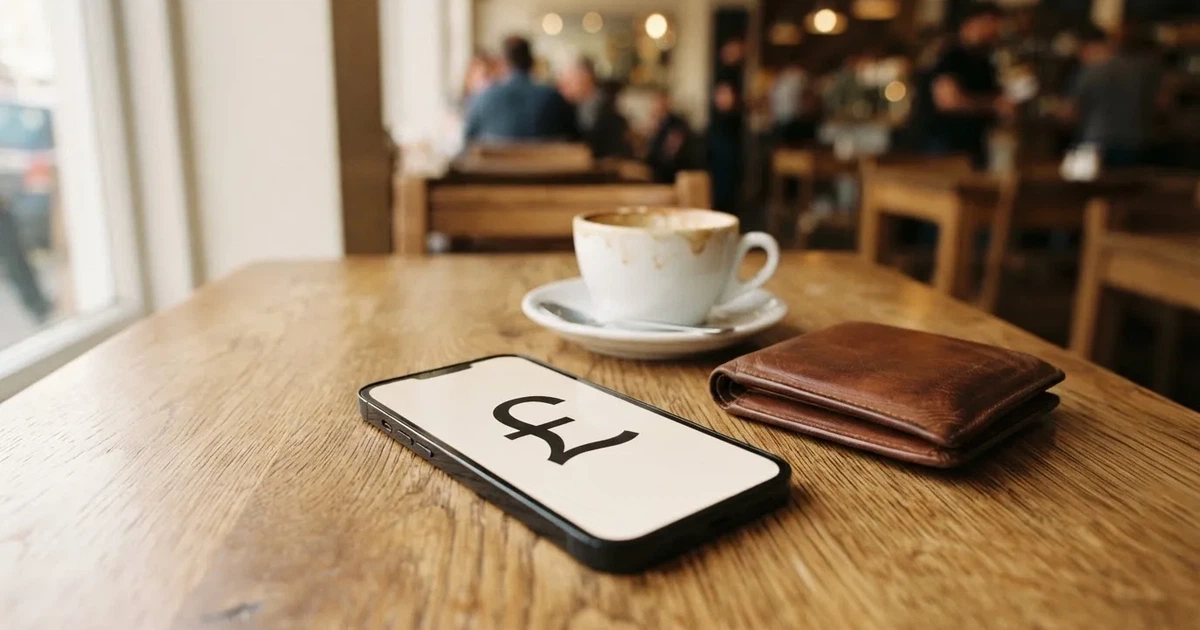
Apple Pay landed on UK-issued payment cards on 14 July 2015, more than a decade ago now, and it has quietly become one of the default ways a British punter tops up a betting account. The tap-to-pay habit formed on the Tube and at Pret local taking longer to migrate into the betting cashier than onto the high street, and ten of the ten bookmakers the Commission licenses for remote sports betting in Great Britain accept it. The interesting question is not whether you can use it. The interesting question is what it costs you in speed, in minimum deposits and in the safety net one spends the other payments on — and which of those ten turns out to be the right one for the way you actually bet.
The law that decides which methods appear on the cashier
The Gambling Act 2005 covers England, Scotland and Wales. Northern Ireland sits outside it under older legislation, so a “GB licence” is precisely that and nothing more — it regulates gambling activity in Great Britain, not across the United Kingdom. Since the Gambling (Licensing and Advertising) Act 2014, an operator whose remote facilities are used by customers in Great Britain needs a Gambling Commission licence wherever the company is incorporated. A Curaçao licence, a Malta Gaming Authority licence, a Gibraltar licence: none of these substitute. The Commission’s public register is the test — searchable by business name, trading name, domain or account number — and that register is what tells a reader whether a brand they have been recommended actually has permission to take their money.

Ten of the ten operators reviewed below appear on that register against a remote general betting standard (real events) licence. The Commission’s register does not sort bookmakers by quality, and a licence is not a recommendation; it is a floor. Several of the operators in this comparison run under the same parent company, and a few trade under sister brands on a single account, so the ten trading names here are not ten independent businesses. They are ten ways of accessing fewer.
One payment rule sits above all the others. Credit cards have been banned for gambling in Great Britain since 14 April 2020, including any credit-card-funded top-up through an e-wallet. Debit cards and bank-based payments sit outside that ban. Apple Pay sits inside a different category: it is not a card issuer, it is a payment tokeniser, and the cards it tokenises are debit cards or credit cards. Where the underlying card is a debit card, the deposit flows through normally. Where it is a credit card, the Commission’s ban applies at the source and the cashier will reject the transaction. This is the rule that decides what Apple Pay looks like in a British cashier, and it is the rule that has shaped every minimum deposit and every bonus eligibility check that follows.
Identity is verified before the first deposit — since 7 May 2019 — by name, address and date of birth, and the check covers free bets and bonuses as well as cash stakes. Anonymous play is not available at a GB-licensed operator, and any site that markets itself as anonymous is operating outside this framework. Source-of-funds questions at higher spend follow from the money-laundering rules, and a customer who treats those questions as friction is a customer who misunderstands what the licence bought them.
Why a financial vulnerability check shows up at higher spend
A separate layer sits on top of the identity check. Since 28 February 2025, a financial vulnerability check applies to licensed remote betting when a customer’s deposits minus withdrawals cross £150 in a 30-day rolling window. It is a public-record check — bankruptcy, county court judgments, that kind of record — not an income check, not a credit reference check. The financial risk assessments reported in the press as “affordability checks” have been announced in a staged plan from the Commission, with no published start date at the time of writing. Where this sits, the reader should expect the cashier to ask another question at higher spend, and should know it is not the same thing as a credit check.

What the bonus cap of 19 January 2026 changes
Promotion rules in force since 19 January 2026 cap wagering requirements on bonuses at 10x. A £10 bonus with a 50x wagering requirement would have required £500 of qualifying bets before withdrawal; under the cap no bonus requires more than £100 of qualifying bets. Mixed-product promotions — an offer that demands betting on two or more product types, such as “bet on football to get free spins” — are banned. Whether the cap applies to free bets that carry no wagering condition, and any cap on the absolute money value of a bonus, are not established. The bonus offers quoted later in this comparison are described from each operator’s own published terms and not from the cap itself.
Responsible gambling and the limits that actually apply
Every GB-licensed online operator is a GAMSTOP member, and membership has been a mandatory licence condition since 31 March 2020. Self-exclusion periods run for six months, one year, five years, or five years with auto-renewal, and after the minimum period ends the exclusion stays in place for a further seven years unless the customer asks GAMSTOP to remove it. The scheme covers online sites and apps; betting shops use a separate self-exclusion service and the two are not interchangeable. A reader who wants to step away from one channel and not the other has to register with both.
There is no state-set deposit ceiling for betting in Great Britain. Deposit limits are the customer’s choice: operators must offer a gross deposit limit on a fixed time frame, and the first changes have applied since 31 October 2025, with a second phase postponed to 30 September 2026. Whether that second phase is live is not established in the published guidance. The safer-gambling tools listed in the operator write-ups below — deposit limits, reality checks, time-outs, product restrictions, self-exclusion — are the operator’s implementation of that framework, and the operator’s own terms describe how each is configured.
Help is straightforward and free. GamCare runs the National Gambling Helpline. GambleAware funds treatment and education. The NHS operates gambling clinics in several regions. Gamblers Anonymous runs peer-support meetings. A reader who notices the habit slipping should reach for one of these before they reach for the cashier.
Anonymous betting and crypto: where the framework leaves no room
The search volume around “anonymous Apple Pay betting” and “Apple Pay betting no KYC” is real, and the honest answer is short. There is no anonymous play at a GB-licensed operator: identity is verified before the first deposit, and this check applies to all bonuses, free bets and cash deposits. Any operator that markets itself as anonymous, no-KYC, or “no verification” is operating outside the GB framework, and the customer loses the protections the framework provides — no GAMSTOP coverage, no Commission complaints route, no approved dispute-resolution body, no British consumer redress if funds are withheld, and no application of the 10x bonus cap or the £150 vulnerability check.
A British named-account rule, a state list of permitted payment methods, and any rule for or against cryptocurrency deposits at licensed operators are not established in the published framework. Payments are described only from each operator’s own terms, and the operator set in this comparison is described as each publishes its cashier. None of the ten operators in this comparison markets itself as anonymous, and none of them accepts cryptocurrency for sports betting in Great Britain.
The honest framing is this. Licensed means checks, limits, GAMSTOP coverage, the bonus cap and the dispute-resolution route, and it also means verification before the first bet. Unlicensed means none of those protections and the possibility that funds are withheld with no recourse. Neither is “the safe choice” by default; the question is which trade-off the reader is willing to make, and what they are giving up on each side.
What a bonus costs in turnover, and what a free bet is actually worth
Two numbers decide what a welcome offer is worth, and neither of them is the headline figure. The first is the wagering requirement — how many times the bonus, or the bonus plus deposit, has to be turned over before any of it can be withdrawn. The second is the minimum odds on the qualifying bet, which decides how much of the wagering requirement actually clears per unit staked. A £40 bonus headline that demands 10x turnover on the bonus alone requires £400 of qualifying bets, and at minimum odds of 2.0 (1/1 in fractional form) every £10 staked risks £10 to win £10. The bonus is not free money; it is a programme of bets with a defined cost.
A free bet is a different mechanism. Where the stake is not returned with a winning free bet, the value of the free bet to the customer is the free-bet amount multiplied by the odds minus one, divided by the odds, then multiplied by the payout share of the market. A £10 free bet at decimal odds of 4.00 on a market with a 95% payout share is worth £10 × 3 ÷ 4 × 0.95, which is £7.13 on average. At odds of 2.00 the value drops to £10 × 1 ÷ 2 × 0.95, which is £4.75. Free bets love long odds, and a punter who uses a free bet at short odds is leaving value on the table. The stake is usually not returned with a winning free bet, and that detail is the difference between “free bet” and “matched bet” in the operator’s own terminology.
The welcome offers quoted in the operator write-ups below are described from each operator’s published terms. They are quoted as a structural description — qualifying stake, minimum odds, expiry, what is issued — and not as a working code or a recommendation to claim.
Payments, payout speed and what “fast” actually means
Apple Pay itself settles the deposit in seconds, and the funds appear in the betting account before the punter has closed the cashier tab. The interest is not on the deposit leg — that is solved technology — it is on the withdrawal leg. The withdrawal flows back to the same debit card the deposit came from, and the timing depends on the card scheme rather than the betting operator. Visa withdrawals to a debit card are often same-day where the operator releases the funds quickly; Mastercard withdrawals can take up to 48 hours on the same operator. Bank transfer, where it is offered, sits at the slower end of the range.
The minimum deposit at most of the ten operators in this comparison sits at £5 by debit card and Apple Pay. DAZN Bet quotes £5 by debit card, Apple Pay, Paysafecard, Trustly and Skrill, with £20 by PayPal. The £5 floor is the industry standard for the cheapest payment rails and is the figure a punter with a small bankroll should look for. None of the operators in this comparison publishes a maximum withdrawal figure that binds in ordinary play; large-stake customers negotiate their own limits with the operator’s VIP team.
No processing fees appear on any of the ten cashiers for the methods covered here. The General Betting Duty, currently 15% on the operator’s gross profits, sits inside every price and is not a charge the punter pays; from 1 April 2027 a new remote betting rate of 25% applies within the duty, while remote bets on UK horse racing, bets on self-service betting terminals in licensed premises, pool betting and in-person betting stay at 15%. The punter pays no tax on betting winnings in Great Britain; a professional gambler should ask HMRC or an adviser.
The ten bookmakers, ranked on the criterion that matters
The ranking below is built on a single consequential question: which of these ten operators treats Apple Pay as a first-class payment rail rather than an afterthought, and which ones have built the rest of the cashier around it. Deposit minimum, withdrawal speed to the same card, Face ID and Touch ID support, the spread of other payment methods on the cashier, and the bonus terms that apply to Apple Pay-funded deposits are the inputs. Licence status is checked against the Gambling Commission’s public register. None of the ten is “the only” licensed one; all ten are licensed, and the rank order is an editorial call on the inputs above.
| Brand | Gambling Commission remote licence number and licence holder | What the operator’s own terms state on the key’s subject |
|---|---|---|
| bet365 | 055148-R-331498-002 — Hillside (UK Sports) ENC | Accounts funded by debit card, PayPal and Apple Pay; the app supports Face ID login on supported devices |
| Coral | 054743-R-330863-014 — LC International Limited | £40 in free bets on a £20 qualifying bet at minimum odds of 2.0 (1/1); free bets issued within 7 days and expire 7 days after issue |
| Unibet | 045322-R-324275-019 — Platinum Gaming Limited | £40 in free bets on a £20 qualifying bet at minimum odds of 2.0 (1/1); free bets expire within 7 days of issue; qualifying payment by debit card or instant bank transfer |
| BoyleSports | 039469-R-319383-025 — Boylesports Enterprise | Early payouts on selected sports: football 2 goals ahead, basketball 20 points ahead, rugby and NFL 16 points ahead, boxing after a knockdown |
| QuinnBet | 061011-R-335683-004 — QuinnBet (Gibraltar) Limited | Accepts debit cards, Apple Pay and Open Banking, plus Revolut cards; does not accept Skrill or Neteller deposits |
| NetBet | 039170-R-319343-032 — Netbet Enterprises Limited | Supports Instant Payments to bank, Apple Pay, PayPal and debit card; Face ID or Touch ID login |
| DAZN Bet | 048756-R-327274-019 — DZBT Limited | Minimum deposit £5 by debit card, Apple Pay, Paysafecard, Trustly and Skrill; £20 by PayPal; no processing fees |
| Fitzdares | 000400-R-103839-030 — Fitzdares Limited | Accepts Apple Pay, Mastercard and Visa; Visa withdrawals usually same-day, Mastercard up to 48 hours |
| Star Sports | 009177-R-104555-019 — Star Racing Limited | Deposit limits, Play Break facility and self-exclusion in My Account; app available in the UK and Ireland |
| Bet Ahoy | 100094-R-341742-003 — Bet Ahoy Ltd | 10% Acca Bonus up to £1,000; Sub-Cover for player substitutions; Best Odds Guaranteed on UK and Irish horse and greyhound racing up to £100; Double Result payout on UK and Irish racing |
The table is the headline; the write-ups below are what the cells cannot carry.
bet365 — the default that sets the floor
bet365 is the brand a British punter has been told to use for the last fifteen years, and the cashier is the reason. Debit card, PayPal and Apple Pay are the three funding rails the app surfaces first, and Face ID login is the authentication the app pushes on supported devices. The withdrawal flows back to the same card, and on Visa-branded debit cards the funds usually land the same day. The licence sits with Hillside (UK Sports) ENC against Commission account 55148, and the brand appears on the public register against the standard remote general betting standard (real events) category. The app is not the place for a marketing gimmick; it is the place where a deposit, a bet and a withdrawal all happen without a thought.
The verdict is that bet365 is the bookmaker to default to if the punter wants the cashier to behave like the rest of their phone — Face ID in, Apple Pay topped up, withdrawal back to the same card before they have closed the app. It is not the place to find a welcome offer with structural generosity; the brand does not lead on promotions and never has.
Coral — the Ladbrokes sister with the £40 headline
Coral runs under LC International Limited against Commission account 54743, and the licence covers both remote general betting standard (real events) and remote betting intermediary. Coral and Ladbrokes share a parent, and a customer with one account will recognise the cashier on the other. The headline sports welcome offer is £40 in free bets on a £20 qualifying bet at minimum odds of 2.0 (1/1), with the free bets issued within 7 days and expiring 7 days after issue, for new GB customers who opt in. The qualifying payment method is the customer’s choice across the cashier’s standard rails.
The verdict is that Coral is the bookmaker for a punter who wants a clear headline offer on a GB-licensed brand and is comfortable with a £20 qualifying bet at minimum odds of 2.0. Coral avoids the withdrawal ambiguity some brands retain, but Mastercard users will find the speed relies entirely on the card issuer’s internal settlement.
Unibet — the long-established European brand with the safer-gambling depth
Unibet has been operating since 1999, and the UK site runs under Platinum Gaming Limited, Gibraltar, against Commission account 45322. The safer-gambling tools run deeper than the comparison average: deposit limits, a Player Profile test, product restrictions and self-exclusion sit alongside live chat support and direct links to BeGambleAware, GamCare, GAMSTOP, Gambling Therapy and the Betting and Gaming Council. The headline sports welcome offer is the same £40-in-free-bets structure as Coral — £20 qualifying bet at minimum odds of 2.0 (1/1), free bets expiring within 7 days of issue — and the qualifying payment method is restricted to debit card or instant bank transfer. A punter funding the qualifying bet through Apple Pay on a debit card meets the requirement; a punter funding through an e-wallet does not.
The verdict is that Unibet is the bookmaker for a punter who wants the safer-gambling framework to be visible from the first page rather than buried in the account settings. Unibet prioritises clarity on the payment methods that qualify for the offer, which means a debit card or bank transfer is the route to take.
BoyleSports — the early-payout specialist with the Irish bookmaking heritage
BoyleSports runs under Boylesports Enterprise against Commission account 39469, on a remote general betting standard (real events) licence. The early-payout structure on selected sports is the differentiator: football pays out if a team goes 2 goals ahead, basketball at 20 points ahead, rugby and NFL at 16 points ahead, and boxing after a knockdown. The accumulator-friendly framing of the offer sits on top of a standard cashier that accepts Apple Pay through the same rails as the rest of the comparison.
The verdict is that BoyleSports is the bookmaker for a punter who bets on accumulators across the four sports the early-payout structure covers and wants a leg of the acca settled before the final whistle. BoyleSports centres the football and rugby markets in the early-payout framework, so tennis or golf bettors will not see the same automated settlement on their tickets.
QuinnBet — the cashier that says what it does not take
QuinnBet runs under QuinnBet (Gibraltar) Limited against Commission account 61011. The cashier is the most explicit in the comparison: debit cards, Apple Pay and Open Banking, plus Revolut cards. Skrill and Neteller deposits are not accepted, and the operator’s own help page states this in plain language. The clarity is the point; a punter who lands on the cashier knows in five seconds whether the rail they had in mind is on it.
The verdict is that QuinnBet is the bookmaker for a punter who values cashier transparency above all else and is happy to fund the account through a debit card, Apple Pay, Open Banking or Revolut. QuinnBet is a clean break from e-wallet funding, with a cashier focused on the debit card and open-banking rails.
NetBet — the Face ID login that matches the cashier
NetBet runs under Netbet Enterprises Limited against Commission account 39170. The cashier supports Instant Payments to bank, Apple Pay, PayPal and debit card, and Face ID or Touch ID login is built into the app. The combination is the point: a punter who funds the account through Apple Pay on a debit card and authenticates with Face ID never types a password or a card number after the first session. The licence is the standard remote general betting standard (real events).
The verdict is that NetBet is the bookmaker for a punter who wants the Apple Pay and biometric login flow to feel native to the device rather than bolted on. NetBet does not feature Skrill or Neteller in its funding mix, focusing instead on the biometric ease of Apple Pay.
DAZN Bet — the £5 floor across the cheap rails
DAZN Bet runs under DZBT Limited against Commission account 48756. The minimum deposit is £5 by debit card, Apple Pay, Paysafecard, Trustly and Skrill, with £20 by PayPal, and no processing fees on any rail. The £5 floor is the lowest in the comparison and is the figure a punter with a small bankroll should look for first. The licence covers the standard remote general betting standard (real events) category.
The verdict is that DAZN Bet is the bookmaker for a punter whose bankroll is small enough that the £5 floor matters. DAZN Bet is a more targeted offering, so punters looking for every novelty market or specialist sport may find the depth is lower than at the oldest brands.
Fitzdares — the premium bookmaker with the explicit withdrawal timing
Fitzdares runs under Fitzdares Limited against Commission account 400 — the oldest account number in the comparison. The cashier accepts Apple Pay, Mastercard and Visa, and the withdrawal timing is published plainly: Visa withdrawals usually same-day, Mastercard up to 48 hours. The premium framing of the brand is on the customer service rather than the cashier; the funding rails are the standard set.
The verdict is that Fitzdares is the bookmaker for a punter whose debit card is Visa-branded and who values the same-day withdrawal as a published commitment. Fitzdares distinguishes between the card schemes in its withdrawal policy, making Visa the preferred choice for those prioritising same-day funds.
Star Sports — the racing-led bookmaker with the safer-gambling surface
Star Sports runs under Star Racing Limited against Commission account 9177. The safer-gambling surface is visible from the app: deposit limits, a Play Break facility and self-exclusion are all configured in My Account, and the app is available in the UK and Ireland. The brand is racing-led, and the football and tennis coverage is narrower than the comparison average.
The verdict is that Star Sports is the bookmaker for a racing-led punter who wants the safer-gambling tools to be a tap away rather than a settings-menu deep. Star Sports concentrates its football coverage on the acca and in-play market, and punters focused on other specialist leagues may find the range is more compact.
Bet Ahoy — the acca bonus with the racing extras
Bet Ahoy runs under Bet Ahoy Ltd against Commission account 100094. The promotional structure is the differentiator: a 10% Acca Bonus up to £1,000, Sub-Cover for player substitutions, Best Odds Guaranteed on UK and Irish horse and greyhound racing up to £100, and Double Result payout on UK and Irish racing. The brand is newer than the comparison average and the market coverage sits inside a narrower set of sports.
The verdict is that Bet Ahoy is the bookmaker for a punter whose betting is concentrated in football accumulators and UK or Irish racing, and who wants the structural promotions to compound on top of the headline price. It is not the place for a punter whose betting spans the full market offering of the comparison’s larger brands.
How the cashier really behaves when Apple Pay is the rail
A few details decide whether Apple Pay is a five-second interaction or a five-minute one. On an iPhone with Face ID, an in-store Apple Pay purchase is authenticated by double-clicking the side button; on a model with Touch ID, by double-clicking the Home button. Online and in-app purchases follow the device’s biometric flow, and the punter does not enter a card number, a CVV or an expiry date. The underlying transaction is tokenised: the actual card number is replaced with a device-specific tokenised Device Primary Account Number, and a dynamic security code is generated for each transaction. The cashier on the betting side never sees the real card number; it sees a token, and the token is useless outside the device that generated it.
The data the cashier does see is the deposit amount, the funding source, and the timing. Identity is verified before the first deposit by name, address and date of birth, and the verification covers free bets and bonuses as well as cash stakes. The punter who has already verified their identity at one operator under the same parent does not re-verify at the sister brand; the verification is shared across the licence holder’s brands. Apple Pay itself is not a regulated payment institution in Great Britain under the Commission’s published framework; the cards it tokenises are. Where the underlying card is a credit card, the deposit is rejected at the cashier. Where it is a debit card, the deposit flows through normally, and the bonus eligibility is decided by the operator’s own terms rather than by Apple Pay.
A punter who funds the account through Apple Pay on a debit card, authenticates with Face ID, and withdraws back to the same Visa-branded debit card has the fastest round-trip the comparison offers. The deposit is settled before the punter has closed the cashier tab; the withdrawal is usually same-day on the Visa leg. The cashier at the other end of the comparison — QuinnBet’s explicit list, Star Sports’s safer-gambling surface, NetBet’s biometric login — is the structural difference between brands, and that structural difference is what the ranking above is trying to surface.
Frequently asked questions about Apple Pay betting in Great Britain
Can you bet against Apple Pay?
Apple Pay is a payment rail, not a betting exchange, so there is no concept of “betting against Apple Pay” in the way the phrase suggests. A punter funds a betting account through Apple Pay on a debit card, places bets with the operator’s own funds, and withdraws back to the same card. The phrase usually refers to betting against a friend or against an exchange, and the rail that funds the account is independent of the bet the punter places.
Can you lose on Apple Pay betting?
Yes. The rail that funds the account does not change the bet the punter places, and a losing bet settles as a losing bet whether the stake arrived by Apple Pay, by debit card or by bank transfer. The punter’s exposure is to the bet they placed and the odds they took, not to the payment method. Spread betting is a separate case: a financial spread bet can lose more than the deposit, and Spreadex, which is regulated by the FCA for spread betting and by the Gambling Commission for fixed-odds betting, states on its homepage that spread betting losses can exceed the deposit.
Can you use Apple Pay in betting shops?
Apple Pay is accepted at the contactless terminal in any betting shop that takes contactless card payments, and the major high-street brands take contactless. The transaction is tokenised in the same way as an online purchase, and the punter authenticates with Face ID or Touch ID on their device. The self-exclusion framework at a betting shop is a separate service from GAMSTOP and has to be registered independently.
Which payment methods do GB-licensed bookmakers accept, and are credit cards allowed?
Debit cards, Apple Pay, Google Pay, bank transfer and Open Banking are the standard rails across the comparison. PayPal, Paysafecard, Trustly, Skrill, Neteller and Revolut appear on some cashiers and not on others, and the operator’s own help page lists the funding and withdrawal methods. Credit cards have been banned for gambling in Great Britain since 14 April 2020, including credit-card-funded top-ups through an e-wallet, and any deposit funded by a credit card — including through Apple Pay on a credit card — is rejected at the cashier.
From what age can bets be placed in Great Britain, and when is identity verified?
Bets can be placed from age 18, and identity is verified before the first deposit by name, address and date of birth — since 7 May 2019. The verification covers free bets and bonuses as well as cash stakes, and a punter who has not verified their identity cannot deposit or bet at a GB-licensed operator. A separate financial vulnerability check applies once a customer’s deposits minus withdrawals cross £150 in a 30-day rolling window.
How can it be checked that a bookmaker holds a Gambling Commission licence?
The Commission’s public register is searchable by business name, trading name, domain or account number, and the register is the whole test of whether a brand holds a licence. The ten operators in this comparison are checked against the register, and the licence numbers, account numbers and licence holders are quoted in the table above. A brand that does not appear on the register is not licensed to take remote bets from customers in Great Britain, and a punter who bets with such a brand loses the protections the framework provides.
Payments & apps – Grey Hound
Content created by the «Grey Hound» team
