
2UP Early Payout Bonuses at UK Bookmakers: What the Offer Really Costs
 Available in US
27 October 2026 · verified against the Gambling Commission’s public register and each operator’s own published terms
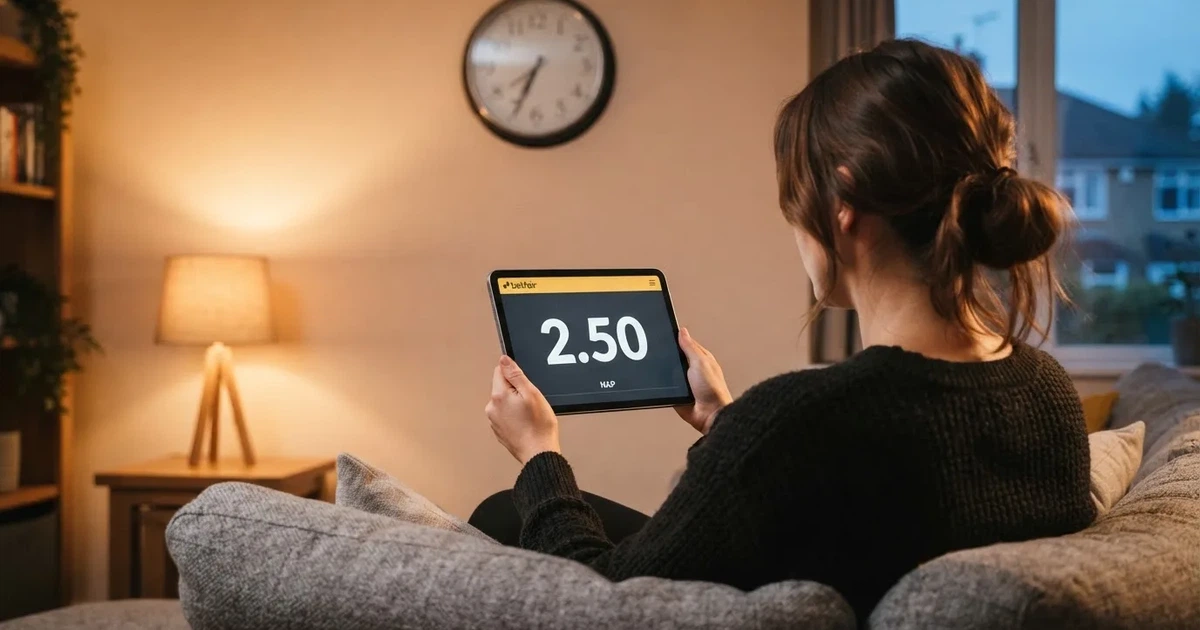
A 2UP early payout is the kind of promotion that sounds generous until the small print is opened. The bookmaker pays out a winning bet the moment the team backed goes two goals ahead, regardless of the final score. The headline never mentions the wagering attached, the minimum odds a qualifying bet has to clear, or that the free bet credit which often accompanies the offer does not return its stake. Ten UK-licensed bookmakers sit on a sensible shortlist for this market; what separates them, once the marketing is stripped back, is the arithmetic of their own terms. This page works through that arithmetic.
The fundamentals of a 2UP early payout
The 2UP market is a separate betting line, not a free add-on. A standard 1X2 bet on the full-time result does not trigger the early payout; the bet has to be placed into the specifically priced 2UP market the bookmaker offers. That distinction matters, because it is the one the marketing copy routinely blurs. A bettor who picks Arsenal to beat Tottenham in the ordinary Match Result market receives no early payout when Arsenal go 2-0 up. The same selection, placed into the 2UP market, settles at that moment. The full-time market keeps running until the whistle.

The second point is the clock. 2UP applies to regular time only. Goals scored in extra time, in a cup tie that goes to thirty minutes of additional play, do not count towards the offer. A bet that is sitting on 2-0 at full time, and then concedes in extra time, still settles as a winner at the 2-0 scoreline because the early payout already triggered inside the ninety minutes. Conversely, a match that is goalless at ninety minutes and then explodes in extra time never reaches the 2-0 threshold under the promotion. The bookmaker settles the bet on the full-time result, and the early payout never fires.
The third is the cash-out. A bet that has been fully cashed out before the selection goes two goals ahead is not eligible for 2UP early payout. Partial cash-out is treated differently: settlement is calculated on the remaining active stake rather than the original unit stake, so a bettor who has already banked half the potential return on a cashed-out portion receives a payout proportional to the stake that is still live. Both rules sit in the small print because they shape how a bettor can manage a position once the match has started.
The promotion is football-specific and is overwhelmingly attached to English Premier League fixtures, with selected European and international fixtures covered by some operators. The bookmaker’s own terms page is the only place that lists which matches carry the offer on a given matchday; the pricing of the 2UP market, which is usually tighter than the equivalent 1X2 line, is set by the operator in the usual way.
The legal frame in Great Britain
A bookmaker offering 2UP to customers in Great Britain needs a Gambling Commission remote licence. The Commission is the non-departmental public body that licenses the entire commercial market under the Gambling Act 2005, which covers England, Scotland and Wales. Northern Ireland sits outside that Act, so the right framing is “Great Britain licence” or “GB-licensed” rather than a UK-wide claim. Since the Gambling (Licensing and Advertising) Act 2014, an operator whose remote facilities are used in Great Britain must hold a Commission licence wherever the company itself is based; a Curaçao, Maltese or Gibraltar licence on its own is not enough.

The Commission’s public register is searchable by business name, trading name, domain or licence account number, and it is the test of whether a brand actually holds a licence. All ten brands reviewed here sit on that register, each under a remote general betting standard (real events) category; Ladbrokes also holds a remote betting intermediary category, which covers the exchange side of the business. Several brands can run under one licensee, so a licensee name on the register is not the same as a separate operator on the market. The register lists far more brands than any single comparison can feature, and no brand is “the only” licensed one in the country. A place in a ranking is not a licence; a licence is a Commission account number, written in the form the register carries it, and a reader who wants to check can do so in a minute.
Minimum age is 18 across the licensed market, and identity checks happen before the first deposit. Name, address and date of birth are verified before a customer can place a bet, including a free bet or bonus bet. A bettor who values anonymity above all other things is not the audience for any GB-licensed operator; an unlicensed offshore site may take a different position, but at the cost of every protection the British framework provides. That trade-off is covered further down.
The promotion rules in force since 19 January 2026 sit at the heart of any cost comparison. Wagering requirements on bonuses are capped at 10x — a £10 bonus with a 50x wagering requirement would have demanded £500 of qualifying bets; under the cap that drops to £100, and no licensed operator can lawfully attach a higher multiplier. The second rule bans mixed-product promotions: an offer that conditions a sports free bet on also playing casino, or on spinning a slot, is not allowed. What the rules do not settle is whether the 10x cap applies to a free bet that carries no wagering condition at all, and no cap on the money value of a bonus has been set. Operators can still credit a £100 free bet; they cannot, on a bonus, demand more than ten times that amount in qualifying bets.
Responsible gambling and the safety net around the offer
The 2UP promotion is sold as a sweetener, but the regulatory frame around it is what makes the licensed market recognisably British. GAMSTOP is the national multi-operator online self-exclusion scheme, and it is a mandatory licence condition for every online operator since 31 March 2020. A customer who registers with GAMSTOP is blocked from every GB-licensed online bookmaker for the period they choose, and the periods are six months, one year, five years, or five years with auto-renewal. After the minimum period the exclusion stays in place for a further seven years unless the customer asks GAMSTOP to remove it. The scheme covers online sites and apps; the high-street betting shop uses a separate self-exclusion system.
A financial vulnerability check is built into the licensed customer journey. It applies once a customer’s deposits minus withdrawals cross £150 in a rolling 30-day window, and it is a public-record check — bankruptcy, county court judgments and the like — rather than an income check or a credit reference check. It runs in the background, and a customer at modest stakes will not normally see it. Financial risk assessments, the heavier affordability checks, were announced in a staged plan, and the Commission has not yet set a start date; the right framing in print is “announced, staged, no start date”. Deposit limits are a customer-set tool rather than a state-set ceiling: operators must offer a gross deposit limit on a fixed time frame, the first changes have applied since 31 October 2025, and a second phase was postponed to 30 September 2026.
Help is available regardless of which bookmaker a customer uses. GamCare runs the National Gambling Helpline. GambleAware funds treatment and education. The NHS runs gambling clinics across the regions, and Gamblers Anonymous runs peer-support meetings. None of these services is bookmaker-specific, and a bettor who feels the promotion is pushing them further than they want to go can reach any of them independently of the operator.
What a 2UP bonus is actually worth
A 2UP early payout is a separate market, and the “bonus” that usually sits beside it in marketing copy is a separate offer again. A welcome package typically bundles the early-payout promotion on football with a free bet credit, a price boost on a named match, or a money-back offer on the first losing bet. The headline value is the easy part; the cost sits in the terms.
The free bet credit is the single biggest cost to understand. A free bet is non-withdrawable and the stake is not returned with the winnings. A £10 free bet placed at evens, on a market where the implied probability of winning is 50%, returns £10 of profit if the bet wins and £0 if it loses — the stake is gone either way. By contrast, a cash stake of £10 at the same evens returns £20, of which £10 is the original stake. The two are not equivalent. A bookmaker that frames a “£40 free bet” as a “£40 bonus” is selling the face value of the credit, not its realisable worth.
Minimum odds are the second filter. Almost every welcome offer requires the qualifying bet — the bet that unlocks the free bet credit — to be placed at a minimum price, usually 2.0 (1/1) in decimal terms. A bet on a heavy favourite at 1.20 (1/5) does not qualify, even though the bet wins, because the price is too short. The minimum odds rule is the bookmaker’s defence against a customer placing a near-certain qualifying bet and walking away with the credit. Wagering requirements are the same defence in another shape: where a bonus has to be turned over a set number of times before withdrawal, the requirement has to be met at minimum odds as well, usually 1.75 or higher, so that low-margin activity does not drain the bonus without giving the bookmaker a fighting chance of keeping some of it.
Expiry is the third filter. A free bet is time-limited. Sky Bet free bets expire 30 days after they are credited; the credit can be used only on single or each-way markets, not on accumulators, and virtual events are excluded. The 7-day window that several bookmakers attach to their welcome free bets is the more common rule across the market. A free bet that expires before the weekend’s fixtures is the same as no free bet at all. The 30-day window gives more room, but a customer who signs up, places the qualifying bet, and forgets about the credit for three weeks still has to find a market the credit will fit on, in time, before the bookmaker takes it back.
Stake not returned is the rule that follows the free bet to settlement. A winning free bet pays the profit only. The difference between a free bet and a cash stake is the stake itself, and that difference compounds over a series of free bets. A bookmaker that grants six £5 free bets over a season has, in headline terms, handed over £30 of value; in realisable terms the value is whatever those bets win, which depends on the prices taken and the outcomes landed. The bookmaker’s framing of the headline as if it were cash is a marketing choice, and the wagering and minimum-odds rules around the credit are the price of taking that headline at face value.
The standard wagering requirement, where one is attached, is now capped at 10x under the Commission’s January 2026 rules. A £10 bonus with 10x wagering requires £100 of qualifying bets before the bonus and any winnings from it can be withdrawn. That figure assumes only the bonus amount is wagered; some operators require bonus plus deposit, which doubles the requirement. The 10x cap is the maximum; many offers carry lower requirements, and a meaningful number carry no wagering condition at all. The cap is a ceiling rather than a floor, and a bookmaker attaching a 5x requirement is offering a better deal than a competitor at 10x, all else equal.
How the cost of a free bet plays out on a real market
A free bet is a credit, not cash, and its real value depends on the price it is taken at. Take a £10 free bet, stake not returned, on a two-way market priced at 1.90 in decimal odds. The credit wins £10 × (1.90 − 1) = £9 of profit if the selection wins, and returns nothing if it loses. The market itself has a margin, which for an evenly priced 1.90 / 1.90 line is 1 ÷ (1 ÷ 1.90 + 1 ÷ 1.90) = 1 ÷ 1.0526 ≈ 0.95, or 95% back to the customer and 5% retained by the bookmaker. The expected value of the free bet, averaged over many uses at this price, is therefore £9 × 0.50 (the implied probability of the price) = £4.50 before the margin is taken into account, and £4.50 × 0.95 = £4.28 once the margin is applied.
That figure is the average worth of the £10 credit at the stated price, assuming the bettor picks selections at the market’s own implied probabilities. A bettor who consistently takes the free bet at longer prices, where the implied probability is lower, sees a higher variance and a lower average — the rare big wins balance more frequent losses. A bettor who takes the credit at shorter prices, where the implied probability is higher, sees the opposite: more frequent small wins and a higher average. The price the credit is taken at is the bettor’s only real lever on the value of the offer. The £10 face value is a marketing number; the £4 to £5 range at a typical 1.90 price is what the credit is actually worth on average.
The band is the honest answer. The same £10 free bet at decimal odds of 3.00, on a market with a similar 5% margin, has a realisable value of £10 × (3.00 − 1) ÷ 3.00 × 0.95 = £6.33 on average, and at decimal odds of 1.50 it drops to £10 × (1.50 − 1) ÷ 1.50 × 0.95 = £3.17. The lower the price, the closer the value is to zero; the higher the price, the closer the value is to the face amount. The bookmaker’s marketing copy never spells this out, because the headline is the headline and the math is the math, and they are not the same number.
The figure is a statistical estimate: an average over many uses of the credit, not a guarantee for any single placement. A bettor who takes one free bet at a long price and wins has beaten the average, and a bettor who takes five at short prices and loses four has not. The expected value is the long-run reference point, and a customer weighing up a welcome offer should weigh the headline against it.
The ten UK bookmakers reviewed here
The list below covers ten bookmakers that hold a Gambling Commission remote licence for general betting on real events. Each is reviewed on the cost of its 2UP-related offer, the licence standing, and the small print around the free bet credit that usually sits beside the early-payout promotion. The order below follows the ranking the table at the end of this section sets out; the names in each review carry a one-line note on what makes that operator different in this comparison.
Unibet — Platinum Gaming Limited, account 45322
Unibet’s sports welcome offer is “Get £40 in Free Bets when you bet £20”: a deposit and a sports bet of £20 or more at minimum odds of 2.0 (1/1) in decimal terms, with the free bets issued within seven days and expiring seven days after issue. The offer is open to new GB customers using a debit card or an instant bank transfer; credit cards are not eligible for gambling in Great Britain. The 2UP early payout is available on selected football fixtures, with the matches covered listed in the operator’s own terms. Unibet has run its UK site under Platinum Gaming Limited since 1999, and the brand carries the longest operating history of the ten on this list. The seven-day window on the free bet is the tight constraint: a customer who places the qualifying bet on a Saturday and waits a week to use the credit finds the credit has gone. The 2.0 minimum odds filter is the standard filter for this market and is in line with most of the competitors. The realisable value of a £40 free bet at a typical 1.90 price is in the £17 range on average, well below the £40 headline, and the bettor who treats the credit as a £40 windfall is treating marketing as fact.
Kalooki Sportsbook — Kalooki Sportsbook Limited, account 57730
Kalooki Sportsbook is operated by Kalooki Sports Book Ltd (company number 12938274) and is licensed by the Gambling Commission under account 57730. The site advertises instant withdrawals by bank transfer within minutes, which is a different proposition from the multi-day withdrawal times the larger brands tend to run, and Best Odds Guaranteed on UK and Irish horse racing sits alongside the 2UP early payout on football. In-play betting, daily boosts and extra-place races round out the sportsbook offer. The brand is smaller than the market leaders and its welcome package is correspondingly modest; the 2UP promotion itself runs on the same terms as the larger bookmakers, with the bookmaker’s own fixture list setting the matches it covers. Kalooki is a GAMSTOP member, as every GB-licensed operator is, and a bettor who has self-excluded cannot place a 2UP bet here any more than they can at any other licensed site. The appeal is the small-operator focus: fewer markets, faster withdrawals, a tighter in-house product.
Ladbrokes — LC International Limited, account 54743
Ladbrokes is one of the high-street names that has moved fully online; LC International Limited holds the licence, and the brand also holds a remote betting intermediary category, which means the exchange side of the business sits on the same licence. The sportsbook offers odds boosts on horse and greyhound bets, Best Odds Guaranteed on UK and Irish horse races, in-play betting and Acca Boosts on selected accumulators. The 2UP promotion applies here too, with the matches covered listed in the operator’s own terms. The welcome offer is the standard “Get £40 in Free Bets when you bet £20” shape, with a debit card or instant bank transfer as the qualifying payment method, the same as Coral under the same licensee. The 7-day expiry on the free bet is the main constraint, and the minimum odds filter of 2.0 is the standard filter for this market. A bettor comparing Ladbrokes and Coral is largely comparing the same offer, because the licence, the terms and the small print are written by the same operator’s compliance team.
10bet — Blue Star Planet Limited, account 43173
10bet’s app advertises a 100% bonus up to £50 for UK sign-ups, plus daily free bets and free spins. The 100% match shape is different from the “Bet £X, Get £Y” structure most of the competitors run: a £50 deposit would qualify for a £50 bonus, with the bonus carrying a wagering requirement that has to be cleared before withdrawal. Under the January 2026 cap that requirement can be at most 10x, so a £50 bonus at the cap requires £500 of qualifying bets; the actual figure is set in the operator’s own terms and may be lower. The 2UP offer applies here, with the matches covered in the operator’s own terms. 10bet is a smaller brand than the high-street names, and the welcome package is correspondingly generous on the headline but demanding on the rollover. A bettor who has the time and the bankroll to clear a 10x wagering requirement sees a different offer than one who does not; for a bettor who values the early-payout promotion as the main reason to open the account, the daily free bets are a smaller sweetener and the headline match bonus is the load-bearing offer.
Star Sports — Star Racing Limited, account 9177
Star Sports offers pre-event and in-play markets with Bet Boosts, Daily Specials and Weekend Enhanced Boosts, and in-play betting on football, horse racing, golf and US sports. The 2UP early payout is part of the football offer and runs on the operator’s standard terms. Star Sports is one of the smaller licensed brands on this list and focuses on the UK racing audience, with the football book built around it. The welcome package is modest in headline terms and is geared toward the racing customer as much as the football customer. The 2UP offer itself sits in the same shape as the rest of the market, with the bookmaker’s own fixture list setting the matches it covers. A bettor looking for a racing-led bookmaker with a football 2UP offer on the side will find Star Sports fits; a bettor looking for a football-led bookmaker with the racing offer as the secondary product will find a different fit on this list.
Midnite — Midnite Limited, account 101839
Midnite’s sports welcome offer is “Bet £5, Get £25 in Free Bets and 50 Free Spins”: a first sports bet of £5 or more at pre-match odds of evens (2.0) or greater within 14 days of sign-up, with the free bets and free spins issued on settlement and valid for seven days. The operator includes the 2UP offer, and the site shows in-play events, an acca builder, popular accas and price boosts with maximum-stake limits on selected markets. The £5 entry point is the lowest on this list and is well below the £20 or £10 entries of the larger brands; the headline ratio of £25 in free bets for a £5 qualifying bet is correspondingly generous. The 14-day window to place the qualifying bet is twice the 7-day window most of the competitors run, and the seven-day window on the free bet is the standard for the market. The free spins sit on the casino side of the product and would, under a less careful regulatory frame, be a mixed-product promotion; the Commission’s January 2026 rules have reshaped how operators structure these packages, and the free spins here are a casino-side add-on rather than a conditioning offer on the sports bet.
Lottoland — EU Lotto Limited, account 38991
Lottoland’s UK app welcome offer is casino-based: a £20 stake on selected slots earns 100 free spins on Fishin’ Frenzy Even Bigger Fish with no wagering and a 30-day expiry, running until 14 February 2027. The 2UP offer runs on standard terms. Lottoland’s primary product is lottery and the sports book sits as a secondary line. The licence account is 38991 and the holder is EU Lotto Limited. The welcome offer is therefore a casino-shaped offer rather than a sports-shaped one, and a bettor looking at Lottoland for the 2UP promotion is looking past the headline welcome package. The 2UP terms are the operator’s own and run on the same shape as the rest of the market. A bettor who values the early-payout promotion as the primary reason for an account is a poor fit for Lottoland’s welcome offer, and a bettor who wants the early-payout promotion as a secondary feature on a lottery-led account is a better fit.
BetGoodwin — Goodwin Racing Limited, account 2927
BetGoodwin’s sports welcome offer is “Bet £10 & Get £15 in Free Bets”, made up of a £5 sports bet, a £5 acca and a £5 Sub-Cover bet. The three-part structure is unusual on this list: most of the competitors run a single free bet credit, and the split into three separate credits means three separate uses, each with its own minimum-odds filter and its own expiry. The brand also includes the 2UP feature, and Goodwin Racing Limited has run the brand as a racing-led bookmaker with a football book built around it. The smaller headline total of £15 in free bets is a smaller headline than the £40 of the larger brands, and the three-credit structure is a more fragmented use of that headline. A bettor who prefers a single credit to use in one go will find a different fit elsewhere; a bettor who likes to spread the credit across three different bets will find the structure suits.
Betmaster — BM Solutions GB Ltd, account 65699
Betmaster is operated by BM Solutions GB Ltd, registered in Malta, and holds Gambling Commission account 65699. The brand sits on the Commission’s public register against a remote general betting standard (real events) category. The 2UP early payout is available on selected football matches, and the welcome offer sits in the standard market shape. Betmaster is a smaller brand on this list and the marketing focus is on the football book. A bettor comparing Betmaster to the larger brands is largely comparing the welcome offer, the depth of the in-play product, and the speed of the withdrawal process. The licence is the same shape as the rest of the market: a remote general betting standard (real events) category on the Commission register, and the brand is a GAMSTOP member.
NetBet — Netbet Enterprises Limited, account 39170
NetBet Sport offers Daily Boosts, Profit Boosts and free bet offers, a Bet Builder with instant dynamic odds, and sports stats for major leagues. The 2UP early payout is available on selected football matches, and the bet builder is a significant secondary feature for a bettor who likes to combine markets from a single match into one bet. The dynamic odds on the bet builder are recalculated as the selections are added, and the customer sees the final price before confirming the bet. The welcome offer sits in the standard market shape. NetBet Enterprises Limited holds the licence, and the brand is a GAMSTOP member. A bettor who values the bet builder as a primary feature will find NetBet’s product stronger than brands that offer a thinner bet builder; a bettor who values the early-payout promotion as the primary reason for the account will find a similar offer across the market.
The bookmakers compared
The table below sets the ten operators side by side on the points that decide whether a 2UP early-payout offer is worth taking. The licence number is the Commission account number, written in the form the register carries it; the licence holder is the company named on the register against that account. The “2UP in the operator’s own terms” column is a direct transcription of what each operator’s own published terms say about the 2UP early payout, not a paraphrase.
| Brand | Licence holder and account | 2UP in the operator’s own terms |
|---|---|---|
| Unibet | Platinum Gaming Limited, 45322 | Free bets expire 7 days after issue; qualifying bet at minimum odds of 2.0 (1/1); 2UP on selected football fixtures |
| Kalooki Sportsbook | Kalooki Sportsbook Limited, 57730 | 2UP on selected football fixtures; instant withdrawals by bank transfer within minutes |
| Ladbrokes | LC International Limited, 54743 | 2UP on selected football fixtures; odds boosts on horse and greyhound; Acca Boosts |
| 10bet | Blue Star Planet Limited, 43173 | 2UP on selected football fixtures; 100% bonus up to £50 with wagering |
| Star Sports | Star Racing Limited, 9177 | 2UP on selected football fixtures; Bet Boosts, Daily Specials, Weekend Enhanced Boosts |
| Midnite | Midnite Limited, 101839 | 2UP on selected football fixtures; £5 qualifying bet at 2.0 or greater; free bets valid 7 days |
| Lottoland | EU Lotto Limited, 38991 | 2UP on selected football fixtures; primary product is lottery |
| BetGoodwin | Goodwin Racing Limited, 2927 | 2UP on selected football fixtures; £15 free bet split into three £5 credits |
| Betmaster | BM Solutions GB Ltd, 65699 | 2UP on selected football fixtures; Malta-registered operator |
| NetBet | Netbet Enterprises Limited, 39170 | 2UP on selected football fixtures; Bet Builder with dynamic odds; Daily Boosts |
The column does not carry the full terms of each operator’s 2UP offer; the operator’s own terms page is the only place those are set out in full, and the table gives the headline shape. A reader who wants to place a 2UP bet on a specific fixture should check the operator’s site for that fixture’s market availability, because the matches covered change from week to week.
What the comparison actually shows
Three patterns stand out across the ten. The first is that the 2UP early payout itself is not the differentiator: every brand on the list offers the promotion on selected football fixtures, and the rules around it — regular time only, full cash-out excluded, partial cash-out calculated on the remaining stake — are the same shape across the market. The differentiator is what sits beside the promotion: the welcome offer, the free bet credit, the minimum odds, the expiry, and the depth of the surrounding sportsbook.
The second is the welcome offer’s real value. The £40 free bet headline at Unibet, Ladbrokes and Coral is a face value, not a realisable value. At a typical 1.90 price, with the stake not returned and a 5% market margin applied, the credit is worth around £17 on average. The £25 free bet at Midnite is worth around £11; the £15 at BetGoodwin is worth around £7 spread across three credits; the £10 at Sky Bet-equivalent structures is worth around £4. The marketing numbers and the math are not the same number, and a bettor who treats the headline as cash is treating marketing as fact.
The third is the constraint. Minimum odds of 2.0 on the qualifying bet filter out near-certain selections, which is the bookmaker’s defence against a customer walking away with the credit. The 7-day expiry on most free bet credits is tight; a customer who places the qualifying bet on a Saturday and forgets the credit for a week finds the bookmaker has taken it back. The 30-day window at Sky Bet-equivalent structures gives more room but is a longer wait than most. Wagering requirements, where attached, are capped at 10x under the January 2026 rules, and many of the offers on this list carry no wagering condition at all. The cap is a ceiling rather than a floor, and a 5x requirement is a better deal than a 10x one, all else equal.
A bettor who wants the smallest possible entry point and the longest possible window to use the free bet credit will lean toward Midnite’s £5 entry and 14-day window. A bettor who wants the largest headline free bet and is happy with a 7-day expiry will lean toward Unibet, Ladbrokes or Coral at £40. A bettor who wants instant withdrawals and a small-operator focus will lean toward Kalooki. A bettor who values the bet builder as a primary feature will lean toward NetBet. A bettor who values a racing-led bookmaker with football on the side will lean toward Star Sports or BetGoodwin. The promotion is the same shape; the surrounding bookmaker is the variable.
Bonuses and free bets in the wider market
A 2UP early payout is one offer in a wider market of bookmaker promotions. The licensed market in Great Britain runs the full range: welcome offers on first deposit, free bet credits on first bet, money-back specials on losing bets, price boosts on named matches, acca insurance on accumulator bets, and loyalty offers on existing customers. The Commission’s January 2026 rules reshaped the structure: wagering requirements are capped at 10x, and mixed-product promotions are banned. The cap is a ceiling; an offer at 5x is a better deal than an offer at 10x, all else equal.
The free bet credit is the most common form. A free bet is a credit, not cash; the stake is not returned with the winnings; the credit is non-withdrawable; the credit is time-limited; the credit usually has to be used on single or each-way markets rather than accumulators. Sky Bet’s terms spell the shape out: free bets expire 30 days after crediting, can be used only on single or each-way markets (not multiples), excluding virtuals, are non-withdrawable and do not return the stake with winnings. The 30-day window is the longer end of the market; the more common shape is 7 days.
The money-back offer is the second form. A bookmaker refunds a losing first bet as a free bet credit, often up to a stated cap, with the credit carrying the same stake-not-returned rule and a similar expiry. The “risk-free” framing in marketing copy is the marketing word, not the bookmaker’s term; a refund as a free bet credit is not a refund in cash, and a customer who loses the qualifying bet and is then expected to clear the credit through further betting has not had a risk-free experience.
The price boost is the third form. A bookmaker offers an enhanced price on a named selection, usually a heavy favourite in a high-profile match, with the boost applying to single bets only and capped at a maximum stake. The boost is a marketing offer on a specific match and rarely carries the same wagering requirements as a free bet credit. William Hill’s Football Acca Boost is a related but different offer: a boost on accumulator bets of 2 or more legs, with each selection at minimum odds of 1/5, a boost from 3% on a double up to 200% on 20 or more legs, a maximum boost of £10,000 per online bet, and the offer running until 30 May 2027.
The acca insurance is the fourth form. A bookmaker refunds a losing accumulator as a free bet credit, usually when one leg of the accumulator lets the bet down. The refund is a free bet, not cash, and carries the same stake-not-returned rule. The minimum number of legs and the minimum odds on each leg are the qualifying filters, and the bookmaker’s own terms set both.
The deposit match is the fifth form. A bookmaker matches a first deposit as a bonus, with the bonus carrying a wagering requirement before withdrawal. 10bet’s 100% up to £50 is the shape. Under the January 2026 cap the wagering requirement is at most 10x, and the operator’s own terms set the actual figure. A £50 bonus at 10x requires £500 of qualifying bets before the bonus and any winnings from it can be withdrawn; at 5x it requires £250.
The loyalty offer is the sixth form, and the hardest to compare. A bookmaker offers free bets, price boosts, acca insurance, or money-back specials to existing customers on a rolling basis. The shape of the offer and the qualifying criteria are set by the operator and are not standardised across the market. A bettor who plans to keep a bookmaker account open for a season is best placed to read the loyalty offer on each operator’s site rather than rely on a comparison.
The cost of an offshore alternative
A bookmaker that does not hold a Gambling Commission licence is not licensed to take bets from customers in Great Britain. The Gambling (Licensing and Advertising) Act 2014 closed the point-of-consumption loophole, and an operator whose remote facilities are used in Great Britain needs a Commission licence wherever the company is based. A Curaçao, Maltese or Gibraltar licence on its own is not a substitute. The Commission can take enforcement action: cease-and-desist notices, search-engine referrals, work with registrars, hosts and payment providers, and court-order DNS blocking powers. The bet placed on an unlicensed site, by a customer in Great Britain, is a bet on a site that has no Commission oversight.
The trade-off is the trade-off every customer makes knowingly or otherwise. A licensed site offers GAMSTOP coverage, the Commission’s complaints route, an approved dispute-resolution body, the 10x bonus cap, the £150 financial vulnerability check, deposit limits, identity verification before the first deposit, and British consumer redress if funds are withheld. An unlicensed site offers none of those. The marketing word for an unlicensed site is usually “anonymous” or “no verification” or “no limits”; the practical word is “no recourse”. A customer who is paid out on a winning bet at an unlicensed site has had a good experience; a customer who is not paid out has no British route to complain.
No offence aimed at the customer who merely bets on an unlicensed site has been found in statute. The framing that holds up is honest: licensed sites come with checks, limits, GAMSTOP and the bonus cap, and the cost of those is identity verification before the first bet. Unlicensed sites come with none of those protections, and the cost of that is the possible loss of funds with no British route to complain. Neither side of that trade-off is “the safe choice” by default. A bettor who values anonymity above all other things is not the audience for a licensed site; a bettor who values the British consumer protection frame is not the audience for an unlicensed one.
The tax and the price
The player pays no tax on betting winnings in Great Britain. The General Betting Duty is the operator’s tax on gross profits, currently 15%, and a new remote betting rate of 25% applies from 1 April 2027, while remote bets on UK horse racing, bets on self-self-service betting terminals in licensed premises, pool betting and in-person betting stay at 15%. Until 1 April 2027 the remote rate stays at 15%, and whether operators pass duty on through tighter odds is not established. The Commission’s statutory levy is a separate charge, not a tax. A bettor who is paid out on a winning bet at a licensed site keeps the full return; the tax sits on the operator’s side of the transaction.
The bookmaker’s margin sits inside every price and is the part the marketing copy never quotes. A 1.90 / 1.90 line on a two-way market has a margin of 1 − (1 ÷ 1.90 + 1 ÷ 1.90)⁻¹ ≈ 5%; a 1.80 / 1.80 line has a margin closer to 11%; a 1.95 / 1.95 line has a margin closer to 3%. The bookmaker keeps that margin of every unit bet on the market, and the rest is paid out in winnings. A bettor who compares prices between bookmakers is comparing margins in disguise, and a 0.05 difference in decimal odds on a heavy favourite is a meaningful difference in the long run. The 2UP market is usually priced tighter than the equivalent 1X2 line, because the bookmaker is taking on extra liability by settling the bet early; the price the bettor sees in the 2UP market already has that liability priced in.
The bookmaker’s margin also sits inside the value of a free bet. The expected value of a £10 free bet at 1.90 on a 5% margin market is £4.28 on average, as set out above. The same free bet at 1.80 on an 11% margin market drops to £10 × (1.80 − 1) ÷ 1.80 × 0.89 = £3.96. The market the bet is placed on, not the size of the free bet, is the bigger lever on the realisable value.
Payment methods and the 2UP offer
Credit cards are banned for gambling in Great Britain, including credit-card-funded payments through an e-wallet. The ban is an LCCP condition and applies to every GB-licensed operator; a bookmaker that accepts a credit card deposit is in breach of its licence. Debit cards and bank-based payments are not covered by the ban. Coral’s payment page lists Apple Pay, Visa, Visa Electron, Mastercard, Revolut Pay, Google Pay, TrueLayer, Earthport and Trustly among its options, with the qualification that the welcome offer has to be qualified with a debit card or instant bank transfer rather than an e-wallet. The 2UP offer itself is a marketing promotion on the sports book and is not conditioned on the payment method; the welcome offer that usually sits beside it is.
E-wallets are not a uniform category. Some operators treat Apple Pay and Google Pay as debit-card transactions for the purposes of the welcome offer; others treat them as e-wallet transactions and exclude them from the qualifying deposit. A bettor who wants to use Apple Pay or Google Pay for the qualifying deposit should check the operator’s own terms, because the welcome offer is conditioned on the deposit method, not the 2UP offer. A bettor who uses Revolut Pay, TrueLayer, Earthport or Trustly is using a bank-based payment and is usually on safe ground.
The minimum deposit to qualify for a welcome offer is usually £10 or £20, depending on the operator. Betway’s minimum deposit is £10; Midnite’s qualifying bet is £5; Unibet’s qualifying bet is £20. The minimum is set in the operator’s own terms, and a deposit below the minimum does not qualify for the welcome offer, even if the same deposit would qualify for the 2UP promotion. A bettor who plans to deposit the minimum and use the credit on the 2UP market should read the operator’s terms on the qualifying payment method, the minimum deposit, and the qualifying bet’s minimum odds before placing the deposit.
Withdrawal times vary across the market. Kalooki advertises instant withdrawals by bank transfer within minutes; the larger brands tend to run multi-day withdrawal times for bank transfers and faster times for debit card withdrawals. The 2UP offer itself does not depend on the withdrawal time, but a bettor who plans to use winnings from a 2UP bet to fund a further bet is best placed on a brand with the faster withdrawal time. A bettor who plans to withdraw winnings to a bank account and is not in a hurry is best placed on a brand with the lower fees or the higher acceptance thresholds.
Picking the right bookmaker for the 2UP offer
A bettor who wants the 2UP early payout as a primary feature and is happy with a tight free bet window will find a number of fits on this list. Unibet, Ladbrokes, Coral and the larger brands offer the £40 headline credit with a 7-day expiry and the standard 2.0 minimum odds filter. Midnite offers a smaller £25 credit on a £5 qualifying bet and a longer 14-day window to place the qualifying bet. 10bet offers a 100% deposit match up to £50 with a wagering requirement, for a bettor who has the time to clear the rollover. BetGoodwin offers three £5 credits, for a bettor who prefers the credit split across three bets.
A bettor who wants the 2UP early payout as a secondary feature on a racing-led or lottery-led account will find Star Sports, BetGoodwin, Kalooki and Lottoland as fits, with the primary product of each set in the operator’s own terms. A bettor who wants the bet builder as a primary feature will find NetBet’s product stronger than brands with a thinner bet builder. A bettor who values instant withdrawals will find Kalooki the standout, with bank transfers within minutes rather than the multi-day times the larger brands run.
A bettor prioritising anonymity above all other things is not the target customer for any brand on this list; an unlicensed offshore site may take a different position, but at the cost of every protection the British framework provides, as set out above. The bettor who values the British consumer protection frame is the audience for every brand here, and the differentiator between them is the surrounding bookmaker, not the 2UP promotion itself.
What to check before claiming a 2UP bonus
Three things decide whether a 2UP bonus is worth claiming. The first is the qualifying bet. The minimum odds filter (usually 2.0) and the minimum stake (usually £10 or £20) are set in the operator’s terms, and a bet that does not clear both does not qualify. A bet on a heavy favourite at 1.20 may look like a near-certain qualifier, but the price is too short and the bet will not trigger the free bet credit. A bet on a long shot at 5.0 may look like a poor use of the stake, but the price is well above the minimum and the bet qualifies. The sweet spot is a bet at exactly the minimum odds, on a selection the bettor would have backed anyway, placed at the minimum stake.
The second is the free bet credit. The expiry (usually 7 or 30 days), the eligible markets (usually singles and each-way, not accumulators), the minimum odds (often 1.75 or higher), and the stake-not-returned rule are the four constraints. A free bet that expires before the weekend’s fixtures is the same as no free bet at all. A free bet that has to be used at minimum odds of 1.75 forces a particular kind of selection. A free bet on accumulators only is a different offer from a free bet on singles only. A free bet that does not return the stake is a different offer from a cash refund, and the realisable value is lower.
The third is the wagering requirement, where one is attached. A 10x wagering requirement on a £10 bonus is £100 of qualifying bets before withdrawal; a 5x requirement is £50; a 0x requirement is the bonus credited as cash, withdrawable on settlement. The January 2026 cap is 10x, and an offer above the cap is in breach of the Commission’s promotion rules. An offer at 5x is a better deal than an offer at 10x, all else equal. An offer with no wagering requirement is the best deal, all else equal, and is the shape more of the market is moving toward.
The fourth, often overlooked, is the partial cash-out rule. A bettor who has partially cashed out a 2UP bet before the selection goes two goals ahead settles on the remaining active stake, not the original unit stake. A bettor who fully cashes out before the 2-0 threshold is reached is not eligible for the early payout at all. Both rules shape how a bettor can manage a position once the match is live, and a bettor who plans to use cash-out should read the operator’s terms on how cash-out interacts with the 2UP offer.
The wider regulatory frame
The bookmaker’s offer sits inside a regulatory frame that the customer does not see most of the time. The LCCP sets the operating standards for licensed operators, from customer due diligence to advertising to bonus structures. The Remote Technical Standards (RTS) set the technical standards for the remote product, from age verification to deposit limits. The CAP Code and BCAP Code set the advertising standards, enforced by the ASA. The Commission’s enforcement is disruption rather than blocking: cease-and-desist notices, search-engine referrals, work with registrars, hosts and payment providers, and court-order DNS blocking powers. The customer who notices none of this is the customer the system is working for.
The January 2026 promotion rules are the most recent shift. Wagering requirements on bonuses are capped at 10x, and mixed-product promotions are banned. The cap is a ceiling rather than a floor, and an offer at 5x is a better deal than an offer at 10x. The mixed-product ban closes a route operators used to take: a sports free bet conditioned on a casino visit. Whether the cap applies to a free bet with no wagering condition is not established, and no cap on the money value of a bonus has been set. The headline on a £100 free bet is still lawful, even though the £100 free bet is not a £100 cash equivalent.
The deposit limit regime is the next shift to watch. Operators must offer a gross deposit limit on a fixed time frame; the first changes have applied since 31 October 2025, and a second phase was postponed to 30 September 2026. Whether that second phase is live is not established. The state does not set a deposit or loss ceiling for betting; the limit is a customer-set tool, and the operator is required to offer the tool and to apply the customer’s chosen limit.
The 25% remote betting duty from 1 April 2027 is a separate change, on the operator’s side of the transaction. Whether the rate change is passed on through tighter odds is not established, and the customer’s return on a winning bet is not reduced by the duty. The duty sits on the operator’s gross profit, not on the customer’s stake or winnings.
What the marketing copy never says
The marketing copy on a 2UP offer says the bookmaker pays out early when the team backed goes two goals ahead. The marketing copy on a free bet says the bettor has been credited with a free bet. The marketing copy on a deposit match says the bettor has been credited with a bonus. None of the marketing copy says the stake is not returned, the wagering requirement is 10x, the qualifying bet has to clear minimum odds, the free bet expires in 7 days, or the early payout applies to regular time only. The small print is the price of taking the marketing at face value, and the small print is the same shape across the market.
The arithmetic of the offer is the bettor’s only defence. A £40 free bet at 1.90 on a 5% margin market is worth around £17 on average, not £40. A £10 free bet at 1.50 is worth around £3. A £25 free bet at 2.00 is worth around £12. The marketing number is the marketing number, and the math is the math, and they are not the same number. A bettor who treats the headline as cash is treating marketing as fact; a bettor who treats the headline as a face value and reads the small print is treating marketing as marketing. The difference is the difference between being disappointed and being informed.
Putting it all together
A 2UP early payout is a useful promotion for a bettor who backs favourites in football and is happy to lock in a return when the selection goes 2-0 up. The promotion is a separate market, not a free add-on, and a bet on the ordinary 1X2 line does not trigger the early payout. The promotion applies to regular time only, and a fully cashed-out bet is not eligible. The rules are the same shape across the GB-licensed market, and the differentiator between bookmakers is the welcome offer, the free bet credit, the minimum odds, the expiry, and the depth of the surrounding sportsbook.
The welcome offer’s real value sits well below the headline. A £40 free bet at a typical 1.90 price is worth around £17 on average; a £25 free bet at the same price is worth around £11; a £15 free bet split across three credits is worth around £7. The minimum odds filter (usually 2.0), the qualifying bet minimum stake (usually £10 or £20), the free bet expiry (usually 7 or 30 days), the eligible markets (usually singles and each-way, not accumulators), and the stake-not-returned rule are the four constraints that decide whether a welcome offer is worth claiming.
The licensed market in Great Britain comes with a regulatory frame the customer does not see most of the time: identity verification before the first deposit, GAMSTOP coverage, the £150 financial vulnerability check, the 10x bonus cap, the 25% remote betting duty from 1 April 2027, the advertising rules enforced by the ASA, and the Commission’s enforcement powers. The unlicensed market comes with none of those. Neither side of that trade-off is “the safe choice” by default; the bettor who values anonymity above all other things is not the audience for the licensed market, and the bettor who values the British consumer protection frame is not the audience for the unlicensed one.
The bookmaker that suits one bettor is not the bookmaker that suits another. Unibet, Ladbrokes, Coral and the larger brands offer the £40 headline credit with a 7-day expiry; Midnite offers a smaller £25 credit on a £5 qualifying bet and a longer 14-day window; 10bet offers a 100% deposit match up to £50 with a wagering requirement; BetGoodwin offers three £5 credits; Star Sports, Kalooki, Betmaster and Lottoland each sit on a more specialist proposition. The 2UP promotion is the same shape across the ten; the surrounding bookmaker is the variable, and the bettor who reads the small print is the bettor who picks the right one.
Frequently asked questions
What does 2UP mean in betting?
A 2UP early payout is a bookmaker’s promotion that pays out a winning football bet the moment the team backed goes two goals ahead, regardless of the final score. The bet is settled at that point and the customer receives the winnings; the bookmaker does not wait for the final whistle. The promotion is a separate market, so a bet on the standard Match Result line does not trigger the early payout.
What is 2UP in betting?
2UP in betting is a priced market on selected football matches, with the price usually tighter than the equivalent 1X2 line because the bookmaker is taking on extra liability by settling the bet early. The bookmaker’s own terms set the matches covered and the price of the 2UP market for each match. The promotion applies to regular time only, and a fully cashed-out bet is not eligible for the early payout.
What is a 2UP bet?
A 2UP bet is a single bet placed into the specifically priced 2UP market, not a free add-on to a standard Match Result bet. The bet settles the moment the team backed goes two goals ahead, and the customer receives the winnings at that point. Goals scored in extra time do not count, and a partial cash-out settles on the remaining active stake rather than the original unit stake.
What is the maximum wagering requirement on a betting bonus in Great Britain?
The Gambling Commission capped wagering requirements on bonuses at 10x from 19 January 2026. A £10 bonus at the cap requires £100 of qualifying bets before the bonus and any winnings can be withdrawn; a £50 bonus at the cap requires £500. Many offers in the market carry no wagering condition at all.
What do minimum odds and the wagering requirement mean in a sign-up offer?
A sign-up offer usually requires the qualifying bet — the bet that unlocks the free bet credit — to be placed at a minimum price, often 2.0 (1/1) in decimal terms. A bet on a heavy favourite at 1.20 does not qualify, even if the bet wins, because the price is too short. The wagering requirement, where one is attached, is the number of times the bonus has to be turned over in qualifying bets before withdrawal, capped at 10x under the January 2026 rules.
Why is the stake of a free bet not paid back with the winnings?
A free bet is a credit, not cash, and the bookmaker’s standard terms state that the stake is not returned with the winnings. A £10 free bet at evens returns £10 of profit if the bet wins and £0 if it loses — the stake is gone either way. By contrast, a cash stake of £10 at evens returns £20, of which £10 is the original stake. The two are not equivalent, and the realisable value of a free bet at a typical 1.90 price is around £4 to £5, not the face value of the credit.
Free bets & offers – Grey Hound
Content created by the «Grey Hound» team
