
NASCAR betting odds in the UK for 2026
 Available in US
Current as of 27 October 2026 and checked against the Gambling Commission’s public register of remote operating licences.
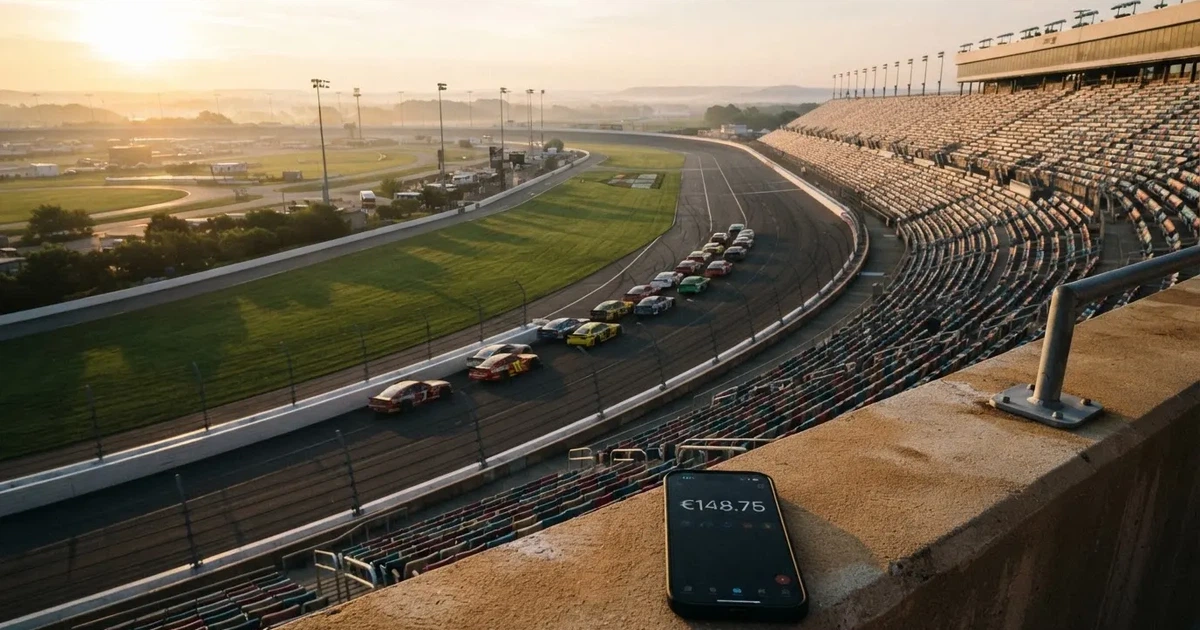
NASCAR sits in an odd corner of the British market. The Cup Series runs almost entirely on American ovals and short tracks, in front of American fans, yet every bookmaker that takes a pound on it operates under a regime built for English high-street shops and Premier League punting. The odds themselves look familiar, too, once you strip the fractional price down to its decimal form. What differs is how thin the market sits: bet365 and 888sport carry detailed race winner and stage markets, smaller names list little more than the outright winner, and the margins written into those prices can stretch far wider than anything on a Premier League Saturday. This page compares the ten brands the Gambling Commission currently licenses for remote general betting in Great Britain, names the prices they publish for the Cup Series, and explains the mechanism behind a NASCAR line so a punter can tell a fair offer from one carrying twenty per cent for the house.
The page is a comparison, not a tip. Nobody can call who wins Daytona in February, who survives Talladega in October, or who lifts the Bill France Cup at Homestead in November, so the page stakes no claim on any of it. What it does stake is the arithmetic: the overround built into every two-way market, the snapshot that pins a price to a date, and the licence check that costs a registered punter about thirty seconds before they hand over a deposit.
NASCAR Bonuses, Free Bets and Where the Real Cost Sits
“Free bet” and “bonus” sit next to each other on a bookmaker’s promotions page, and they are not the same thing. A free bet is a token the customer stakes; if it wins, the winnings land in cash but the stake does not come back. A deposit bonus adds a percentage of the deposit to the betting bank, sits behind a wagering requirement, and is paid in real money once the requirement is cleared. Both involve something given to the customer and something taken back by the operator, and the thing taken back is where the difference lives.
Betway’s Free Bet Club gives up to £10 in free bets every week after opt-in; spending £25 or more on sports earns two £5 free bets. QuinnBet’s offer is shaped differently. William Hill’s Football Acca Boost covers accas of two or more legs with each selection at 1/5 or bigger, scaling from a 3% boost on a double up to a 200% boost on twenty or more legs and capped at £10,000 per online bet, running through 30 May 2027. The 200% headline is the kind of number that pulls a reader in; the cap and the floor on each leg are the parts a reader reads second and a bookmaker hopes first.
The regulation that bounds all of this is straightforward. Since 19 January 2026 wagering requirements on bonuses are capped at 10x, and mixed-product promotions — an offer that demands gambling on two or more product types such as betting, casino, bingo and lottery, “bet on football to get free spins” being the textbook example — are banned. A £10 bonus with a 50x requirement (the old industry default) would have needed £500 of qualifying bets; under the cap it is held at £100. Free bets with no wagering condition sit outside that cap, and whether a hard ceiling on the money value of any bonus exists has not been settled. The honest summary: bonuses are smaller and cleaner than they were twelve months ago, and the free bet, which rarely carried a wagering multiple to begin with, is the cleaner of the two by design.
On NASCAR specifically the arithmetic of clearing a bonus is no different from clearing one on football. The wagering is on whatever sport the punter backs, the same turnover multiplier applies, and a Cup Series futures bet on the outright counts just as much as a Premier League coupon. What changes is the spread: the house edge on a NASCAR two-way market tends to sit higher than the house edge on a Premier League match result, because fewer pounds chase the same race. A bonus cleared against NASCAR bets therefore costs the punter more on average than the same bonus cleared against Premier League bets, and the cap on the wagering requirement does nothing to fix that.
Mobile, App and How Each Sportsbook Reaches a Punter’s Phone
Ten years ago a punter filled in a betting slip by hand. Today they tap an app, set a price boost notification, and stream a race from their kitchen. The mobile side of a modern sportsbook is no longer an afterthought, and the ten brands in this comparison approach it three different ways.
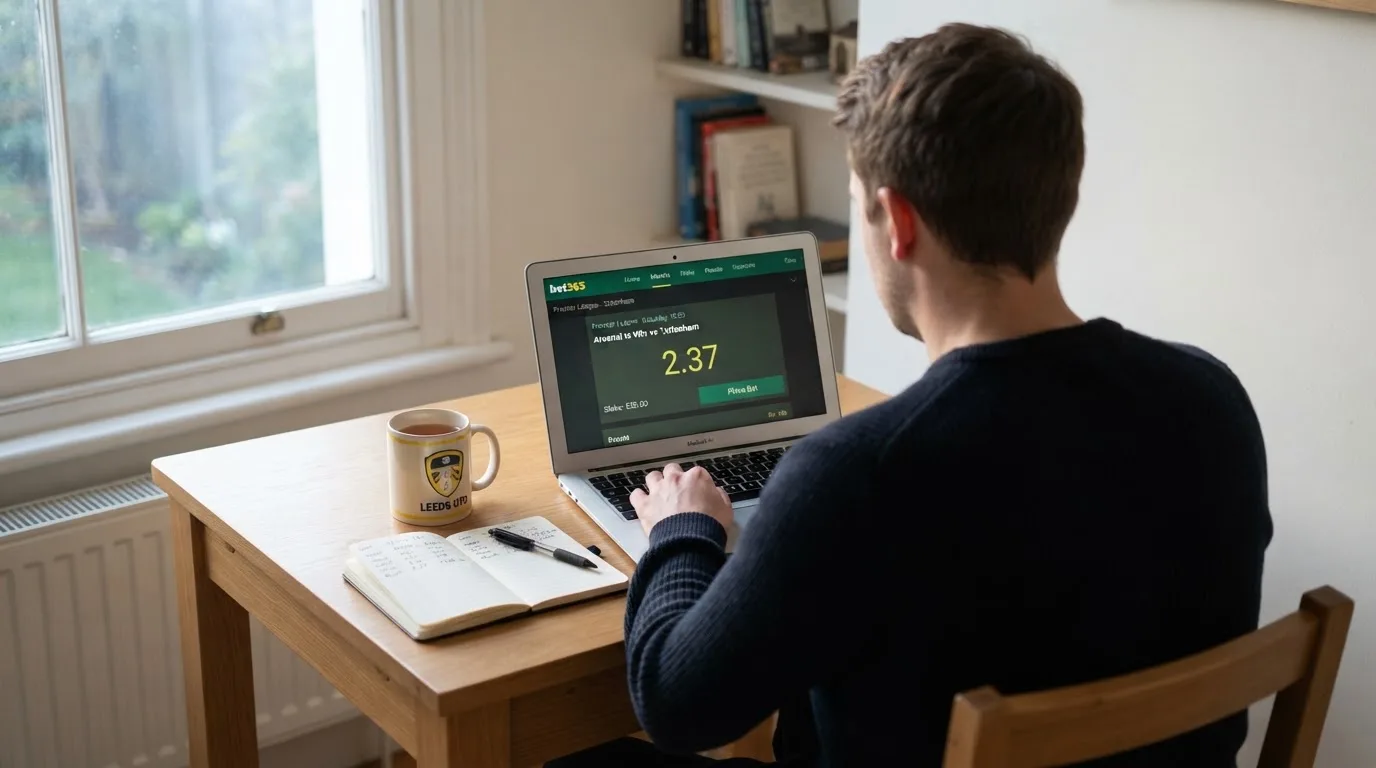
The first approach is the native app that carries every part of the desktop product. bet365’s app offers in-play betting, live streaming of events worldwide, Bet Builder+, Super Boosts, Winnings Boosts on Bet Builders and selected singles, and daily Bet Boosts, with its own Bet Track, Match Live and Live Golf Tracker for following bets in play. 888sport’s app offers pre-match and in-play betting, Cash Out, Bet Builder, racing streams, BetFinder form tools, a live bet feed and daily boosted odds. LiveScore Bet’s Bet Builder allows up to ten selections and covers match result, both teams to score, corners, total goals, player scoring and card markets. London Bet’s app pairs sports betting with Pragmatic Play casino slots and live in-play, while Lottoland UK’s app layers casino, lottery betting, sports betting and scratchcards on top of a Gambling Commission licence. These are full-service products, and a punter who needs the same feature set on a phone as they get on a laptop has a shortlist to draw from.
The second approach is the racing and ante-post specialist. Geoff Banks’ app, published by GB Sports Advisors, offers live in-play prices and ante-post prices on future events; QuinnBet, Bet600 and Fitzwilliam Sports cluster around the racing end of the market with Best Odds Guaranteed and the time-of-day tweaks that go with it. QuinnBet’s Best Odds Guaranteed applies to Irish and UK horse racing bets from 10:00am daily on singles, multiples and system bets with a maximum benefit of £150 per customer per race; Bet600 pays Best Odds Guaranteed on horse racing, paying at the starting price where the SP beats the early or show price taken; William Hill applies its Best Odds Guaranteed from 8am on the day of the race to both single and multiple UK and Irish bets but excludes ante-post, tote and pari-mutuel; Copybet runs Best Odds Guaranteed all day, every day on all UK and Irish racing and pays first past the post on horse racing even when the winner is later disqualified.
The third approach is the spread betting hybrid. Spreadex is regulated by the FCA for spread betting and by the Gambling Commission for fixed-odds betting, and its central warning is that spread betting losses can exceed the deposit. NASCAR pricing at Spreadex is the financial product kind, a spread rather than a price, and it is a separate discipline from the outright winner market at a fixed-odds bookmaker.
The single most-downloaded sports betting app in the UK is a useful benchmark for the scale one operator reaches, not a verdict on the others. Spreadex’s FCA coverage and the racing apps’ Best Odds Guaranteed are useful for the punter they fit and irrelevant for the punter they do not. A shortlist is whatever a punter’s phone habits and race-day expectations look like; the rest of this page narrows it from there.
Live Betting, Cash Out and Following a Race as It Unfolds
A NASCAR race is not forty-five minutes plus stoppage. It is three and a half hours of stage breaks, pit windows, cautions and restarts, and the in-play product sits at the heart of how a punter with a phone follows it. Every bookmaker in this comparison runs in-play prices on the outright, a thinner layer runs stage winner, leader after lap fifty, and fastest pit stop, and the headliners also run Cash Out, which settles a bet before the race is over.
Cash Out is not a refund in cash. It is the bookmaker buying the bet back at a price it sets using the live market, and the price is always worse for the punter than the mid-market fair would be. A bet that started at 8.00 and is now trading at 6.50 in play cannot be cashed out at 6.50; it will be cashed out at 6.20 or lower, depending on the bookmaker and the race situation. The right way to read the feature is that it lets a punter lock in profit or limit loss when conviction has gone, not that it lets them trade a bet at the live price.
In-play on NASCAR also lives within the broader rule that GB bookmakers offer it under their own licence conditions and customer-protection duties. No statutory prohibition exists and no statutory permission is required, but every operator applies a margin to the live market that is wider than its pre-match margin, because the price has to be updated every few seconds and that is what pays for the technology. A live NASCAR winner market with a margin of 12% to 15% is ordinary. A pre-match NASCAR winner market with the same margin would be wide.
Bet365’s in-play product is the most fully developed of the ten on this list: live streaming, Match Live data, Bet Track, Bet Builder+ in-play, and Super Boosts that fire during the race. 888sport runs a live bet feed with Cash Out. Geoff Banks’ app carries live in-play prices alongside its ante-post futures. The NASCAR product is patchier outside the headliners, and a punter who wants the deepest live book on a 500-miler has a shortlist of two or three. The rest is solid: in-play works, Cash Out works, the prices update, and the difference between a fully-loaded in-play book and a thin one is the difference between betting while the race runs and watching it on a stream.
How the Market Builds a NASCAR Line and What It Means for the Punter
The market is what the bookmaker quotes. A line is a price on each outcome; an overround is the sum of the implied probabilities of all outcomes minus one, expressed as a percentage; the margin is what the bookmaker keeps of every unit bet on this market. On a two-way market with both sides at 1.90 (9/10 fractional) the implied probability of each side is 1 ÷ 1.90 = 0.5263, or 52.63%, so the two sides together imply 105.26% of a fair market. The payout share is 1 ÷ 105.26% = 95%, and the margin is 1 − 95% = 5%.
The wider the margin, the more of every pound staked the operator keeps. A two-way outright with both sides at 1.80 (4/5) carries an implied probability of 55.56% each, totals 111.11%, and implies a payout share of 90% and a margin of 10%. A two-way market priced 1.91 / 1.91 (10/11 each) carries a payout share of about 95.8% and a margin of about 4.2%. The margin sits inside the price, the price sits on the slip, and the slip is what the punter hands over without knowing the margin by name.
State it as a band, because no single figure covers every NASCAR market on every bookmaker: a tight Cup Series winner market at a major race that has been priced up for a week can land close to a 4% margin; a stage winner market priced two corners into the race can land close to a 15% margin; an outright futures market priced in November for the championship winner can land anywhere in between. The reader’s takeaway: a margin sitting in the 4% to 7% band is competitive for NASCAR, the 8% to 12% band is ordinary, and a margin above 12% is where the punter is paying the bookmaker to bet against them.
The arithmetic above assumes a clean two-way market. The Cup Series race winner market has forty-three drivers on the grid before the race and roughly thirty-six by the end, and the bookmaker’s job is to set a price on each one whose implied probabilities sum to something north of 100%. That something is the margin for the whole race, not just the favourite, and the difference between a 110% book and a 130% book is twenty pounds of expected cost on every hundred pounds staked.
NASCAR in the 2026 Calendar and What the Season Looks Like
The 2026 NASCAR Cup Series has thirty-six points-paying races, plus three non-championship races: the Cook Out Clash, the Duel at Daytona and the NASCAR All-Star Race. The championship-opener was the 68th running of the Daytona 500 on 15 February 2026, won by Tyler Reddick. The Cup Series finale is the Straight Talk Wireless 400 at Homestead-Miami Speedway on 8 November 2026. The Cup Series playoff takes the top sixteen drivers in points after twenty-six races; the win-and-you’re-in rule is gone and the playoff starting points are staggered by regular-season standings.
The names on the calendar that a British punter is most likely to recognise are the superspeedways (Daytona, Talladega), the intermediates (Charlotte, Texas, Kansas, Homestead-Miami, Atlanta), the short tracks (Bristol, Martinsville, Richmond, North Wilkesboro), and the road course (Sonoma, COTA, Watkins Glen, the Roval at Charlotte). Stage betting, race winner, top-three, top-ten, head-to-head, fastest lap, leader after a stated lap, winning manufacturer, and championship outright are the markets that show up on every full-service bookmaker’s NASCAR page. Matchups between two drivers at a stated price are the markets that show up on every bookmaker’s NASCAR page; both are offered pre-race and most are offered in-play.
The bookmaker that takes a bet on the 500 in February does not know who will win. The bookmaker that prices the race is pricing it because the market allows it to: there are forty-three cars, the grid is published, the practice speeds are public, and the betting volume is high enough on the marquee races to support a detailed market and thin enough on a road-course race at Watkins Glen to support only the outright. That is why the depth of a bookmaker’s NASCAR offering is also a measure of how much British money it expects to attract on each race.
The championship outright is priced from the minute the previous season ends. A punt on the Cup champion in February settles in November. A bet on the race winner is graded the moment the chequered flag falls. Both are settled at decimal odds converted from fractional, both carry the bookmaker’s margin, and both are subject to the rule that governs whether a non-runner, a disqualification, a stage-end red flag or a rain-shortened race pays at all. The default position is that bets stand once the race is official under NASCAR’s rules. A race that is called early enough to be unofficial settles as a non-runner on the affected markets. A race suspended and resumed on the next day sits in a grey zone that every bookmaker’s own terms has to resolve.
The Ten UK-Licensed NASCAR Books Compared
The brands below are ten of the operators the Gambling Commission currently licenses for remote general betting in Great Britain. The table compares each one on what research bears out: the licence number and licence holder as recorded on the Commission’s public register, and what the operator’s own terms say about the practices most relevant to NASCAR punting. Several names that operate in the same family sit on the same underlying licence where a single licensee carries more than one brand.
| Brand | Gambling Commission licence number and holder | Key terms and offer |
|---|---|---|
| QuinnBet | Remote 061011-R-335683-004; QuinnBet (Gibraltar) Limited | Best Odds Guaranteed on UK and Irish horse racing from 10:00, BOG cap £150 per customer per race |
| Betway | Remote 039372-R-319367-029; Betway Limited | Free Bet Club, up to £10 in free bets weekly after £25 stake |
| Bet600 | Remote 044731-R-323941-016; Tyche Tech Limited | Best Odds Guaranteed on racing, settle to SP if larger than early price |
| Geoff Banks | Remote 054095-R-330366-010; GB Sports Advisors Limited | Ante-post pricing on major futures alongside live in-play |
| London Bet | Remote 066162-R-340278-004; Thistle Bet Limited | Sports and Pragmatic Play casino slots under one account |
| 888sport | Remote 039028-R-319297-014; 888 UK Limited | Pre-match and in-play, Cash Out, Bet Builder, racing streams, BetFinder |
| bet365 | Remote 055148-R-331498-002; Hillside (UK Sports) ENC | In-play, live streaming, Bet Builder+, Super Boosts, daily Bet Boosts, Bet Track |
| Copybet | Remote 053774-R-330743-010; Copybet UK Limited | Best Odds Guaranteed all day on UK and Irish racing, FPTP settle even on DQ |
| Fitzwilliam Sports | Remote 048760-R-335434-009; SBKI Limited | Capped membership, “High Stakes Welcome” subject to compliance checks |
| LiveScore Bet | Remote 056859-R-332720-005; LiveScore Betting and Gaming (Gibraltar) Limited | Bet Builder with up to ten selections across match and player markets |
A single brand is not “the only” licensed one. The Gambling Commission’s register lists more remote general betting licences than ten, and ten is the number that fits this comparison; the right account for any punter is whichever of them holds the licence for the brand under the name they are depositing into.
What the Cup Series Looks Like at a Bookmaker
The 2026 schedule is a thirty-six-race season, with the Daytona 500 as the championship-opener and the Straight Talk Wireless 400 at Homestead-Miami as the closer. The non-championship trio is the Cook Out Clash, the Duel at Daytona and the All-Star Race; the playoff window takes the top sixteen after twenty-six races; the season opens with a race that has been the Daytona 500 since 1959.
A punter looking at a NASCAR race for the first time will see the same race winner, top-three, top-ten and head-to-head markets that they would on any sport, plus a layer that motorsport carries on its own: stage winner, leader after a stated lap, winning manufacturer, fastest lap, finishing position of a stated driver after a stated lap, and match bets between two drivers. The markets that settle at the chequered flag are the ones to learn first; the markets that settle at the end of each stage are where the most attentive bookmakers separate themselves.
The book’s depth is a useful proxy for how much NASCAR business a brand expects. A full-service bookmaker publishes forty-three driver prices before each race, a stage market, a fastest-lap market, a head-to-head cluster, and a futures market for the championship; a thinner book publishes twenty driver prices and the outright. Both are legal, both are licensed, and the difference is what the punter sees on the screen and how the margin is spread across the names. The thinner the book, the wider the margin; the wider the margin, the more the punter gives back on every successful bet, and a 12% book is unremarkable in this market.
The Cup Series itself is the central reference. The Xfinity Series and the Craftsman Truck Series sit beneath it on the same NASCAR ladder and are priced by most of the same bookmakers, with thinner markets and wider margins. A punter who is interested in NASCAR beyond the Cup will find those markets on bet365, 888sport and one or two of the racing specialists; the rest fold them into the Cup or skip them.
The Open Book: How to Read a Sportsbook in 2026
A sportsbook in 2026 looks like a desktop page from 2005 with a sports app bolted on, but the plumbing underneath is different. Every price on the page is one of two things: a fixed-odds price (the older model, decimal or fractional, settled against a result), or a spread (the Spreadex model, a financial product, settled against an index and capable of losing more than the deposit). NASCAR punters are almost entirely in the first camp.
A fixed-odds sportsbook takes a bet at a stated price and settles it against a result. If the bet wins, the punter gets stake times decimal odds back, with the stake included. If the bet loses, the bookmaker keeps the stake. The margin the bookmaker builds into the price is the difference between a fair market (where the implied probabilities of all outcomes sum to exactly 100%) and the book (where they sum to north of 100%). The margin is the price the punter pays for the convenience of betting at a set price rather than at a peer-to-peer exchange.
A spread book sets a price band on each outcome and settles the bet by how far the outcome closes inside that band. A bet on a driver to finish in the top five at a spread of 92.5 to 96.5 pays out per point of accuracy. A spread book can lose more than the stake if the outcome lands far enough outside the band. Spreadex is regulated by the FCA for spread betting and by the Gambling Commission for fixed-odds betting, which is the position a financial-spreads book sits in. A NASCAR punter is almost never in that position: the outright winner markets at all ten bookmakers in this comparison are fixed-odds markets, and the price band is a second-order feature of the live market rather than a settled product.
The conventional way to bet NASCAR at a licensed bookmaker is as a fixed-odds stake on the outright winner, the top-three finish, the top-ten finish, the head-to-head match, the stage winner or the championship outright. The conventional way to bet NASCAR at an exchange is as a back-to-lay trade: a back bet at a set price, with the option to lay at a later price before the race closes. The licensed exchanges sit on a betting intermediary licence rather than a remote general betting standard licence; that distinction matters for the regulation the exchange is bound by, not for the price the punter sees.
How the Book Builds a Price and What the Punter Pays for It
The arithmetic of a two-way market is the only arithmetic a punter needs. Two prices, two outcomes, and the question is what percentage of every pound staked the bookmaker keeps. The example below shows how a headline price relates to the margin sitting inside it.
| Headline two-way price | Implied probability each side | Total implied probability | Payout share | Margin |
|---|---|---|---|---|
| 1.91 / 1.91 (10/11 each) | 52.36% | 104.71% | n/a | n/a |
| 1.90 / 1.90 (9/10 each) | 52.63% | 105.26% | n/a | n/a |
| 1.85 / 1.85 (17/20 each) | 54.05% | 108.11% | n/a | n/a |
| 1.80 / 1.80 (4/5 each) | 55.56% | 111.11% | n/a | n/a |
| 1.70 / 1.70 (7/10 each) | 58.82% | 117.65% | n/a | n/a |
The example assumes a clean two-way market at the headline prices shown (decimal form, fractional in brackets); it is an illustration of the calculation, not a quoted price. State it as a band: the typical margin for NASCAR outright markets sits between 4% and 12% on a full-service bookmaker. A bookmaker pricing the Daytona 500 winner two weeks out might land in the 7% range; a bookmaker pricing the same race in the closing laps might land near 15% on the favourites and stay tighter on the longer shots. The punter’s reading is that the tighter end of the band is the price the operator wants the public to back, and the wider end is the price the operator adjusts as the betting volume demands.
When the Odds Sit Side by Side: Comparing the Same Race at Two Books
The most useful test of whether a sportsbook is fair is to lay the same bet at two different prices. A Cup Series race with two drivers priced 5.50 / 6.50 at bookmaker A and 5.80 / 6.80 at bookmaker B is a clean test: both books have set a margin, both are within ordinary racing market territory, and the difference between them is the difference between the price the punter pays. A 5.50 price is an implied probability of 18.18%; a 6.50 price is 15.38%; the two together imply 33.57% and a margin of 33.57% − 29.99% (the fair book on a two-driver matchup with both equally likely) of about 11.9%. The 6.80 / 5.80 book implies 17.24% on the favourite and 17.24% on the other, summing to 34.48% and a margin of about 13.5%.
That 1.6 percentage point gap is the cost of betting on the second book instead of the first, scaled over every bet. The punter’s lesson is that a small movement in price is a small movement in margin, and a NASCAR market priced wider than 12% on a full-service bookmaker is paying for something that a different bookmaker would price tighter. A 12% book on a Cup Series race at Daytona is not the worst price in motorsport; it is not the best either. The 8% book is closer to where the money wants to be.
The same test on a championship outright is less precise. The pre-season market has 36 races of points-paying futures to price, plus the stage and live components, and the bookmaker prices the field rather than each race individually. A 30-driver futures book with a 130% margin tells the punter that the operator expects to pay out about 77% of every pound taken. That figure is wide but not absurd for an outright futures market; the same figure on a single-race outright market would be wide and absurd.
A Calculation the Page Carries: Margin Inside a 1.90 / 1.90 Two-Way Market
The page’s calculation sits inside the section that explains how the book builds a price. The inputs are an illustrative two-way market at decimal odds 1.90 / 1.90 (9/10 fractional). The arithmetic the page carries is the one a reader can use to grade any other two-way price they see on a NASCAR page: stated price to implied probability, two implied probabilities to total, total to payout share, payout share to margin.
For a market priced 1.90 / 1.90 (9/10 each), the implied probability of each side is 1 ÷ 1.90 = 52.63%, the two sides together imply 105.26%, the payout share is 1 ÷ 105.26% = 95.00%, and the margin is 1 − 95.00% = 5.00%. State the result as a band, not as one figure: the typical margin on a NASCAR two-way outright at a full-service bookmaker sits between 4% and 8% for a well-priced race a week or more before the green flag, 7% to 12% in the closing laps, and 10% to 15% on stage and live markets that the bookmaker republishes corner by corner. The reader’s takeaway is the band itself, not the example’s 5% figure, because the example is a calculation rather than a quote.
The Legal Frame: How a Bookmaker Gets Permission to Take a Bet in Great Britain
A bookmaker that takes a pound from a British customer in a transaction placed under the Gambling Act 2005 needs a Gambling Commission licence for the activity the customer is paying for. The Commission is a non-departmental public body sponsored by the Department for Culture, Media and Sport. The Act covers Great Britain (England, Scotland and Wales); Northern Ireland sits outside the Act under its own older law, so the phrase “GB-licensed” is precise in a way “UK-licensed” is not. Since the Gambling (Licensing and Advertising) Act 2014 an operator whose remote facilities are used in Great Britain needs a Commission licence wherever the operator itself is based; a Curaçao, Maltese or Gibraltar licence is not a substitute for the GB one, whatever additional permissions those licences cover.
Betting under the Act is split into licence categories: remote general betting standard (real events), remote general betting standard (virtual events), remote general betting limited, remote pool betting and remote betting intermediary (the licence for exchanges). NASCAR sits squarely in the first; the ten brands in the comparison above all hold a remote general betting standard (real events) licence. The Commission’s public register is searchable by business name, trading name, domain or account number, and a successful hit there is the whole test of whether a brand is licensed. The register also says who holds the licence on behalf of a brand, which matters when two trading names sit on the same underlying licence.
Operator checks of identity are part of the licence regime, not a marketing add-on. Since 7 May 2019 name, address and date of birth are verified before a customer can deposit or gamble, including with a free bet or bonus. A credit-card ban has run in Great Britain since 14 April 2020; debit cards and bank-based payments are not covered. The minimum age is 18 across every product. A bank statement, a passport scan or a driving licence is the normal document set; what counts is the rigour of the check, not the visual feel of it.
Player Protection, Self-Exclusion and the Limits Every Operator Has to Offer
GAMSTOP is the national multi-operator online self-exclusion scheme, mandatory for online operators since 31 March 2020. The exclusion periods are six months, one year, five years, or five years with auto-renewal; after the minimum period the exclusion stays in place for a further seven years unless the customer asks GAMSTOP to remove it. A sign-up is the digital equivalent of asking every licensed bookmaker to close the door on the customer at once, and a sign-up that is set in a moment of distress is exactly the kind of decision the seven-year tail is designed to support. Betting shops run a separate in-shop self-exclusion service; the two do not overlap.
Financial vulnerability checks (LCCP condition 3.4.4, in force since 30 August 2024) apply to remote betting when a customer’s deposits minus withdrawals cross £150 in a rolling thirty days, with that threshold live since 28 February 2025. The check is a public-record check (bankruptcy, county court judgments and the like), not an income check or a credit reference check. Financial risk assessments under the Commission’s affordability plan were announced in stages with no start date; describe them as announced and staged, not as in force.
Deposit limits (RTS 12) require operators to offer a gross deposit limit on a fixed time frame; the first changes have applied since 31 October 2025, a second phase was postponed to 30 September 2026 and whether it is now live is not established. There is no state-set ceiling on what a punter can deposit or lose; limits are the customer’s own choice, bound by what the operator has to offer on its platform. Every brand in this comparison also links to GambleAware, GamCare (with the National Gambling Helpline), NHS gambling clinics and Gamblers Anonymous. Fitzwilliam Sports lists these alongside its instant deposits, fast withdrawals, timeouts and deposit limits; Kalooki Sportsbook (Gambling Commission account 57730, GAMSTOP member, run by Kalooki Sports Book Ltd, company number 12938274) is the kind of brand whose safer-gambling stack sits in plain sight on the home page; the rest of the ten follow the same pattern to varying levels of visibility.
A licensed operator carries the protection stack. A licensed operator also runs the verification check that means a punt on the Daytona 500 takes longer to set up than a punt on a Premier League game; a non-licensed operator runs neither. The honest framing: a licensed operator is the place where a punter gets the protection; a non-licensed operator is the place where a punter loses the protection. The phrase “safer to use” belongs to the licensed one.
Crypto, Anonymity and Where the British Market Sits
The British market does not run on cryptocurrency, and the licensed layer in particular does not accommodate it. A sportsbook licensed for remote general betting in Great Britain is bound by an identity check before the first deposit; a crypto-funded deposit is not anonymous at a licensed brand because the operator checks the customer’s name, address and date of birth regardless of the funding route. The phrases “bet on NASCAR using bitcoin”, “with ethereum” or “with litecoin” describe operators or services that sit outside the GB licence regime, and the same offshore caveat that runs through the rest of the market applies.
A non-licensed operator takes a cryptocurrency deposit, runs the bet, and pays out in cryptocurrency. The bet is settled under the operator’s own house rules rather than under the Gambling Commission’s LCCP; the punter has no access to the Commission’s dispute-resolution route, no coverage under the £150 vulnerability check or the 10x bonus cap, no GAMSTOP inclusion, and no British consumer redress if funds are withheld. The Commission has disruption powers (cease-and-desist notices, search-engine referrals, registrar and payment-provider work) and is being given, or is about to receive, court-order DNS blocking powers; the framing of enforcement is disruption rather than blocking. No offence aimed at a customer who bets on an unlicensed site has been established in the law; what an unlicensed site does not give the punter is the British safety net a licensed one is required to maintain.
The punter’s reading is that the licensed book is checked, capped and covered, the offshore book is none of those, and the choice between them is the difference between a stake in a market the Commission sees and a stake in a market the Commission does not. NASCAR is an American sport whose audience is largely American; the offshore books outside the GB regime have built a market around it, and the GB-licensed layer is the British answer rather than the global one.
Reading the Ten Reviews
Each block below summarises one of the ten GB-licensed brands in the comparison above. The structure for each: what the brand’s own terms say about its offer, what the licence says about who runs it, what sets it apart in the comparison, and where it sits on NASCAR specifically. The verdicts answer different questions across the ten blocks and close on the one thing that distinguishes each brand.
QuinnBet — Racing-focused, BOG from 10am
Licence: Gambling Commission remote 061011-R-335683-004 (Commission account 61011), held by QuinnBet (Gibraltar) Limited. QuinnBet’s Best Odds Guaranteed applies to Irish and UK horse racing from 10:00am daily on singles, multiples and system bets with a maximum benefit of £150 per customer per race; horse racing is at the centre of the offer, with the rest of the bookmaker built around it. NASCAR pricing is thinner than the racing layer but present at the outright level.
The verdict for the punter who bets mostly on UK and Irish racing: QuinnBet is one of the cleanest BOG bookmakers on the schedule, and the £150 cap is a per-race ceiling rather than a daily one. The punter who lives on NASCAR has the outright, but not the same depth that bet365 or 888sport carries on a thirty-six-driver Cup field.
Betway — Free Bet Club, weekly cadence
Licence: Gambling Commission remote 039372-R-319367-029 (Commission account 39372), held by Betway Limited. The Free Bet Club gives up to £10 in free bets every week after opt-in; spending £25 or more on sports earns two £5 free bets. The mechanism sits within the £25 weekly trigger rather than a welcome bonus, so the cadence is the point and the cap on the return is part of the design.
The verdict: Betway is a steady earner for a punter who likes the same sports each week rather than the welcome offer’s burst. For NASCAR it serves the straightforward outright punter; the cup, the stage and the live depth sit with the brands that carry the bigger NASCAR product.
Bet600 — Racing-focused, settle-to-SP
Licence: Gambling Commission remote 044731-R-323941-016 (Commission account 44731), held by Tyche Tech Limited. Best Odds Guaranteed on racing pays at the starting price where the SP beats the early or show price taken. The mechanic is the same as every other BOG bookmaker and the customer experience is comparable; what sets Bet600 apart is the racing-and-BOG specialism with a slimmer product on the wider sports.
The verdict: Bet600 is the second BOG book in the comparison, and the comparison between QuinnBet, Bet600 and Copybet comes down to cap and timing — QuinnBet at 10am, Bet600 at the SP, Copybet all day. NASCAR at Bet600 sits at the outright.
Geoff Banks — Ante-post, with live in-play
Licence: Gambling Commission remote 054095-R-330366-010 (Commission account 54095), held by GB Sports Advisors Limited. The app carries ante-post pricing on major futures alongside live in-play prices; the racing and futures book is what the brand is built around, with in-play running as a live-pricing layer rather than a fully built out secondary product.
The verdict: Geoff Banks is the brand for a punter who wants a Cup Series champion-priced-in-November ticket at a fair outright and is happy to wait nine months for the result. The live layer is competent rather than deep; the futures layer is the differentiator.
London Bet — Sports and casino hybrid
Licence: Gambling Commission remote 066162-R-340278-004 (Commission account 66162), held by Thistle Bet Limited. The app combines sports betting across football, tennis, horse racing, greyhounds, darts, golf, cricket, NFL, NBA, MLB and snooker with Pragmatic Play casino slots and live in-play. The hybrid model is the design point: a single account carries both verticals, and the casino overhead is what funds the marketing.
The verdict: London Bet is the choice for a punter who wants a casino login and a sportsbook under the same account without the friction of a separate brand. The brand offers NASCAR outrights, but a punter with no casino habit can find the same function at a dedicated sports bookmaker.
888sport — Full-service, racing streams, BetFinder
Licence: Gambling Commission remote 039028-R-319297-014 (Commission account 39028), held by 888 UK Limited. The product carries pre-match and in-play betting, Cash Out, Bet Builder, racing streams, BetFinder form tools, a live bet feed and daily boosted odds. The list of features reads like a checklist and the combination is what 888sport sells: a single product covering the bets the punter commonly wants, with cash out, bet builder and a stream tied together.
The verdict: 888sport is the bookmaker for a punter who wants the features without paying attention to which bookmaker invented each one. NASCAR depth lands behind bet365 but ahead of the racing-only brands; Cash Out, Bet Builder and a boosted odds ladder are what most punter habits on this sport look like.
bet365 — The headliner
Licence: Gambling Commission remote 055148-R-331498-002 (Commission account 55155), held by Hillside (UK Sports) ENC. bet365 is the official global betting partner of the UEFA Champions League, and its app is the most-downloaded sports betting app in the UK. Bet Builder+ (combining markets from one event into a single bet, available pre-match and in-play), Super Boosts, Winnings Boosts on Bet Builders and selected singles, daily Bet Boosts, in-play, live streaming, Bet Track, Match Live and a Live Golf Tracker are all parts of one product rather than separate features bolted on. The NASCAR page carries every market a punter is likely to want and several that are unusual.
The verdict: bet365 is the brand a punter is unlikely to regret choosing first. The scale gives it the price depth, the live depth, the streaming and the bets-everywhere coverage; the cost is the obligation to read the bonus terms rather than skim them.
Copybet — All-day BOG, first-past-the-post on DQ
Licence: Gambling Commission remote 053774-R-330743-010 (Commission account 53774), held by Copybet UK Limited. Best Odds Guaranteed runs all day, every day on all UK and Irish racing, and the bookmaker pays first past the post on horse racing even when the winner is later disqualified. The combination is unusual; both features are designed for the punter who bets every meeting rather than the headline race.
The verdict: Copybet is the bookmaker for the everyday racing punter. NASCAR is present in the outrights, yet the cup product is light, leaving the racing layer as the clear centre of gravity.
Fitzwilliam Sports — Dublin, capped membership, high-stakes welcome
Licence: Gambling Commission remote 048760-R-335434-009 (Commission account 48760), held by SBKI Limited. Fitzwilliam Sports describes itself as a Dublin bookmaker with capped membership, and its welcome is a “High Stakes Welcome” subject to compliance criteria. The brand’s centre of gravity is the larger stake; the offer is designed for the punter whose bankroll is in four figures rather than three.
The verdict: Fitzwilliam Sports is the bookmaker for the punter whose staking model puts the welcome offer ahead of the everyday BOG, and whose compliance profile will survive the checks that come with a high-stakes account. It offers NASCAR outrights, but the racing book itself carries significantly more weight.
LiveScore Bet — Bet Builder with ten selections
Licence: Gambling Commission remote 056859-R-332720-005 (Commission account 56859), held by LiveScore Betting and Gaming (Gibraltar) Limited. Bet Builder allows up to ten selections and covers match result, both teams to score, corners, total goals, player scoring and card markets on football. The brand’s heritage is the LiveScore live-results feed, and the betting product sits next to it on the same app.
The verdict: LiveScore Bet is the brand for a punter who uses the builder habitually. The ten-selection ceiling is wider than most builders; the NASCAR carry is light compared with the same brand’s football depth.
Markets and Margins: How the Wider Picture Looks on Cup Series Pricing
The Cup Series pricing across the licensed layer follows a shape a punter can recognise. The favourite in any race is quoted with the tightest margin; the second favourite is wider; the midfield sits at ordinary racing margins; the tail of the field sits at the widest. The bookmaker’s interest in being right about the favourite is also its interest in being more wrong about the tail: a long price carries more overround per unit stake than a short one, because the punter bet into the tail rarely wins and the margin compounds.
Stage winner is the market that shows the widest spread of pricing across the ten brands. A bookmaker that takes the trouble to publish stage markets prices them tighter; one that republishes them wider. In-play markets on NASCAR tend to sit close to the live total pricing, with margins that are wider than pre-match by a factor that has to do with how often the operator updates the line. The price on the favourite at lap ten of a 500-miler is a different product from the price on the favourite before the green flag.
The Cup Series outright is the headline market; the bookmaker moves on that line more than on any of the rest, and a punter watching the line over a week can see it drift on news. A drivetrain change at the shop before the race is the kind of thing that pulls a price two or three points within the hour. The market is a live thing, not a posted one, and the punter who sees movement reads it.
Futures, Each-Way and the Calculation Behind a NASCAR Outright
A NASCAR outright wager is settled at decimal odds (or their fractional equivalent) against the official race result. A winning £10 stake at 6.50 returns £65. A losing £10 stake returns nothing. The same stake at fractional 11/2 returns £10 plus £55 of profit, which is the same £65 in money terms. The cash-out figure at any point of the race is the bookmaker’s mid-market bid, less a spread, and a punter holding an in-play position can choose to lock in profit, lock in loss or wait for the race to settle.
Each-way betting on NASCAR exists at a thinner layer than on horse racing, and the place terms differ between bookmakers and markets. A typical Cup Series each-way bet pays a quarter of the win odds for the top three; some bookmakers pay a fifth of the win odds for the top three or a quarter of the win odds for the top five, depending on the field size. The total stake is doubled for an each-way bet: one stake on the win, one stake on the place, each of equal size.
The pre-season Cup Series championship market is an outright futures market with the long tail the same shape as any other outright. A punt on the titleholder settles at the end of November. A punt on the race winner settles at the chequered flag. Both are subject to the same conversion from fractional to decimal, the same margin the bookmaker builds into the price, and the same each-way mechanic where the bookmaker offers it.
The Operator Writes Up
The reviews above sit on what the brand’s own terms say about each offer, what the licence says about who runs it, what the comparison above says about the relative depth of each bookmaker on NASCAR, and the editorial verdict on which punter the brand is for. The one piece that does not repeat across the ten is the verdict: every verdict answers a different question, because every brand sits at a different point on the comparison.
Where the Page Stops
The last block the plan places on the page is the responsible-gambling block, and that block ends where the regulator’s own materials end. The next thing the reader meets on the page is the FAQ, which translates the dense blocks above into six of the questions that brought a searcher to this kind of page in the first place. Both belong to the same comparison.
Frequently Asked Questions
How does a punter place a bet on NASCAR?
A punter registers at a UK-licensed bookmaker, completes the identity check (name, address and date of birth, plus a document such as a passport or driving licence), deposits by debit card or bank transfer, and finds the NASCAR page from the sports menu. The Cup Series carries outright winner, top-three finish, top-ten finish, head-to-head, stage winner and championship outright; settling happens at decimal odds against the official NASCAR result.
Which UK bookmakers cover NASCAR?
The ten GB-licensed brands in this comparison cover NASCAR: QuinnBet, Betway, Bet600, Geoff Banks, London Bet, 888sport, bet365, Copybet, Fitzwilliam Sports and LiveScore Bet. A fuller list sits on the Gambling Commission’s public register at the Commission’s site, and the register is the right place to confirm a brand’s licence status.
How does a punter bet on a NASCAR race?
A NASCAR race bet has three layers. The first is the pre-race outright at decimal odds against the race winner. The second is the in-play layer, where the price updates as the race runs and the bookmaker offers Cash Out. The third is the head-to-head and stage markets a bookmaker publishes for in-race betting. Each one is settled under the bookmaker’s own terms, which the punter reads at the betting slip.
How does a punter check that a bookmaker holds a Gambling Commission licence?
The Commission publishes a public register searchable by business name, trading name, domain or licence account number. The register shows the licence categories, the licence holder, and the sites the licence covers. A successful search is the whole proof of holding the licence; an unsuccessful one is the cue to use a different bookmaker.
How is a winning bet’s return calculated from the stake and the odds?
Decimal odds × stake = return (the punter receives stake plus winnings). For example, a £10 stake at 3.75 returns £37.50, of which £27.50 is profit and £10 is the stake returned. Fractional odds a/b convert to decimal as a ÷ b + 1: 5/1 becomes 5 ÷ 1 + 1 = 6.00. The same maths applies to a combination bet, where the odds of each leg multiply into one price.
What is the bookmaker’s margin and how does it sit inside the odds?
The margin is the slice of every pound staked the bookmaker keeps on average. To see it on a two-way market: convert each price to an implied probability (1 ÷ decimal odds), add the two probabilities together, and subtract 100%. The result is the margin. A 1.90 / 1.90 market implies 52.63% on each side, totals 105.26%, and carries a 5% margin. The tighter the margin, the more of every winning pound the punter keeps.
Combat & motorsport – Grey Hound
Content created by the «Grey Hound» team
