
Online cricket betting — a guide for British bettors
 Available in US
Data current as of 27 October 2026, checked against the Gambling Commission’s public register of remote operating licences and each operator’s own published terms.

Cricket is not a fringe market for British bookmakers. The Hundred draws sell-out crowds in Cardiff and Lord’s, the Vitality Blast runs through the English summer, England’s Test side tours the world through the winter, and the next men’s T20 World Cup sits on the ICC calendar within twelve months of almost any week you happen to look. Punters who follow the sport have a wider choice of licensed sites, formats and in-play markets than they have had in any previous season — and a wider set of bonus conditions to read before claiming.
This guide walks through what a British bettor actually faces. It starts on the boundary rope, with live betting and cash out, then moves through prediction culture, the bet types themselves, the tournaments worth knowing, the ten reviewed operators, the legal frame, safer gambling, bonuses and mobile apps in that order, and closes with the questions the search box tends to bring up.
In-play cricket betting and cash out
A Test match played across five days rarely moves in straight lines. A side that is 80 for 4 at lunch can be 220 for 6 by tea, and a fifty-over chase that looks dead at the powerplay can turn on a 25-run over. In-play cricket markets exist precisely because the state of a match changes between deliveries, and the price a bookmaker showed ten minutes ago is rarely the price it shows now.
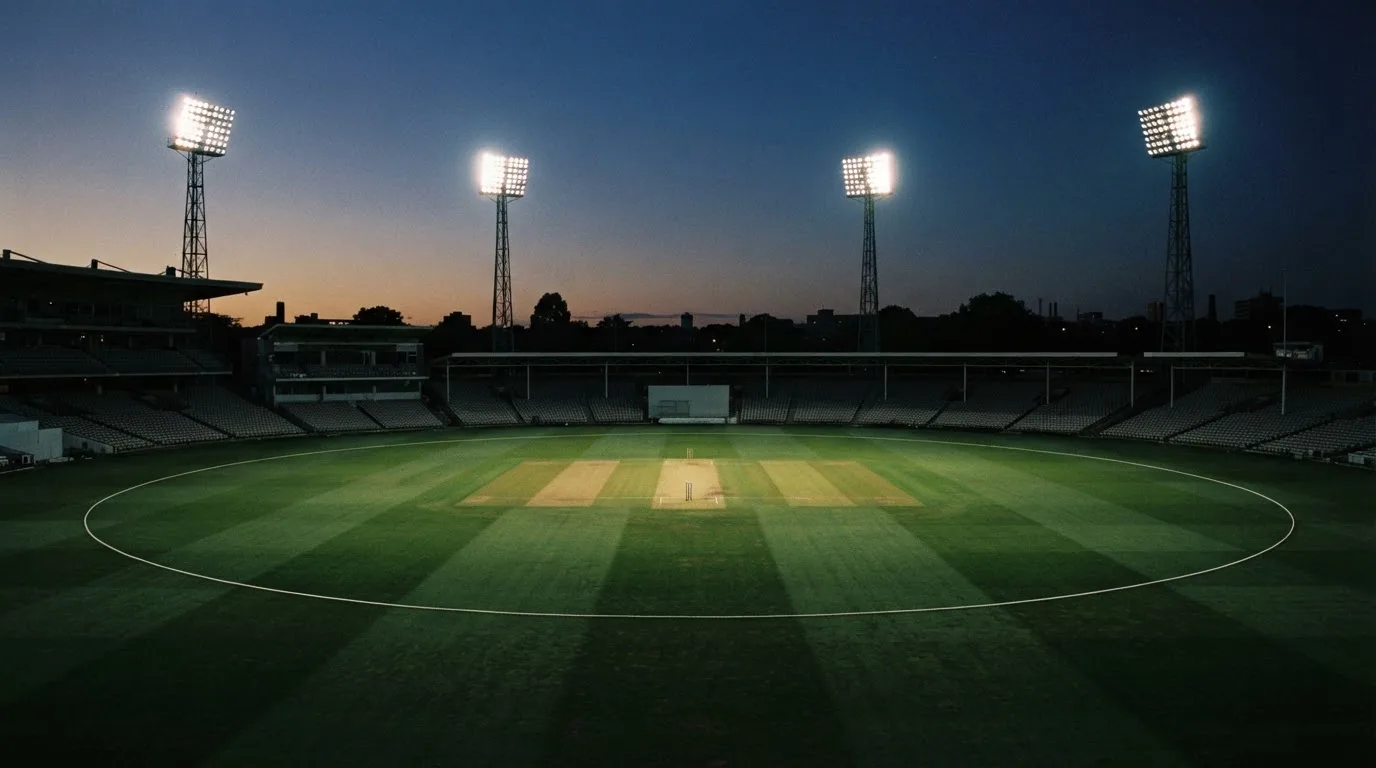
The mechanics are straightforward. Once a match begins, the bookmaker’s site prices a fresh set of markets that mirror the live state: match winner, next over total, method of next dismissal, top batter for the innings, runs at the fall of the next wicket, the side to win the toss. The price updates ball by ball on most sites, and on the larger exchanges it updates after every ball settled. A punt on India at 1.85 before the match can be traded for a profit or a loss at 1.65 mid-innings if a top-order wicket falls — or cashed out entirely.
Cash out sits alongside in-play betting and is the other half of why the in-play product matters. With cash out, a bettor closes a bet before the match has settled, at a price the bookmaker itself offers. The price is built from the current live odds minus the bookmaker’s margin, and it is rarely as generous as a matched price on an exchange. The trade-off is convenience: cash out is one tap on the bet slip, where a lay bet on Betfair takes a few more.
In-play cricket markets work well at the larger international events — the men’s T20 World Cup, India’s home ODIs, the Ashes — where bookmakers keep a trader on the game for every session. Domestic T20 leagues (the IPL, the Big Bash, the Hundred, the Blast) sit a tier below in coverage but are usually live-priced by every major British site. County Championship and Test cricket between lower-profile sides are sometimes offered only as match winner, with no over-by-over markets, because the live data feed does not extend to those fixtures.
A practical note: cash out on cricket is not always available right through a match. When a partnership is building, or when rain stops an ODI and the Duckworth-Lewis-Stern calculation is being run, the bookmaker often suspends the cash-out button. The bet stays live; the button greys out for a few minutes. That is normal, not an error.
The deeper picture is that in-play betting is where the bookmaker’s margin does its quietest work. Live odds are calibrated continuously and the overround is the same as it was pre-match, sometimes slightly higher because the trader is pricing one match at a time rather than the morning card. A bettor who picks and chooses when to strike — backing a side whose price has drifted too far during a bad patch, rather than laying it in play — has a better chance of finding value than one who fires on every session.
Cricket betting predictions, tips and bankroll discipline
Prediction culture around cricket is loud and largely free. Tipsters publish daily selections across Telegram channels, X feeds, YouTube previews and Substack newsletters. Most are paid. Almost none of them publish long-term staking records that an independent auditor could verify.

The model that survives contact with the betting record is plain: pick matches in a form of the game you follow closely enough to form a view, price your own line before looking at the bookmaker’s line, and only bet where your price is better than the market’s. Everything else — staking plans, accumulators as a system, “guaranteed” tips — is a marketing wrapper on top of the same idea.
Two pieces of bankroll discipline hold up. First, stake a fixed unit (1% to 2% of the betting bank is the common range) so a losing streak does not empty the bank. Second, keep a written record of every bet with the closing line price beside your price; if your record is not beating the closing line over a few hundred bets, the edge is not there.
A prediction is not a tip. The market knows things the tipster may not — team news, weather, the toss — and prices them in. Where the tipster and the market agree, the price is short and the value is gone. Where they disagree, the tipster either has information the market has missed, in which case the price will move once the market catches up, or the tipster is wrong, and the bettor who backed the market did the right thing.
Cricket bet types and how odds are built
A cricket bet slips into three broad families: match result, player performance, and combined markets.
Match result is the simplest and the one most punters start with. The match winner market has two sides in a one-off match and three in a Test (home win, away win, draw). The draw in Test cricket is a real outcome — about a quarter of Test matches since 2010 have ended without a result — and bookmakers price it accordingly. Limited-overs matches have no draw: a tied match is a tie (rare in Tests, vanishing in ODIs and T20s) and rain-affected matches produce a no result or a DLS-adjusted target. The draw rule sits in the bookmaker’s terms and is worth reading once.
Player markets sit on top of match markets. Top batter for the innings, top bowler, batter to score fifty or a hundred, total runs, method of dismissal, number of sixes. They are priced from the player’s recent record and the conditions, and the margin is usually a percentage point or two wider than on the match market because the bookmaker prices each player separately rather than offsetting them in a book.
Combined markets — bet builder, same-game multi, accumulator — let a bettor stack several selections from one match into one bet, with the odds multiplying into a single price. The trade-off is that the bookmaker has already worked out what each leg is worth and priced the accumulator to give it back: an acca margin of 15% to 25% is common, against a single-match margin of 5% to 8%. The bettor is paying for the thrill of a five-leg winner.
Odds themselves come in two forms. British bookmakers publish fractional odds by default (5/1, 11/4, evens) and decimal odds on the same slip (6.00, 3.75, 2.00). They are the same price; the conversion is decimal = (numerator ÷ denominator) + 1. A £10 bet at 5/1 returns £60 (£50 profit plus the £10 stake); the same bet at 6.00 returns the same £60. Odds-on means shorter than evens (1/2, 4/6, 8/13 — any price below 2.00 decimal) and a stake larger than the profit.
The bookmaker’s margin is built into every price and is easiest to see on a two-way market. Take an ODI where both teams are matched at 1.90 (9/10). The implied probability of each side winning, naïvely read, is 1 ÷ 1.90 = 52.63%. Two sides add to 105.26%; the extra 5.26 percentage points is the overround, and the payout share for the bettor is 100 ÷ 105.26 = 95%. The bookmaker’s margin on this market is 5.0%. Across all cricket markets on a typical British bookmaker, match-winner margins sit in a 4% to 8% band, with Test draw markets wider (10% to 15% is common, because the draw is harder to price) and player markets a touch wider again. The arithmetic is the same whichever market is examined, and the gap between 100% and the implied probabilities is what the bookmaker keeps.
Sports and tournaments worth a punter’s attention
The cricket calendar runs on three international formats, four domestic leagues in England, and a Test programme that never quite ends.
Test cricket is the oldest form: five days, up to four innings, a minimum of ninety overs scheduled per day, and a draw as a real outcome. Twelve nations hold Test status — England, Australia, India, Pakistan, South Africa, New Zealand, the West Indies, Sri Lanka, Bangladesh, Zimbabwe, Afghanistan and Ireland — and they play each other in the World Test Championship, the ICC’s two-year cycle of series that determines a champion every odd-numbered year.
One-day internationals (ODIs) give each side a fixed fifty overs. A tied match is a tie; a rain-affected match is settled by the Duckworth-Lewis-Stern method, and if too few overs are bowled (usually under twenty) the match is a no result. ODIs run through World Cups, Champions Trophy events and bilateral series.
Twenty20 (T20) is the shortest form: twenty overs per side, a maximum of four overs per bowler, a tied match decided by a super over. The men’s T20 World Cup is held roughly every two years, with India winning the 2026 edition in a tournament co-hosted by India and Sri Lanka (7 February to 8 March 2026) that closed with a 96-run win over New Zealand in the final. Domestic T20 leagues sit alongside the international game: the IPL, the Big Bash, the Caribbean Premier League, South Africa’s SA20, the Hundred (England’s eight-team franchise event played in July and August) and the Vitality Blast (the English domestic T20 competition).
On the women’s side, women’s cricket has its own T20 World Cup, an ODI World Cup, a Test programme that runs less frequently, The Hundred women’s competition, and a county structure in England. Most major British bookmakers price the women’s internationals and the Hundred women’s games at the same depth as the men’s competitions, with the IPL women’s competition now priced too.
The fixtures a punter cares about — Test series, World Cups, the IPL, the Hundred — drive the bulk of betting volume. County Championship matches and most bilateral ODI series sit lower in the betting menu. Bookmakers sometimes price only match winner and a top-batter market at the lower tier; full in-play coverage is reserved for the marquee events.
The ten reviewed bookmakers
What follows is the set of ten licensed operators on the Gambling Commission’s public register that this guide reviews in turn. Each is a real-money sports book with cricket markets. The order is the order of comparison; nothing about a higher placement implies a recommendation, and nothing about a lower placement implies a knock. A bookmaker that suits a Test-only punter is not a bookmaker that suits a T20-accumulators punter, and the comparison holds both up.
A licensing line is the bare fact of the Commission account and licence number, both of which can be checked on the Commission’s public register. It is not a guarantee of any kind — every operator holding a remote general betting standard (real events) licence has that line — but it is the only fact in this guide that the regulator itself vouches for.
The table at the foot of this section ties each brand to its licence and to the cricket-relevant terms the operator publishes. Where a cell carries a dash, the operator’s published terms do not state the point in a way this guide could verify, and the operator is not, on that basis, ranked below its peers.
Fitzdares
Fitzdares has run as a private bookmaker since the 1980s and keeps a smaller, more curated feel than the high-street giants. The Fitzdares app offers cash out, accumulators, Lucky 15s, specials and antepost markets across horse racing, football, tennis, rugby, cricket, golf and American football, with live in-play odds on the listed sports. The cricket menu is not as deep as bet365’s or William Hill’s, and the brand does not push cricket as its lead sport, but for a punter who follows the Ashes and the Hundred and wants a quieter betting slip, it is a credible alternative. The bookmaker’s strength is the antepost book on the bigger series, where prices can be a touch sharper than the market average; its weakness is depth of player markets, where it sits a tier below the leaders. For the punter who wants a quieter account and a sharper antepost line on Test series, Fitzdares fits. For a T20-bumper-accumulators punter, the menu is thin.
Geoff Banks
Geoff Banks runs as a single-name bookmaker under GB Sports Advisors Limited. Its app shows live in-play prices and ante-post prices on future events, and the brand leans on a personal-service feel rather than scale. Cricket coverage is functional rather than headline: the main events are priced, with match winner and a small set of player markets. There is no sportsbook-style bet builder, no acca-insurance product, and the in-play coverage is thinner than the bigger brands. A good second account for a punter who already has a primary bookmaker and wants a different line on a marquee fixture; not a one-stop shop.
BetVictor
BetVictor is one of the older online sportsbooks in the British market. Its app features Best Odds Guaranteed on UK and Irish horse racing, enhanced live race streaming, a BetFinder feature for finding racing bets, and Smart Stats for form. Cricket sits alongside the racing product rather than leading the menu, and the brand is not the natural home of a T20-accumulators punter, but the in-play product on the bigger internationals is solid and the operator’s terms on withdrawals and limits are clean. A reasonable mid-market account, particularly for a punter who bets across cricket and racing and wants one bookmaker to handle both.
DAZN Bet
DAZN Bet is the sports betting arm of the DAZN streaming brand and runs on a clean, modern interface. Deposits start at £5 by debit card, Apple Pay, Paysafecard, Trustly and Skrill, and at £20 by PayPal, with no processing fees — a deposit floor that is gentle on a small-budget punter. Cricket sits inside a wider sports menu and has a competitive set of pre-match markets on the bigger events. The brand is younger than the long-established names and has not yet built the same depth of antepost cricket coverage. A good fit for a punter who already uses DAZN for streaming and wants one wallet; depth of cricket is mid-market rather than best-in-class.
William Hill
William Hill is one of the three or four names that define British high-street betting and has run a remote book since well before the 2014 change. Its cricket menu is wide, its in-play product is competitive, and the brand’s Best Odds Guaranteed promotion on UK and Irish horse racing from 8 AM on race day, on both single and multiple bets, is one of the standard market offers (it does not apply to ante-post, tote or pari-mutuel bets). For cricket specifically, William Hill prices all formats and the bigger domestic leagues, with a bet builder on the marquee events. The default British sportsbook for a punter who wants one app that prices everything; the depth of cricket is not the leader on every fixture, but the menu is reliable and the app rarely has a hole in the schedule.
NetBet
NetBet’s app offers Daily Boosts, Profit Boosts and free bet offers, a Bet Builder with instant dynamic odds, and sports stats for major leagues. Cricket coverage is broader than several of the smaller brands, and the bet builder is the kind of feature a T20-accumulators punter uses. The sportsbook is mid-sized and the brand’s promotional cadence is heavy — a steady stream of enhanced odds, profit boosts and free bet offers — which suits a punter who enjoys working through promos and weighs less for one who wants a clean, low-noise account. A punchy sportsbook for the promos-driven punter; the cricket menu is solid rather than headline-best.
Coral
Coral is one of the two main brands on the Entain platform (Ladbrokes is the other, and both sit under LC International Limited). Its sports welcome offer for new GB customers is a deposit and sports bet of £20 or more at minimum odds of 2.0 (1/1), with £40 in free bets issued within seven days and expiring seven days after issue. The cricket product covers all formats with a deep in-play menu, and Coral’s price on the marquee T20 leagues tends to be among the sharper on the British market. A heavyweight of the British market and a natural primary account for cricket, particularly for a punter who likes in-play betting on the bigger T20 leagues.
Midnite
Midnite is a newer sportsbook and casino brand and pitches itself at a younger audience. Its site cites Gambling Commission licence 101839, shows in-play events, an acca builder, popular accas and price boosts with maximum-stake limits. The welcome offer for new customers is a £5 or more pre-match bet at minimum odds of EVS (2.0) within 14 days of sign-up, with £25 in free bets and 50 free spins issued in return, valid for seven days. The cricket menu is competitive at the top end (T20 leagues, the Hundred, internationals) and thinner at the long tail (County Championship, women’s cricket outside the marquee events). A good fit for a punters who uses accas and price boosts heavily and wants a sharper modern interface; the cricket menu is best-in-class on the marquee events and thin on the rest.
Star Sports
Star Sports is a smaller British bookmaker with a personal-service reputation. Customers can speak to a trader directly on the published phone number to open an account, place bets or ask customer queries, and there is also email support. Cricket coverage is narrower than the big four and the menu concentrates on the marquee events, with competitive antepost prices on the bigger series. The brand suits a punter who values the personal-service angle and is willing to lose some menu depth for it. A small but credible alternative; the personal-service angle is the reason to choose it over a bigger brand.
Paddy Power
Paddy Power runs under PPB Counterparty Services Limited (the same licensee as Betfair) and is the more recognisable of the two on the high street. Its sports betting app covers football, horse racing, boxing, rugby, tennis, golf, darts, snooker and F1. Cricket is in the wider menu, and the brand’s promotional style — money-back specials, enhanced odds on marquee events — fits cricket well, particularly on the Hundred and the T20 World Cup. The in-play product is competitive on the marquee events. A heavyweight account with a promotional style that suits the cricket calendar; the menu is wide and the brand is reliable for the marquee fixtures.
Operator comparison
| Operator | Gambling Commission licence | Cricket product summary |
|---|---|---|
| Fitzdares | 000400-R-103839-030 (Fitzdares Limited) | Cash out, accumulators, Lucky 15s and antepost markets across the major sports, with live in-play odds on cricket |
| Geoff Banks | 054095-R-330366-010 (GB Sports Advisors Limited) | Live in-play prices and ante-post prices on future events |
| BetVictor | 039576-R-319370-028 (BV Gaming Limited) | Best Odds Guaranteed on UK and Irish horse racing, enhanced live race streaming, BetFinder and Smart Stats alongside the cricket menu |
| DAZN Bet | 048756-R-327274-019 (DZBT Limited) | Modern sportsbook with deposits from £5 on most methods and from £20 by PayPal, no processing fees, cricket priced alongside a wider menu |
| William Hill | 039225-R-319373-015 (WHG (International) Limited) | Wide cricket menu across all formats, competitive in-play product, Best Odds Guaranteed on UK and Irish racing |
| NetBet | 039170-R-319343-032 (Netbet Enterprises Limited) | Daily Boosts, Profit Boosts and free bet offers, a Bet Builder with instant dynamic odds, sports stats for major leagues |
| Coral | 054743-R-330863-014 (LC International Limited) | Wide cricket menu across formats with a deep in-play offering; sports welcome offer of £40 in free bets after a £20 qualifying bet |
| Midnite | 101839-R-342850-001 (Midnite Limited) | In-play events, an acca builder, popular accas and price boosts; welcome offer of £25 in free bets and 50 free spins after a £5 qualifying bet |
| Star Sports | 009177-R-104555-019 (Star Racing Limited) | Personal-service bookmaker with direct-trader phone support and email helpdesk, narrower cricket menu concentrated on marquee events |
| Paddy Power | 039439-R-319330-013 (PPB Counterparty Services Limited) | Promotional-heavy sportsbook covering football, horse racing, boxing, rugby, tennis, golf, darts, snooker and F1, with cricket priced inside that menu |
The legal frame for online cricket betting
In Great Britain the regulator is the Gambling Commission (UKGC), a non-departmental public body sponsored by the Department for Culture, Media and Sport. The framework is the Gambling Act 2005, which covers England, Scotland and Wales; Northern Ireland is outside the Act and has its own older law, which is why a “GB licence” is the right phrase rather than a “UK licence”.
Since the Gambling (Licensing and Advertising) Act 2014 an operator whose remote facilities are used in Great Britain needs a Commission licence wherever the operator is based. A Curaçao, Maltese or Gibraltar licence is not a substitute. The licence categories a sports book holds are remote general betting standard (real events), remote general betting standard (virtual events), remote general betting limited, remote pool betting and remote betting intermediary (the licence for betting exchanges). The Commission’s public register can be searched by business name, trading name, domain or account number and is the whole test of whether a brand holds a licence. Licensed operators use .com as well as .co.uk, so the domain proves nothing.
Financial spread betting is a different regime. It is regulated by the Financial Conduct Authority, not the Commission, and a separate licence. Spreadex, for instance, runs under both an FCA licence for spread betting and a Commission licence for fixed-odds betting, and its site states that spread betting losses can exceed the deposit. That detail is not a curiosity; it is the defining risk of spread betting.
Identity verification is built into the licensing regime. Since 7 May 2019, a bookmaker must verify a customer’s name, address and date of birth before the customer can deposit or gamble, including with a free bet or bonus. The result is that there is no anonymous play at a licensed British site; even a £5 free bet requires the same identity checks as a £5,000 deposit. Offshore sites, which do not hold a Commission licence, do not apply that check.
What may be bet on is not prescribed by statute. There is no government list of permitted sports or markets. A bookmaker holds a licence for a category (most often remote general betting standard, real events) and offers markets under its own rules and the Commission’s Licence Conditions and Codes of Practice (LCCP). Esports are treated like any other event; virtual events are a separate licence category; bets on politics, TV shows and novelty markets are offered by British bookmakers and no statutory prohibition was found. In-play betting is offered by GB bookmakers and the controls are the operator’s licence conditions and customer-protection duties, not a legal ban.
Tax sits on the operator, not the player. General Betting Duty is the operator’s tax on gross profits, currently 15%. From 1 April 2027 a new remote betting rate of 25% applies within it, while remote bets on UK horse racing, bets on self-service betting terminals in licensed premises, pool betting and in-person betting stay at 15% (HM Government policy paper of 26 November 2025); spread betting has its own rates (3% financial, 10% other). Until 1 April 2027 the remote rate stays at 15%, and whether operators pass duty on through odds is not established. The player pays no tax on betting winnings in Great Britain (a professional gambler should ask HMRC or an adviser; this is general information, not tax advice).
Advertising is not licensed by the Commission. It runs through the CAP Code (non-broadcast) and BCAP Code (broadcast), enforced by the ASA, alongside the LCCP marketing conditions. The CAP Code section 16 sets the social responsibility rules: marketing must be socially responsible, must not be of strong appeal to under-18s, and no one who is or seems to be under 25 may feature in the advertisement gambling or play a significant role. That rule concerns who may appear in the advertisement, not who may bet; the minimum age to bet is 18. From 1 August 2019 betting advertisements are not shown on TV from five minutes before a live sporting event to five minutes after it, before the 9pm watershed (horse and greyhound racing excluded). That is an industry code, not statute. The Premier League clubs’ voluntary withdrawal of gambling sponsorship from the front of matchday shirts from the 2026/27 season is not a law.
Offshore is the other side of the legal frame. A GB licence is compulsory at the point of consumption, and providing gambling facilities in Great Britain without the licence the Act requires is an offence under section 33 of the Gambling Act 2005, aimed at the operator. There is no offence aimed at the customer who merely bets on an unlicensed site. The cost to the customer is the loss of protection: no GAMSTOP coverage, no Commission complaints route, no approved dispute-resolution body, no British consumer redress if funds are withheld, and not bound by the 10x bonus cap or the £150 vulnerability check. Enforcement is disruption, not blocking: cease-and-desist notices, search-engine referrals, work with registrars, hosts and payment providers, and court-order DNS blocking powers the Commission has been given or is about to receive. Honest framing: licensed = checks, limits, GAMSTOP and a bonus cap, but also verification before the first bet; unlicensed = none of those protections and possible loss of funds. Neither is the safe choice by default.
Safer gambling at licensed bookmakers
Safer gambling is built into the licence conditions and is not a feature a brand can opt out of. Three pieces of the regime matter most for a cricket punter.
GAMSTOP is the national multi-operator online self-exclusion scheme. It is a mandatory licence condition for online operators, and exclusion periods are six months, one year, five years, or five years with auto-renewal. After the minimum period, the exclusion stays in place for a further seven years unless the customer asks GAMSTOP to remove it. GAMSTOP covers online sites and apps; betting shops use a separate service. For a punter who wants to step away from online betting, GAMSTOP is the single step that closes every licensed bookmaker at once.
Financial vulnerability checks are run by the operator under LCCP condition 3.4.4. The check is in force from 30 August 2024 for licensed remote betting when a customer’s deposits minus withdrawals exceed £150 in a rolling 30 days (since 28 February 2025). It is a public-record check (for example bankruptcy or county-court judgments), not an income check and not a credit reference check. Financial risk assessments, the affordability checks of the press coverage, are announced in a staged plan (a Commission article of 7 July 2026) with no start date. The right phrasing is “announced, staged, no start date”, not “in force”.
Deposit limits sit with the customer. Operators must offer a gross deposit limit on a fixed time frame under Remote Technical Standards 12. The first changes have applied since 31 October 2025 and a second phase was postponed to 30 September 2026; whether it is live is not established. There is no state-set deposit or loss ceiling for betting: limits are the customer’s choice, and the operator must offer the tool.
Help is free and confidential. GamCare runs the National Gambling Helpline. GambleAware funds treatment and education. The NHS runs gambling clinics across the regions. Gamblers Anonymous runs peer-support meetings. Every licensed bookmaker links to these services from the safer-gambling page, and several (Fitzwilliam Sports, for instance) carry the links on the home page.
A British licensed bookmaker is required to interact with a customer whose pattern of play is flagged as risky; the LCCP social responsibility code sets the steps. The interaction is light-touch at first (a pop-up, a nudge, a deposit limit offered) and escalates if the pattern continues. Self-exclusion at the operator is a one-click step that closes the account for a chosen period.
Bonuses, free bets and what they really cost
The marketing word “free” is the place to start. A free bet is not a refund in money if it wins: a £10 free bet at 3.0 returns £30, not £40, because the £10 stake is not paid back with a win. A bookmaker offering “£40 in free bets” is offering four £10 free bets, not £40 in cash, and the headline value is not the value the punter receives.
Welcome offers are deposit-gated. Coral’s sports welcome offer, for instance, is “Get £40 in Free Bets when you bet £20”: a deposit and sports bet of £20 or more at minimum odds of 2.0 (1/1), with £40 in free bets issued within seven days and expiring seven days after issue, for new GB customers who opt in. Midnite’s sports welcome offer is similar in shape: new customers who bet £5 or more on pre-match odds of EVS (2.0) or greater within 14 days of sign-up receive £25 in free bets and 50 free spins, valid for seven days.
Each welcome offer is a small package of conditions. The minimum odds on the qualifying bet, the expiry of the free bet, the markets on which it can be used, the maximum winnings from a free bet (where there is one), the form of payment excluded from the qualifying deposit (often Skrill and Neteller) and the fact that the offer is a new-customer offer, not an existing-customer offer, are the conditions to read before claiming.
Wagering requirements on bonuses are capped at 10x from 19 January 2026: a £10 bonus at 50x needed £500 of bets before withdrawal, and under the cap no more than £100. The cap applies to bonuses with a wagering condition. Whether it applies to free bets with no wagering condition, and any cap on the money value of a bonus, are not established. Mixed-product promotions — an offer that requires gambling on two or more product types such as betting, casino, bingo and lottery — are banned.
Enhanced odds are a separate category. A price boost takes the price a bookmaker would normally show on a market and raises it for a stake limit and a window of time. A £10 stake at a boosted 8/1 is still a free bet in shape (the stake usually not returned at enhanced odds) and the value is in the price, not in the bonus mechanics. Acca insurance refunds a stake if one leg of an accumulator lets the bet down, usually as a free bet, and is a different product again.
Cashback promotions credit a percentage of net losses over a window as a free bet or bonus, often with a wagering condition. The headline cashback percentage is not the value to the punter; the wagering condition is.
A practical note: every bookmaker’s welcome offer is one offer per customer, one per household, one per payment method where the practice allows it, and one per device where the practice extends. The free bet that comes back the second time is a different offer, usually smaller and usually with a worse expiry.
A worked reading of the Coral welcome offer is a useful illustration. A new GB customer deposits £20 and places a £20 sports bet at minimum odds of 2.0. The bet wins or loses on its own terms; the offer is the £40 in free bets issued within seven days. The free bets expire seven days after issue. The £40 is split across the free-bet denominations Coral publishes; if the offer is four £10 free bets, a £10 free bet at odds 3.0 returns £30 (the stake is not paid back). At odds 5.0 a £10 free bet returns £50. The expected value depends on the price the punter takes the free bet at and on the market margin, which on a typical cricket match-winner market sits in the 5% to 8% range; on a tightly priced match-winner (margin closer to 3%) the expected value is higher; on a wide-margin market (player props, exotic bets) it is lower.
Mobile apps and the betting handset
The British sports-betting market is mobile-first. Most bets are placed from a handset, and the app is the main interface for a cricket punter. Every reviewed bookmaker runs an iOS app, and every reviewed bookmaker runs a mobile site as a fallback; Android availability varies by operator and by Google Play policy for gambling apps in the user’s region.
The features that matter most for a cricket punter on the app are the bet slip (single, multiple, each-way, bet builder), the in-play product (live odds, cash out, the ability to set a price alert), the deposit and withdrawal flow (PayPal, Apple Pay, debit card, Trustly, Skrill and Paysafecard are the common set), the safer-gambling tools (deposit limit, time-out, self-exclusion, reality check), the live streaming product (where one exists; not every brand offers cricket live streams), and the speed of the app on a poor network (a cricket punter at a ground with patchy 4G will notice the lag).
Each reviewed app has a profile:
- The Fitzdares app offers cash out, accumulators, Lucky 15s, specials and antepost markets across the major sports, with in-play live odds. The app’s reputation is for a clean, uncluttered interface.
- Geoff Banks’ app shows live in-play prices and ante-post prices on future events. The app is functional rather than feature-rich.
- BetVictor’s app carries Best Odds Guaranteed on UK and Irish horse racing, enhanced live race streaming, BetFinder and Smart Stats. The cricket product sits inside the wider sports menu.
- DAZN Bet deposits start at £5 by debit card, Apple Pay, Paysafecard, Trustly and Skrill, and at £20 by PayPal, with no processing fees. The app is clean and modern.
- William Hill’s app is the most-downloaded-style product on the British market and prices cricket across all formats.
- NetBet’s app offers Daily Boosts, Profit Boosts and free bet offers, a Bet Builder with instant dynamic odds and sports stats for major leagues.
- Coral’s app covers cricket across formats and carries the deep in-play product.
- Midnite’s app shows in-play events, an acca builder, popular accas and price boosts with maximum-stake limits.
- Star Sports’ app offers direct-trader phone support (08000 521 321) and email helpdesk ([email protected]) for account, bet placement and customer queries.
- Paddy Power’s app covers football, horse racing, boxing, rugby, tennis, golf, darts, snooker and F1, with cricket inside that menu.
bet365 sits outside the reviewed set but is referenced as the official global betting partner of the UEFA Champions League and is described as the most downloaded sports betting app in the UK; it is a benchmark the reviewed apps are tested by. Lorcan runs as a benchmark rather than a reviewed bookmaker in this comparison.
Lottoland UK’s spot is a hybrid product: the app combines casino, lottery betting, sports betting and scratchcards and states it is licensed by the Gambling Commission for customers in Great Britain. Cricket is one of several sports on the menu and is not the lead product.
A note on app-store presence: the Apple App Store in Great Britain carries gambling apps under the standard age rating, and the apps are region-locked to GB for some brands. Google Play policies on gambling apps vary by region and by version; some British bookmakers distribute through the Play Store, others through their own Android APK from the brand site. The practical point is that the iOS app is reliable on every reviewed brand and the Android path sometimes requires a sideload.
A reading of the maths behind a cricket market
The bookmaker’s margin is the most useful number to hold in mind. The arithmetic behind it is plain and is worth knowing once.
Take a two-way market at 1.90 (9/10) on each side. A naïve reading gives each side a 52.6% chance of winning (1 ÷ 1.90). Two sides add to 105.3%; the extra 5.3 percentage points is the overround. The payout share for the bettor, expressed as a fraction of every pound staked across the market, is 100 ÷ 105.3, or about 95.0%. The bookmaker’s margin is 100% minus the payout share: 5.0% in this example, with a hair to spare.
Three implications follow.
The first is that the margin is hidden but everywhere. On a market priced at 1.90 / 1.90 it is 5.0%. On a market priced at 1.80 / 2.20 it is closer to 5.5%. On a market priced at 1.95 / 1.95 it is closer to 2.5%. A punt at any of these prices is paying the bookmaker’s margin, even on a winning bet. The margin does not depend on whether the bet wins or loses; it is the price of the bet itself.
The second is that a market margin of 5% is the band most cricket match-winner markets sit in, with Test draw markets a little wider (10% to 15% is common) and player markets a little wider still. The wider the margin, the harder it is to win on a long-term basis, because the bookmaker is keeping more of every pound staked.
The third is that the margin is the same on a free bet as on a cash bet, and a free bet’s expected value is the free-bet amount times the price-minus-one divided by the price, multiplied by the payout share of the underlying market. A £10 free bet at odds 3.0 on a market with a 95% payout share is worth 10 × (3 − 1) ÷ 3 × 0.95, which is £6.33 in expected value. The £10 stake is the bookmaker’s money, not the punter’s; the punter’s expected gain is the £6.33, not the £30 the bet returns on a win.
The band the maths yields is the right thing to hold in mind. A bookmaker’s margin on a cricket match-winner market sits in a 4% to 8% band; a Test draw market sits wider, often 10% to 15%; a player market sits wider again. The free bet the welcome offer issues is worth its face value times (price − 1) ÷ price, multiplied by the underlying payout share, never on the money.
Frequently asked questions
How to bet on cricket?
Pick a licensed British bookmaker, register an account, verify your name, address and date of birth with the documents the bookmaker asks for (a passport or driving licence, and a recent utility bill or bank statement), deposit by debit card or one of the accepted e-wallets, navigate to the cricket section, choose a match and a market, and add the selection to the bet slip. Set the stake, confirm the bet, and the bet is placed. A free bet is placed from the free-bet balance rather than the cash balance, and the stake is usually not returned on a win.
How does a bettor win at cricket betting?
A bettor wins at cricket betting by pricing a market more accurately than the bookmaker. That is the only long-term edge. A staking plan (a fixed unit of 1% to 2% of the betting bank per selection), a discipline of only betting where the bettor’s price is better than the bookmaker’s, and a written record of every bet with the closing line beside the bettor’s price are the mechanics that translate the edge into a bank. There is no system that wins; every advertised system is a marketing wrapper around the same idea.
How is a return on a bet worked out from the stake and the odds?
Return = stake × decimal odds. On a £10 bet at decimal odds 3.0 the return is £30. Profit = stake × (odds − 1). On the same bet the profit is £20. The stake is returned with the profit on a win. A free bet is different: a £10 free bet at odds 3.0 returns £30, and the £10 stake is not paid back with the win. On a combination bet (an accumulator) the odds multiply into one price before the stake is applied.
What is the bookmaker’s margin?
The bookmaker’s margin is the share of every pound staked across a market that the bookmaker keeps on average, regardless of the outcome. It is calculated by adding the implied probabilities of every outcome (each implied probability is 1 ÷ decimal odds) and subtracting the result from 100%. On a market priced 1.90 / 1.90 the implied probabilities add to 105.3%; the bookmaker’s margin is 5.0%. The wider the margin, the harder it is for the punter to win on a long-term basis. Cricket match-winner markets typically carry a margin in the 4% to 8% band.
How can a bettor check that a bookmaker holds a Gambling Commission licence?
The Commission’s public register can be searched by business name, trading name, domain or account number. The account number is on every operator’s terms page and on this guide’s comparison table; the register confirms the licence category (most often remote general betting standard, real events), the licence holder (the company that holds the licence, which is often different from the brand on the betting slip), and the current status. A brand that holds a GB remote licence has passed the Commission’s checks; a brand that does not hold one is an offshore operator and is outside the British regulatory frame.
Rugby, cricket & Gaelic – Grey Hound
Content created by the «Grey Hound» team
