
Online greyhound racing betting in 2026: the bookmakers, the markets, the price
 Available in US
Prices and licence details checked as of 27 October 2026 against the Gambling Commission’s public register and each operator’s own published terms.
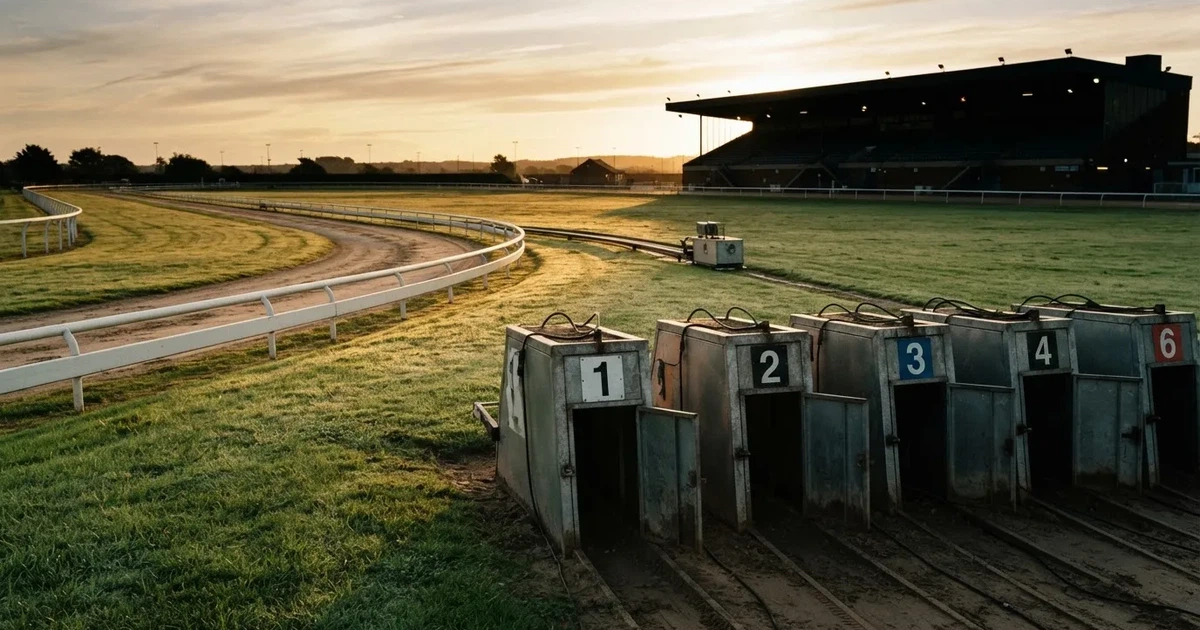
Greyhound racing is one of the smaller sports in a British online bookmaker’s catalogue, but it is a thoroughly regulated one: the Greyhound Board of Great Britain supervises 18 licensed stadia, races settle to a formal starting price alongside fixed-odds bookmaker prices, and every bookmaker that takes a UK bet needs a Gambling Commission remote licence. The page that follows sorts out who serves whom, which markets a greyhound bettor actually meets, and what the margin in a typical race market costs the punter in real terms.
Live greyhound betting: when the trap springs, the in-play picture
A greyhound race settles in roughly thirty seconds. That is the starting point for any serious look at in-play greyhound markets: by the time a punter has clicked “back” the dogs are past the first bend, so live betting on greyhounds means betting on a market that is mostly over before it starts. The platforms that have built a usable live greyhound product accept that, and have arranged their in-play screens around it.
bet365 sets the standard for in-play depth across all sports, and greyhounds sit on the same engine. The in-play tab shows the race, a running match-live tracker, and a refreshed price ladder while the trap opens. For a race that starts every few minutes at busy stadia like Crayford or Perry Barr, that is enough to read the break. The same in-play screen supports Bet Builder+ on races that are eligible, so a pre-built selection on a winner-and-margin market can carry into the live phase. Super Boosts and Winnings Boosts on selected singles and on Bet Builders run across the in-play card.
10bet runs a tighter live product, but a usable one for greyhounds. Cash out is available, Bet Builder is available, and Live Streaming on selected events is the operator’s own claim on the App Store. For a punter who watches a meeting from Towcester or Monmore, the combination of cash out and live pictures is what makes a small live greyhound card workable.
Midnite shows in-play greyhound events alongside its other in-play markets, with a price-boost tab and an acca-builder on the same page. The platform is smaller than the household names, but the live greyhound screen carries price changes and stake limits that a serious live punter can plan around.
Fitzdares’ app supports in-play live odds, ante-post and specials markets on the sports it covers. Greyhounds sit inside the ante-post screen rather than a dedicated live card, which is the typical pattern for an operator that runs greyhounds as a secondary vertical to horse racing.
Coral, Sky Bet, NetBet, BetGoodwin, Fitzwilliam Sports, Bar One Racing, Betmaster and Kalooki Sportsbook all carry greyhound meetings on their racing pages. Their in-play greyhound offering is thinner than bet365’s — typically the price is published and refreshed but the live-tracker and live-streaming combination is not on the same level. For most punting, that is enough: a starting price in-running, a cash-out button, and the option to add to a Bet Builder.
Cash out is the other side of the live picture, and almost every bookmaker on the public register now offers it on greyhound markets. The question is the price the cash-out button offers against the true live price. A cash-out price that is 2% below the live price is not the same product as a cash-out price that is 8% below it. Read the cash-out price in the same breath as the live market, not as a separate feature.
Greyhound racing predictions and strategy: what a tip actually does, and what it does not
The search for a “greyhound racing system” is the most common thing that lands a punter on a betting page, and the honest answer is that no system turns a margin-loaded market into an expected-profit one. A greyhound race is a thirty-second event with six runners, the favourite wins around a third of the time, and the bookmaker’s margin sits between the two prices on every race. A strategy that does not first face those three facts is not a strategy; it is a sales pitch.

What a tip or a system CAN do, in order of usefulness, is this. It can sort the card into runners whose recent form is real and runners whose recent form is at a weaker venue, and a service that does that well earns the modest subscription it charges. It can flag trap biases — the statistical tendency of one trap at one track to outperform, often a slow early pace that the inside traps do best in. It can also tell a punter when a race is a non-bet, and that is the single most useful thing a tip can do: most losing greyhound bets lose because the race was unplayable, not because the punter picked the wrong dog.
A staking plan belongs to the same paragraph. A flat-stake rule — the same stake on every selection — does not change the expected loss; it does, however, stop the punter from doubling up on a loser. The accumulator insurance products marketed around greyhound cards work the same way: they cap the loss on a six-fold when one leg lets the rest down, but they do not change the chance the six-fold wins in the first place.
“Form” in greyhound racing is shorter than in horse racing, and that is part of the design. A greyhound’s useful career at the top of a card runs in months rather than seasons, the form lines are by trap and by track, and any free tip that does not separate recent form at the venue from older form at a different venue is worth less than the price it asks.
The closing summary is the part no tipster likes to say: a betting system that claims a fixed yield over a season is making a claim that no betting system can support in a market where the bookmaker’s edge is built into every price. The shape of the edge is the topic of the next section, and it is the one a punter should read before reading any tip.
Bet types, odds and what a greyhound price means
The most common greyhound bet in Britain is the single, a fixed-odds wager on one dog to win the race. The price is shown in decimal form, settled at the starting price if the punter has not taken a price before the trap springs, and paid out as stake × odds. A £10 bet at 5.00 returns £50; a £10 bet at 1.50 returns £15.
Each-way betting is offered on greyhound meetings with five or six runners, with place terms that vary by race and by operator. An each-way bet is two bets of equal stake, so a £5 each-way bet costs £10: £5 on the win, £5 on the place. The place payoff depends on the place terms, usually a quarter of the win odds for a six-runner race, a fifth for five runners. A common misread is to treat the each-way as a single bet — it is not, and the total stake doubles.
Forecast and tricast bets ask the punter to name the first two (forecast) or three (tricast) dogs in the correct order. The payout is the product of the two or three odds, but a winning forecast on a long-priced pair can return a much bigger multiple than the product of the two prices suggests, because the unit stake is multiplied by a divided pool and the pool is small. Forecasts are settled as a straight forecast (correct order) or a reverse forecast (either order).
Ante-post betting is offered on the bigger greyhound meetings, particularly the English Greyhound Derby at Towcester and the Scottish Greyhound Derby at Shawfield. The price drifts as the ante-post market runs and the field firms up, and a non-runner rule applies: a non-runner before the declaration stage usually means the bet is void and the stake is returned; after the final declarations, the bookmaker’s non-runner rule decides. Check the operator’s non-runner terms before placing a single ante-post bet.
A bet builder is offered by 10bet and bet365 on selected greyhound meetings. The bet builder assembles two or more markets on the same race — typically winner, winning distance band, and trap number — into a single combined price. The combined price is the product of the individual prices, and the margin sits inside every one of them. That is the trade: a bet builder is convenient, the combined price is honest to the operator’s margin, and the punter pays for the convenience on every leg.
Spread betting on greyhound races is a different product, regulated by the Financial Conduct Authority for financial spread bets and by the Gambling Commission for fixed-odds spread bets. Losses in spread betting can exceed the stake, which is the operator’s own statement on the matter, and a spread bet is not a fixed-odds bet even when the two products share a screen.
A bet calculator is built into every operator’s racing page. The inputs are stake, odds, and each-way terms; the output is the return under win, place, and each-way. The same inputs the punter already has on the slip.
The bookmaker’s margin is the difference between the prices as listed and the prices a perfectly efficient market would list. The mechanic is on display in every market: take a two-way market at 1.90 / 1.90, the example used later in this page. The implied probability of each outcome is 1/1.90 = 0.5263, and the two outcomes sum to 1.0526. The 0.0526 above 1 is the overround, the same number seen from the other side is 5.26% — the bookmaker’s margin. Every price the punter sees in a greyhound market carries the same shape, scaled by the number of runners and the operator’s pricing model.
Greyhound sports, stadia and tournaments worth knowing
Greyhound racing in Great Britain is run on the sand track, with a mechanical artificial lure that runs along an inside rail. The 18 stadia licensed by the Greyhound Board of Great Britain cover independent tracks like Crayford, Perry Barr, Hove, Towcester, Monmore, Romford, Sheffield, Sunderland, Yarmouth and Kinsley, and the larger group operations. The fixture list runs all year, with evening and afternoon meetings, and the busy card at a single stadium can run to twelve races at fifteen-minute intervals.
The English Greyhound Derby at Towcester is the headline meeting. The classic distance is 500 metres, the field goes through a series of qualifying rounds, and the ante-post market runs for weeks. The Scottish Greyhound Derby at Shawfield is the second tier, with a similar format. The Irish Greyhound Derby at Shelbourne Park is the meeting that pulls in the cross-border ante-post market, run by the Irish Greyhound Board; British-licensed bookmakers offer ante-post and day-of prices on the meeting.
The Grand National at Crayford and the Champion Stakes at various venues are other named meetings on the calendar. The bigger meetings are the ones with ante-post pricing, while the regular evening card is settled on the day.
A note on New Zealand greyhound racing, included because the page is a British one and British punters sometimes meet New Zealand names in international markets. Greyhound racing in New Zealand was ended by the Racing Industry (Closure of Greyhound Racing Industry) Amendment Act 2026, passed on 2 April 2026, with the phase-out set for 1 August 2026. Winston Peters, who as Deputy Prime Minister announced the policy on 10 December 2024, framed the decision on animal-welfare grounds. Until the ban, Greyhound Racing New Zealand ran seven affiliated clubs — Auckland, Waikato, Whanganui, Palmerston North, Canterbury, Otago and Southland — and the international market on the major New Zealand meetings was small but present. As of 2026 no licensed New Zealand greyhound races are run.
Greyhound racing sits inside the same regulatory box as horse racing for the starting price, the place terms, and the ante-post rules. That is a working convenience for a punter: most of the racing vocabulary crosses over.
The top ten bookmakers for greyhound betting in the UK
The ten operators below are the brands that hold a Gambling Commission remote licence for general betting on real events, that publish greyhound markets in their racing tabs, and that come up most often in the British online greyhound market as of 2026. The licences below are stated with the Commission’s own account number against each brand; the live register is the place to confirm the licence, and the licence number is the only stable identifier across the register. Each write-up closes on a verdict, and the verdicts read the same way: a punter is told which card this bookmaker belongs on, and what it costs them.
Bar One Racing — the Irish independent with a rebranded British front
Bar One Racing rebranded its British app as BAR 1 Betting, an Irish independent with a high-street presence across Ireland, racecourse sponsorships at Dundalk, Fairyhouse, Navan, The Curragh, Curraheen Park and Cork, and a small but well-priced racing tab. The British greyhound offering sits inside the racing page and includes the bigger British and Irish meetings. The licensed operator is Bar-One Racing Limited, account 56516.
A bar one punter pays a fair ante-post price on the named meetings, and the welcome offer is light compared to the high-street brands. The fit is a punter with a settled idea of what they want to back and a taste for an independent racing book rather than a large-market feed. For a casual greyhound punter who wants the largest card, it is not the right card.
BetGoodwin — the racing-led book with a tight welcome
BetGoodwin is the racing-led bookmaker behind the Goodwin Racing brand, run by Goodwin Racing Limited under Commission account 2927. The British site runs a small but focused racing tab, with greyhound meetings, ante-post, and place markets on the bigger cards. The welcome offer, as BetGoodwin’s own App Store listing states, is a “Bet £10 & Get £15 in Free Bets” structure made up of a £5 sports bet, a £5 acca and a £5 Sub-Cover bet. A punter who takes the offer is on the hook for the £10 qualifying stake and the time it takes to settle the three free bets; the offer is not “free” in any meaningful sense.
The bet is a clean racing punter who likes an independent book and does not mind a tight welcome.
Fitzdares — the premium book with an ante-post tilt
Fitzdares is the premium bookmaker, run by Fitzdares Limited under Commission account 400. The app supports cash out, accumulators, Lucky 15s, specials and ante-post markets on horse racing, football, tennis, rugby, cricket, golf and American football, with in-play live odds. Greyhounds sit inside the ante-post screen with the named meetings priced up, and the live in-play greyhound card is smaller than the dedicated racing books’. The licensed operator is Fitzdares Limited.
A Fitzdares account is for a higher-stakes punter who values the premium card and the specials market more than the breadth of the racing card. For a casual greyhound bettor, the racing product is enough but not the reason to be there.
Coral — the household name with a heavy welcome
Coral is one of the larger British high-street and online brands, run by LC International Limited under Commission account 54743. The greyhound card is broad — every licensed British stadium, ante-post on the major meetings, and an in-play feed that runs through the racing tab. The licensed operator also runs the betting exchange at Ladbrokes, but Coral itself is the fixed-odds product. The sports welcome offer, in Coral’s own terms, is a “Get £40 in Free Bets when you bet £20” structure: a deposit and a sports bet of £20 or more at minimum odds of 2.0 (1/1), with £40 in free bets issued within 7 days and expiring 7 days after issue, for new GB customers who opt in. The £40 free-bet value is contingent on taking the free bets at a price that pays out, and the seven-day expiry on each tranche is the cost of the offer that nobody markets.
A Coral account is a household-name account with a broad racing card, and the welcome is heavy because the brand can afford the marketing spend. The fit is a punter who values the card breadth and the brand familiarity.
Kalooki Sportsbook — the small, GAMSTOP-signed independent
Kalooki Sportsbook is the small independent bookmaker run by Kalooki Sports Book Ltd (company number 12938274) under Commission account 57730. The British site is a GAMSTOP member and verifies customers at the point of deposit, as the licensed standard requires. The greyhound card is present, focused on British and Irish meetings, and runs without the welcome-heavy marketing of the high-street brands.
Kalooki appeals to a punter seeking a small, transparent independent book with a focused racing product, rather than the breadth of the major-market cards.
Betmaster — the football-led book with a racing tab
Betmaster is published by BM Solutions GB Ltd under Commission account 65699. The British app covers football, cricket, horse racing, NFL and eSports (League of Legends, Dota 2) betting, with greyhounds on the racing tab. The licensed product is broader than the racing focus of the smaller books, but the greyhound card is not the headline vertical of the site.
A Betmaster account fits a punter who bets across sports and treats greyhounds as one of several, and is content with a smaller greyhound card.
Sky Bet — the high-street card with a known free-bet rule
Sky Bet is run by SBG Sports Limited under Commission account 67370, the Sky-branded online bookmaker tied to the Sky high-street presence. The British greyhound card is broad, the in-play feed is competitive, and the welcome offer runs to free bets. The Sky Bet free-bet terms are the rule to read: free bets expire 30 days after crediting, can be used only on single or each-way markets (not multiples) excluding virtuals, are non-withdrawable and do not return the stake with winnings. A punter who treats the free bet as a stake-inclusive bet will be surprised at the payout. The rule is the operator’s own, and the offer is worth the price only if the punter prices in a stake that does not come back.
A Sky Bet account is a high-street card with a competitive racing product, and the free-bet rule is the cost the punter pays in advance.
10bet — the Cash-out and Bet Builder book
10bet is run by Blue Star Planet Limited under Commission account 43173. The British app covers football, tennis and horse racing, with Cash out, Bet Builder and Live Streaming as the headline features, and greyhounds on the racing tab. The product is a Cash-out-driven racing book, and the bet builder is the same shape as the larger books’.
10bet provides a structured in-play and bet-builder service, suiting a punter who uses cash out across several sports and values the greyhound card as a functional part of a wider multi-sport feed.
NetBet — the boosts and builders book
NetBet is run by Netbet Enterprises Limited under Commission account 39170. The British app offers Daily Boosts, Profit Boosts and free bet offers, a Bet Builder with instant dynamic odds, and sports stats for major leagues. Greyhounds sit on the racing tab alongside horse racing, with ante-post on the bigger meetings and an in-play feed that is lighter than the dedicated racing books’.
NetBet fits a punter who prioritises boosts across sports and uses the bet builder tool to structure their greyhound bets, with the racing card functioning as a regular vertical alongside the rest of the site.
Fitzwilliam Sports — the Dublin bookmaker with a high-stakes welcome
Fitzwilliam Sports is the Dublin bookmaker run by SBKI Limited under Commission account 48760, describing itself as a Dublin bookmaker with capped membership. The British site offers instant deposits, fast withdrawals, timeouts and deposit limits, and links to GambleAware, GamStop and Gamblers Anonymous. The welcome is a “High Stakes Welcome” subject to compliance criteria, which is a different shape from a typical £5-£10 free bet. The licensed operator runs a smaller racing card than the high-street brands, with greyhounds on the racing tab.
A Fitzwilliam account is for a higher-stakes punter who wants a Dublin bookmaker with a capped membership, and the welcome is the operator’s own terms at a different price to the household names.
The bookmaker landscape at a glance
The table below lays the ten bookmakers side by side on the matters a greyhound punter typically checks first. The licence numbers are the Gambling Commission’s own account numbers; the operator’s own statements on the greyhound offering are taken from each brand’s published terms.
| Bookmaker | Licence account | Licence holder | Greyhound offering (operator’s own terms) |
|---|---|---|---|
| Bar One Racing | 56516 | Bar-One Racing Limited | Irish-led independent with British greyhound card on racing page |
| BetGoodwin | 2927 | Goodwin Racing Limited | Racing-led book with a small greyhound card and a tight welcome |
| Fitzdares | 400 | Fitzdares Limited | Premium book with ante-post and specials markets; greyhounds inside ante-post |
| Coral | 54743 | LC International Limited | Broad greyhound card across every licensed British stadium and major meetings |
| Kalooki Sportsbook | 57730 | Kalooki Sportsbook Limited | Small independent racing book, GAMSTOP-signed, focused on British and Irish meetings |
| Betmaster | 65699 | BM Solutions GB Ltd | Football-led multi-sport book with greyhounds on the racing tab |
| Sky Bet | 67370 | SBG Sports Limited | Broad greyhound card, in-play, and free bets with a 30-day expiry rule |
| 10bet | 43173 | Blue Star Planet Limited | Cash out, Bet Builder and Live Streaming with greyhounds on the racing tab |
| NetBet | 39170 | Netbet Enterprises Limited | Daily Boosts, Profit Boosts and Bet Builder with greyhounds on the racing tab |
| Fitzwilliam Sports | 48760 | SBKI Limited | Dublin bookmaker with capped membership, racing tab and a high-stakes welcome |
The table reads a consistent shape: every operator above is a Gambling Commission remote licensee, every card carries greyhound markets, and the difference between the rows is the depth of the racing tab and the welcome offer, not the licence standing. A punter choosing between them is choosing between breadth of card, depth of live product, and the welcome offer, with the licence standing the same for every row.
Greyhound betting in the UK: what the licence means and what it does
The regulator is the Gambling Commission (UKGC), a non-departmental public body sponsored by the Department for Culture, Media and Sport, licensing the whole commercial market under the Gambling Act 2005. The Act covers Great Britain — England, Scotland and Wales. Northern Ireland is outside the Act, with its own older law, which is why “GB-licensed” is the right word and never “UK-licensed”. Since the Gambling (Licensing and Advertising) Act 2014 an operator whose remote facilities are used in Great Britain needs a Commission licence wherever it is based, under sections 33 and 36 of the 2005 Act as amended. A Curaçao, Maltese or Gibraltar licence is not a substitute.
There is no statutory list of permitted bets or markets, no state monopoly, and no cap on the number of licences. An operator holds a licence for a category — remote general betting standard (real events), remote general betting standard (virtual events), remote general betting limited, remote pool betting, or remote betting intermediary (the licence for a betting exchange) — and offers markets under its own rules and the Licence Conditions and Codes of Practice (LCCP). The Commission’s public register is searchable by business name, trading name, domain or account number, and is the whole test of whether a brand holds a licence. The account numbers in the table above are the register’s account numbers.
Identity verification is required before the first deposit or bet, including with a free bet or bonus, and the operator verifies name, address and date of birth. That is the licensed way, and the absence of it is the unlicensed way. A bookmaker that does not verify is not a bookmaker licensed for Great Britain.
A financial vulnerability check (LCCP condition 3.4.4, in force since 30 August 2024) applies to licensed remote betting when a customer’s deposits minus withdrawals exceed £150 in a rolling 30 days (since 28 February 2025). The check is a public-record check (for example, bankruptcy or county court judgments) and not an income check. Financial risk assessments are announced in a staged plan, with no start date; the right wording is “announced, staged, no start date”. A deposit limit is the operator’s own offer, and the operator must offer a gross deposit limit on a fixed time frame under RTS 12.
In-play betting is allowed, and the controls are the operator’s licence conditions and customer-protection duties. There is no statutory cap on stakes in sports betting; the maximum stake is the operator’s, and the operator may restrict a customer. There is also no state-set deposit or loss ceiling for betting. The ceiling is the punter’s own choice, set inside the operator’s interface.
Betting on politics, TV shows and novelty markets is offered by GB bookmakers, and esports are treated like any other event. Virtual events are a separate licence category. The greyhound meetings that sit on a licensed British bookmaker’s racing tab are real events under the GBGB-supervised schedule.
The tax frame: the punter pays no tax on betting winnings in Great Britain. The operator pays General Betting Duty on gross profits, currently 15%, with a new remote rate of 25% from 1 April 2027. The 25% rate applies within the duty, while remote bets on UK horse racing, bets on self-service betting terminals in licensed premises, pool betting and in-person betting stay at 15%. The Commission’s statutory levy is a separate charge, not a tax.
The illegal frame: providing gambling facilities in Great Britain without the licence the Act requires is an offence under section 33 of the Gambling Act 2005, on summary conviction up to 51 weeks’ imprisonment, a fine up to level 5, or both, and six months in Scotland. The offence is aimed at the operator. The punter who bets on an unlicensed site loses access to the protections the licence brings — no GAMSTOP coverage, no Commission complaints route, no approved dispute-resolution body, no British consumer redress if funds are withheld, and no cover under the 10x bonus cap or the £150 vulnerability check. Honest framing: licensed means checks, limits, GAMSTOP and the bonus cap, but also verification before the first bet; unlicensed means none of those protections, and the possible loss of funds. Neither side is “the safe choice” by default.
Safer gambling: the protection around the bet
GAMSTOP is the national multi-operator online self-exclusion scheme, a mandatory licence condition for online operators since 31 March 2020. A self-exclusion period is six months, one year, five years, or five years with auto-renewal, and after the minimum period the exclusion stays in place for a further seven years unless the customer asks GAMSTOP to remove it. GAMSTOP covers online sites and apps; betting shops use a separate service.
The financial vulnerability check, in force for licensed remote betting since 30 August 2024, applies when a customer’s deposits minus withdrawals exceed £150 in a rolling 30 days (since 28 February 2025). The check is a public-record check and not a credit check or an income check. The deposit limit offered by every operator is the punter’s own choice, set inside the operator’s interface; the operator must offer a gross deposit limit on a fixed time frame under RTS 12.
The help lines are GamCare, the National Gambling Helpline, GambleAware, the NHS gambling clinics, and Gamblers Anonymous. The Fitzwilliam Sports and the licensed racing bookmakers’ own sites link to one or more of them, and the GAMSTOP exclusion is the main lever for online betting.
A greyhound bettor who reads this page seriously: set a deposit limit at the licensed operator of your choice, register with GAMSTOP if your betting has tipped into a pattern you do not want, and use the help line if you are at the point of asking the question. The bookmaker’s margin, the topic of the next section, is small in arithmetic and large in compounding: it is the difference between a sustainable habit and a losing one over a season.
Bonuses and free bets on greyhound cards
A bonus on a greyhound card is not a gift; it is a bet that has been pre-paid, with conditions. The shape the offer takes matters, and the conditions around it matter more. Wagering requirements on bonuses are capped at 10x by the LCCP, in force since 19 January 2026 — a £10 bonus at 50x needs £500 of bets; under the cap, no more than £100. A mixed-product promotion, an offer that requires gambling on two or more product types such as betting, casino, bingo and lottery, is banned under the same rule. The cap is the licensed frame around the bonus; the offer’s own conditions are inside that frame.
A free bet is the most common greyhound welcome. A £20 free bet is not £20 in cash; it is a token the punter uses to place a bet, and the stake usually does not come back with the winnings. A £20 free bet at 3.00 returns £40 in winnings (£20 × (3.00 − 1)), not £60. That is the operator’s rule on the Sky Bet free bet, and a comparable rule on most licensed welcome offers. The price the punter pays is the stake that is not returned: a free bet at 3.00 returns 200% of the face value, not 300%.
A deposit-gated package — “deposit £20, get £40 in free bets” — is a bonus on the deposit, settled in free bets. Coral’s sports welcome offer, in Coral’s own terms, is a “Get £40 in Free Bets when you bet £20” structure: a deposit and a sports bet of £20 or more at minimum odds of 2.0 (1/1), with £40 in free bets issued within 7 days and expiring 7 days after issue, for new GB customers who opt in. The 7-day expiry on each tranche is the cost the punter pays for the marketing. A free bet that is not used in the window is gone.
A price boost is a different shape. A price boost on a named greyhound at the English Greyhound Derby raises the listed price from, say, 5.00 to 6.00, and the punter pays the stake. The price is the price; the boost is the operator’s marketing. The same shape applies to an acca insurance, where one leg lets a six-fold down and the operator refunds the stake as a free bet. The refund is the same shape as a free bet: the stake is not returned, the refund is the operator’s terms, and the punter prices the insurance into the bet.
A matched-bet service is offered to greyhound cards, and the arithmetic is the same as on any other market: a back bet at the bookmaker and a lay bet at the exchange, with the free bet’s stake-not-returned rule priced in. The shape is workable, and the offer is the operator’s; the offer changes from week to week, and the punter who chases it is chasing a moving target.
The honest close: a greyhound bonus is worth what the conditions let the punter take out, and the conditions are the rule. The 10x cap is the licensed frame; the offer’s own minimum price, expiry and stake-not-returned rule are the offer. A punter who reads those three rules and prices them into the bet is a punter who knows what the bonus costs.
Mobile and app: the racing tab on a phone
The greyhound card lives on the racing tab of a mobile app, and the racing tab is the part of the app that a greyhound bettor uses most. The patterns are: a list of meetings by stadium, a list of races by meeting, a price ladder per race, an each-way toggle, a bet builder where the operator runs one, and a cash-out button in play. The work the app does is the same on every operator: show the card, take the bet, settle the result, and credit the winnings.
bet365, by the operator’s own App Store listing, is the most downloaded sports betting app in the UK. The racing tab is on the same screen as the in-play card, the bet builder, and the live streaming. The greyhound card is at the same depth as the horse racing card, and the price refresh is fast enough for in-play use.
Sky Bet’s racing tab carries greyhound markets, in-play, and the bet builder where available. The free bet section is on a different screen, and the 30-day expiry on the Sky Bet free bet is the rule the punter should read before claiming.
10bet, Coral, NetBet, BetGoodwin, Fitzdares, Fitzwilliam Sports, Bar One Racing, Betmaster and Kalooki Sportsbook all run a British greyhound card on their apps. The differences are the depth of the in-play screen, the bet builder presence, and the welcome offer, not the racing tab itself.
A punter who bets mostly on greyhounds has a use case for the racing-led book — BetGoodwin, Fitzwilliam Sports, Bar One Racing — over the multi-sport book. A punter who bets across several sports and uses the bet builder has a use case for 10bet, NetBet, or bet365. The racing tab is the same on both; the rest of the app is what the punter is buying.
The price of the card: working out the margin in a greyhound market
The margin in a greyhound market is the difference between the prices as listed and the prices a perfectly efficient market would list. In a typical greyhound race, this manifests as an overround that creates the bookmaker’s margin, the cost of being in the market. The example below uses an illustrative two-way market at decimal odds 1.90 / 1.90 (fractional 9/10) — an example, not a quoted price.
The implied probability of each outcome at 1.90 is 1/1.90, which is 0.5263. Two outcomes sum to 1.0526. The 0.0526 above 1 is the overround, and 5.26% is the bookmaker’s margin. A market with six runners and prices that imply a 110% overround is a 10% margin market, which is the typical pattern on a greyhound card. A market with prices that imply a 108% overround is a 8% margin market, which is the typical pattern on a heavily-priced-up meeting with several runners. The number sits inside the prices; the punter does not see it directly, but the punter pays it on every bet.
Stated as a band: in a typical greyhound race, the margin is between 8% and 15%, with six-runner races at the lower end of the band and races with non-runners, withdrawals and rule-4 adjustments at the higher end. The band is the takeaway; the number depends on the race, the operator, and the time before the trap. A punter who shops the price across two operators at the same race sees the band in action.
The margin in a forecast or tricast market is higher, typically 25%-35%, because the permutations multiply. A bet builder on a greyhound race has a margin on every leg, and the combined price carries the product of the legs’ margins. The trade on a bet builder is the convenience, and the convenience is priced in.
The greyhound bettor’s checklist: a few closing notes
The greyhound card is one of the cleaner racing products in a British bookmaker’s portfolio. The starting price is a stable settlement, the place terms are a known quantity, and the ante-post market on the bigger meetings is well-priced. The checks the page stands on: the operator holds a Gambling Commission remote licence for general betting on real events; the operator’s terms say what the free bet is worth; the operator’s margin on the card sits between 8% and 15% on most six-runner races; the punter pays no tax on winnings; the operator is a GAMSTOP member.
The greyhound card is also one of the smaller ones, and the page’s verdict on the choice of operator is that the licence is the floor, not the ceiling. A punter who reads the operator’s own terms before claiming a welcome, who knows the stake-not-returned rule on the free bet, and who treats the card as one racing product among several has a working bet. The shape of the edge is in the prices, and the edge is what the punter pays to be in the market.
Frequently asked questions about online greyhound racing betting
How do you bet on greyhound racing?
Pick a meeting and a race on a licensed bookmaker’s racing tab, choose a runner and a stake, and confirm the bet on the slip. The bet is settled at the price the punter took or at the starting price if no price was taken, and the win returns the stake times the odds. A place bet pays out on the place terms, and an each-way bet is two bets of equal stake, doubling the cost.
How do you bet on greyhound dogs?
A greyhound dog race is settled under the same rules as a horse race on a British bookmaker: a single bet, an each-way bet, a forecast, a tricast, or an ante-post bet. The bet is placed on the racing tab of a licensed bookmaker, and the punter checks the operator’s non-runner rules for ante-post bets.
How do you win at greyhound betting?
No system turns a margin-loaded market into an expected-profit one. A punter who wins over a season is a punter whose selections have, by chance or by reading form well, beaten the margin. The bookmaker’s edge sits inside every price, and the edge compounds over a season. The realistic target is a sustainable habit, not a fixed yield.
How can a bookmaker’s Gambling Commission licence be checked?
The Commission’s public register is searchable by business name, trading name, domain or account number, and the account number is the stable identifier. The register is the only place to confirm a licence; the domain alone is not proof, because licensed operators use .com as well as .co.uk. The account numbers in the table earlier in this page are the register’s account numbers, and the register’s own access date is the date the licence was confirmed.
How is the return on a bet worked out from the stake and the odds?
The return on a winning bet is stake × odds. A £10 bet at 5.00 returns £50; a £10 bet at 1.50 returns £15. The net profit is the return minus the stake, which is stake × (odds − 1). A free bet whose stake is not returned pays the profit only: a £20 free bet at 3.00 returns £40, not £60.
What is the bookmaker’s margin, and how does it show in the odds?
The margin is the difference between the prices as listed and the prices a perfectly efficient market would list. The mechanic: take a two-way market at 1.90 / 1.90, the implied probability of each outcome is 1/1.90, the two outcomes sum to 1.0526, and the 0.0526 above 1 is the overround, which is 5.26% seen as the margin. In a typical greyhound race with six runners, the margin is between 8% and 15%, and the punter pays the margin on every bet.
Horse racing & greyhounds – Grey Hound
Content created by the «Grey Hound» team
