
Online ice hockey betting in 2026: where to wager, how to read the market, and what an offer actually costs
 Available in US
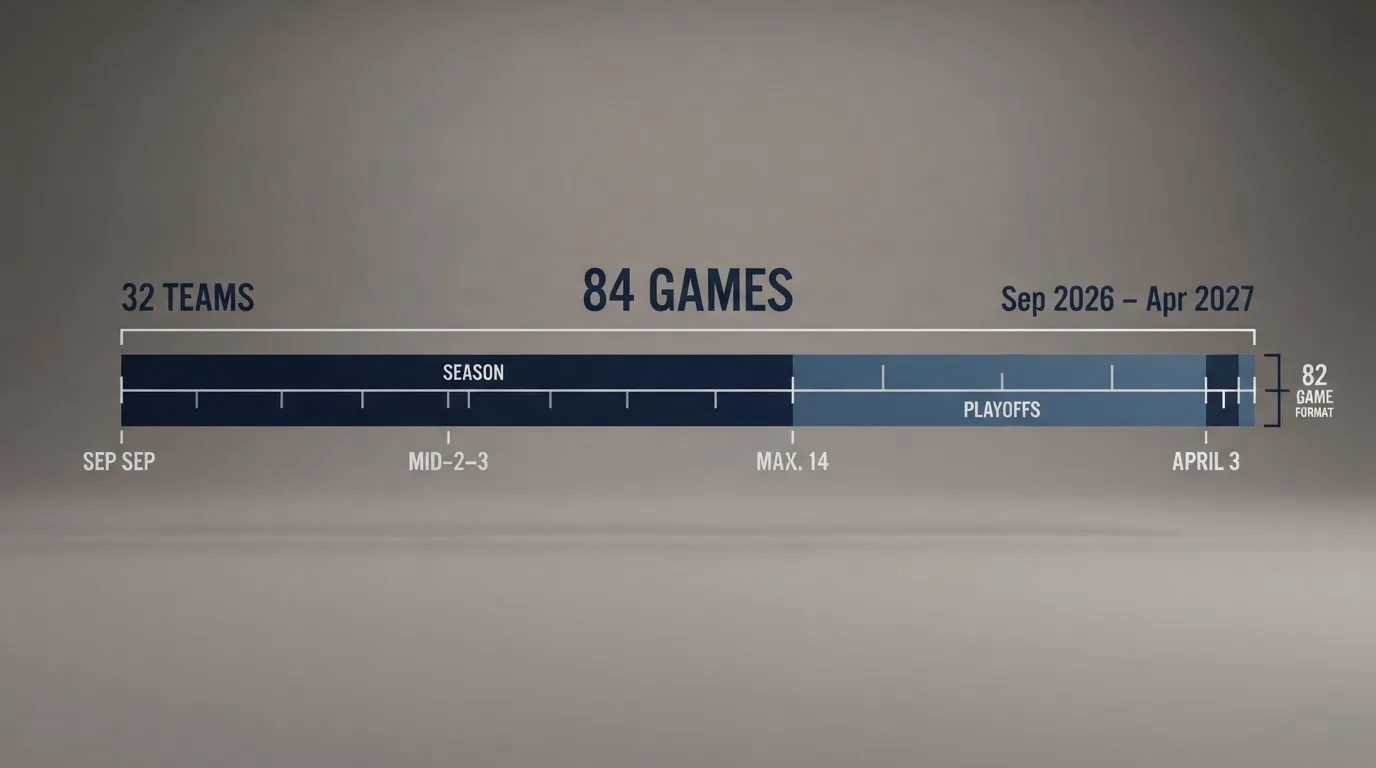
The 2026–27 NHL regular season opens on 29 September 2026 with 32 teams playing 84 games each, up from 82 last year, and closes on 10 April 2027 — two extra matches per side that, for a punter, means two extra data points and two extra chances to find a mispriced line. Carolina took the 2026 Stanley Cup from Vegas, and the cycle starts again. Ice hockey betting online is no longer a niche: licensed bookmakers carry the NHL, the Champions Hockey League, the Finnish and Swedish leagues, the KHL, the IIHF World Championship and the Olympic tournament, plus a long tail of North American minor leagues and the odd international friendly. The choice is in the markets, the offers and the bookmaker, not in whether anyone will take the bet. What follows is what each piece of that choice is worth.

Data current as of 27 October 2026; licence claims verified against the Gambling Commission’s public register.
Bonuses, free bets and what an ice hockey offer actually pays
The bookmaker’s welcome page leans hard on the word “free”. It is the wrong word. A “free bet” is a token whose stake is rarely returned with a win, a “matched” offer is a percentage of the deposit that has to be turned over a stated number of times before it turns into withdrawable cash, and an “odds boost” is a one-line price improvement with a cap. The arithmetic behind each is honest; the marketing around it is not. What matters is the multiplier, the minimum price, the deadline and the cap on winnings.
Promotion rules in force in Great Britain since 19 January 2026 cap wagering requirements on bonuses at 10x the bonus amount — meaning a £10 bonus at 50x would have needed £500 of qualifying bets; under the cap no more than £100. Free bets with no wagering condition sit outside the cap, and the cap does not put a ceiling on the money value of a bonus, so an offer headline can still read large. A mixed-product promotion — a sports bet that unlocks a casino bonus, a free bet that requires a slot spin — is now banned. That is the regulatory floor, and a welcome offer below it is at least legal. Most welcome offers sit comfortably above it; the question is whether they are worth the turnover.
A typical shape: deposit £10, place a qualifying bet at minimum odds of 1/1 (2.00 decimal), receive four £10 free bets split between football accumulators and multiples, valid for seven days with opt-in required. Another: stake £20, receive £40 in free bets that expire inside a week and that must come from a debit card or instant bank transfer. A third: bet £10, get £15 in free bets that arrive as three separate £5 tokens for sports, accumulators and a niche product called Sub-Cover. A fourth: a 50% refund as a free bet up to £50, with a small casino bonus attached. Each is a different deal. None of them is “free” in the everyday sense of the word.
The first number to find is the wagering multiple. Where the offer is a cash bonus with turnover, the cost of clearing it is the bonus amount multiplied by that multiple, divided by the stake you actually place. The second is the minimum price on the qualifying bet, since wagers below it typically do not count. The third is the deadline — seven days is common — because a free bet that expires is a free bet that was never free. The fourth is the cap: the maximum a free bet can return, which the operator’s own terms set, and which is often the only number the headline “Get £40” hides.
The other shape is the price boost. A bookmaker raises the price on a single market for new or existing customers, with a small maximum stake, no wagering requirement and a one-line settlement. A boost’s value is the difference between the boosted price and the prevailing market price, multiplied by the maximum stake — typically a few pounds. Useful, but small.
The verdict is the same on every offer: read the wagering multiple, the minimum price, the deadline and the cap before the deposit. The page walks through the rest.
Mobile apps and what the smaller screen changes
The hockey calendar runs through summer in Europe and through spring in North America; the bettor does not always sit at a desk. The mobile app is the betting shop, and the right one is the one that loads quickly on a train, takes a fingerprint login and lets a punt place a single in-play bet without the slip hanging mid-confirm.
App Store descriptions across the major UK-licensed brands describe the same set of features — in-play odds, cash out, bet builders, accumulators, the same deposits and the same withdrawals. The differences are smaller than the marketing would have it. The genuinely relevant ones are the size of the app, the latency between the live event and the price, the layout of the in-play puck-line market (which is the most common ice hockey wager and the one the punter places during a power play) and the speed of the fingerprint-to-slip path.
The other relevant difference is coverage. The bigger apps carry the NHL, the Champions Hockey League, the Swedish Hockey League, the Finnish Liiga, the KHL and the World Championship; smaller apps may carry only the NHL and the international tournament. For a bettor who follows the SHL or the Liiga, coverage is a hard filter. Check the schedule filter on the operator’s own site before installing, because the App Store description rarely lists which leagues are inside the app.
The browser fallback is the same product on a different screen, and the same price — a bookmaker does not offer a better line on the app than on the desktop. The 4G latency, however, is real: a 200 ms delay is the difference between a price at 1.91 and a price that has already moved to 1.85 by the time the slip confirms. For in-play hockey, that delay is the spread.
Live betting, cash out and the value of a price that moves
Ice hockey is built for in-play betting. A sixty-minute game with three periods, a power play roughly every five minutes, a goaltender pull in the final minute when a team is down by one — the game hands the bookmaker a reason to reprice constantly and the punter a reason to read those repricings. The 3-on-3 overtime in the IIHF Worlds since 2019 and the shootout at NHL level have only added in-play markets.
In-play pricing is mechanical. The bookmaker’s algorithm reads the score, the time, the shots, the power play and the implied win probability from the live xG model, and updates the price every few seconds. The punter’s edge, where it exists, is the time between a meaningful on-ice event — a power play starting, a goalie pulled, an injury — and the moment the algorithm catches up. That window is short, and the algorithm is good. The shape of in-play hockey is periods of relative stillness punctuated by the goal that the model missed, and the bettor who wants to be there for the goal is the one who has the slip pre-built.
Cash out is the operator’s mirror image of in-play. The bookmaker offers to settle the bet at the current live price — locking in a smaller win or a smaller loss — and the punter can take the cash or let the bet run. A cash out value above the back-and-lay equivalent is the operator’s edge, and a value below it is the punter’s. The honest framing is that cash out is a convenience charge for not having to lay the bet off on an exchange. Whether the charge is worth the convenience is the punter’s call.
The in-play markets on a UK-licensed bookmaker typically include the next-goal scorer, the result after three periods, the team total, the total goals, the puck line (a goals handicap that pays out close to even money on both sides), the period result and the race to X goals. Some operators also offer player shots on goal and player power-play points. The deeper the market, the smaller the liquidity, the wider the spread and the more the bookmaker’s margin eats the price. A bettor who needs the in-play first-goal market gets it almost everywhere; a bettor who wants shots on goal gets it on the bigger apps and rarely on the rest.
Predictions, tips and what a “system” actually is
A tipster sells a forecast. A system sells a rule. Both are the wrong place to look for an edge in ice hockey betting — the bookmaker’s margin is built into every price, the in-play algorithm catches news within seconds, and a tipster whose record was genuinely strong would be arbitraging their own tips on a betting exchange rather than selling a subscription. The pages that claim a 70% strike rate on NHL picks are the pages that the math refuses. NHL favourites at -200 cover the spread about 60% of the time; that is the figure, and a 70% tipster is a fiction.
What a punt can usefully do is read the structure of a price. A moneyline favourite at 1.30 has a margin of roughly 7% baked in, the puck line favourite at 1.91 has a margin of about 5%, and the over 5.5 total at 1.91 has the same. The difference between the prices is the market’s view of the favourite’s edge, and the punter’s view of it. Where the two views disagree, there is a price to be had. Where they agree, the price is the market and the bettor is paying the margin for the privilege of being there.
The honest version of a “system” is a bankroll rule: a fixed percentage of the bank per bet, never more, and never the size that loses the punter sleep. The other honest version is a market rule: a market the punter has watched for years, on a league the punter follows, on a price the punter knows. The system is the discipline, not the prediction.
Bankroll management: bet 1-2% of the bank per wager, with the percentage dropping as the variance grows. A 1.91 puck line bet has roughly the same variance as a 1.91 moneyline bet at a smaller number, and a 5-leg accumulator has the variance of five singles multiplied together. The punter’s edge does not grow with the number of legs; the variance does. A small punter with a £200 bank who places ten £20 accas is doing something different from a small punter with a £200 bank who places ten £2 singles, and the second punter’s variance is what the bank can absorb.
A genuine strategy for in-play ice hockey is the power-play price. When a team goes on a 5-on-4, the live price on the team to score next moves sharply. The market’s algorithm reads the shot rate and the historical conversion percentage and prices the next goal accordingly. The punter who has the team’s power-play conversion rate memorised from the last ten games is the one whose view of the price might differ from the algorithm’s. The window is short — ninety seconds to two minutes — and the slip has to be ready.
Bet types, odds and how a price is built
The bet types in ice hockey are the same shapes as in any other sport, with names that take some learning. The core menu:
The moneyline, or 1X2 in three-way form (home, draw, away). A draw in the NHL after regulation is rare enough that the three-way market effectively collapses to a two-way market at the bookmaker’s discretion. Some operators list “regulation time only” and “including overtime and shootout” as separate prices; the difference is the draw. The two-way moneyline at 1.91 / 1.91 is the illustrative example used in the calculation further down.
The puck line is ice hockey’s handicap. It is set at 1.5 goals in most markets — the favourite gives 1.5, the underdog takes 1.5 — and pays out close to even money on both sides because the line is set to balance the action. Some bookmakers run an alternative puck line at 2.5 for larger favourites, with a shorter underdog price.
The total, or over/under, sits at 5.5 or 6.0 goals for most regular-season NHL games, occasionally 6.5 for offensive matchups. The over at 1.91 / the under at 1.91 is a 5% margin market; a wider line (over 5.5 at 1.85, under 5.5 at 1.95) reflects a margin closer to 5.3%.
Period betting is a separate market. The first period is a low-scoring 20 minutes and the price reflects it; the third period is the highest-scoring and the price reflects that too. The team total — Tampa Bay to score over 2.5 goals at 1.85 — is a half of the game total and behaves the same way.
The bet builder combines markets from one match into a single price: Tampa Bay to win, over 5.5 total goals, Nikita Kucherov to score. The legs multiply into one price, the margin of each leg multiplies too, and the bettor pays the operator for the convenience of not having to lay each leg off separately. A bet builder on a single NHL game typically carries a margin of 8-12%, against 5% on a straight puck line. The convenience is the price.
The Grand Salami is a league-wide total — the sum of goals across every game on a given night. It is a popular market with ice hockey bettors because the bettor can read the day’s schedule and find a mispriced total by adding up the per-game lines and comparing. The margin is wider (7-9%) and the bookmaker’s pricing model is weaker, because the per-game correlations are noisy. A confident bettor can find a line.
Each-way betting exists in ice hockey only on outrights — the Stanley Cup, the Conference winner, the Division winner. Each-way is not a thing on a single game.
The odds themselves come in two forms in the UK. Fractional odds — 5/1, 11/4, 1/1 (evens) — are the British form, where 5/1 means a £1 stake returns £5 profit plus the £1 stake for a £6 total. Decimal odds — 6.00, 3.75, 2.00 — are the European form, where 6.00 means a £1 stake returns £6 total. The conversion is straightforward: 5/1 → 5 + 1 = 6.00, 11/4 → 11/4 + 1 = 3.75, 1/1 → 1 + 1 = 2.00. This page uses decimal prices wherever it quotes a number, and the bookmaker’s slip usually offers both decimal and fractional.
The sports, the leagues and the calendar
The IIHF is the international governing body of ice hockey, and the World Championship is the senior men’s tournament. The Olympics carry ice hockey for both men (since 1924) and women (since 1998). The NHL is the North American professional league and the one that drives the betting volume: 32 teams, 84 games each in 2026–27, a 1,344-game regular season and four rounds of playoffs.
The Champions Hockey League runs the top European club sides from the SHL, the Liiga, the Czech Extraliga, the Swiss National League and the DEL. The KHL — the Russian-based multi-national league — sits outside the IIHF umbrella for political reasons and is offered by fewer UK-licensed bookmakers than it used to be; some operators carry it, some do not, and the punter should check the schedule before assuming.
The Swedish Hockey League and the Finnish Liiga are the strongest domestic leagues outside North America and are covered by most UK-licensed apps. The Extraliga (Czech Republic), the DEL (Germany), the National League (Switzerland) and the Austrian league are also covered, usually on the bigger apps.
The NHL is the bulk of the betting volume. Game times run through the European evening, with the late games starting around midnight UK time and the West Coast games around 03:00 — a punishing schedule for a British punter, which is one reason the in-play market is so heavily used: many bets are placed the morning after, on the closing price.
The 2026–27 NHL schedule is the new wrinkle. Two extra games per team (84 against the previous 82) means the regular season runs a touch longer and the load-management picture shifts: goalies rest more often, top players sit out back-to-backs, and the betting market on a star player’s points props needs to be read with the schedule in mind. The 10 April 2027 closing date leaves less than a week before the playoffs start, and a punter backing a long-shot Stanley Cup pick needs to know whether their team will be in the race or out of it by then.
The top ten: ten UK-licensed bookmakers and what each is worth
What follows is the ranking: ten operators, each with a Gambling Commission remote licence, each with its own welcome offer, each with a profile that fits a different kind of punter. The licences are verified against the Commission’s public register; the offers are each operator’s own terms as published on the date of research. The operators below are listed in table order; the verdict on each is the page’s own.
| Brand | Gambling Commission remote licence | Licence holder | Operator’s own position on the key’s subject |
|---|---|---|---|
| Fitzdares | 000400-R-103839-030 | Fitzdares Limited | Cash out, accumulators, Lucky 15s, antepost markets on horse racing, football, tennis, rugby, cricket, golf and American football, with in-play live odds |
| BetUK | 039198-R-319450-029 | LeoVegas Gaming PLC | New customers who deposit £10+ and place a sports bet within 7 days receive four £10 free bets (two football accumulators of 4+ selections, two multiples of 2+), valid for 7 days, with opt-in required |
| Unibet | 045322-R-324275-019 | Platinum Gaming Limited | Operating since 1999; “Get £40 in Free Bets when you bet £20” — deposit and sports bet of £20+ at minimum odds of 2.0 (1/1), free bets expire within 7 days, GB customers using a debit card or instant bank transfer |
| BoyleSports | 039469-R-319383-025 | Boylesports Enterprise | £20 in free bets when a £10 bet is placed for UK players (€30 in free bets for a €10 bet for Irish players) |
| Octobet | 062545-R-337248-006 | Octopus Game Limited | 50% back as a free bet up to £50, plus a £10 casino bonus for new customers |
| BetGoodwin | 002927-R-327985-008 | Goodwin Racing Limited | “Bet £10 & Get £15 in Free Bets” — a £5 sports bet, a £5 acca and a £5 Sub-Cover bet |
| London Bet | 066162-R-340278-004 | Thistle Bet Limited | Sports betting (football, tennis, horse racing, greyhounds, darts, golf, cricket, NFL, NBA, MLB, snooker) with Pragmatic Play casino slots and live in-play betting |
| Fitzwilliam Sports | 048760-R-335434-009 | SBKI Limited | Dublin bookmaker with capped membership; “High Stakes Welcome” subject to compliance criteria; instant deposits, fast withdrawals, timeouts, deposit limits, links to GambleAware, GamStop and Gamblers Anonymous |
| bet365 | 055148-R-331498-002 | Hillside (UK Sports) ENC | Official global betting partner of the UEFA Champions League; Bet Builder+ (combining markets from one event into a single bet, pre-match and in-play), Super Boosts, Winnings Boosts on Bet Builders and selected singles, daily Bet Boosts, in-play betting and live streaming, Bet Track and Match Live |
| Kwiff | 044448-R-323408-017 | Eaton Gate Gaming Limited | Trading name operated by Spryme Ltd; 17+ App Store age rating |
A few patterns fall out of that table. Eight of the ten welcome offers are variants on the same shape: deposit and place a small qualifying bet, receive a larger bundle of free bets that expire in seven days. Two — Octobet and Fitzwilliam Sports — structure the offer differently. Octobet refunds half the first bet as a free bet if it loses, up to £50; Fitzwilliam runs a “High Stakes Welcome” that the site says is “subject to compliance criteria” and does not publish in full, which is the opposite of transparent and the opposite of what a £10 punter needs. The bulk of the welcome value, on every offer, sits in the £20-£40 bracket of free bet credit, and the wagering on top of that is zero — a free bet does not need to be turned over to be withdrawn, but its stake is not returned with a win.
The two operators with the deepest in-play ice hockey product are bet365 and Unibet. bet365’s app carries Bet Builder+, Super Boosts, Winnings Boosts, in-play betting and live streaming, plus a Live Golf Tracker (irrelevant to ice hockey) and Bet Track; Unibet has been operating since 1999 and carries a similar in-play range. The other eight operators carry ice hockey in their sportsbooks but with thinner in-play coverage and fewer bet builder legs per match — a meaningful gap for a punter whose edge lives in the live market.
The two operators with the most restrictive terms are Fitzdares (Lucky 15s and antepost on American football, but ice hockey not named in the App Store description) and Fitzwilliam Sports (capped membership, “compliance criteria” on the welcome). Both are bookmakers for a higher-stakes customer than the typical ice hockey punter, and the ice hockey product at either is worth checking in the schedule before assuming.
Fitzdares
Fitzdares’ App Store description names horse racing, football, tennis, rugby, cricket, golf and American football as the markets on which cash out, accumulators, Lucky 15s, specials and antepost are available. Ice hockey is not in that list. In-play live odds are present, but the question of how deep the puck line and the period betting go is one the punter has to answer by looking at the schedule on the Fitzdares site — the public description is silent. Fitzdares sits in the comparison on the basis of its licence and its in-play engine, not on a published hockey offer. Verdict: a high-end bookmaker with a long British history and a deep in-play product, but the hockey coverage has to be checked before a stake.
BetUK
The BetUK welcome offer is the cleanest in the comparison: deposit £10, place a sports bet within seven days, receive four £10 free bets, two of them football accumulators of four or more selections and two of them multiples of two or more. The free bets are valid for seven days from issue, opt-in is required and the qualifying bet has no minimum odds stated. The bundle is split into football accas and multiples — which is a problem for a punter who bets ice hockey and not football, because two of the four tokens are unusable. A punter who bets football can use the lot; a punter who doesn’t is left with two £10 tokens. The brand is owned by LeoVegas Gaming PLC, which means the casino side is LeoVegas and the sports side is BetUK, and the two products are kept separate. Verdict: a solid welcome if the punter bets football, a thinner welcome if they don’t.
Unibet
Unibet has been operating since 1999 and its UK site runs under Platinum Gaming Limited, Gibraltar, on Commission account 45322. The welcome offer is “Get £40 in Free Bets when you bet £20”: deposit and place a sports bet of £20 or more at minimum odds of 2.0 (1/1), receive £40 in free bets, expire within seven days, GB customers using a debit card or instant bank transfer. The qualifying bet is at minimum odds of 2.0 — meaningful, because it forces the punter onto a market where the bookmaker’s margin is around 5% rather than the sub-2% of a heavy favourite. The £40 of free bets is split, in practice, across a number of sports and is not restricted to football the way the BetUK bundle is. Unibet carries the NHL, the SHL, the Liiga, the KHL, the Champions Hockey League and the World Championship. Verdict: the most balanced welcome in the comparison for a punter who bets across sports, and the deeper of the two big-brand in-play ice hockey products.
BoyleSports
BoyleSports’ UK welcome is £20 in free bets for a £10 qualifying bet, with the Irish welcome the same shape in euros. The brand is an Irish bookmaker with a UK presence, and the sports product is broader than the welcome suggests. The £20 in free bets is not split the way the BetUK bundle is, which means the punter chooses the market. The punter should check the terms for minimum odds on the qualifying bet. BoyleSports carries the NHL and the major European leagues, and the in-play product is solid without being market-leading. Verdict: a clean £20-for-£10 welcome with no football-only restrictions and a single token to spend rather than four.
Octobet
Octobet’s welcome is the different shape: 50% back as a free bet up to £50, plus a £10 casino bonus. The mechanism is a refund of half the first losing bet as a free bet, capped at £50 — a safety net for the first wager rather than a guaranteed credit. The punter deposits, places the first bet, and if it loses, half of it (up to £50) comes back as a free bet; if it wins, the welcome pays nothing. The £10 casino bonus is a separate credit, not part of the sports refund. The shape suits a punter who plans to place a larger first bet and is happy to lose it for the free bet; it does not suit a punter who wants guaranteed credit on day one. Verdict: a refund-style welcome that pays only on a loss, and the right shape only for a specific kind of first bet.
BetGoodwin
The BetGoodwin welcome is “Bet £10 & Get £15 in Free Bets” split into three £5 tokens: a £5 sports bet, a £5 acca and a £5 Sub-Cover bet. Sub-Cover is a niche BetGoodwin product — a bet that pays out if a named selection’s result is covered by another event on the same slip. For a punter who bets ice hockey singles, the £5 sports token and the £5 acca are usable, and the £5 Sub-Cover is an unknown unless the punter reads the terms. The brand is Goodwin Racing Limited, and the racing heritage shows: the welcome is structured around a small punter who bets horses and would like to add a sports bet on the side. Verdict: a three-token welcome that splits awkwardly for an ice hockey-only punter.
London Bet
London Bet’s app combines sports betting on football, tennis, horse racing, greyhounds, darts, golf, cricket, NFL, NBA, MLB and snooker with Pragmatic Play casino slots and live in-play betting. Ice hockey is not in the named list. The schedule is the test, and a punter who plans to bet the NHL with London Bet needs to check the league filter before assuming. The brand is run by Thistle Bet Limited under Commission account 66162. Verdict: a smaller bookmaker with a casino-led product, where the ice hockey coverage is the unknown and has to be confirmed in the schedule.
Fitzwilliam Sports
Fitzwilliam Sports describes itself as a Dublin bookmaker with capped membership, and its welcome is a “High Stakes Welcome” subject to compliance criteria. The site states it offers instant deposits, fast withdrawals, timeouts, deposit limits and links to GambleAware, GamStop and Gamblers Anonymous. The welcome is the opposite of transparent: the criteria are not published in full, and the size of the credit is not stated. Capped membership means the bookmaker takes a finite number of customers — a model that suits a high-stakes punter and excludes the typical small-stake ice hockey bettor. The site carries ice hockey as part of a multi-sport product, but the depth of the coverage is the test the punter runs on the schedule. Verdict: a bookmaker for the higher-stakes customer, with a welcome that is not the right shape for the typical ice hockey punter.
bet365
bet365 is the official global betting partner of the UEFA Champions League, and its app is the most downloaded sports betting app in the UK. The sportsbook product is the deepest in the comparison: Bet Builder+ combines markets from one event into a single bet, available pre-match and in-play; Super Boosts, Winnings Boosts on Bet Builders and selected singles, and daily Bet Boosts are the price-improvement product; in-play betting and live streaming of events worldwide are part of the package, alongside Bet Track, Match Live and a Live Golf Tracker. The bet365 ice hockey product carries the full NHL slate, the SHL, the Liiga, the Champions Hockey League and the World Championship, with deep in-play coverage on every game. The punter should check the bet365 site for the current welcome offer. Verdict: the deepest ice hockey product in the comparison, the most reliable in-play engine, and the welcome is the question the punter answers on the day.
Kwiff
Kwiff is the dark horse in the comparison. The brand is licensed by the UK Gambling Commission and describes itself as a trademark operated by Spryme Ltd, with a 17+ App Store age rating. The product is built around “supercharged” odds — randomly boosted prices on selected markets, with the punter finding out the boost only when the bet is placed. The mechanism is unusual: Kwiff’s algorithm decides, at the moment of the wager, whether to apply a multiplier to the price, and the punter’s return is the boosted number. The brand’s appeal is the price-improvement mechanic on a smaller operator. Verdict: a bookmaker with a distinctive odds mechanic and a thinner welcome, where the punter’s edge lives in the random boost rather than the welcome.
The fundamentals of ice hockey and what the rule book means for the bettor
Men’s ice hockey has been part of the Winter Olympics since 1924, and women’s ice hockey was added in 1998. The professional game is three periods of twenty minutes with each side fielding six players including one goaltender. Tied games go to overtime, and the NHL regular season follows overtime with a penalty shootout; the IIHF World Championships and the Olympic gold medal game have used 3-on-3 overtime since 2019.

The rule book shapes the market. Three periods of twenty minutes means the game is short by football standards (60 minutes of regulation play) and the variance per minute is high. A goaltender pulled for an extra attacker in the last minute of a one-goal game is the most volatile single minute in professional team sport, and the live market on the next goal moves by 30-40% of the pre-pull price. The punter who has the price locked in before the pull is the one who benefits; the punter who has to rebuild the slip after the pull is the one who pays the new price.
The power play is the other rule book mechanic that matters. A team plays 5-on-4 for two minutes on a minor penalty, and the historical conversion rate is around 20%. The market’s algorithm reads the power play and prices the next goal accordingly. The punter who has the team’s power-play conversion rate memorised is the one whose view of the live price might differ from the algorithm’s. The window is short.
Overtime and the shootout are the third mechanic. The 3-on-3 overtime since 2019 in the IIHF tournaments has increased the scoring rate in overtime by a wide margin, and the market on the period result reflects it. The NHL shootout is a coin flip with the home team winning roughly 52% of the time. A bet on the draw in regulation (the three-way market that includes the draw) is a bet on a tied game after 60 minutes, and the price reflects the rarity of the regulation draw.
Legality, the Gambling Commission and what a UK licence actually means
The Gambling Commission is the regulator. It is a non-departmental public body sponsored by the Department for Culture, Media and Sport, and it licenses the whole commercial betting market in Great Britain under the Gambling Act 2005. The Act covers England, Scotland and Wales; Northern Ireland has its own older law and is outside the Commission’s remit, so a “GB licence” is exactly that and no more.
Since the Gambling (Licensing and Advertising) Act 2014, an operator whose remote facilities are used in Great Britain needs a Commission licence wherever it is based. A Curaçao, Maltese or Gibraltar licence is not a substitute. The Commission’s public register is searchable by business name, trading name, domain or account number and is the test of whether a brand holds a licence; the table earlier in this article names the account number and the licence holder for each featured operator, and the punter can verify any of them on the register.
The Act does not list permitted sports or markets. A bookmaker licensed for “remote general betting standard (real events)” can offer whatever markets its licence conditions and codes of practice allow, and the categories on the register are not a list of permitted bets. In-play betting, novelty markets and esports are all offered by GB bookmakers, and no statutory prohibition applies. Spread betting on financial markets is regulated by the Financial Conduct Authority, not the Commission, and a financial spread betting account is a different licence entirely. Spreadex, for example, is regulated by the FCA for spread betting and by the Gambling Commission for fixed-odds betting, and the brand’s own terms state that spread betting losses can exceed the deposit.
The age threshold is 18, and identity verification has been required before the first deposit or wager since 7 May 2019 — including with a free bet or a bonus. The punter’s name, address and date of birth are checked against public records, and the first deposit does not go through until the check clears. No anonymous play exists at a licensed site, and that is one of the trade-offs the punter accepts in exchange for the protections below.
The financial vulnerability check (LCCP condition 3.4.4, in force since 30 August 2024) applies to licensed remote betting when a customer’s deposits minus withdrawals exceed £150 in a rolling 30 days — a threshold that came into force on 28 February 2025. The check is a public-record check (bankruptcy, county court judgments), not an income check and not a credit reference check. Financial risk assessments — the “affordability checks” of the press — are announced in a staged plan with no start date, and the article’s framing is “announced, staged, no start date” until the Commission publishes a date. Deposit limits are the customer’s choice; the operator must offer a gross deposit limit on a fixed time frame, but there is no state-set ceiling.
GAMSTOP is the national multi-operator online self-exclusion scheme and a mandatory licence condition for online operators since 31 March 2020. The exclusion periods are six months, one year, five years, or five years with auto-renewal, and after the minimum period the exclusion stays in place for a further seven years unless the customer asks GAMSTOP to remove it. GAMSTOP covers online sites and apps; betting shops use a separate service. Every featured operator in the table above is a GAMSTOP member.
The bonus cap (in force since 19 January 2026) is 10x the bonus amount on wagering requirements — meaning a £10 bonus can require at most £100 of qualifying bets. Free bets with no wagering condition sit outside the cap. Mixed-product promotions — an offer that requires gambling on two or more product types such as betting, casino, bingo and lottery — are banned.
The player pays no tax on betting winnings in Great Britain. General Betting Duty is the operator’s tax on gross profits, currently 15% on remote bets and rising to 25% on remote bets from 1 April 2027 under a policy paper published on 26 November 2025. Whether operators pass duty on through the odds is not established, and the punter is not charged duty directly. The Commission’s statutory levy is a separate charge, not a tax.
Credit cards are banned for gambling in Great Britain since 14 April 2020 (LCCP condition 6.1.2), including credit-card-funded payments through an e-wallet. Debit cards and bank-based payments are not covered by the ban. Cryptocurrency deposits at licensed operators sit in a grey area: the law does not forbid them, and the operator’s own terms set the policy. A punter who plans to deposit in crypto should check the operator’s payment page rather than assume.
An offshore operator without a GB licence is committing an offence under section 33 of the Gambling Act 2005 (on summary conviction up to 51 weeks’ imprisonment, a fine up to level 5, or both; six months in Scotland). The offence is aimed at the operator, not the customer. The punter’s loss for using an unlicensed site is the loss of the GB protections: no GAMSTOP coverage, no Commission complaints route, no approved dispute-resolution body, no British consumer redress if funds are withheld, and no application of the 10x bonus cap or the £150 vulnerability check. The honest framing is that a licensed site offers checks, limits, GAMSTOP and the bonus cap, and an unlicensed site offers none of those and the risk of losing the stake entirely. Neither is “the safe choice” by default; one is the regulated choice and the other is the unregulated one.
Responsible gambling: where the help is
GAMSTOP is the self-exclusion register, and every featured operator is a member. The exclusion periods are six months, one year, five years, or five years with auto-renewal; after the minimum period the exclusion stays in place for a further seven years unless the customer asks GAMSTOP to remove it. The register is national, multi-operator, online-only, and free. A punter who has signed up cannot open a new account at any GB-licensed online bookmaker for the duration of the exclusion.
GamCare runs the National Gambling Helpline, a free confidential service for anyone affected by gambling. GambleAware funds treatment and research across Great Britain. The NHS runs gambling clinics in several regions for problem gambling treatment. Gamblers Anonymous runs peer-support meetings across the country and online. Fitzwilliam Sports links to all three on its own page; the others carry the same links inside their safer-gambling pages.
The safer-gambling tools on a GB-licensed site are the customer’s deposit limit, the reality check, the time-out, the self-exclusion and the activity statement. The deposit limit is the customer’s choice, with the operator required to offer a gross deposit limit on a fixed time frame. The reality check is a pop-up after a chosen duration. The time-out is a short break from 24 hours to six weeks. The self-exclusion is the GAMSTOP route for a longer break. The activity statement is a record of the punter’s deposits, withdrawals and net position over a chosen period.
A punter who feels the betting has stopped being a choice should call GamCare, register with GAMSTOP, or talk to a GP. There is no cost, no shame, and the help is there.
Crypto and anonymous betting at the ice hockey rinks
The legal frame for crypto at GB-licensed bookmakers is the grey area described earlier. The law does not forbid it, and the operator’s own terms set the policy. A punter who plans to deposit in Bitcoin, Ether or a stablecoin should check the operator’s payment page, because the answer varies: some operators accept crypto at the cashier, some list only debit cards and bank transfers, and the rest fall in between.
The trade-offs are real. A crypto deposit at a licensed operator goes through the same identity check as a debit card deposit — the operator verifies the punter’s name, address and date of birth before the first deposit clears, and the source-of-funds question applies at higher spend. The crypto part is the funding rail, not the anonymity. A punter who wants anonymity is looking for a different kind of site, and the section above on offshore operators is the honest framing: an unlicensed site is unlicensed for a reason, and the loss of the GB protections is the cost of the anonymity.
The unlicensed sites that take crypto and offer ice hockey do exist. They run on their own house rules, with their own margin and their own dispute resolution (or lack of it). The punter who bets on one does so with the knowledge that the Commission will not intervene in a dispute, that GAMSTOP does not apply, and that the bonus cap and the vulnerability check do not apply either. The price may be sharper than at a licensed site, because the operator’s compliance costs are lower, and the lack of a margin floor means the line can drift further. Whether that is worth the loss of protection is the punter’s call, and the article will not make it for them.
A licensed operator’s terms typically list the payment methods the cashier supports, and a punter who plans to use crypto should expect to see at most a handful of operators on the GB-licensed side offering it. The rest of the comparison is debit cards, bank transfers and e-wallets.
How to read a price: the worked example
The bookmaker’s margin is the cut the operator takes from every market. The punter who knows how to read it can compare two prices and pick the better one; the punter who doesn’t is paying the margin for the privilege of being there.
Consider an illustrative two-way market at decimal odds of 1.90 on each side — a symmetric price the punter might see on a puck line or a total. The first thing to do is sum the implied probabilities: 1 ÷ 1.90 plus 1 ÷ 1.90, which is 0.5263 plus 0.5263, or roughly 1.0526. That sum is greater than 1, and the excess over 1 is the bookmaker’s margin. The payout share — the fraction of every pound staked that comes back to all winning bettors combined — is 1 divided by that sum, or about 0.95. The margin is 1 minus the payout share, or about 0.05, which is 5%.
That 5% is the operator’s cut on every pound wagered on the market, and it does not depend on which side wins. A £10 bet on side A at 1.90 returns £19 if it wins, a £10 bet on side B at 1.90 returns £19 if it wins, and the operator keeps 5p of every £1 staked across the market on average. The punter who backs side A is paying 2.5% of the stake as the operator’s edge (half of the 5% margin, weighted by the symmetric stakes); the same is true for side B.
Asymmetric prices carry different margins on each side, and the calculation is the same. A market at 1.50 / 3.00 has an implied probability sum of 0.6667 + 0.3333, which is exactly 1.00 — a margin of zero, a “fair” book. In practice this is never offered, and a real market at 1.50 / 3.00 will be 1.45 / 2.90 or 1.45 / 3.10 depending on the bookmaker’s view, with a margin of 4-5%. The punter who compares two operators’ 1X2 prices on the same match can run the calculation and pick the one with the lower margin.
A useful rule of thumb: a 5% margin is the floor for a liquid two-way market, a 7-8% margin is typical for a less liquid market, and a 10%+ margin is the territory of a bet builder or a niche player prop. A market at 1.91 / 1.91 is 4.7% margin; a market at 1.85 / 1.95 is 5.1% margin; a bet builder leg at 1.80 / 1.80 is 11.1% margin. The punter who reads the margin is the punter who knows which market is worth the stake.
The calculation in context
The two-way market at 1.90 / 1.90 is an illustrative example, not a quoted price. A real puck line on a real NHL game will sit somewhere between 1.85 and 1.95 on each side, with a margin in the 5-7% band depending on the bookmaker and the timing. The calculation is the same regardless of the specific price, and the result is a margin in the 5-7% range, with the tighter end typical of the bigger operators and the wider end typical of the smaller ones.
The takeaway is that every price carries a margin, and the punter’s job is to find the lower one. A market at 1.91 / 1.91 is better than the same market at 1.85 / 1.95 at the same operator, and a market at 1.93 / 1.93 at a second operator is better than either. The differences are small per bet, and they compound over a season.
A short checklist before placing a bet
Check the licence on the Gambling Commission’s public register. The account number in the table above resolves to the operator’s record, and the licence category confirms remote betting for real events.
Read the welcome offer’s wagering multiple, the minimum price on the qualifying bet, the deadline and the cap on the free bet winnings. A £40 free bet with a 7-day expiry and no cap is a different deal from a £40 free bet with a 3-day expiry and a £500 cap on winnings.
Confirm the league is in the schedule. The Champions Hockey League and the SHL are covered by the bigger apps; the KHL is covered by some and not others; smaller leagues vary.
Set a deposit limit on day one, before the welcome credit is spent. The limit is the punter’s own ceiling, and the operator is required to offer one.
Pick the market. The puck line at 1.91 / 1.91 is a 4.7% margin; the bet builder on the same game is 8-12% margin. The difference is the operator’s edge on the convenience.
What the season ahead looks like
The 2026–27 NHL regular season opens on 29 September 2026 with 32 teams playing 84 games each, and closes on 10 April 2027. The Champions Hockey League group stage runs in parallel. The IIHF World Championship is in May 2027. The Olympic tournament is in 2026, in February, with the men’s and women’s draws both running.
The schedule means the punter’s calendar runs through the year, with the NHL the bulk of the volume and the international tournaments the punctuation. The bigger apps carry the lot; the smaller apps carry the NHL and the World Championship. The rest of the schedule is the punter’s choice to follow.
A note on the rest of the year
The betting calendar does not stop in April. The NHL playoffs run into June, the Stanley Cup Final in late June, the draft in late June, free agency in early July, and the pre-season in September. A punter who follows the offseason can bet on the Stanley Cup winner at any point from the previous season’s end, with the price adjusting as the offseason news breaks. The IIHF World Championship runs in May, the Champions Hockey League group stage in September, and the Olympic tournament in February. The bettor’s year is the calendar of the leagues, and the bookmakers carry most of it.
How the bookmakers set their prices
The bookmaker’s trading team sets the opening price on a market — the moneyline, the puck line, the total — based on a statistical model of the two teams’ expected goals, the starting goaltender, the home-ice advantage and the recent form. The opening price is the most efficient, because the model is the most informed. As bets come in, the price moves to balance the book — to make sure the operator is not overexposed on one side — and as news breaks (an injury, a goaltender change) the price moves again. The closing price, just before the event starts, is the most efficient of all, because every piece of public information has been priced in.
The punter who finds an edge is the one who has a piece of information the model hasn’t, or a view on a market the bookmaker is mispricing. The first is rare; the second is the bread and butter of the small-stake ice hockey bettor. A model that prices the SHL less efficiently than the NHL is a real edge, because the SHL has fewer bettors, less data and a wider bookmaker margin. A model that prices a backup goaltender poorly is a real edge for the bettor who reads the pre-game news. The edge is small, the punter needs to be selective, and the margin is what they pay for the privilege.
Frequently asked questions
How do I bet on ice hockey?
Pick a bookmaker with a Gambling Commission licence, register an account, deposit via a debit card or bank transfer (credit cards are banned for gambling in Great Britain), and place a bet from the ice hockey schedule. The most common wager is the puck line — a 1.5-goal handicap priced close to even money on both sides. The 1X2 market is offered as regulation time only or including overtime and shootout; check which version the slip is pricing. Identity is verified before the first deposit, and the punter must be 18 or over.
How does ice hockey betting work?
An ice hockey bet is a wager on the outcome of a match, a period, a player statistic or a tournament. The bookmaker offers a price in decimal or fractional form; the punter stakes an amount; if the wager wins, the stake is multiplied by the decimal price (or the stake plus the stake times the fractional price) and returned. The bookmaker keeps a margin — typically 5% on a liquid two-way market — built into every price, and the punter pays that margin on every bet.
How do I check that a bookmaker holds a Gambling Commission licence?
The Commission’s public register at gamblingcommission.gov.uk is searchable by business name, trading name, domain or account number. The table earlier in this article lists the account number for each featured operator; the punter types the number into the register and confirms the licence category (remote general betting standard, real events) and the licence holder. A licence that does not resolve on the register is not a licence.
How is the return on a bet worked out from the stake and the odds?
Return = stake × decimal odds. For fractional odds, return = stake + (stake × fractional odds), which is the same as stake × (fractional odds + 1). Net profit is the return minus the stake. A £10 bet at decimal odds of 2.50 returns £25 and pays £15 profit; a £10 bet at fractional odds of 3/1 returns £40 and pays £30 profit. The bookmaker’s margin sits inside the price and is not a separate charge.
What is the bookmaker’s margin and how is it visible in the odds?
The margin is the cut the operator takes from every market. For a two-way market, sum the implied probabilities (1 ÷ decimal odds for each side); the excess over 1 is the margin. A symmetric market at 1.90 / 1.90 has a sum of 1.053 and a margin of about 5.3%; a symmetric market at 1.95 / 1.95 has a sum of 1.026 and a margin of about 2.6%. The punter who reads the margin is the punter who picks the cheaper market at the same operator, or the better operator at the same market.
US & other team sports – Grey Hound
Content created by the «Grey Hound» team
